


Choose an option to see quick actions and get help faster.
.svg)
What Are Your Options for Adding Cooling Without Ductwork?
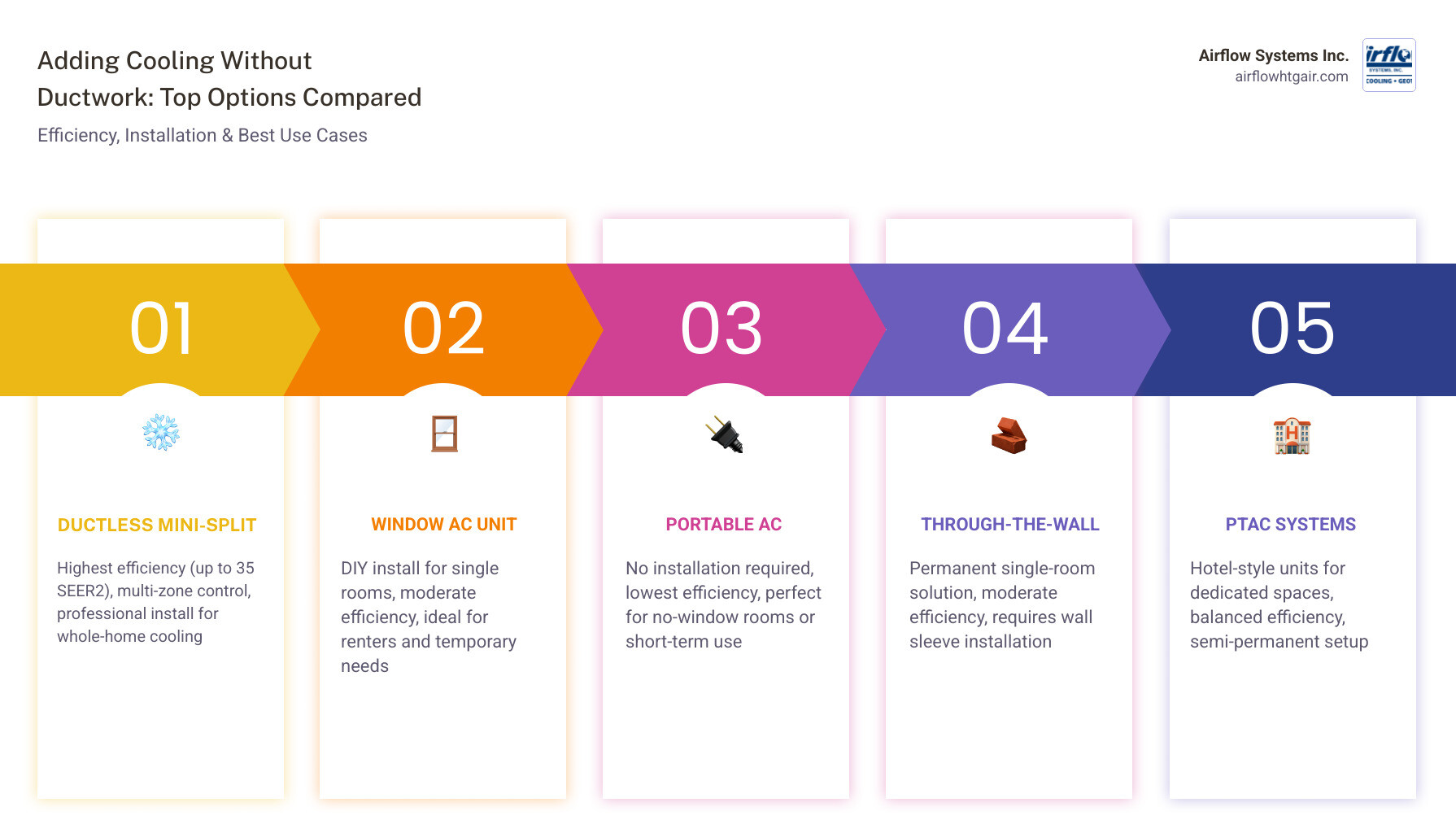
Adding cooling without ductwork options compared is exactly what this guide covers — so here's a quick breakdown before we dive into the details:
• Ductless Mini-Split — Best For: Whole-home or multi-room cooling — Efficiency: Highest (up to 35 SEER2) — Installation: Professional required
• Window AC Unit — Best For: Single rooms, renters, temporary — Efficiency: Moderate — Installation: DIY-friendly
• Portable AC — Best For: Renters, no-window rooms, temporary — Efficiency: Lowest — Installation: No installation needed
• Through-the-Wall / PTAC — Best For: Permanent single-room solution — Efficiency: Moderate — Installation: Wall sleeve required
If your home doesn't have existing ductwork, you're not stuck. Millions of older homes, room additions, and converted spaces face the same challenge every summer. And the good news? You have real, proven options — from high-efficiency ductless mini-split systems to simple plug-in portable units.
The catch is that not every option works the same way, costs the same to run, or delivers the same level of comfort. In fact, the U.S. Department of Energy notes that even homes with ductwork can lose up to 30% of their cooling power through leaks and gaps — meaning going duct-free can actually work in your favor.
Whether you're cooling a bonus room above the garage, a finished basement, or an entire older home in Central Virginia, knowing which system fits your situation can save you real money and a lot of frustration.
Adding Cooling Without Ductwork Options Compared
When we look at adding cooling without ductwork options compared, we have to consider the specific layout of our Central Virginia homes. Many of our historic properties in Charlottesville weren't built with central air in mind. For decades, the only solution was to block a window with a heavy, noisy box. Today, the landscape has changed completely.
The primary options we recommend evaluating include:
1. Ductless Mini-Split Systems: These are the gold standard for permanent cooling. They consist of an outdoor compressor and one or more indoor air handlers.
2. Window Air Conditioners: The classic choice for a single room. They are affordable but come with trade-offs in noise and security.
3. Portable AC Units: These sit on the floor and vent through a hose. They are flexible but generally the least efficient.
4. PTAC Units (Packaged Terminal Air Conditioners): Often seen in hotels, these are through-the-wall units that provide both heating and cooling for a single large space.
Adding Cooling Without Ductwork Options Compared: The Mini-Split Advantage
If we are talking about long-term value and comfort, the ductless mini-split is often the clear winner. Unlike traditional systems that are either "all on" or "all off," modern mini-splits use inverter technology. This allows the system to speed up or slow down like a car’s cruise control, rather than slamming on the brakes and restarting constantly.
This technology leads to incredible efficiency. While a high-end central AC might reach a 26 SEER rating, some ductless models boast SEER2 ratings as high as 35. For us in Charlottesville, where the humidity can make a 90-degree day feel like 100, that efficiency translates directly to lower monthly utility bills.
Furthermore, mini-splits offer multi-zone control. This means we can cool the upstairs bedroom to a crisp 68 degrees while leaving the downstairs guest room at 74. You only pay to cool the rooms you are actually using.
Adding Cooling Without Ductwork Options Compared: Portable vs. Window Units
For many of our neighbors, a permanent installation isn't always the first step. If you are renting a home near the University of Virginia or just need a quick fix for a weekend heatwave, window and portable units are the "budget champions."
• Window Units: These are more efficient than portables because the hot components stay outside the window. They don't take up floor space, but they do block your view and can be a security risk if not properly braced.
• Portable Units: These are the ultimate "no-install" option. You just plug them in and stick a hose out the window. However, they can be quite noisy and take up several square feet of floor space. We usually suggest these as a "last resort" for rooms without standard windows or for temporary cooling during a primary system repair.
The Efficiency Champion: Ductless Mini-Split Systems
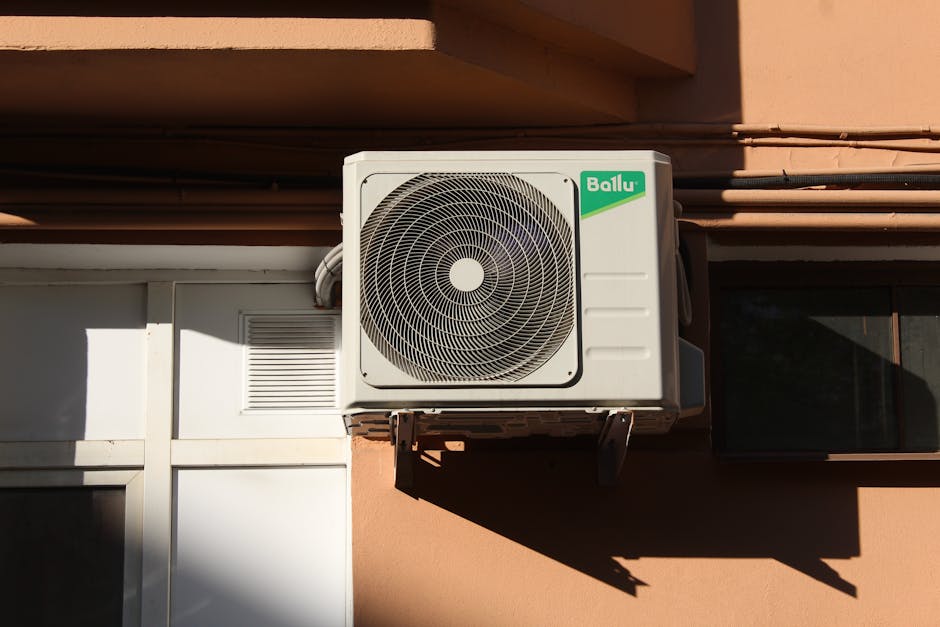
When we dive deep into the mechanics, a ductless mini-split is essentially a "split" system, just like central air, but without the bulky metal tubes running through your attic or crawlspace.
The system relies on three main parts:
1. The Outdoor Compressor: This sits outside your home and does the heavy lifting of dispersing heat.
2. The Indoor Air Handler: This is the sleek unit mounted on your wall (or ceiling) that delivers the cool air directly.
3. The Conduit: A small, three-inch hole in your wall houses the refrigerant lines, suction tubing, and power cable that connect the two units.
Because there are no ducts, we eliminate the 20% to 30% energy loss associated with duct leaks. It’s like drinking through a straw instead of trying to pour water through a series of leaky pipes. You can learn more about how these systems are configured by visiting our page on mini-split systems.
Comparison: Mini-Splits vs. Central AC
• Ductwork Needed — Ductless Mini-Split: No — Central Air Conditioning: Yes
• Typical SEER2 — Ductless Mini-Split: 20 to 35 — Central Air Conditioning: 14 to 26
• Zoned Cooling — Ductless Mini-Split: Standard (per unit) — Central Air Conditioning: Requires expensive dampers
• Installation Time — Ductless Mini-Split: 1 to 2 days — Central Air Conditioning: 3 to 7 days (with ducts)
• Lifespan — Ductless Mini-Split: 15 to 20+ years — Central Air Conditioning: 10 to 15 years
Superior Air Quality and Comfort
One of the most overlooked benefits of going ductless is the impact on your health. Traditional ducts are notorious for collecting dust, pet dander, and even mold over time. Every time the AC kicks on, those particles are blasted into your living space.
Ductless systems feature multi-stage filtration that captures 99.9% of allergens. Since the air isn't traveling through hidden, dusty passages, the air you breathe is significantly cleaner. This is a major plus for our customers who suffer from seasonal allergies during Virginia’s pollen peaks. For those interested in a deeper dive into breathing easier, check out our indoor air quality systems.
Additionally, mini-splits are masters of dehumidification. In Central Virginia, the "mugginess" is often worse than the heat. Mini-splits can run at lower speeds for longer periods, which pulls more moisture out of the air than a standard central unit that cycles on and off quickly.
Flexible Alternatives: Window and Portable AC Units
While we love the efficiency of mini-splits, we recognize that every situation is unique. Sometimes, you just need a "right now" solution.
Through-the-Wall Units are a step up from window units. They require a permanent "sleeve" cut into the exterior wall. This keeps your windows clear and provides a tighter seal against the elements. They are common in older apartment buildings and additions where a window isn't available.
PTAC Systems are those large units you often see under hotel windows. They are rugged and capable of cooling large spaces, but they require a significant wall opening. They are a solid choice for a large sunroom or a detached workshop where aesthetics are secondary to raw cooling power.
Limitations of Portable and Window Systems
Before you head to the big-box store, it's important to understand the trade-offs.
• Noise Levels: A window unit or portable AC has the compressor — the loudest part of the system — inside or partially inside your room. While a mini-split operates at about 19 to 30 decibels (quieter than a library), a window unit can roar at 50 to 60 decibels. That’s the difference between a whisper and a normal conversation.
• Security: A window unit can often be pushed in from the outside, providing an entry point for intruders.
• Energy Loss: It is nearly impossible to get a perfect, airtight seal around a window or portable AC hose. Hot air from outside will inevitably leak back in, forcing the unit to work harder and increasing your energy bill.
• Aesthetics: Let’s be honest — a plastic hose snaking across your floor or a box hanging out of your window doesn't do much for your home's curb appeal.
Installation and Maintenance for Longevity
No matter which option you choose, the quality of the installation determines how long the system will last. For window and portable units, the "installation" is mostly about ensuring a good seal and a dedicated electrical outlet.
For ductless mini-splits, professional installation is a must. We start with a Manual J calculation, which is a scientific way of determining exactly how much cooling your specific room needs based on its size, insulation, and window placement. An oversized unit will cycle too often and fail to dehumidify, while an undersized unit will run constantly and burn out early.
Our team at Airflow Systems Inc. specializes in these precise AC installations. We ensure the refrigerant lines are properly flared and vacuum-tested to prevent leaks, which is the number one cause of system failure.
Maintenance Tips for Homeowners
To keep your system running through those grueling July afternoons, follow these simple steps:
• Wash Your Filters: Most ductless units have mesh filters that you can simply pop out and rinse in the sink. We recommend doing this every 4 to 6 weeks during the summer.
• Clear the Outdoor Unit: Make sure grass, leaves, and "fuzz" from cottonwood trees aren't clogging the fins of your outdoor compressor.
• Schedule a Tune-Up: Just like your car, your AC needs a professional look-over once a year. We check refrigerant levels, clean the coils, and ensure the electrical connections are tight. You can find more details on our maintenance services to help extend the life of your investment.
Frequently Asked Questions about Ductless Cooling
We hear a lot of questions from our Charlottesville neighbors about making the switch to ductless. Here are the most common ones:
Can a mini-split cool an entire home?
Yes! While we often install "single-zone" systems for a new addition, we can also install "multi-zone" systems. A single outdoor compressor can power up to eight indoor air handlers. This allows you to have a head in the living room, one in the kitchen, and one in each bedroom, effectively cooling your entire home without a single inch of ductwork.
How long do ductless systems last?
With proper care and annual maintenance, a high-quality ductless mini-split can last 15 to 20 years or more. This is significantly longer than the 10 to 12-year lifespan of most window units or the 7 to 10-year lifespan of portable units. Because they are permanent fixtures, they also tend to increase the resale value of your home.
Are ductless units quieter than window ACs?
Absolutely. Because the noisy compressor is located outside, the only thing you hear inside is the quiet hum of a small fan. Many of our customers tell us they have to check the lights on the unit to even tell if it's running. At 19 decibels, some models are literally quieter than the sound of rustling leaves.
Conclusion: Achieving Year-Round Comfort
When adding cooling without ductwork options compared, the best choice depends on your budget, your timeline, and your goals for comfort. If you need a temporary fix for a single room, a window unit might do the trick. But if you are looking for a permanent, whisper-quiet, and ultra-efficient solution that will save you money for decades, a ductless mini-split is hard to beat.
At Airflow Systems Inc., we are proud to be a family-owned contractor serving the Charlottesville and Central Virginia community. We understand the unique challenges of our local climate and our beautiful, historic homes. Whether you need a quick repair or a brand-new installation, our certified professionals are here to help you find the perfect fit for your home.
Ready to reclaim your home from the summer heat? Explore our full range of HVAC services and let us help you stay cool, no matter how high the mercury rises. Give us a call today — we’re ready to help you achieve the year-round comfort you deserve!
Book Expert Service Or Contact Us
Our Service Process
A Hassle-Free Service Experience
01
Consultation & Diagnosis
We start by listening to your needs and performing a thorough diagnosis of your system to recommend the best solution.
02
Transparent Quoting
We provide a clear, upfront estimate with no hidden fees, so you know exactly what to expect.
03
Expert Service & Follow-Up
Our factory-trained technicians complete the work to the highest standards, and we follow up to ensure your complete satisfaction.
testimonials
What Our Customers Are Saying
Our customers consistently praise our exceptional service and attention to detail, making us a trusted choice for all your HVAC needs.
where we operate
Service areas