

Choose an option to see quick actions and get help faster.
.svg)
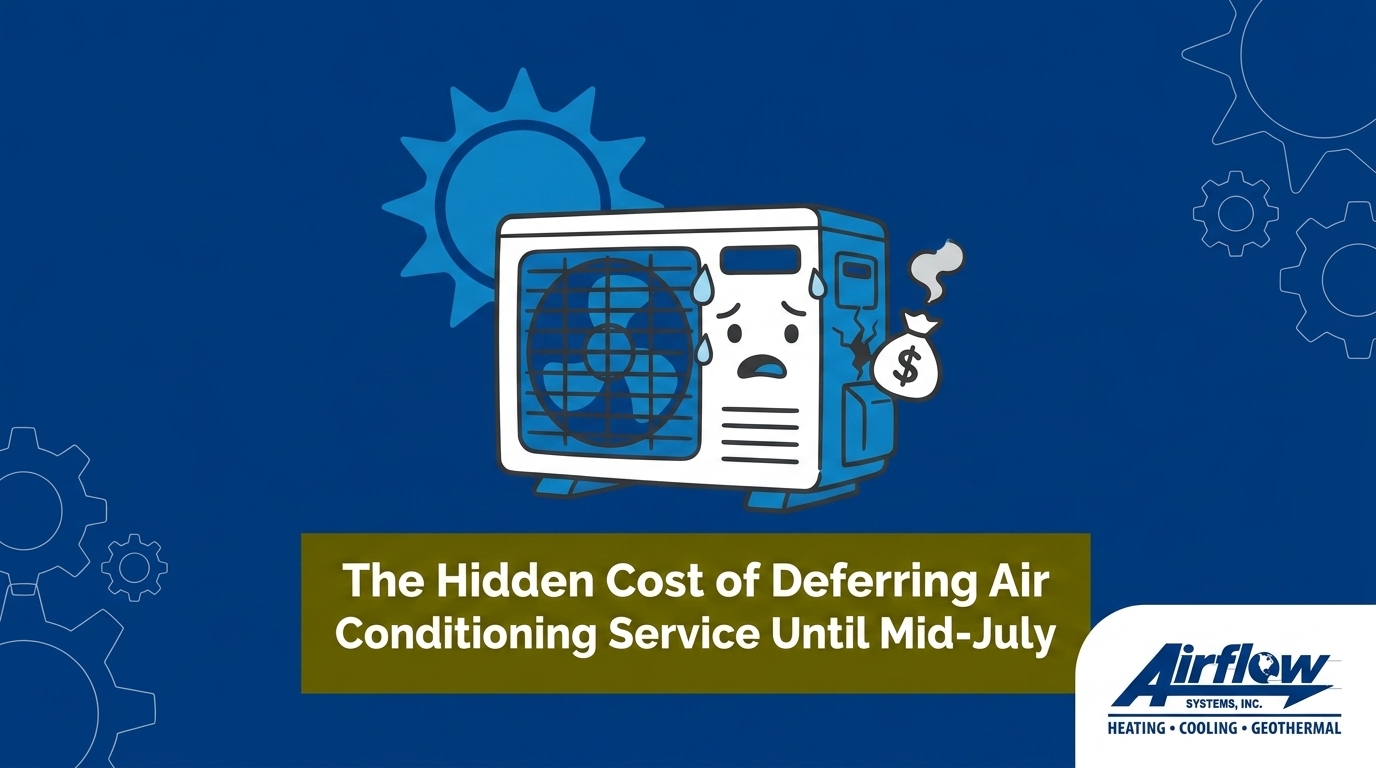
When a Minor June Warning Becomes a Major July Crisis
The heavy summer weather has officially arrived, and if you have been ignoring a strange noise from your vents since spring, you are about to discover the hidden cost of deferring air conditioning service until mid-July. A cooling system that seems to be running fine on the surface might actually be secretly struggling to keep up with the rising temperatures. What starts as a minor mechanical warning in early summer can rapidly transform into a major crisis when the most intense heatwaves hit.
As a homeowner, you face a critical decision point: do you address that noisy component right now, or do you wait until the unit completely stops blowing cold air? Most people assume the only consequence of waiting is an eventual repair bill. However, the true cost is much steeper. The real penalty is the hidden backend logistics of sourcing specific components, like OEM blower motors, during the busiest time of the year. Getting a skilled technician out to your home is only half the battle when national supply chains are completely strained.
Whether you need comprehensive air conditioning services or targeted AC repair, addressing these small issues early is the key to keeping your home comfortable and safe all summer long.
Recognizing the Early Summer Warning Signs
Before a catastrophic failure occurs, your cooling system will almost always give you subtle indicators of mechanical strain. During the hotter months, HVAC systems run up to three times longer than they do in milder weather. This extended runtime accelerates the wear and tear on aging components. If you know what to listen for, you can catch a struggling motor while it is still functioning, rather than waiting for an emergency outage.
Identifying the signs your AC needs repair before summer reaches its peak is critical. The most common indicators are auditory warning signs coming directly from the air handler.
• Grinding noises: This usually points to worn-out bearings inside the motor. Once the bearings lose their lubrication, metal grinds on metal.
• High-pitched squealing: Often an indicator of a failing belt or a severe friction issue within the blower assembly.
• Loud rattling: This can mean a component has vibrated loose or the blower wheel itself is out of balance.
• Clicking or humming: Electrical struggles, such as a failing capacitor trying and failing to jumpstart the motor, often produce these sounds.
These noises usually indicate that OEM blower motors and other vital parts are on the verge of failure. Catching these signs early allows for a scheduled, proactive replacement.
The Escalation from Noise to Failure
The mechanical timeline of a failing motor is predictable. When a component like a blower motor begins to wear out, the internal friction increases. This friction generates excess heat within the housing. Modern motors are equipped with thermal overload protectors that will shut the motor down if it gets too hot. Initially, you might notice your system short-cycling—turning on and off rapidly—as the motor overheats, trips the safety switch, cools down, and tries again.
Eventually, the internal winding insulation melts from the repeated overheating, or the bearings seize completely. At this point, the motor burns out entirely. What could have been a planned swap on a Tuesday morning is now a total system failure on a Friday afternoon.
The Logistical Reality of Peak National Cooling Demand
To understand why waiting is so risky, you have to look beyond your own neighborhood and look at the macro-level supply chain. Every single July, a massive bottleneck occurs across the entire country. National HVAC distribution centers experience their highest order volumes of the year as heatwaves strike multiple regions simultaneously.
During the mid-July peak heat in Charlottesville, local and regional part inventories are drained rapidly. A standard repair that might have a one-to-two day turnaround in early June suddenly stretches into a week-long waiting game in July. Distributors simply cannot keep up with the sudden influx of emergency orders from thousands of contractors nationwide.
When an entire region experiences a heatwave, the local warehouses empty out first. Contractors are then forced to order parts directly from the manufacturer's national hubs. Standard shipping times are frequently extended due to sheer volume. Getting a technician to your house to diagnose the problem is relatively quick; getting the physical part shipped across the country and delivered to your door is where the timeline falls apart.

Why Specific Components Face Severe Supply Chain Bottlenecks
Not all broken parts cause a week-long delay. Common items like capacitors, contactors, and standard fuses are universally stocked on almost every service truck. However, the indoor blower motor—the critical component responsible for actually circulating conditioned air through your ductwork—is a completely different story.
Modern, high-efficiency HVAC systems rely on electronically commutated motors (ECMs). These are not generic, one-size-fits-all motors. They are highly complex components that are factory-programmed to match the exact airflow requirements of your specific unit. Because of this, exact-match OEM blower motors are often required for the system to function correctly. You cannot easily swap in a universal part to get the system limping along.
This reliance on proprietary components creates a massive bottleneck when factory inventories are depleted. One local homeowner experienced this firsthand when a leaking coil in their air handler needed repair. The technician identified the leaking coil right away, but because the specific OEM replacement was required, the system could not be fully restored until the necessary part finally arrived from the distributor. The repair was completed successfully with excellent service, but the wait for the part was an unavoidable reality of peak-season demand.
When you defer service on a struggling component, you are gambling that the exact proprietary part your system needs will be sitting on a local shelf the day your system finally quits. During peak summer demand, that is rarely the case.
The Compounding Threat of High Humidity and Extreme Temperatures
Waiting days for a part is frustrating in mild weather. In the middle of summer, it becomes a serious disruption to your home's safety. The mid-July peak heat in Charlottesville brings intense humidity that compounds the discomfort of high temperatures. When your system loses its ability to cool, it also loses its ability to dehumidify.
The Problem: Air conditioning is actually a two-part process. Sensible cooling lowers the temperature, while latent cooling removes moisture from the air. A functioning blower motor is essential for drawing warm, damp indoor air across the cold evaporator coil to extract that moisture.
The Cause: When the blower motor fails, air stops moving. The latent cooling process halts immediately. Within hours, the indoor humidity levels spike, making the air feel thick, sticky, and drastically hotter than the thermostat actually reads.
The Solution: Maintaining airflow is the only way to control indoor humidity. A multi-day wait for a part means your home will quickly become dangerously uncomfortable.
• 1 to 4 Hours — Indoor Environment Impact: Air becomes stagnant; humidity begins to rise. — Comfort & Safety Risk: Mild discomfort; ceiling fans provide temporary relief.
• 12 to 24 Hours — Indoor Environment Impact: Indoor temperature matches outdoor temperature; high humidity traps heat. — Comfort & Safety Risk: Severe discomfort; sleeping becomes difficult.
• 48+ Hours — Indoor Environment Impact: House structure absorbs heat; indoor air feels oppressive. — Comfort & Safety Risk: Safety risk for vulnerable individuals and pets.
Framing a broken AC as just a mechanical issue ignores the reality of living in a sweltering house. The true cost of deferring service is paid in days of extreme discomfort while you wait for a shipping truck to arrive.
Navigating Multi-Day Outages vs. Proactive Fixes
The experience of a proactive June repair is entirely different from the chaos of a reactive July emergency. In a controlled, scheduled repair environment, you dictate the timeline. Routine check-ups are designed to identify struggling components before they fail under heavy load.
If a technician spots a failing motor during a maintenance visit, they can order the necessary OEM blower motors while your system is still limping along. You keep your air conditioning running, and the technician returns to swap the part once it arrives. There is zero downtime, zero emergency fees, and zero days spent sweating in your living room.
During a recent summer service call, a local homeowner experienced the benefits of this proactive approach. A technician found and corrected an AC problem quickly, and was even able to fix additional issues caused by the home's original installer. Because the problem was addressed early, the system was working correctly and efficiently well before the severe weather hit. The home stayed comfortable, and the homeowner avoided the stress of a sudden breakdown.
This is why enrolling in a routine HVAC maintenance plan is so valuable. It shifts your home from a reactive emergency state to a proactive, managed environment.
Leveraging Local Inventory and Supply Chain Foresight
Working with a local provider who actively tracks national supply chain trends offers a massive advantage. Professional teams monitor which parts are becoming scarce and adjust their inventory accordingly. They know that mid-July peak heat in Charlottesville will drain regional warehouses, so they prioritize securing critical components early in the season.
Airflow Systems maintains firsthand visibility into local supply chain delays. By scheduling early summer service calls, our technicians can identify at-risk components and secure inventory before the national rush hits. If a proprietary part does need to be ordered, having a professional team advocate for expedited shipping on your behalf makes a significant difference in turnaround time.
Partnering with experts who prioritize foresight over reactive emergency responses ensures that your home remains protected, even when the national supply chain slows down.
Common Questions About Summer HVAC Delays and Repairs
Why are AC parts taking so long to arrive?
The short answer is that national distribution centers are overwhelmed during peak summer months. When heatwaves strike multiple regions simultaneously, local warehouses are drained of inventory. Contractors must then order directly from the manufacturer, leading to extended shipping times due to sheer volume.
Should I replace a noisy AC blower motor before it breaks?
Yes, replacing a noisy motor proactively is always the best approach. A grinding or squealing noise indicates that the motor is failing and will eventually seize up. Replacing it early allows you to order the part while the system is still running, preventing a multi-day outage in a hot house.
How long does it take to get an AC blower motor in the summer?
During peak summer demand, wait times for specific OEM blower motors can range from three to seven days, depending on factory availability. In milder months, these same parts might only take one or two days to arrive. This delay is why proactive inspections are so critical.
What happens if I delay AC maintenance until peak season?
Delaying maintenance means you risk a total system failure during the hottest weeks of the year. If your system breaks down in mid-July, you will likely face longer wait times for both available technicians and replacement parts, leaving your home uncomfortable for days.
Are OEM parts required for my air conditioning repair?
For modern, high-efficiency systems, exact-match OEM parts are frequently required. Components like ECM blower motors are factory-programmed for your specific unit's airflow requirements. Using generic or universal parts can reduce efficiency, void warranties, or fail to communicate with the system's control board.
Secure Your System's Reliability Before the Peak Rush
Acting on early warning signs is the only way to avoid the hidden logistical risks of peak season breakdowns. A minor noise today can easily become a week-long wait for parts tomorrow. With the mid-July peak heat in Charlottesville pushing systems to their limits, now is the time to evaluate any struggling components. Schedule an inspection with a local expert to secure your system's reliability, ensuring you stay cool and comfortable without the stress of a multi-day outage.
Book Expert Service Or Contact Us
Our Service Process
A Hassle-Free Service Experience
01
Consultation & Diagnosis
We start by listening to your needs and performing a thorough diagnosis of your system to recommend the best solution.
02
Transparent Quoting
We provide a clear, upfront estimate with no hidden fees, so you know exactly what to expect.
03
Expert Service & Follow-Up
Our factory-trained technicians complete the work to the highest standards, and we follow up to ensure your complete satisfaction.
testimonials
What Our Customers Are Saying
Our customers consistently praise our exceptional service and attention to detail, making us a trusted choice for all your HVAC needs.
where we operate
Service areas