

Choose an option to see quick actions and get help faster.


Why Is There a Burning Smell When I Turn On My Heat?
Is that sudden, alarming scent coming from your vents a sign of an electrical emergency, or just a harmless byproduct of the changing seasons? Among the common homeowner questions answered by HVAC professionals every year, diagnosing a burning smell during the late fall/November heating startup easily ranks near the top. When the first major temperature drop hits and you switch your thermostat from cooling to heating, expecting warm comfort but instead getting a nose full of smoke-like odor is an incredibly jarring experience. It immediately forces a critical decision: do you let the system run and hope the smell clears out, or do you shut it down immediately to prevent a potential house fire?
This initial panic is completely understandable. We are conditioned to associate burning smells with danger, especially when they originate from heavy appliances. However, distinguishing between harmless seasonal dust burn-off and a genuine electrical hazard is simpler than you might think. Whether you rely on a traditional central furnace or a highly efficient ductless configuration, understanding what happens inside your equipment during that first cycle of the season is the key to keeping your home safe without scheduling an unnecessary emergency service call.
To ensure your home remains comfortable and safe year-round, explore our mini split systems, and when you are ready to upgrade, schedule your mini split installation and service today.
The Science Behind the 'First Heat' Odor
To understand why your heater smells like a dusty campfire, you have to look at what happens to your equipment during the months it sits dormant. Throughout the spring and summer, while your air conditioning is running or your system is completely powered down, the internal components of your heating unit remain idle. During this time, microscopic airborne particles naturally settle inside the cabinet.
How Dust Accumulates on Idle Components
Every home has a constant circulation of airborne particulate matter. This includes everyday household dust, pet dander, microscopic fabric fibers, pollen, and naturally shedding skin cells. Even with high-quality air filters in place, a tiny fraction of these particles will bypass the filter media and settle on the stationary internal components of your HVAC system. Over several months, a thin, nearly invisible blanket of this organic material coats the heat exchanger, the heating elements, and the surrounding internal housing.
This accumulation process is heavily influenced by regional weather patterns. Charlottesville's variable autumn climate—with lingering warm, humid falls—causes systems to sit idle longer, leading to heavier dust buildup before the first true cold snap finally arrives. The elevated humidity also helps this dust adhere more stubbornly to the metal surfaces inside your unit.
The Incineration Process
When the late fall/November heating startup finally occurs, those internal components heat up rapidly. A standard gas furnace heat exchanger can reach internal temperatures of several hundred degrees within minutes. As the metal heats up, the thin layer of settled organic dust is instantly incinerated. This rapid combustion of microscopic debris produces a very distinct, dusty, slightly smoky odor that the blower fan then pushes through your ductwork and out into your living spaces.
The short answer is that this process is entirely normal. It happens in almost all central forced-air systems and ductless configurations alike. The smell is simply the physical evidence of your system clearing its own internal surfaces. If you want to explore modern alternatives that manage airflow differently, looking into updated heating solutions can provide options with advanced filtration that minimize particulate buildup over the summer.
The 20-to-30-Minute Rule for Normal Odor Dissipation
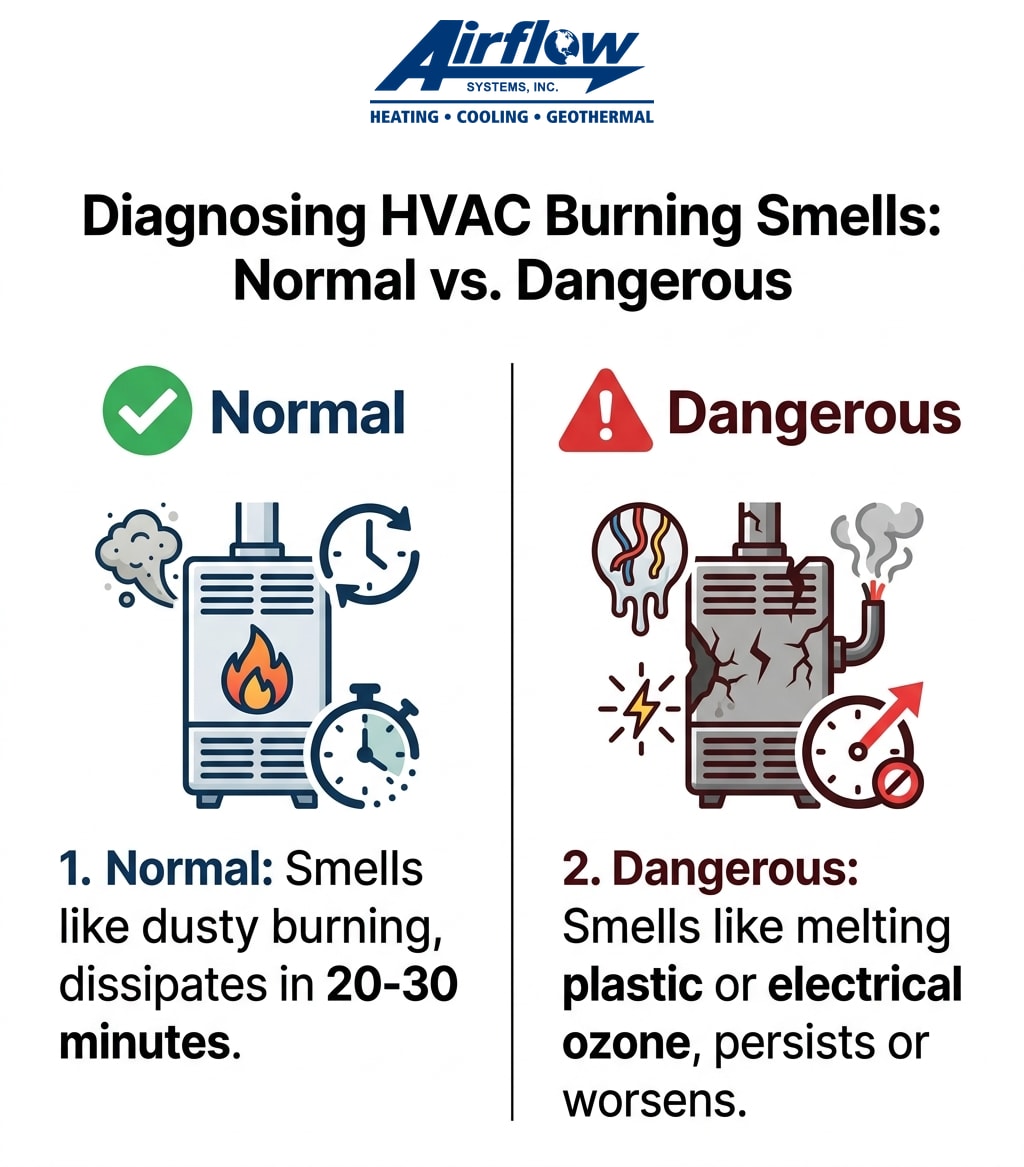
Knowing that dust burn-off is normal brings us to the next logical question: how long should you tolerate the smell before taking action? HVAC professionals rely on a very specific timeframe to separate standard seasonal operation from mechanical failure. The golden standard is the 20-to-30-minute rule for normal odor dissipation.
Establishing the Safe Window
When you power on your heat for the first time, make a note of the exact time on the clock. A harmless dust burn-off odor should peak within the first ten minutes of operation and then naturally clear out within 20 to 30 minutes of continuous running. Because the layer of dust is microscopic, it does not take long for the high temperatures of the heat exchanger to completely incinerate the debris. Once the dust is gone, the source of the smell is gone, and the circulating air will return to normal.
Active Monitoring Strategies
While you wait out this window, do not leave the house. Stay indoors and actively monitor the situation. To make the process more comfortable, open a few windows to ventilate the space and allow the initial burst of dusty air to escape. Keep your system running continuously during this test period rather than turning it on and off, as continuous heat is required to finish burning off the accumulated layer.
If the smell persists beyond this 30-minute window, or if the intensity of the odor grows stronger rather than fading away, the situation escalates from normal to requiring immediate attention. A smell that refuses to dissipate means there is a continuous, active source of combustion occurring inside the unit, which is never a safe scenario.
Red Flags: When to Shut Your System Down Immediately
While a dusty, dry burning smell is harmless, there are specific odor profiles that indicate a severe mechanical or electrical failure. If you detect any of these scents, the 20-to-30-minute rule for normal odor dissipation no longer applies. You must take immediate action to protect your home and your equipment.
Identifying Dangerous Odor Profiles
• Melting plastic or burning rubber: This scent is highly distinct from burning dust. It often smells sharp, fishy, or intensely chemical. This usually indicates overheating internal components, failing fan motors, or foreign objects (like a plastic toy or wrapper) that have found their way into the ductwork and are resting against a heating element.
• Electrical ozone or burning wires: An electrical short produces a very specific scent that smells like a mixture of chlorine, metallic sparks, and burning insulation. This indicates that wire casings are melting away or a capacitor is actively failing, which poses a severe fire hazard.
• Rotten eggs or sulfur: If you utilize a natural gas furnace, a sulfurous smell is an immediate emergency. Utility companies add this scent to natural gas to warn you of a leak. This is not a burn-off issue; it is an explosive hazard.
Immediate Actions to Take
If you detect the smell of melting plastic, electrical ozone, or burning wires at any point—even within the first five minutes of operation—do not wait to see if it clears up. Walk to your thermostat and switch the system to the "off" position immediately. Next, locate your home's main electrical panel and flip the breaker dedicated to your HVAC system to cut all power to the unit. By removing the power source, you stop the electrical arcing or overheating that is generating the dangerous smell.
Does the Type of HVAC System Affect the Smell?
The mechanics of how your home is heated play a significant role in how you experience that initial seasonal odor. While almost all systems experience some level of dust settling, the distribution and intensity of the burn-off smell vary greatly depending on the architecture of your equipment.
Comparing System Architectures
• Traditional Central Furnace — Odor Source: Main heat exchanger inside the central cabinet — Odor Distribution: Pushed simultaneously through all vents in the entire house — Prevention Strategy: Upgraded central air filters and sealed ductwork
• Ductless Mini Split Heat Pump — Odor Source: Heating coils inside individual wall-mounted air handlers — Odor Distribution: Localized strictly to the specific room where the unit operates — Prevention Strategy: Washing reusable indoor filters before the season begins
Traditional furnaces burn off dust at a single, central location—the massive heat exchanger. Because the blower fan immediately forces this air into the main supply trunk, the smell is broadcasted evenly and forcefully throughout every room in the house simultaneously. This is why a central furnace startup can feel so overwhelming.
Conversely, ductless units accumulate dust directly on the coils of their indoor air handlers. When you trigger a late fall/November heating startup on a ductless unit, the smell is typically localized strictly to that specific room. Furthermore, because ductless systems do not rely on expansive, hidden duct networks where extra dust can hide, the burn-off period is often shorter and less intense. If you are weighing the benefits of different zoned setups, reviewing a detailed comparison of mini splits and window units can shed light on how modern equipment handles seasonal transitions more cleanly.
Preventive Steps for a Smooth Seasonal Transition
While a brief dusty smell is normal, you do not have to simply accept a house full of smoke-scented air every autumn. By taking a proactive approach before the late fall/November heating startup arrives, you can drastically minimize the amount of debris waiting to be incinerated.
1. Replace or wash your air filters: The single most effective step you can take is starting the season with a clean filter. A clogged filter restricts airflow, which makes the system work harder, run hotter, and produce a stronger burn-off smell. Swap out disposable filters or thoroughly wash reusable ductless filters before making the switch from cooling to heating.
2. Clean your registers and return grilles: Grab a vacuum with a brush attachment and clean the exterior of all your supply vents and return grilles. Removing the visible dust from the room's entry points prevents the blower fan from immediately sucking that debris into the system.
3. Schedule a professional tune-up: Having a technician inspect your system in early fall ensures that the coils are cleaned and all wiring is secure before the heavy cold hits. This preventive maintenance physically removes the dust blanket from the heat exchanger, virtually eliminating the startup odor.
A critical safety warning: Never attempt to open the main cabinet to clean internal electrical components, heat exchangers, or blower motors yourself. These areas contain high-voltage wiring and sensitive mechanical parts. Deep internal cleaning requires specialized tools and must always be performed by a licensed professional. If you are looking to upgrade your system's filtration entirely before the next season, exploring modern air conditioning options with integrated air purification can keep your internal components cleaner year-round.
Frequently Asked Questions About Heating System Odors
Is it normal for a heater to smell like burning?
Yes, if it is the first time turning it on for the season, a brief burning odor is completely normal. It is simply settled dust burning off the heating elements and heat exchanger. As long as the smell resembles dry, dusty smoke and fades quickly, there is no cause for alarm.
How long does the burning smell last when turning on heat?
The odor should naturally dissipate within 20 to 30 minutes of continuous operation. The microscopic layer of dust incinerates rapidly once the system reaches its operating temperature. If it lasts longer than half an hour, the system should be turned off and inspected by a professional.
Can the burning smell from a heater be dangerous?
A dusty smell is harmless, but electrical or plastic smells indicate extreme danger. If you detect the sharp scent of melting wire casings or burning rubber, it points to an active electrical short or failing motor. Always shut the system down immediately if you suspect an electrical fire.
What does an electrical fire in an HVAC unit smell like?
It smells sharply of ozone, melting plastic, or burning rubber, often resembling the scent of a harsh chemical or a fishy, metallic spark. This is distinctly different from the mild, campfire-like smell of singed dust. Electrical odors will often grow stronger the longer the system runs, rather than fading away.
Why does my new ductless unit smell when on heat mode?
Even new units can have manufacturing oils or accumulated construction dust that needs to burn off during their first few operating cycles. The same 20-to-30-minute rule applies to new installations. Once those factory residues are incinerated, the unit should operate without any noticeable odor.
Making the Safe Call for Your Home's Comfort: Common Homeowner Questions Answered
Navigating the transition into colder weather shouldn't be a source of anxiety. Knowing the clear difference between normal dust burn-off and dangerous electrical smells is the best way to keep your home safe while keeping your family warm. Trust your senses, ventilate your space, and rely on the 20-to-30-minute rule for normal odor dissipation. If the scent clears up quickly, you can settle in and enjoy the warmth. If it smells like melting plastic or refuses to fade, shut the system down at the breaker.
As an independent, locally-owned HVAC company in Central Virginia, Airflow Systems prioritizes honest, practical advice—saving you an unnecessary diagnostic fee if it is just normal dust, but standing completely ready to help if it is a genuine mechanical issue. If you are ever unsure about the safety of your equipment, or if you are interested in exploring a new mini split installation and service to improve your home's air quality, reaching out for a professional diagnostic is always the smartest move. When it comes to common homeowner questions answered, our goal is always to provide you with the clarity and confidence you need to manage your home's comfort safely.
Book Expert Service Or Contact Us
Our Service Process
A Hassle-Free Service Experience
01
Consultation & Diagnosis
We start by listening to your needs and performing a thorough diagnosis of your system to recommend the best solution.
02
Transparent Quoting
We provide a clear, upfront estimate with no hidden fees, so you know exactly what to expect.
03
Expert Service & Follow-Up
Our factory-trained technicians complete the work to the highest standards, and we follow up to ensure your complete satisfaction.
testimonials
What Our Customers Are Saying
Our customers consistently praise our exceptional service and attention to detail, making us a trusted choice for all your HVAC needs.
where we operate
Service areas