

Choose an option to see quick actions and get help faster.
.svg)
The August AC Threat: Why Condensate Drain Lines Fail Now
August is here, and your cooling system has been running relentlessly for over two months. With the late summer heat pressing down on the region, your system is working overtime to keep your home comfortable. If you are wondering why your condensate drain line is most likely to clog in August, the answer lies in what has been building up inside your system since early June. An August drain line clog is rarely a sudden mechanical failure; rather, it is the climax of a predictable biological cycle.
To learn more about keeping your system running smoothly and preventing these late-summer breakdowns, explore our comprehensive air conditioning services.
The Hidden Cycle Inside Your System
Most homeowners never think about the small PVC pipe running from their indoor air handler to the outside of their house. This pipe, known as the condensate drain line, carries away the moisture your system removes from the indoor air. Recognizing the signs of an impending late-summer clog is critical to preventing indoor water damage. By the time August arrives, that pipe has seen a massive volume of water pass through it.
Understanding this biological cycle helps homeowners take proactive steps rather than reacting to a flooded floor. When you know what is happening inside those pipes, you can stop a minor buildup from turning into a major water disaster right at the peak of the cooling season.
The Heavy Lifting: What Your AC Extracted in June and July
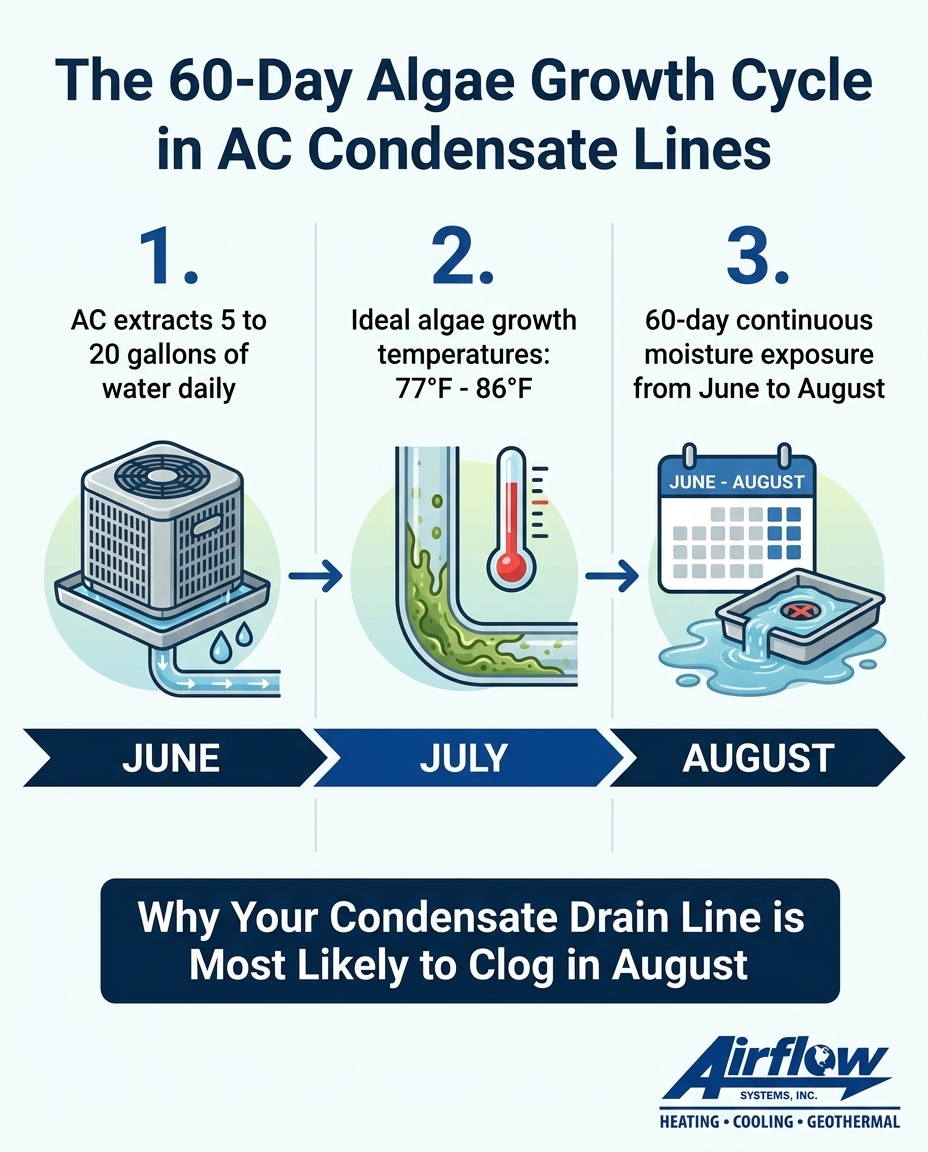
A standard central air conditioner acts as a heavy-duty dehumidifier, extracting 5 to 20 gallons of condensation per day during highly humid weather. Throughout June and July, this moisture constantly flows through the condensate drain line. To put that into perspective, your system is essentially funneling a small bathtub's worth of water through a narrow pipe every single week. If you ignore the signs of a struggling system under this heavy load, you might find yourself needing emergency AC repair before the season ends.
The Impact of Regional Humidity
Central Virginia experiences average summer morning humidity levels frequently exceeding 80%, forcing the AC to pull massive amounts of water from the indoor air. Warm air holds significantly more moisture than cool air. As your system draws in that warm, humid indoor air and passes it over the freezing cold evaporator coil, the moisture condenses into liquid water. This continuous flow creates a perpetually damp, warm environment inside the PVC piping.
• Early June — System Workload: Moderate cooling, increasing dehumidification — Moisture Volume Extracted: 5 to 10 gallons daily — Pipe Condition: Damp, beginning to collect airborne dust
• Mid-July — System Workload: Heavy, continuous cooling cycles — Moisture Volume Extracted: 10 to 15 gallons daily — Pipe Condition: Constantly wet, warm, and dark
• Late August — System Workload: Maximum sustained cooling and dehumidification — Moisture Volume Extracted: 15 to 20 gallons daily — Pipe Condition: Never dries out, heavy biological buildup
Because the system runs almost constantly to keep up with the summer heat, the drain line never gets a chance to fully dry out. This constant state of moisture lays the perfect groundwork for biological growth. The water sitting in the drain pan and flowing through the line creates an ideal habitat for microscopic contaminants to thrive.
The 60-Day Incubation Period: How Algae Takes Over
The Problem: Algae and mold spores naturally circulate in the air inside your home. While your air filter catches many particles, microscopic spores still make their way into the condensate pan and drain line. Once they settle into that constantly wet environment, they begin to multiply.
The Cause: These biological contaminants thrive in dark environments with temperatures between 77 and 86 degrees Fahrenheit. The inside of your indoor air handler and the attached PVC piping provide exactly this climate. The 60-day period from early June to August serves as the perfect incubation timeline. During the first few weeks of summer, the growth is merely a thin, microscopic biofilm clinging to the inside of the pipe. However, as the weeks pass and the moisture continues to feed it, the growth accelerates.
The Solution: By late summer, what started as a microscopic biofilm thickens into a gelatinous mass capable of completely blocking the pipe. Breaking this 60-day cycle requires proactive intervention before the mass becomes dense enough to stop water flow entirely. Understanding this timeline is the key to preventing the inevitable August backup.
Early Warning Signs of an Impending Drain Line Clog
A drain line rarely blocks completely without giving you a few subtle hints first. Knowing how to inspect your condensate drain line can help you catch these issues early. If you know what to look and listen for as late summer approaches, you can call for professional help before water starts ruining your floors or drywall.
• Unusual gurgling or bubbling sounds: If you hear a strange gurgling noise coming from your indoor air handler, it usually means water is struggling to bypass a partial blockage. Air bubbles get trapped as the water slowly drains past the growing algae mass.
• A persistent musty or damp smell: Biological growth smells like a damp basement or wet socks. If you notice a lingering musty odor near the AC unit or emerging from your air vents, algae or mold is likely thriving in your drain pan.
• Visible water pooling: Check the base of your indoor unit. If you see water pooling around the floor, or if there is excessive dripping from the secondary drain pipe outside your home, the primary line is severely restricted.
• Sluggish cooling performance: When water backs up, the system struggles with internal humidity. Your home may feel clammy and sticky, even if the thermostat says the temperature has reached your desired setting.
Catching these symptoms in early August gives you a brief window to address the biological buildup before it triggers a complete system shutdown or causes severe water damage to your property.
The Float Switch: Your System's Last Line of Defense
Modern AC units are equipped with a critical safety device known as a float switch, which is mounted directly in or on the condensate drain pan. When algae blocks the drain line, the condensation has nowhere to go, causing water to back up into the pan. As the water level rises dangerously close to the edge, it lifts a small buoyant mechanism inside the switch.
How the Protective Sequence Works
1. Water Accumulation: The gelatinous algae mass stops the flow of water, causing the drain pan to fill rapidly during a cooling cycle.
2. Float Elevation: The rising water lifts the float switch mechanism.
3. Circuit Interruption: Once the float reaches a certain height, it breaks the low-voltage electrical circuit connecting your thermostat to your air conditioner.
4. System Shutdown: The AC shuts off automatically to prevent the pan from overflowing and causing massive water damage to your ceilings, walls, or floors.
This mechanism is exactly why your system might suddenly stop working on a hot day in Charlottesville, VA. A tripped float switch is a primary suspect when the thermostat is blank or the outdoor unit refuses to turn on. While it is frustrating to lose cooling during a heatwave, the float switch is actually doing its job perfectly—sacrificing your temporary comfort to save your home from thousands of dollars in water damage.
Why Clearing a Drain Line Isn't a DIY Project
When faced with a clogged pipe, many homeowners instinctively reach for household chemicals or tools from the garage. However, attempting to clear a biological clog with household chemicals can severely damage the PVC piping or the delicate AC evaporator coil. Pouring bleach into the drain pan, a common DIY myth, can cause volatile reactions with the metal components of your system, leading to rapid corrosion and expensive coil replacements.
The Risks of DIY Clearing
Using high-pressure air or wet/dry vacuums incorrectly can rupture the drain line behind your walls, causing hidden leaks that you might not discover until mold begins growing in your drywall. The joints holding the PVC pipes together are not designed to withstand high-pressure blasts.
• Pouring Bleach — The Intended Result: Kill the algae and clear the pipe — The Dangerous Reality: Corrodes copper coils, degrades PVC cement, voids warranties
• High-Pressure Air — The Intended Result: Blow the clog out the end of the pipe — The Dangerous Reality: Blows apart PVC joints inside walls, causing hidden water leaks
• Wire Hanger / Snake — The Intended Result: Physically push the blockage out — The Dangerous Reality: Punctures the drain pan or gets permanently stuck in 90-degree pipe elbows
Licensed professionals use specialized tools to safely extract the biological mass without harming the HVAC equipment. They know exactly how much suction or pressure the system can handle. Furthermore, proper clearing also involves treating the system to delay future algae growth, which requires professional-grade solutions that are safe for both your equipment and your indoor air quality.
Professional Prevention: Breaking the Algae Cycle
The most effective way to handle the late-summer humidity curve is to prevent the 60-day algae cycle from completing in the first place. Routine maintenance flushes the condensate system before the biological growth can peak. When a professional cleans the line early in the season, the algae has to start its growth cycle all over again, ensuring the pipe remains clear through the hottest months.
The Value of Consistent Check-Ups
During a professional visit, technicians can install specialized treatments, such as time-release biocide tablets, in the drain pan to inhibit biological growth throughout the entire season. Regular inspections ensure the float switch and drain line are functioning correctly before the heaviest humidity hits. One local homeowner reached out for their routine bi-annual HVAC maintenance check-up. By having an experienced technician perform a thorough inspection and provide valuable advice on managing the system, their equipment was kept in top performance through the hottest months, avoiding the dreaded late-summer breakdown entirely.
Independent, local HVAC experts understand exactly how Central Virginia's summer humidity curve impacts equipment longevity, allowing them to time maintenance perfectly. Consistent check-ups keep the entire HVAC system running efficiently, preventing unexpected late-summer shutdowns. Enrolling in a routine maintenance plan is the best way to stay ahead of the curve and ensure your drain line remains clear year after year.
Protect Your Home Before the Drain Line Backs Up
As we have seen, an August drain line clog is a predictable biological event, not a random failure. After 60 days of acting as a heavy-duty dehumidifier, your system's condensate line becomes the perfect incubator for thick, gelatinous algae growth. Understanding why your condensate drain line is most likely to clog in August empowers you to take action before the water stops flowing.
If you notice musty odors, gurgling sounds, or intermittent shut-offs, professional intervention is necessary. Do not wait for the float switch to shut down your system on the hottest day of the year, and do not risk damaging your equipment with DIY chemical treatments. Explore professional maintenance options to keep your system clear and your home protected from water damage. A clear, regionally specific approach to maintenance ensures you can enjoy a comfortable, worry-free late summer.
Frequently Asked Questions
Why does my AC drain line keep clogging in the summer?
Your AC drain line clogs frequently in the summer due to continuous biological growth fueled by constant moisture. As your system extracts humidity from the air, the drain line remains perpetually wet and warm. This creates an ideal environment for airborne algae and mold spores to settle, multiply, and eventually form a thick mass that blocks water flow.
How do I know if my condensate drain line is clogged?
The most obvious sign of a clogged condensate drain line is water pooling around the base of your indoor air handler. You may also notice a persistent musty smell coming from your vents, hear unusual gurgling noises from the unit, or find that your air conditioner is shutting off unexpectedly during a cooling cycle.
What happens if your AC drain line is clogged?
When your AC drain line is clogged, the condensation cannot exit the home and backs up into the drain pan. If your system has a functioning float switch, it will automatically shut off the air conditioner to prevent an overflow. If the switch fails or is missing, the water will overflow the pan, causing significant water damage to your ceilings, walls, or floors.
What are the signs of a clogged AC drain line?
Warning signs include a blank thermostat, a system that refuses to turn on, and visible water dripping from the indoor unit. You might also notice a damp, swampy smell in your home, sluggish cooling performance, or excessive water dripping from the secondary drain pipe located outside your house.
Why does my AC shut off intermittently in late summer?
Intermittent shut-offs in late summer are often caused by a tripped float switch responding to a partially clogged drain line. As water backs up, it trips the switch and stops the system; once the water slowly drains past the partial clog, the switch resets and the AC turns back on. This cycle will continue until the line is completely blocked or professionally cleared.
How fast can algae grow in an AC condensate line?
Algae can begin forming a microscopic biofilm within just a few days of constant moisture exposure. Under peak summer conditions, with temperatures between 77 and 86 degrees Fahrenheit, it typically takes about 60 days for this biofilm to multiply and thicken into a gelatinous mass large enough to completely block a standard PVC drain line.
Book Expert Service Or Contact Us
Our Service Process
A Hassle-Free Service Experience
01
Consultation & Diagnosis
We start by listening to your needs and performing a thorough diagnosis of your system to recommend the best solution.
02
Transparent Quoting
We provide a clear, upfront estimate with no hidden fees, so you know exactly what to expect.
03
Expert Service & Follow-Up
Our factory-trained technicians complete the work to the highest standards, and we follow up to ensure your complete satisfaction.
testimonials
What Our Customers Are Saying
Our customers consistently praise our exceptional service and attention to detail, making us a trusted choice for all your HVAC needs.
where we operate
Service areas