

Choose an option to see quick actions and get help faster.
.svg)

Why Knowing How to Inspect Your Condensate Drain Line in Humid Weather Can Save Your Home
Knowing how to inspect your condensate drain line in humid weather is one of the most practical things a Central Virginia homeowner can do to protect their home and keep their AC running strong all summer.
Here is a quick overview of the inspection process:
1. Turn off power at the thermostat and circuit breaker before touching anything.
2. Locate the drain line and pan near your indoor air handler — look for a PVC pipe and a shallow drain pan beneath the unit.
3. Inspect the drain pan with a flashlight for standing water, rust, slime, or musty odors.
4. Check the drain line opening for visible blockages, biofilm, or slow drainage.
5. Pour water into the cleanout tee and watch for steady flow at the outdoor exit.
6. Use a wet/dry vacuum on the outdoor pipe end to clear any minor clogs.
7. Flush with distilled white vinegar (about 1 cup) to kill algae and biofilm buildup.
Summers in Charlottesville, VA bring serious humidity. On a peak summer day, your AC can pull anywhere from 5 to 20 gallons of water out of the air — and every drop of it has to travel through a small PVC pipe to exit your home safely. When that pipe gets blocked by algae, bacterial sludge, or debris, water backs up fast. The result can be water damage to your ceilings, floors, and walls, mold growth inside your system, or your AC shutting down entirely on the hottest day of the year.
The good news is that a simple inspection takes less than 30 minutes and can catch problems before they turn into serious repairs.
How to inspect your condensate drain line in humid weather terms to know:
• ac maintenance checklist for virginia homeowners
• how to clean your outdoor ac unit safely
What is a Condensate Drain Line and Why is it Critical?
To understand why this tiny pipe is so important, we have to look at how your air conditioner actually cools your home. Your AC doesn't just lower the temperature; it is also a massive dehumidifier.
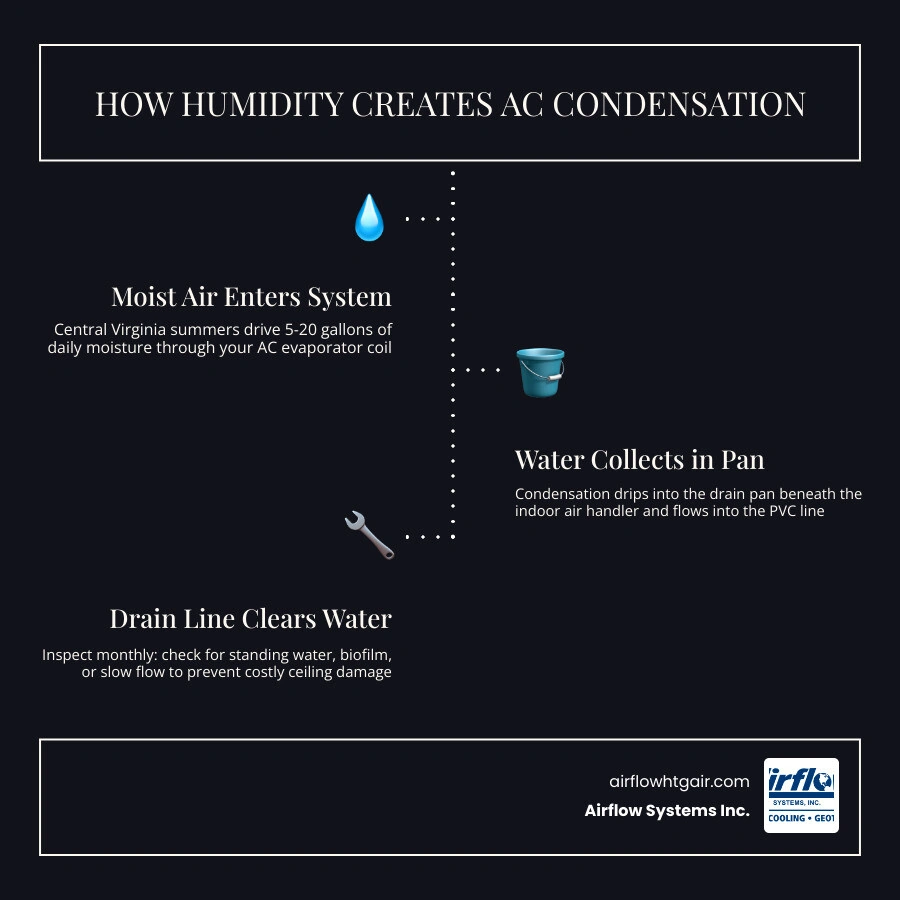
As warm, humid indoor air is pulled across the freezing cold evaporator coil of your indoor unit, moisture from the air condenses on the coil’s surface. Think of it like a cold glass of sweet tea sitting on a porch in Charlottesville on a humid July afternoon—condensation naturally forms and drips down.
This water collects in a drain pan located directly beneath the evaporator coil. From there, it flows into the condensate drain line—typically a 3/4-inch white PVC pipe—which uses gravity to carry the water safely outside or to a nearby floor drain.
During our thick Central Virginia summers, your AC works overtime. When relative humidity levels soar, your system can easily pull 5 to 20 gallons of water out of your indoor air every single day.
If your condensate drain line is clean and clear, this water flows away unnoticed. But if the line is blocked, that massive volume of water has nowhere to go but to overflow the pan and spill into your home. Keeping this line clean does more than prevent water damage, too; maintaining clean drain lines can improve your HVAC system’s overall efficiency by 10% to 15%. When your system can drain freely, it doesn't have to work against stagnant, humid air pockets inside the air handler.
To get your entire cooling system in peak shape for the humid months, it helps to review How to Prepare Your AC for Summer as part of your seasonal routine.
How to Inspect Your Condensate Drain Line in Humid Weather
As we navigate the hot, sticky days of June 2026, keeping a close eye on your HVAC system is essential. In Central Virginia, high humidity levels create the perfect breeding ground for biological growth inside dark, damp PVC pipes. Performing monthly checks during the cooling season is the best defense against sudden system failures.
If you want to ensure your system is fully prepared to handle the summer heat, scheduling professional AC Maintenance Charlottesville VA is a great way to gain peace of mind. However, learning how to inspect your condensate drain line in humid weather is a straightforward DIY task that any homeowner can master.
Let’s break down exactly how to find, evaluate, and test your system's drainage setup.
Locating the Drain Line and Drain Pan
The first step is finding the equipment. Your condensate drain line is connected to your indoor air handler or furnace unit. Depending on the layout of your Central Virginia home, this unit could be located in:
• A basement or utility closet
• An unconditioned attic
• A crawlspace or garage
Look for a white PVC pipe extending from the side of the indoor unit. Near the base of the unit, you will also find the condensate drain pan.
Most modern installations feature two pans:
1. The Primary Drain Pan: This is built directly inside the unit under the evaporator coils to catch immediate runoff.
2. The Secondary (Auxiliary) Drain Pan: This is a larger, shallow metal or plastic pan placed directly underneath the entire indoor unit. It acts as a safety net to catch water if the primary pan overflows.
If you are having trouble finding these components or notice that your AC is acting up, you can read our guide on AC Not Cooling Properly: What to Check First to help diagnose the issue.
Identifying Signs of a Clogged or Failing Line
Once you have located the drain pan and line, grab a flashlight and look for these common warning signs of a failing drainage system:
• Standing Water in the Secondary Pan: Under normal conditions, the secondary drain pan should be completely dry. If you see even a small puddle of standing water, your primary drain line is either partially or fully clogged.
• Rust Stains: Rust on a metal drain pan or around the bottom of your air handler indicates chronic, slow moisture backups.
• Musty, Moldy Odors: If your home smells damp or mildewy when the AC kicks on, standing water in the drain pan is likely harboring mold growth.
• Zooglea and Biofilm: Zooglea is a thick, gelatinous bacterial sludge that thrives in warm, dark, wet environments. Unlike typical green algae, zooglea forms a tough, gray-brown slime plug that can completely choke a 3/4-inch PVC pipe in a matter of weeks during high-humidity periods.
If biological growth or clogs go unnoticed, they can cause the evaporator coils to freeze up. If you suspect this has already happened, check out our troubleshooting tips on Ice Forming on Your AC Unit: Causes and What to Do.
Step-by-Step Inspection and Testing Process
Now that you know what to look for, let’s go through the physical testing process. This step-by-step guide will help you verify that your line is actively draining water out of your home. Before starting any hands-on inspection, make sure to check out these AC Troubleshooting Tips Before Calling a Pro to ensure you are operating safely.
Why Knowing How to Inspect Your Condensate Drain Line in Humid Weather Prevents Water Damage
Before we begin, it’s important to understand the role of safety devices like the float switch. Most modern AC systems are equipped with a float switch installed on the primary or secondary drain pan. If water rises too high due to a clog, the float rises, tripping a switch that immediately shuts down the entire AC system.
While a sudden system shutdown on a humid afternoon is frustrating, it is actually saving your home from catastrophic water damage. If your system lacks a float switch, or if the switch fails, the water will overflow. This can lead to ruined flooring, warped drywall, moldy insulation, and sagging ceilings.
A quick 5-minute check of your drain pan can prevent a $5,000 insurance claim for water damage. If you notice signs of moisture damage or if your system has shut down unexpectedly, it is wise to review the Signs Your AC Needs Repair Before Summer to catch issues early.
Best Practices on How to Inspect Your Condensate Drain Line in Humid Weather to Catch Early Blockages
Follow these steps to safely inspect and test your drain line:
1. Shut Off the Power: Safety first! Turn off your air conditioner at the thermostat. Next, head to your home's main electrical panel and flip the circuit breaker for your indoor AC unit to the "off" position.
2. Perform a Visual Check: Inspect both the primary and secondary drain pans. If you see standing water, you have an active clog that must be cleared.
3. Locate the Cleanout Tee: Look for a T-shaped PVC pipe fitting on your drain line near the indoor unit. It usually has a removable cap on top. If the cap is glued shut, do not force it; however, in most systems, it should lift off easily.
4. Conduct a Water Flow Test: Remove the cap from the cleanout tee and slowly pour about a cup of water into the line.
5. Verify Outdoor Flow: Walk outside to where the PVC pipe exits your home (usually near the outdoor condenser unit). Watch to see if the water you poured flows out steadily. If the water drains slowly or backs up out of the cleanout tee inside, you have a partial blockage.
6. Use the Wet/Dry Vac Method: If you suspect a clog, you can perform a quick 60-second fix. Take a wet/dry shop vacuum to the outdoor end of the PVC pipe. Wrap a rag around the vacuum hose to create a tight seal against the PVC pipe, and run the vacuum for about 60 seconds. This suction will easily pull out plugs of algae, dirt, and zooglea.
7. Flush with Vinegar: Once the line is clear, pour 1 cup of distilled white vinegar down the indoor cleanout tee. Let it sit for 30 minutes to break down any remaining biofilm, then flush it with clean water.
For more tips on keeping your system clean, you can read about How to Clean Your AC Condenser Unit Safely to maintain the outdoor portion of your AC.
To help you decide when to handle this yourself and when to call in our team, we have put together this comparison table:
• Frequency — DIY Inspection: Monthly (April - October) — Professional Maintenance: Annually (Spring/Summer)
• Visual Pan Check — DIY Inspection: Yes (Using a flashlight) — Professional Maintenance: Yes (Comprehensive inspection)
• Minor Clog Clearing — DIY Inspection: Yes (Using a wet/dry vacuum) — Professional Maintenance: Yes (Using professional tools)
• Vinegar Flush — DIY Inspection: Yes (To prevent algae) — Professional Maintenance: Yes (Biocide treatments used)
• Safety Switch Testing — DIY Inspection: No (Risk of electrical damage) — Professional Maintenance: Yes (Full safety switch testing)
• Pipe Slope & Integrity — DIY Inspection: No (Hard to diagnose) — Professional Maintenance: Yes (Verifies pitch and connections)
• Coil Inspection — DIY Inspection: No (Requires opening unit) — Professional Maintenance: Yes (Deep cleaning of evaporator coils)
Frequently Asked Questions About AC Drain Lines
Can I use bleach to clean my condensate line?
We strongly recommend against using bleach to clean your condensate drain line. While bleach is highly effective at killing biological growth, it presents several serious risks to your HVAC system and your home:
• Damages PVC Glue: Chemical bleach can degrade the cement and glue holding your PVC drain pipe connections together, leading to hidden leaks inside your walls or ceilings.
• Toxic Fumes: Pouring bleach into your air handler can pull toxic chloramine fumes directly into your ductwork, spreading harsh chemical odors throughout your living spaces.
• Corrosion: Bleach is highly corrosive to the metal components inside your air handler, including the evaporator coil and the drain pan itself.
Instead, use distilled white vinegar. It is safe for PVC pipes, environmentally friendly, and highly effective at killing algae, mold, and bacterial zooglea without damaging your system.
Why does my AC shut off when it is highly humid outside?
When the humidity outside is exceptionally high, your air conditioner removes massive volumes of water from your indoor air. If your primary condensate drain line has a partial restriction—such as a buildup of biofilm or a slow-moving clog—it won't be able to drain the water as fast as the coils are producing it.
As a result, water backs up into the drain pan. This triggers the safety float switch, which immediately cuts power to your system to prevent an overflow. If your system suddenly stops running on a hot day, this safety mechanism is likely the cause.
For more information on electrical and power-related shutdowns, you can read our guide on why your AC Circuit Breaker Keeps Tripping: What It Means.
How often should I check my drain line in Virginia?
In Central Virginia, you should perform a visual check on your condensate drain line and pan once a month from April through October.
Our local cooling season starts in the spring and runs well into autumn, with peak humidity hitting hard in July and August. Consistently checking your pan and pouring a cup of vinegar down the cleanout tee every 30 days during these months will keep biological growth from taking hold.
To ensure your system is fully prepared for the seasonal shift, the spring is the Best Time of Year to Schedule Your AC Tune-Up.
Conclusion
Knowing how to inspect your condensate drain line in humid weather is a simple but highly effective way to protect your Central Virginia home from unexpected water damage and system breakdowns. By taking just a few minutes each month during the humid summer of June 2026 to check your drain pan, test your water flow, and flush the line with vinegar, you can keep your system running smoothly.
While monthly DIY inspections are highly beneficial, they do not replace the need for comprehensive professional care. If you run into a stubborn clog, notice water damage, or want the peace of mind that comes with a complete system check, we are here to help.
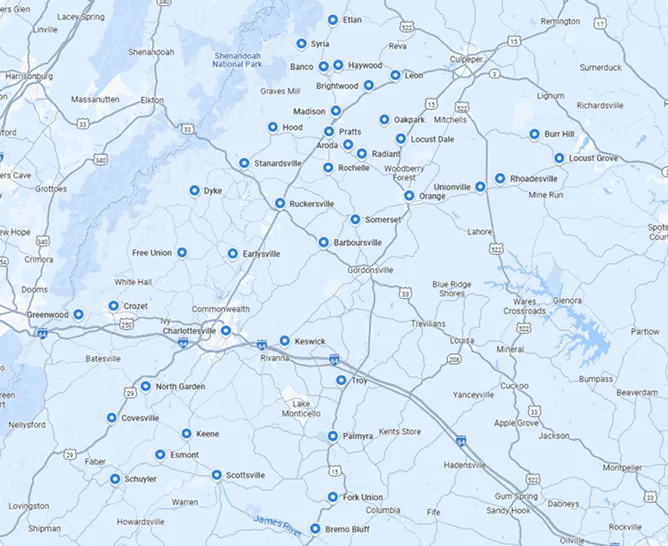
At Airflow Systems Inc., we provide trusted, professional Air Conditioning maintenance, repairs, and installations throughout Charlottesville, VA and the surrounding Central Virginia region. Reach out to our family-owned team today to schedule your seasonal tune-up and keep your home cool and dry all summer long!
Book Expert Service Or Contact Us
Our Service Process
A Hassle-Free Service Experience
01
Consultation & Diagnosis
We start by listening to your needs and performing a thorough diagnosis of your system to recommend the best solution.
02
Transparent Quoting
We provide a clear, upfront estimate with no hidden fees, so you know exactly what to expect.
03
Expert Service & Follow-Up
Our factory-trained technicians complete the work to the highest standards, and we follow up to ensure your complete satisfaction.
testimonials
What Our Customers Are Saying
Our customers consistently praise our exceptional service and attention to detail, making us a trusted choice for all your HVAC needs.
where we operate
Service areas