


Choose an option to see quick actions and get help faster.
.svg)
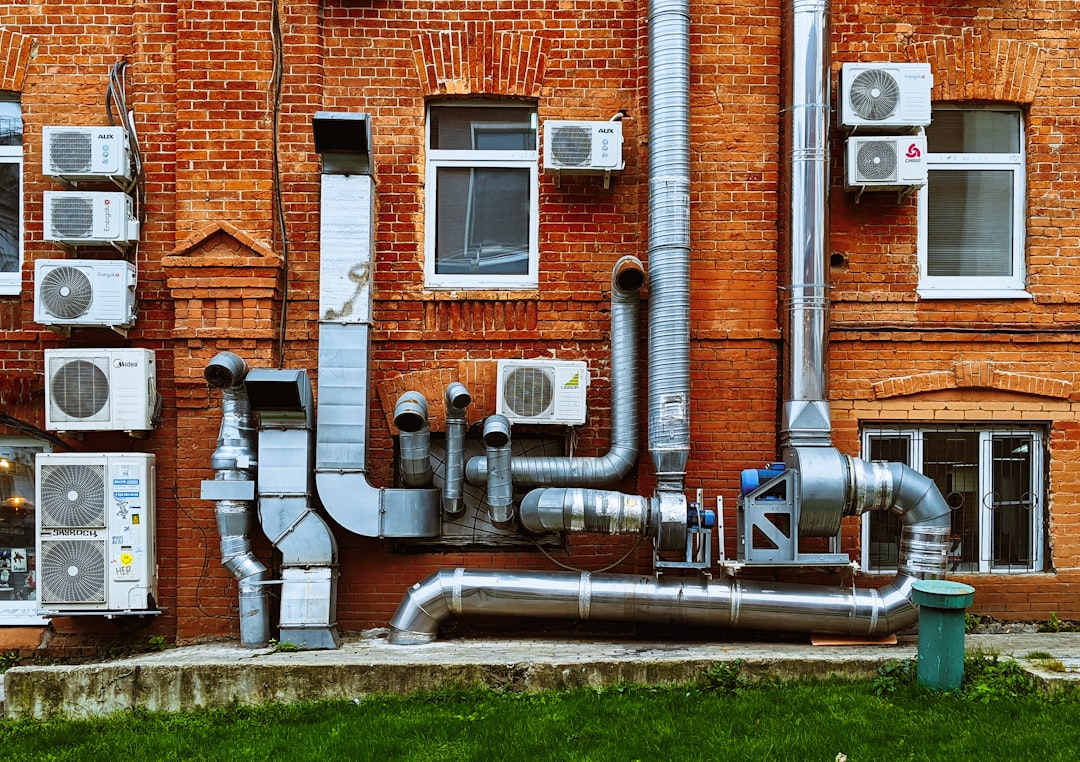
What Actually Happens Inside Your AC? A Simple Explanation
If you've ever wondered how your air conditioner works explained simply, here's the short answer: your AC doesn't create cold air — it removes heat from the air inside your home and moves it outside, leaving your rooms cooler and more comfortable in the process.
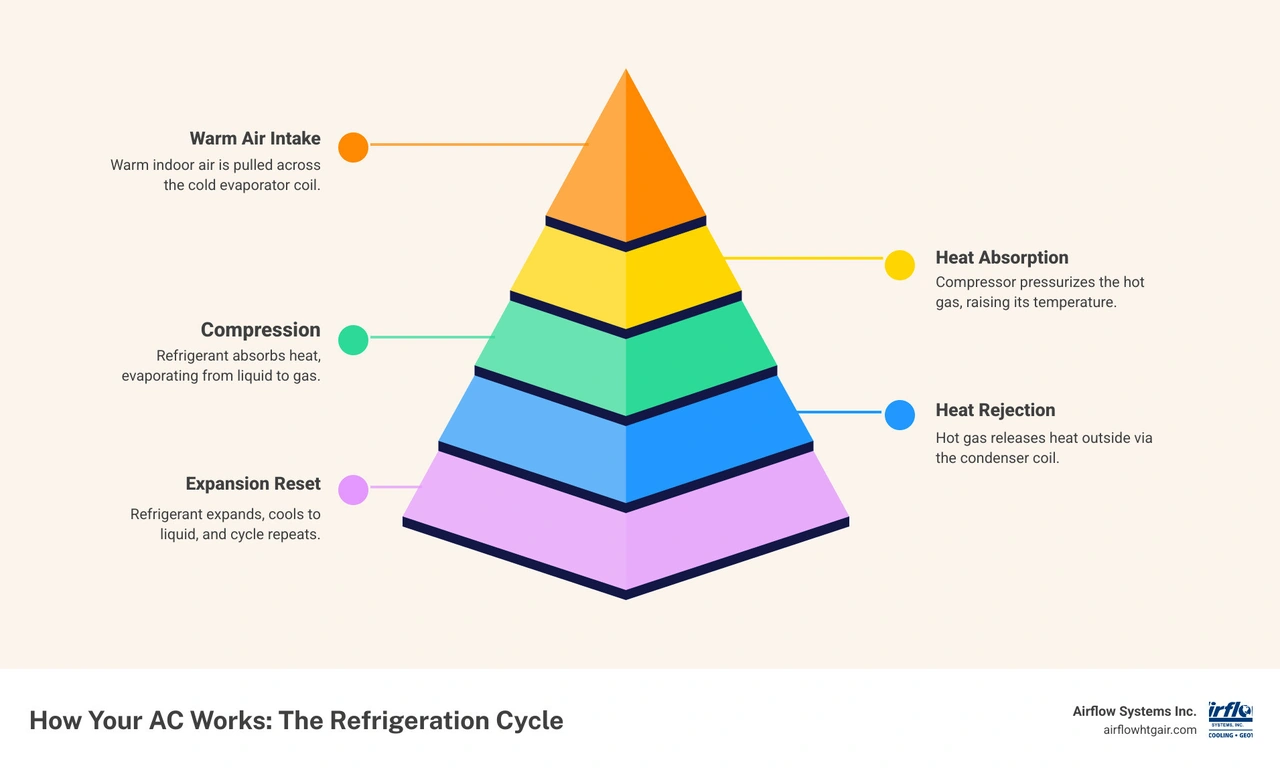
How an air conditioner works in 5 simple steps:
1. Warm indoor air is pulled across a cold indoor coil (the evaporator coil)
2. Refrigerant inside the coil absorbs the heat, changing from a liquid into a gas
3. The compressor pressurizes the gas, raising its temperature even further
4. The hot gas travels outside to the condenser coil, where the heat is released into the outdoor air
5. The refrigerant cools back into a liquid and the cycle starts all over again
That loop repeats continuously until your thermostat tells the system to stop. It's physics, not magic — and once you understand it, everything about your AC starts to make a lot more sense.
For homeowners in Charlottesville, VA and the surrounding Central Virginia region, understanding how your system works is the first step toward keeping it running efficiently through the long, humid summers that push cooling systems to their limits. Whether your AC is struggling to keep up or you're just curious about what's happening behind the vents, this guide breaks it all down in plain language.
The Science of Chill: How Your Air Conditioner Works Explained Simply

To understand how your air conditioner works explained simply, we have to look at the "Second Law of Thermodynamics." Don't worry, we aren't going back to high school physics class for a test. All you really need to know is that heat naturally wants to move from a warm place to a cooler place.
Think of your air conditioner as a "heat mover." It uses a chemical messenger called refrigerant to grab heat from your living room and carry it outside. This is a process of heat transfer. Even on a 95-degree day in Charlottesville, your AC can dump heat outside because the system manipulates the refrigerant to be even hotter than the outdoor air.
One of the biggest factors that makes your AC work harder is the local climate. In Central Virginia, it’s not just the temperature; it’s the "mugginess." How Heat and Humidity Drive Up Your Cooling Costs is a great resource to understand why your unit seems to run longer when the air feels thick and damp.
The Basic Principle of How Your Air Conditioner Works Explained Simply
The magic happens through a process called "phase conversion." You see this every day: when you boil water, it turns from a liquid to a gas (steam). To make that change, the water has to absorb a lot of heat.
Your air conditioner does the same thing but in reverse. It uses a liquid that "boils" at a very low temperature. As this liquid evaporates into a gas inside your home, it sucks the heat right out of the air. When that gas is sent outside and squeezed back into a liquid (condensation), it releases that trapped heat. It’s an endless, elegant cycle of absorbing and releasing energy.
Why Refrigerant is the Secret Ingredient
Refrigerant is the lifeblood of your system. It is a special chemical compound designed to change states from liquid to gas at exactly the right temperatures to move heat efficiently.
Over the years, these chemicals have evolved. Older systems used R-22 (Freon), which was phased out due to its impact on the ozone layer. Then came R-410A, and now, in 2026, we are seeing a shift toward even more environmentally friendly options like R-32. These modern refrigerants have a lower "Global Warming Potential" (GWP) and are actually better at carrying heat, which means your system doesn't have to work as hard to keep you cool.
The Four Main Components of Your Cooling System
Your AC is like a well-rehearsed band; if one member is off-beat, the whole performance suffers. To understand the mechanical cooling process, you need to know the four "stars" of the show. If you ever notice strange noises or a lack of cooling, knowing these parts helps you identify How to Tell If Your AC Compressor Is Failing or if a different component is the culprit.
The Compressor: The Heart of the System
The compressor is the "heart" because it pumps the refrigerant through the entire system. Located in the outdoor unit, its job is to squeeze (compress) the refrigerant gas. When you compress a gas, its temperature rises significantly. This is why the air blowing out of your outdoor unit feels like a blast furnace—the compressor has made the refrigerant hot enough to dump its heat into the already-warm Virginia summer air.
Evaporator vs. Condenser Coils
These two coils are where the actual heat exchange happens:
• Evaporator Coil (Indoor): Located inside your home (usually in the attic or a closet), this coil is filled with cold, liquid refrigerant. As indoor air blows over it, the refrigerant absorbs the heat.
• Condenser Coil (Outdoor): This is the large coil in your backyard unit. It takes the hot gas from the compressor and allows it to release that heat to the outdoors.
Because the outdoor unit is exposed to the elements, it can get covered in dirt, pollen, and grass clippings. Learning How to Clean Your AC Condenser Unit Safely is a vital part of maintaining that heat-rejection process.
The Expansion Valve and Blower Fan
The expansion valve is the "metering device." It acts like a nozzle on a spray bottle, turning the high-pressure liquid refrigerant into a low-pressure mist before it enters the evaporator coil. This sudden drop in pressure makes the refrigerant incredibly cold.
Finally, the blower fan is the unsung hero. It’s the fan that actually moves the air through your ductwork, ensuring that the "conditioned" air reaches every corner of your home.
A Step-by-Step Look at the Refrigeration Cycle
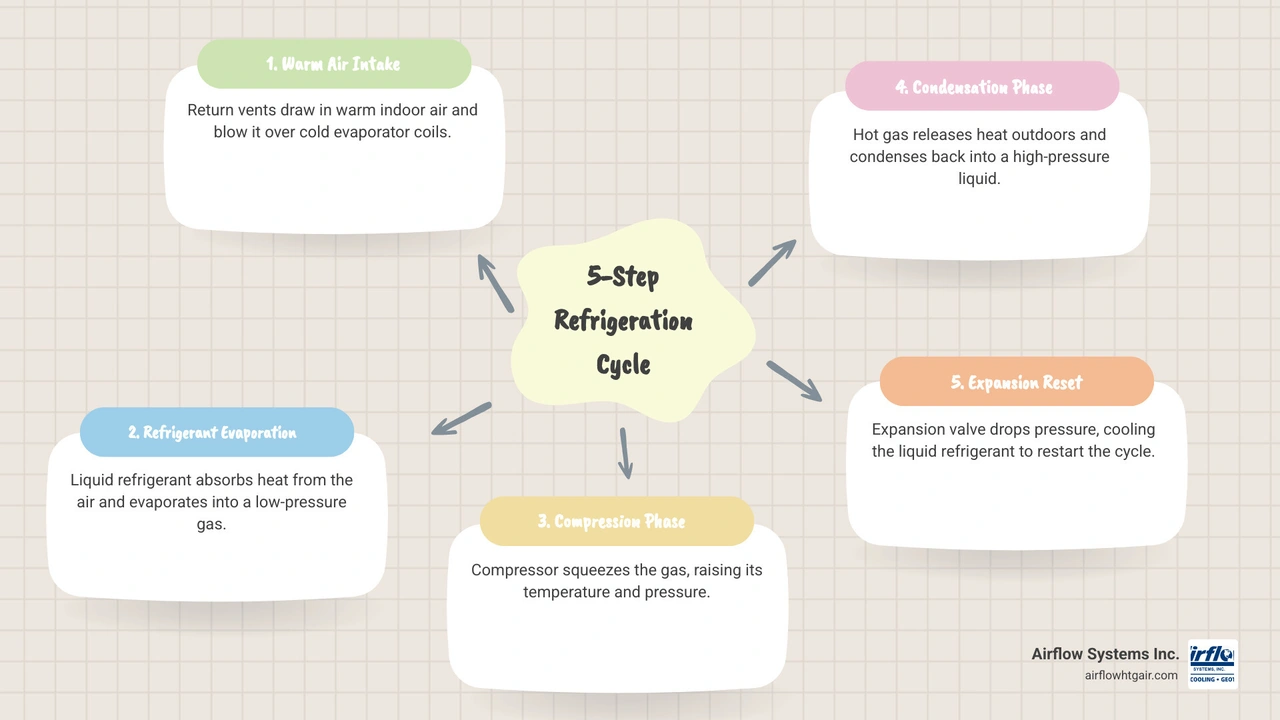
Now that we know the players, let’s watch the game. The refrigeration cycle is a continuous loop. If the loop is broken—by a leak or a mechanical failure—you'll notice. If you find your AC Not Cooling Properly? What to Check First is your best starting point for troubleshooting.
Understanding the Cycle: How Your Air Conditioner Works Explained Simply
1. Warm Air Intake: Your home's return vents suck in warm indoor air and push it over the cold evaporator coils.
2. Evaporation: The refrigerant inside the coils absorbs the heat and evaporates into a gas.
3. Compression: This gas travels to the outdoor unit, where the compressor squeezes it, making it very hot.
4. Condensation: A large fan blows outdoor air over the condenser coils, "rejecting" the heat to the outside. The refrigerant turns back into a liquid.
5. Expansion: The liquid refrigerant passes through the expansion valve, cools down rapidly, and heads back inside to start over.
How Your AC Removes Humidity
One of the best "side effects" of air conditioning is dehumidification. As warm, moist air from your Charlottesville home hits the freezing-cold evaporator coil, the moisture in the air reaches its "dew point" and condenses into water droplets—just like a cold glass of iced tea "sweats" on a porch in July.
This water collects in a pan and flows out through a condensate drain line. Removing this moisture is actually what makes you feel comfortable. Drier air allows your sweat to evaporate faster, which is your body's natural way of cooling down.
• 30% — Perceived Temperature (at 75°F Actual): 73°F (Feels Crisp)
• 50% — Perceived Temperature (at 75°F Actual): 75°F (Comfortable)
• 70% — Perceived Temperature (at 75°F Actual): 77°F (Sticky)
• 90% — Perceived Temperature (at 75°F Actual): 80°F+ (Miserable)
Recirculation vs. Outside Air
A common myth is that your AC pulls fresh air from outside. In reality, most residential systems (especially split-systems common in Central Virginia) recirculate the air already inside your home. It pulls air in through the filters, cools it, and sends it back out. This is why keeping your windows closed is so important—if you leave them open, your AC is trying to cool the entire neighborhood!
Choosing the Right System for Your Charlottesville Home
Every home in Central Virginia is unique. A historic home near UVa might have different needs than a new build in Albemarle County. When choosing a system, we look at "tonnage"—which isn't how much the unit weighs, but how much heat it can remove. One "ton" of cooling is equal to the amount of heat it takes to melt 2,000 pounds of ice in 24 hours (or 12,000 BTUs per hour).
Central Air vs. Ductless Mini-Splits
• Central Air (Split-Systems): These use a network of ducts to cool the whole house at once. They are the standard for most American homes.
• Ductless Mini-Splits: These are perfect for home additions or older homes where adding ductwork is impossible. They allow for "zoning," meaning you can cool the upstairs bedroom without wasting energy on the downstairs kitchen. Check out our Central AC vs Ductless Mini-Split Comparison for a deeper dive.
Modern Efficiency and SEER2 Ratings
In 2026, efficiency is the name of the game. We use SEER2 (Seasonal Energy Efficiency Ratio) to measure how much cooling you get for every dollar of electricity. Modern variable-speed inverter compressors are a game-changer; unlike old units that are either "on" or "off," these can slow down or speed up as needed. This can result in up to 58% efficiency gains compared to older, fixed-speed systems.
Portable and Window Units
While we primarily handle whole-home systems, window and portable units have their place for supplemental cooling in small spaces or workshops. However, they are generally less efficient and noisier than a professional split-system or mini-split.
Keeping Your System Running Efficiently All Summer
We want your AC to last its full 15 to 20-year lifespan. The best way to ensure that is through regular care. Before the heat waves hit, it's a great idea to learn How to Prepare Your AC for Summer.
Reducing the Workload on Your AC
Your AC doesn't have to do all the heavy lifting alone. You can help it by:
• Selective Shading: Close the blinds on the sunny side of the house.
• Thermal Insulation: Make sure your attic has enough "fluff" to keep the heat out.
• Smart Thermostats: Program your system to be 7-10 degrees warmer when you're at work.
For more tips, read How Shade, Insulation, and Sealing Reduce Your AC Workload.
Professional Maintenance and Longevity
Think of a professional tune-up like an oil change for your car. We check the refrigerant levels, clean the coils, and ensure the electrical components are safe. A well-maintained system runs more quietly, breaks down less often, and keeps your energy bills from skyrocketing.
Frequently Asked Questions About Air Conditioning
Does my air conditioner bring in fresh air from outside?
No. Most home air conditioners recirculate the air inside your home. The outdoor unit's only job is to release heat and house the compressor. If you want fresh air, you would need a separate ventilation system or an ERV (Energy Recovery Ventilator).
Who invented the modern air conditioner and why?
The credit goes to Willis Carrier, who designed the first modern electrical air conditioning unit in 1902. Interestingly, he wasn't trying to cool people down—he was trying to solve a humidity problem at a printing plant in Brooklyn where the damp air was making the paper swell and the ink smudge!
Why are modern refrigerants better for the environment?
Modern refrigerants like R-32 have a much lower impact on the ozone layer and a lower Global Warming Potential. They are also more efficient at transferring heat, meaning your system uses less electricity to achieve the same level of comfort.
Conclusion
Living in Charlottesville and Central Virginia means dealing with some truly sweltering summer days. At Airflow Systems Inc., we’ve been helping our neighbors stay cool since 1988. As a family-owned business, we pride ourselves on providing honest, expert service—from simple repairs to high-efficiency installations.
Now that you know how your air conditioner works explained simply, you can see why regular maintenance and proper sizing are so important. Don't wait until you're "melting" to think about your HVAC system. If you're looking for Expert Air Conditioning Services in Charlottesville, our certified professionals are here to help you stay comfortable all year long.
Book Expert Service Or Contact Us
Our Service Process
A Hassle-Free Service Experience
01
Consultation & Diagnosis
We start by listening to your needs and performing a thorough diagnosis of your system to recommend the best solution.
02
Transparent Quoting
We provide a clear, upfront estimate with no hidden fees, so you know exactly what to expect.
03
Expert Service & Follow-Up
Our factory-trained technicians complete the work to the highest standards, and we follow up to ensure your complete satisfaction.
testimonials
What Our Customers Are Saying
Our customers consistently praise our exceptional service and attention to detail, making us a trusted choice for all your HVAC needs.
where we operate
Service areas