How can we help today?Choose an option to see quick actions and get help faster.
Heat Pump Tune-Up in Charlottesville, VA
This guide explains how technicians check refrigerant levels, coils, and blower motors during a standard heat pump tune-up in Charlottesville.
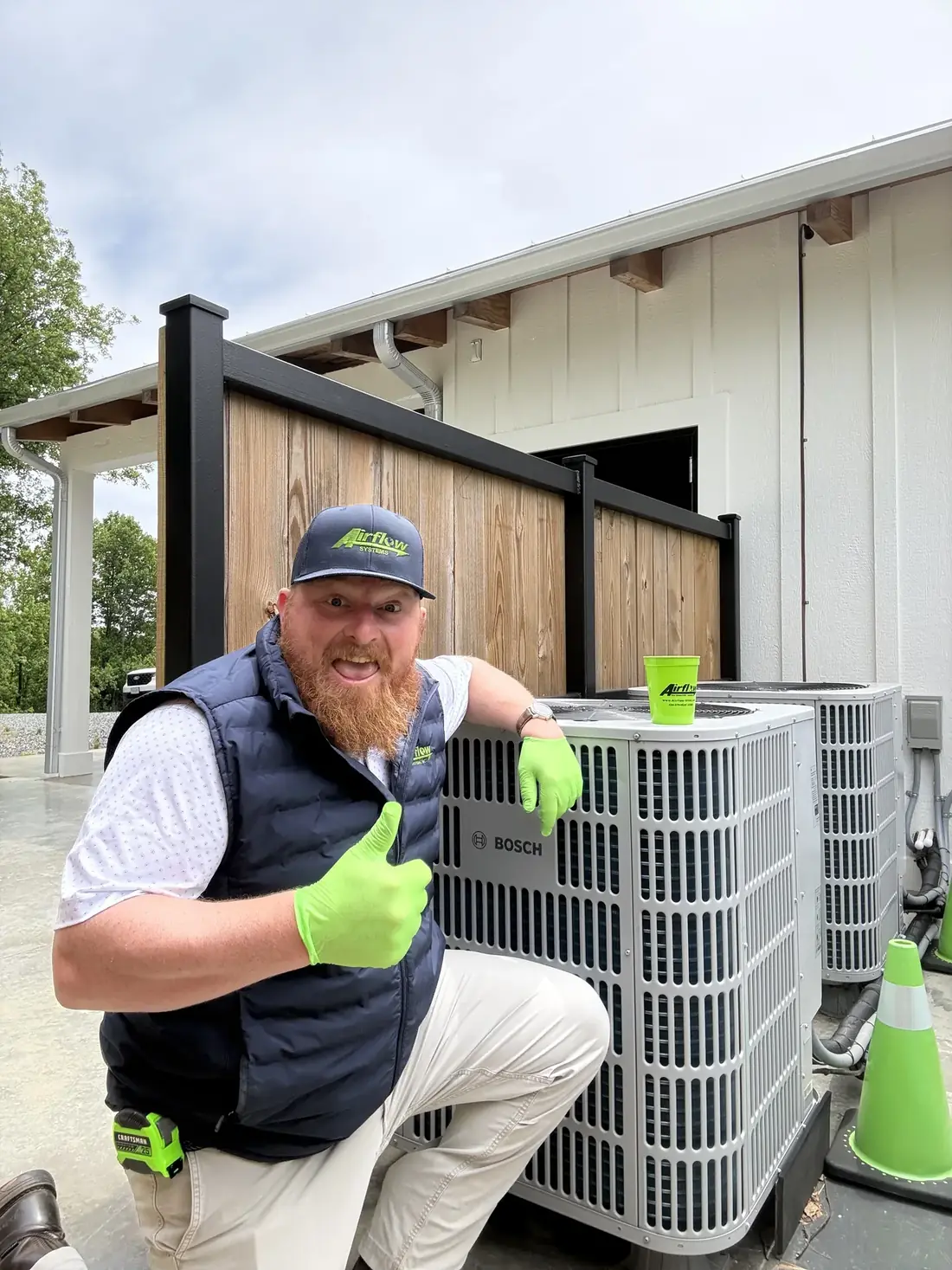
A routine heat pump tune-up in Charlottesville focuses on assessing the mechanical and electrical parts of your HVAC system. A technician evaluates the blower motor, inspects the indoor coil, and measures the refrigerant charge.
Keeping these mechanical components in good condition helps the system transfer heat efficiently. Dirt buildup on the outdoor coil can restrict airflow and strain the compressor over time. Arranging a heat pump maintenance & tune-up gives a professional the opportunity to calibrate your equipment and identify any failing parts before the weather changes.
How does a heat pump work?
A heat pump moves heat from one place to another using a continuous refrigerant cycle. It extracts heat from the outdoors to warm your home and reverses the process to cool it.
The compressor pumps chemical refrigerant through the indoor and outdoor coils. As this fluid changes state from liquid to gas, it absorbs and releases thermal energy. A specialized reversing valve controls the direction of the flow, allowing the exact same equipment to provide both heating and cooling for your home.
What causes heat pump problems?
Routine wear and tear on moving parts often leads to mechanical issues. Environmental factors like dust and debris also play a major role in system malfunctions.
If the outdoor unit becomes covered in leaves, the system loses its ability to exhaust or absorb heat. A failing defrost control board can cause ice to build up on the outdoor coil during winter. Recognizing these common problems helps you know when to seek professional maintenance.
What does a technician check?
Maintenance visits focus on cleaning critical components and testing mechanical functions. A technician uses specialized tools to read system pressures and electrical currents.
The inspection typically includes verifying the integrity of the heat exchanger if a backup gas furnace is present. The professional will also examine the fan blades for proper balance and lubricate moving parts if applicable. These routine steps keep the heating and cooling equipment functioning correctly.
- Reading system pressures
- Examining fan blades
- Lubricating moving parts
- Testing backup heating
- Cleaning the outdoor coil
What maintenance can homeowners do?
While professionals handle the mechanical work, homeowners can perform basic upkeep to support system health. Managing your filters and keeping the outdoor unit clear are simple tasks.
Check your air filter regularly and replace it when it looks dirty. A clean filter protects the blower motor and keeps dust off the indoor coil. You should also walk around the outdoor unit to remove leaves, branches, or snow that might block airflow.
Why is my heat pump making unusual noises?
Unusual sounds often point to loose parts, airflow restrictions, or failing components. Identifying the type of noise helps a professional diagnose the underlying issue with the blower motor or compressor.
A rattling sound might indicate that debris has fallen inside the outdoor cabinet or that a panel is loose. Grinding or squealing noises usually come from the indoor air handler, often pointing to worn bearings or a failing blower motor. When you hear these mechanical sounds, it is time to have a professional inspect the system before the strain causes a complete breakdown.
- Rattling from loose cabinet panels
- Grinding from worn blower motor bearings
- Hissing from refrigerant line leaks
What does a reversing valve do in a heat pump?
The reversing valve is the component that allows a heat pump to provide both heating and cooling. It changes the direction of the refrigerant flow.
In cooling mode, the reversing valve directs hot refrigerant gas to the outdoor coil to release heat outside. When you switch your thermostat to heating mode, the valve shifts, sending the hot gas to the indoor coil instead. This simple mechanical shift is what sets a heat pump apart from a traditional air conditioner.
- Directs refrigerant flow direction
- Enables both heating and cooling
- Responds to thermostat mode changes
- Shifts hot gas between coils
What happens when a heat pump short-cycles?
Short-cycling occurs when your heat pump turns on and off rapidly without completing a full heating or cooling phase. This constant starting and stopping places severe strain on the compressor and blower motor while reducing indoor comfort.
A system that cycles repeatedly struggles to manage indoor humidity and temperature evenly. Because the equipment shuts down before circulating conditioned air through the entire house, some rooms may feel drafty or stagnant. The constant switching also draws excessive electricity, as starting the compressor requires a significant surge of power compared to running steadily. This erratic operation forces components to work harder than intended.
Several underlying issues can cause a system to short-cycle. A severely clogged air filter restricts airflow, causing the internal coil to freeze and triggering safety switches to shut the system down. An oversized unit will also cool or heat a space too rapidly and shut off before properly conditioning the air. If you notice rapid cycling, check your air filter first and look at your thermostat settings.
- Restricted airflow from a dirty air filter
- Incorrectly sized equipment for your home
- Thermostat placed near a drafty window
- Refrigerant leaks causing low system pressure
Our Charlottesville office
You can find our Charlottesville office located at 1134 Rose Hill Dr, where Airflow Systems schedules heating and cooling work for various locations in the Charlottesville service area.
Please inquire about the Annual Tune-Up & System Evaluation when you contact Airflow Systems for service.
Heat Pump Tune-Up questions from Charlottesville homeowners
Why is there ice on my outdoor unit?
A thin layer of frost is normal in cold weather, and the defrost cycle should melt it. Heavy ice buildup indicates a problem with the defrost control board, a faulty sensor, or restricted airflow that requires a professional diagnosis.
What does the reversing valve do?
The reversing valve changes the direction of the refrigerant flow. This mechanism allows the heat pump to switch between heating and cooling modes. If the valve gets stuck, the system will only blow hot or cold air regardless of the thermostat setting.
What do SEER2 and HSPF2 ratings mean?
SEER2 measures the cooling efficiency of the equipment, while HSPF2 measures the heating efficiency. Higher ratings indicate that the system uses less energy to provide the same amount of conditioning. Proper maintenance helps the unit perform closer to these ratings.
Why does my heat pump turn on and off constantly?
This behavior is called short-cycling. It can be caused by a clogged air filter, a malfunctioning thermostat, or an oversized system that cools the space too rapidly. Short-cycling prevents the equipment from properly removing humidity from the air.
Why is my heat pump blowing cold air in winter?
The system might be in defrost mode, which temporarily reverses the cycle to melt ice on the outdoor coil. If the cold air continues for an extended period, you could have a refrigerant leak, a failing reversing valve, or a broken backup heating element.
For professional service in Central Virginia, contact Airflow Systems. Airflow Systems operates Monday through Friday to handle your requests at (434) 979-4328.
Ready When You Are.
One call reaches Charlottesville's premier WaterFurnace partner. We repair, replace, and maintain heating, cooling, and geothermal systems across Charlottesville and Central Virginia & the Blue Ridge — Mon–Fri, 7:30 AM – 4:00 PM.
- 100%Satisfaction
- FamilyOwned & operated
- M–F7:30 AM – 4:00 PM