How can we help today?Choose an option to see quick actions and get help faster.
Heat Pump Installation & Replacement in Charlottesville, VA
When an aging climate control system struggles to maintain comfortable temperatures, a properly sized replacement restores reliable operation to your home.
Heat Pump Upgrades for Central Virginia and the Blue Ridge
When an aging heat pump struggles to keep up with demand, homeowners may notice clear signs of a problem. Inconsistent temperatures from room to room, strange grinding or rattling noises from the outdoor unit, or a sudden and unexplained increase in energy usage all point to a system under strain. Because a heat pump provides both heating and cooling, these issues can surface at any time of year, compromising comfort during the hottest summer days or the coldest winter nights. Deciding what to do next can feel uncertain when your home's primary climate system is no longer reliable.
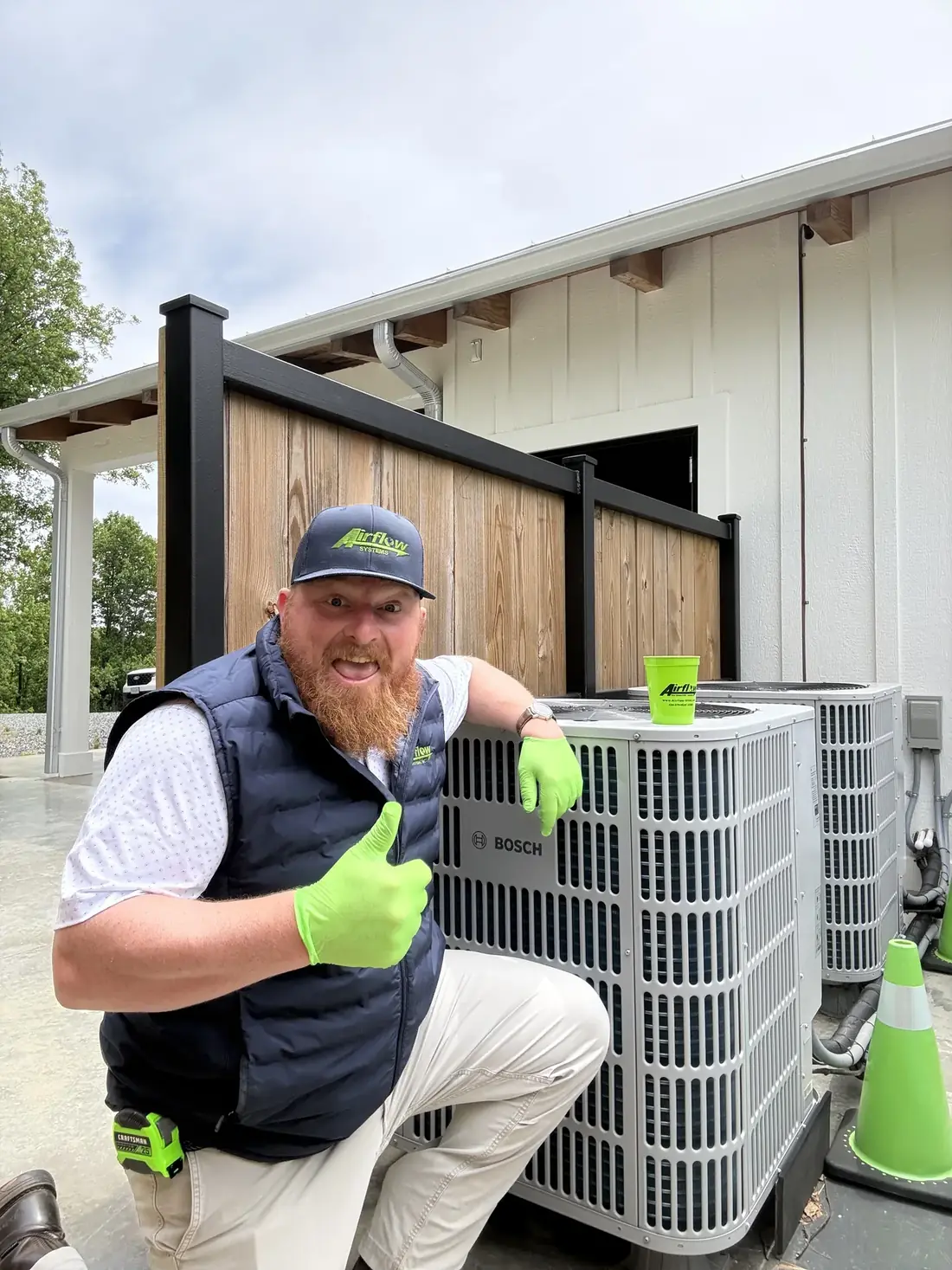
A heat pump installation or replacement service is a detailed process that involves removing the old or failing equipment and installing a new, correctly sized system. This approach addresses the root mechanical issues, such as a failing compressor or widespread coil corrosion, rather than applying a temporary fix. While a targeted Heat Pump Repair & Service can resolve specific component failures and routine Heat Pump Maintenance & Tune-Up can help sustain performance and efficiency, a full replacement becomes the most practical solution when the existing unit reaches the end of its operational life or requires repairs that are disproportionately costly.
What to Expect When You Choose Airflow Systems
- Respectful Approach: We enter your residence with care and maintain a tidy environment.
- Prompt Service: We act swiftly to ensure your home returns to optimal comfort.
- Expert Knowledge: Highly capable technicians arrive equipped to resolve your complex system issues.
- Resolved Correctly: We pinpoint the exact issue and fix it right without delay.
- Straightforward Billing: Transparent pricing means you approve the exact cost before work commences.
Understanding the Heat Pump Replacement Process
Replacing a residential heat pump is a detailed technical process that goes far beyond simply swapping one box for another. The work begins with a safe and methodical decommissioning of the old system. This critical first step includes recovering any remaining refrigerant in accordance with industry standards to prevent its release, followed by the careful disconnection of the electrical wiring and sealed refrigerant lines. The indoor air handler and outdoor condenser are then removed to prepare the site for the new equipment. This preparation often involves leveling or replacing the concrete pad for the outdoor unit and thoroughly evaluating the existing connections to confirm they are suitable for the new system.
Once the area is prepared, the new indoor and outdoor units are set in place. A technician then connects them by brazing the copper refrigerant lines, a process that uses a high-temperature torch to create a durable, leak-proof seal. The high- and low-voltage electrical connections are wired, and the condensate drain line is connected and tested for proper flow. After the physical installation is complete, the system is pressure-tested, evacuated to remove all air and moisture from the line set, and charged with the precise amount of refrigerant specified by the manufacturer. Airflow Systems installs and services equipment from brands including Trane, Mitsubishi Electric, and Daikin, and is a WaterFurnace geothermal partner.
What Our Heat Pump Installation & Replacement Visit Includes
A thorough installation process examines every related component to support the new equipment's performance and longevity. The evaluation includes:
- Refrigerant Line Set Evaluation: The existing copper lines that carry refrigerant between the indoor and outdoor units are inspected for correct sizing, integrity, and cleanliness to determine if they are suitable for use with the new system and its modern refrigerant type.
- Electrical System Check: A technician verifies that the circuit breakers, wiring gauge, and disconnect box are all correctly sized and in good condition to safely handle the electrical load of the new, often more efficient, heat pump and air handler.
- Condensate Management System Inspection: The drain lines, pan, and pump (if present) are checked for blockages, cracks, and proper slope so that moisture removed from the air during the cooling cycle can drain away effectively, preventing water damage.
- Plenum and Ductwork Connection Review: The connection points where the new indoor unit meets the existing supply and return plenums are inspected to confirm they are structurally sound and completely sealed, preventing conditioned air from leaking into unconditioned spaces.
After a new system is installed, confirming that all parts of the system are working together correctly is a key final step. If you suspect an issue with an existing unit, a Heat Pump Repair & Service visit can help identify the source of the problem before considering a full replacement.
Why Professional Installation Matters
The quality of a heat pump installation has a direct and lasting impact on its efficiency, reliability, and lifespan. A methodical, professional approach addresses several critical factors that generic installations might overlook, ultimately determining how well the system will perform for years to come.
- Correct Sizing: A proper load calculation is performed to determine the precise heating and cooling capacity your home requires, considering factors like insulation, window quality, and layout. An oversized system will short-cycle, failing to dehumidify the air properly, while an undersized system will run constantly without reaching the target temperature, causing premature wear.
- Ductwork and Airflow Assessment: The existing duct system is evaluated to confirm it can support the airflow requirements of the new equipment. Leaky, disconnected, or undersized ducts can choke the new system, reducing its capacity and efficiency and putting strain on the blower motor.
- Proper Refrigerant Charging: The amount of refrigerant in the system is not a "one size fits all" measurement. A technician charges the system to the manufacturer's exact specifications based on the length of the refrigerant lines, as too little or too much refrigerant can dramatically reduce efficiency and damage the compressor.
- System Commissioning: After installation, the technician performs a series of tests, running the system through its heating, cooling, and defrost cycles. This commissioning process verifies that all components, safety controls, and thermostat functions are operating correctly and that the system is delivering the right air temperatures at the vents.
Deciding Between Repair and Replacement
When a heat pump fails, homeowners face the important choice of repairing the existing unit or investing in a new one. This decision does not have to be a stressful guess. By looking at a few key factors about the current equipment and the nature of the problem, you can make an informed choice that aligns with your long-term comfort and financial considerations.
Age of the System
The operational lifespan of a heat pump can vary based on usage patterns and maintenance history, but all mechanical systems eventually wear out. As a system ages, its efficiency naturally declines, and its components are more likely to fail. If the equipment is in the later stages of its expected service life, putting a large amount of money into a major repair may not be a practical long-term solution. Other aging parts may soon fail, leading to another service call and additional costs. Furthermore, older systems may use refrigerants that are being phased down, which can affect the availability and cost of future repairs.
Frequency and Cost of Repairs
A single, minor repair on a relatively new system is often a straightforward and sensible choice. However, if the unit has required multiple service calls over the last couple of years, it is important to consider the cumulative cost. When the cost of a proposed repair approaches a significant fraction of the price of a new unit, replacement becomes a more viable option. A pattern of recurring issues often indicates a systemic problem or widespread wear, meaning that even after the current issue is fixed, another one may be just around the corner.
Nature of the Failure
The specific component that has failed is a major consideration in the repair-versus-replace debate. A problem with a capacitor, fan motor, or contactor is typically a manageable repair that restores function without an overwhelming cost. In contrast, a failure of the compressor—the heart of the refrigeration cycle—or a significant refrigerant leak in an indoor or outdoor coil can be among the most substantial and costly repairs a heat pump can need. For older systems, the high cost of replacing a compressor often makes a full system replacement the more logical financial path.
System Performance and Comfort
Beyond the breakdown itself, it is important to consider how well the system was performing before the issue arose. Was it noisy? Did it struggle to maintain temperature on very hot or cold days? Did it leave the indoor air feeling clammy and humid? A repair will only restore the system to its previous level of performance. A new system, on the other hand, offers an opportunity to address these underlying comfort issues. Modern equipment can offer improved humidity control, quieter operation, and more even temperatures throughout the home, providing a significant upgrade in overall comfort.
Our Approach: Guidance, Not Guesswork
The approach at Airflow Systems begins with listening to the history of the problem in your own words—what you have seen, heard, and noticed. This context guides the technical evaluation. Afterward, findings are explained in plain language, connecting the mechanical issues to the comfort problems you have noticed. A clear explanation is the foundation for a confident decision.
Available options are presented with the pros and cons of each path, without pressure. The goal is to provide the information needed to choose what is right for your home and budget, whether it is a repair or a full system replacement. A clear, detailed price is provided before any work begins, so you are in complete control. For new installations, financing is available. Airflow Systems also offers an Annual Tune-Up & System Evaluation to help maintain new equipment.
Related Services
Beyond new installations, the full range of Heat Pump Services includes support for existing equipment. A detailed Heat Pump Maintenance & Tune-Up can prepare a system for the season ahead, while a focused Heat Pump Repair & Service can address operational issues that arise.
Get Your Comfort Back
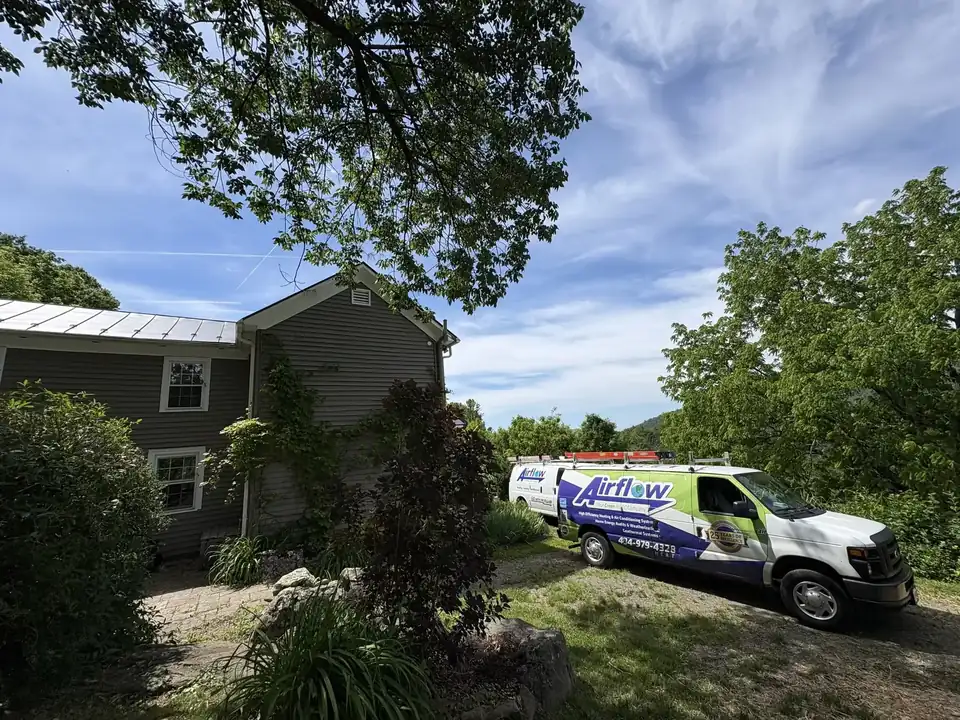
Airflow Systems is a family-owned and locally operated company serving Charlottesville and Central Virginia. To learn more about our service areas and our full range of Heat Pump Services, and to Request Heat Pump Installation, contact us at (434) 979-4328.
Talk to Airflow Systems
Airflow Systems is a family-owned heating and cooling company at 1134 Rose Hill Drive in Charlottesville and a WaterFurnace geothermal partner. Call Monday through Friday, 7:30 AM to 4:00 PM, or request service online any time.
Ready When You Are.
One call reaches Charlottesville's premier WaterFurnace partner. We repair, replace, and maintain heating, cooling, and geothermal systems across Charlottesville and Central Virginia & the Blue Ridge — Mon–Fri, 7:30 AM – 4:00 PM.
- 100%Satisfaction
- FamilyOwned & operated
- M–F7:30 AM – 4:00 PM