How can we help today?Choose an option to see quick actions and get help faster.
AC Replacement in Charlottesville, VA
Find details on central AC replacement in Charlottesville. Read about modern cooling technology, SEER2 ratings, and how technicians evaluate home ductwork.
A proper AC replacement in Charlottesville goes beyond simply swapping out a metal box. It requires evaluating the entire ventilation network to confirm the new air conditioner will deliver balanced airflow to every room.
Older cooling systems often struggle to remove humidity and maintain consistent temperatures as internal parts wear down. When repairs become too frequent, upgrading the machinery provides a fresh start. Exploring your options for AC installation & replacement allows you to select equipment with updated SEER2 ratings. A technician can explain how different compressor types handle summer heat and help you find a suitable match for your property.
What happens during an AC installation?
A successful cooling installation requires precise coordination between electrical work, plumbing, and ductwork adjustments. Technicians take their time to verify that every connection is secure and properly calibrated.
After hauling away the outdated equipment, the installation crew prepares the indoor plenum to fit the new evaporator coil. Modifications to the sheet metal are often necessary to create an airtight seal, which prevents cold air from escaping into the attic or basement.
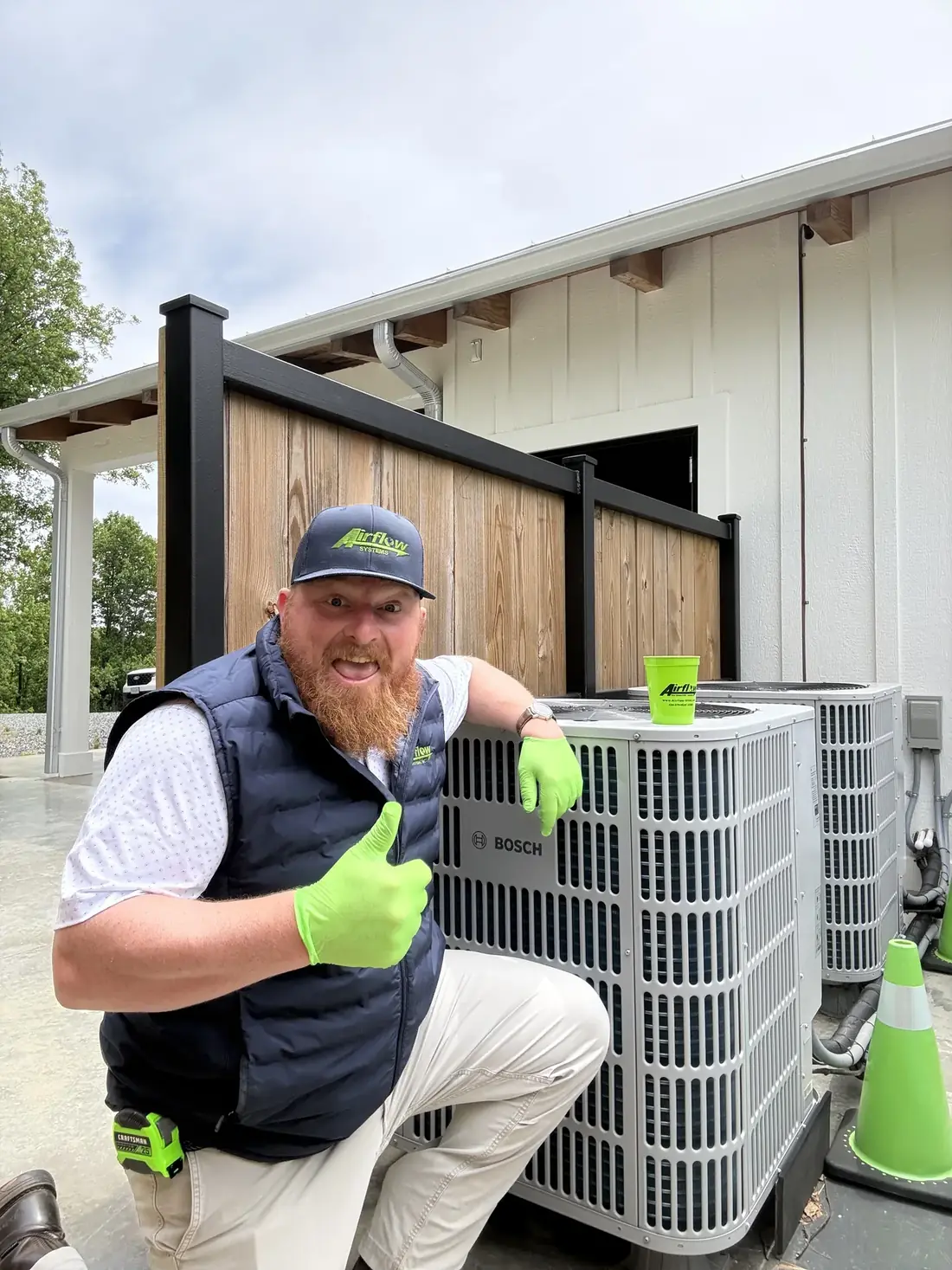
Outside, the new compressor is set in place and wired to the main breaker panel. The technicians flush the copper tubing if it is being reused, or they run completely new line sets. Finally, they charge the system with refrigerant, test the thermostat communication, and measure the airflow from the vents to confirm proper operation.
What affects the cost of a new AC?
Budgeting for a new air conditioner requires looking beyond just the price of the metal cabinet. The total cost encompasses the technology inside the unit and the labor needed to install it properly.
Advanced features significantly influence equipment pricing. Systems equipped with two-stage compressors, sound-dampening enclosures, and smart thermostat compatibility cost more to manufacture than standard models. Homeowners must decide which comfort features align with their goals and budget constraints.
The condition of your home infrastructure is another major variable. Installations in tight attics or crawlspaces take more time and effort, affecting labor costs. If a technician discovers that the current indoor coil is incompatible with the new outdoor unit, both pieces must be purchased and installed together, which changes the financial equation.
What are the main components of a cooling system?
A split system separates its major parts into an outdoor cabinet and an indoor air handler. These units contain the compressor, coils, and fans necessary for the refrigerant cycle.
The indoor section typically contains the evaporator coil and a blower fan. When the system runs, the blower moves warm air across the cold coil. The refrigerant inside the coil absorbs the heat, cooling the air before it flows into your living spaces. The warmed refrigerant then travels outside to the compressor and condenser coil, where the heat is released.
- Indoor air handler houses the blower fan
- Evaporator coil cools the air passing over it
- Outdoor cabinet contains the compressor and condenser
- Refrigerant carries heat from inside to outside
What features matter when selecting a new air conditioning system?
Choosing replacement equipment involves evaluating blower motor types, compressor stages, and efficiency ratings. These components dictate how effectively the system manages humidity, distributes air, and consumes energy during operation.
Modern units offer variable-capacity compressors that adjust cooling output to match current indoor conditions, rather than simply turning on and off. This continuous operation helps remove moisture from the air, improving overall comfort. You might also consider systems with variable-speed blower motors, which provide a steady flow of conditioned air and reduce noticeable temperature swings between rooms. Efficiency is another factor, measured by SEER2 ratings. Equipment with higher SEER2 ratings typically uses less electricity to produce the same amount of cooling as standard models.
- Variable-capacity compressors for precise temperature control
- Variable-speed blowers to maintain consistent airflow
- Higher SEER2 ratings for reduced energy consumption
- Compatibility with smart thermostat technology
How can you prepare your home for a cooling system replacement?
Getting your home ready means creating unobstructed access to both indoor and outdoor units, relocating valuable items, and securing pets. This allows the installation crew to work without interference.
Technicians need adequate space to remove your old air conditioner and position the new system. Start by clearing the perimeter around your indoor air handler, making sure there is enough room for technicians to stand and work. Outdoors, clear away garden hoses, toys, and vegetation that might block access to the condenser. Since the replacement process involves carrying bulky equipment in and out of the house, keeping walkways clear of trip hazards and securing pets in a quiet space keeps everyone safe.
- Creating space around the indoor air handler
- Moving garden hoses and outdoor toys
- Clearing vegetation from the condenser location
- Securing animals away from heavy equipment movement
What indicates your current cooling equipment is the wrong size?
Signs of incorrect sizing include a system that turns on and off repeatedly or one that runs continuously without adequately cooling the space. Both scenarios negatively impact indoor comfort.
Oversized cooling equipment blasts cold air and satisfies the thermostat abruptly. Because it does not run long enough, it fails to extract sufficient humidity, resulting in a cold but sticky environment. On the other hand, a system that is too small lacks the power to overcome the heat entering the home. It will operate without pause, struggling to lower the indoor temperature. Proper sizing requires a detailed calculation of the thermal characteristics of the house to match the exact cooling demand.
- Short cooling cycles that leave air sticky
- Continuous running during warm weather
- Inability to lower indoor temperatures effectively
- Uneven cooling distribution across the house
Why do some air conditioning systems create unusual noises during operation?
Strange sounds from a cooling system often point to loose components, airflow restrictions, or failing parts. Identifying the type of noise can help determine the underlying issue affecting the equipment.
A rattling noise usually suggests that a panel, screw, or internal part has vibrated loose during operation. If you hear a high-pitched squeal, it might indicate an issue with the blower motor or a worn belt in older models. Hissing sounds can occur when there is an airflow restriction in the ductwork or if refrigerant is escaping from the closed loop. While you can check for loose debris around the outdoor unit, unusual mechanical noises require a professional inspection to prevent further damage.
- Rattling sounds from loose panels or screws
- High-pitched squeals indicating blower motor issues
- Hissing noises caused by restricted airflow
- Grinding sounds pointing to worn mechanical parts
Our Charlottesville office
Airflow Systems provides heating and cooling Monday–Friday, 7:30 AM – 4:00 PM, and you can visit our Charlottesville office at 1134 Rose Hill Dr or check the Charlottesville service area.
Airflow Systems installs and services Trane, Mitsubishi Electric and Daikin equipment and is a WaterFurnace geothermal partner. Airflow Systems offers financing options for customers installing replacement heating and cooling equipment.
AC Replacement questions from Charlottesville homeowners
What is a variable-speed compressor?
A variable-speed compressor can adjust its cooling output in small increments rather than just running at full capacity. This technology allows the system to maintain a precise indoor temperature while using less electricity. It also excels at removing humidity during mild summer weather.
Does a new AC improve indoor air quality?
A new cooling system can help manage indoor air quality by providing consistent airflow and better humidity control. Modern variable-speed units run longer cycles, which pulls more air through the filter to capture particles. However, dedicated air purifiers are needed for severe air quality issues.
Why is my new air conditioner freezing up?
Ice formation usually indicates a severe restriction in airflow or a problem with the refrigerant charge. A clogged air filter, blocked return vents, or a failing blower motor can cause the coil temperature to drop below freezing. A technician should evaluate the system to prevent compressor damage.
How long does an AC replacement take?
The installation process varies depending on the complexity of the job. Technicians must remove the old equipment, modify ductwork connections, and carefully test the new system. Factors like limited accessibility, replacing copper lines, or the need for new electrical wiring will extend the overall timeline.
How often should I change my air filter?
Filters should be checked regularly and replaced whenever they appear dirty. Homes with pets, excessive dust, or heavy system usage will require more frequent filter changes. A clean filter protects the blower motor from strain and helps the system maintain proper airflow throughout the house.
Address indoor comfort concerns by having a professional inspect your system. To schedule a visit, contact Airflow Systems or call (434) 979-4328.
Ready When You Are.
One call reaches Charlottesville's premier WaterFurnace partner. We repair, replace, and maintain heating, cooling, and geothermal systems across Charlottesville and Central Virginia & the Blue Ridge — Mon–Fri, 7:30 AM – 4:00 PM.
- 100%Satisfaction
- FamilyOwned & operated
- M–F7:30 AM – 4:00 PM