How can we help today?Choose an option to see quick actions and get help faster.
Heat Pump Replacement in Charlottesville, VA
Review common equipment failure signs and learn the steps involved in planning a residential heat pump replacement at your Charlottesville property.
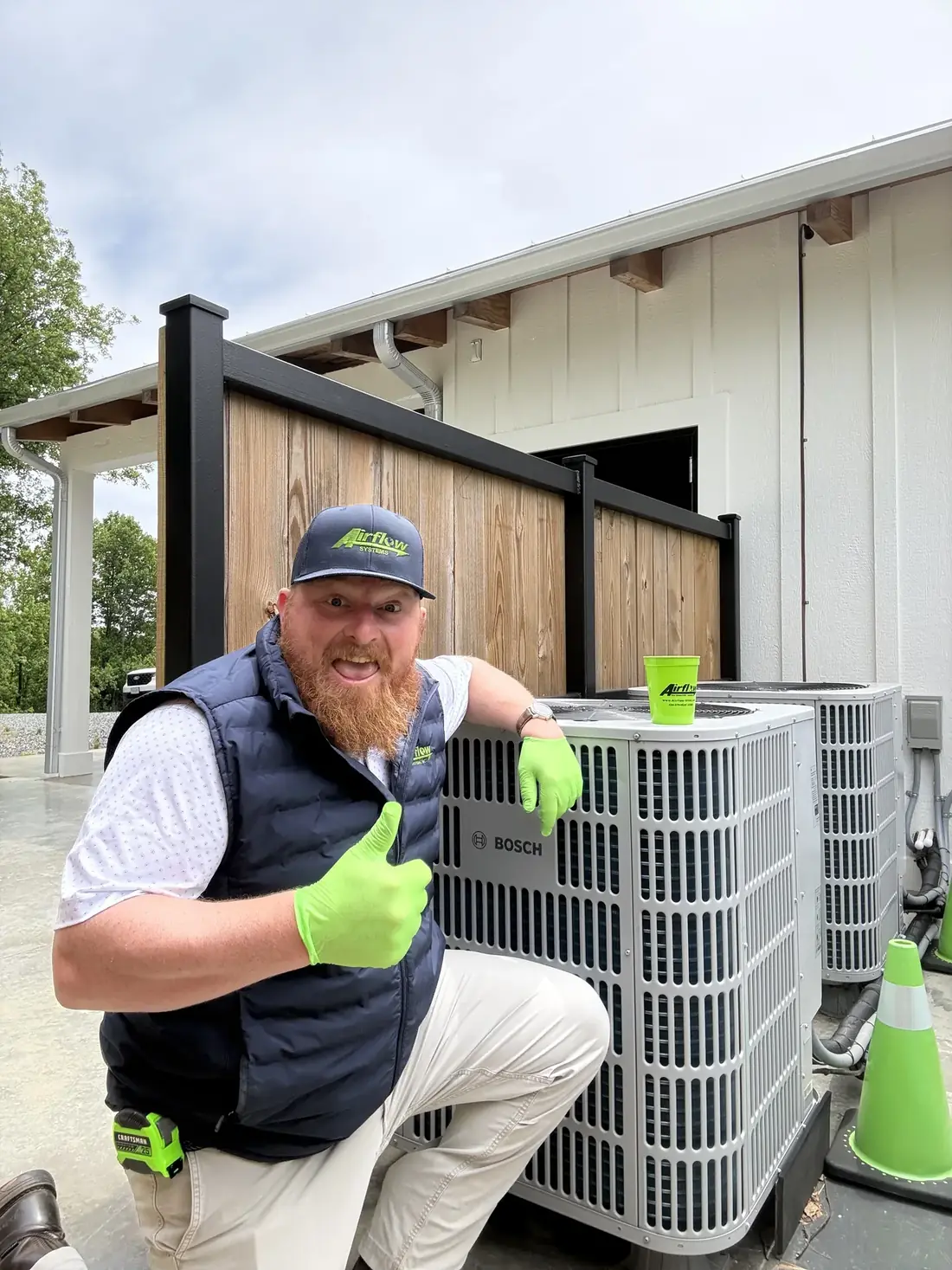
Changing out a failing system means selecting a modern unit that meets the heating and cooling needs of your Charlottesville residence. The installation process includes safely recovering old refrigerant and connecting the new indoor and outdoor components.
The transition to new equipment requires attention to electrical connections, refrigerant lines, and airflow requirements. A properly matched system operates more efficiently and provides better humidity control during warm weather. Technicians calibrate the new thermostat and test the defrost cycle to confirm everything functions smoothly. Homeowners planning an upgrade can learn more about heat pump installation & replacement to understand the full scope of the project.
What are common signs of system failure?
Aging equipment often displays warning signs before a complete breakdown occurs. Recognizing these symptoms early gives you time to plan for a replacement instead of facing a sudden loss of comfort.
A major indicator of trouble is a steady decline in heating or cooling performance, even after routine maintenance. You might notice that the unit runs constantly but struggles to reach the temperature set on the thermostat. Unusual noises, like grinding or squealing from the outdoor cabinet, point to failing mechanical components. Additionally, frequent tripped breakers or ice buildup on the coils suggest severe operational issues.
- Weak airflow coming from the supply vents
- Loud grinding or rattling noises during operation
- Ice forming on the outdoor or indoor coils
- The system runs continuously without pausing
Why is proper system sizing important?
Matching the equipment capacity to your specific square footage prevents operational problems and improves indoor comfort. Careful calculations dictate the appropriate size for your new heating and cooling machinery.
If a system has too much capacity, it will turn on and off in short bursts rather than running in smooth cycles. This behavior prevents the equipment from adequately filtering the air or controlling indoor moisture levels. A unit lacking sufficient power will operate without pausing, which increases the likelihood of a premature breakdown. Proper sizing balances the airflow and allows the machinery to run exactly as designed.
How do SEER2 and HSPF2 ratings work?
Efficiency ratings provide a standardized way to compare the performance of different heating and cooling units. They reflect the ratio of comfort output to electrical input over a typical season.
SEER2 stands for Seasonal Energy Efficiency Ratio and focuses entirely on the cooling capabilities of the equipment. It calculates the total cooling provided divided by the total electrical energy consumed. The HSPF2 rating, or Heating Seasonal Performance Factor, applies the same concept to the heating cycle. Upgrading to machinery with higher numbers generally results in a system that operates more smoothly and uses less energy to maintain your desired temperature.
What are the differences between ducted and ductless heat pumps?
A ducted heat pump relies on central ductwork to condition an entire house, whereas a ductless system uses individual indoor units to heat and cool specific zones directly.
Ducted heat pumps operate using a central indoor blower that distributes air through a series of supply and return vents. This design maintains a unified climate across the home and keeps the mechanical components mostly out of sight. It is a common choice for homes built with central air systems.
Ductless systems bypass the need for ductwork entirely by placing air-handling units directly in the living space. Refrigerant lines connect these indoor units to the outside compressor. This allows for targeted temperature management in rooms that lack ductwork or require separate climate control, offering a highly flexible replacement option.
Why might a heat pump struggle to maintain consistent temperatures?
Inconsistent temperatures often result from restricted airflow, improper refrigerant charge, or an incorrectly sized system that cannot match the heating and cooling demands of the living space.
A heat pump relies on steady airflow to transfer heat effectively. A severely clogged air filter or blocked return vents can restrict this flow, causing the system to overwork while failing to reach the setting on the thermostat. Clearing debris around the outdoor unit and keeping indoor vents open helps maintain proper circulation.
Another common cause of uneven temperatures is an improper system size. An oversized unit will short-cycle, turning on and off before it can adequately condition or dehumidify the air. An undersized unit will run without stopping but still fall short of the target temperature, leaving the home uncomfortable.
- Clogged air filters restrict necessary airflow
- Blocked vents prevent proper air distribution
- Improper refrigerant levels reduce heating capacity
- Oversized units short-cycle and fail to dehumidify
- Undersized units lack the power to condition
What do unusual noises from a heat pump indicate?
Unexpected noises signal changes in system operation, with screeching indicating motor problems, rattling pointing to loose parts, and buzzing suggesting electrical issues at the compressor or fan.
A noticeable change in the sound of a heat pump is a clear sign that a component is struggling. Screeching or squealing noises usually come from the blower motor or the outdoor fan, warning that the bearings are failing. A loud buzzing noise often points to an electrical problem, such as a failing capacitor or a stuck relay that prevents the compressor from starting.
Homeowners can visually inspect the outdoor unit for visible debris or check the breaker panel for tripped switches. However, resolving internal buzzing, grinding, or hissing sounds requires professional tools and training. Ignoring these warning signs can result in complete system failure and more extensive repairs.
Which features improve heat pump efficiency and comfort?
Modulating compressors, variable-speed air handlers, and advanced thermostat controls improve system performance by allowing the heat pump to adjust its heating and cooling output precisely as conditions change.
Modern heat pumps offer features that significantly improve indoor air quality and comfort. A variable-speed compressor acts like a dimmer switch, ramping up or down to provide exactly the right amount of conditioning. This reduces the energy wasted by starting and stopping a large motor.
Variable-speed air handlers complement this by pushing air through the ductwork at lower speeds, which allows the filter to capture more airborne particles. By maintaining steady operation, these systems achieve higher SEER2 and HSPF2 ratings, indicating that they use less energy to deliver the same level of comfort.
- Modulating compressors prevent harsh temperature swings
- Variable-speed handlers improve air filtration
- Modulating systems achieve higher SEER2 ratings
- Smart controls manage operation for efficiency
Our Charlottesville office
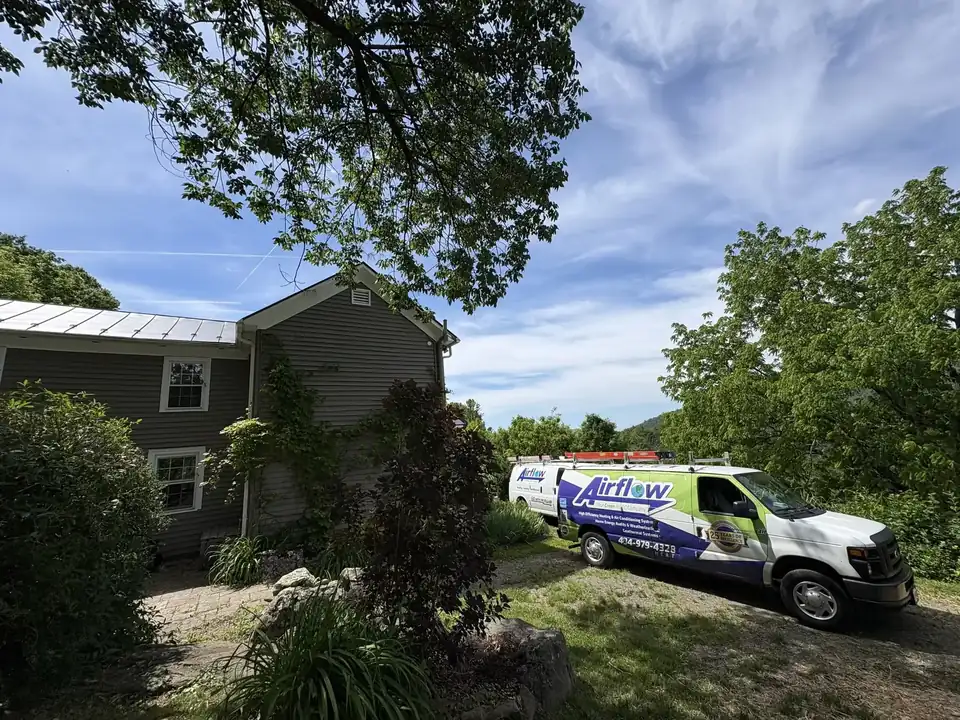
Airflow Systems manages heating and cooling jobs through our Charlottesville office at 1134 Rose Hill Dr, and information about travel distances is available via the Charlottesville service area.
Airflow Systems acts as a WaterFurnace geothermal partner, and we install or service equipment from Daikin, Trane, and Mitsubishi Electric. Homeowners can explore financing options when replacing a system in Charlottesville.
Heat Pump Replacement questions from Charlottesville homeowners
What is the difference between standard and variable-speed systems?
Standard fixed-speed units operate at full capacity whenever they turn on. Variable-speed systems can adjust their output in small increments to match the exact temperature needs of the house, resulting in quieter operation and better humidity control.
Why is my heat pump freezing up in the winter?
A light layer of frost is normal during cold weather, and the defrost cycle should melt it away. If thick ice builds up, it usually indicates a restricted air filter, a failing fan motor, or a malfunctioning defrost control board.
Can I replace just the outdoor heat pump unit?
It is highly recommended to replace both the indoor air handler and the outdoor condenser at the same time. Mismatched equipment can cause severe efficiency drops, poor humidity control, and premature mechanical failure due to incompatible parts.
How long does a heat pump replacement take?
The installation process generally requires a dedicated block of time to safely remove the old equipment and connect the new machinery. Complex projects involving ductwork modifications or electrical upgrades will extend the timeline of the installation.
If you suspect an issue with your system, contact Airflow Systems for a professional diagnosis. You can reach Airflow Systems at (434) 979-4328.
Ready When You Are.
One call reaches Charlottesville's premier WaterFurnace partner. We repair, replace, and maintain heating, cooling, and geothermal systems across Charlottesville and Central Virginia & the Blue Ridge — Mon–Fri, 7:30 AM – 4:00 PM.
- 100%Satisfaction
- FamilyOwned & operated
- M–F7:30 AM – 4:00 PM