

Choose an option to see quick actions and get help faster.
.svg)
What Homeowners in Charlottesville, VA Need to Know About R410A vs R454B Refrigerant
If you've been researching a new air conditioner or heat pump, understanding r410a vs r454b refrigerant what you need to know could save you from a costly surprise. As of January 1, 2025, new residential and light commercial HVAC systems manufactured in the United States can no longer use R-410A. R-454B is now the industry-standard replacement — and the two refrigerants are not interchangeable.
Here's a quick side-by-side breakdown:
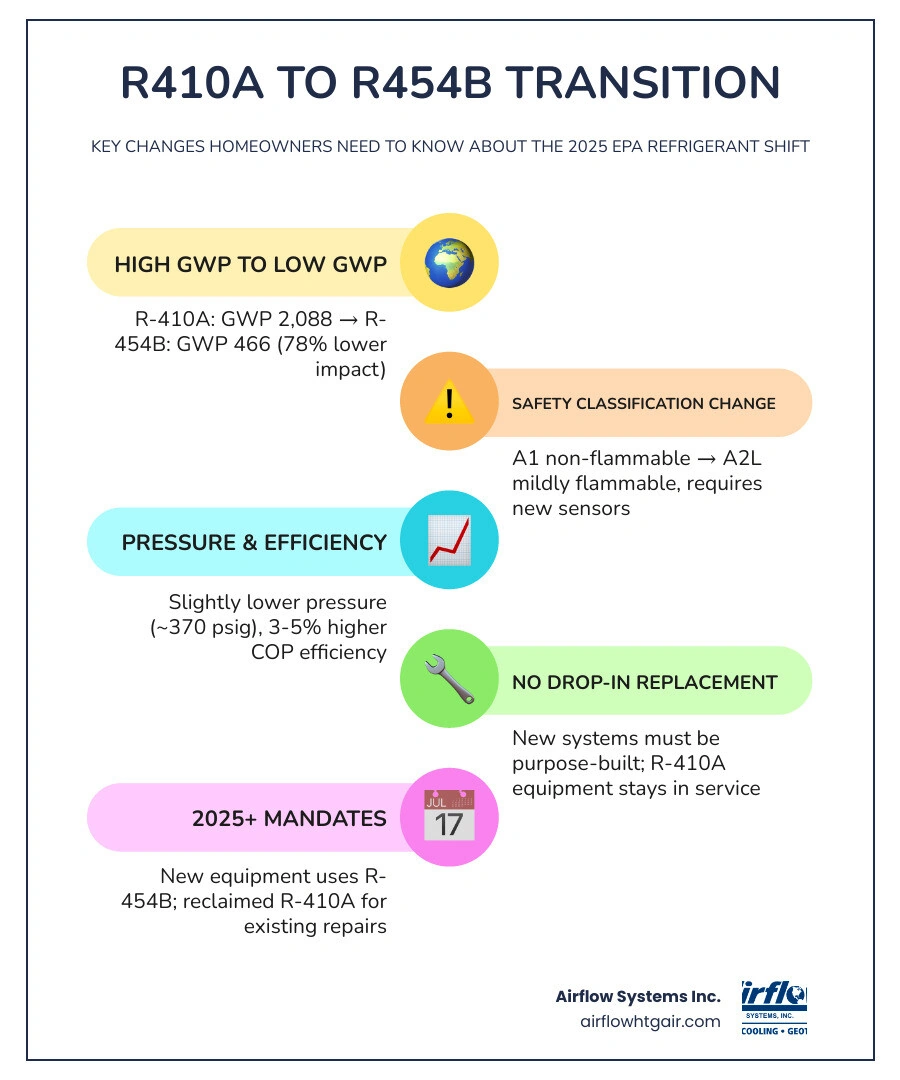
• Global Warming Potential (GWP) — R-410A: 2,088 — R-454B: 466
• GWP Reduction — R-410A: — — R-454B: ~78% lower
• Safety Classification — R-410A: A1 (non-flammable) — R-454B: A2L (mildly flammable)
• Operating Pressure (high side) — R-410A: ~400 psig — R-454B: ~370 psig
• Energy Efficiency (COP) — R-410A: Baseline — R-454B: 3–5% higher
• Drop-in Replacement? — R-410A: — — R-454B: No
• New Equipment Allowed After Jan 2025? — R-410A: No — R-454B: Yes
• Available for Servicing Existing Systems? — R-410A: Yes — R-454B: Only in new equipment
The short version: R-410A systems already installed in your home can still be serviced, but any new HVAC equipment you purchase now uses R-454B. These refrigerants require completely different equipment — you cannot simply swap one for the other.
For Central Virginia homeowners, this transition affects everything from what to expect when buying a new system to how your current equipment will be maintained for years to come. The good news is that R-454B delivers real benefits — better efficiency, a dramatically lower environmental footprint, and a longer regulatory future. The learning curve is real, but it's manageable with the right local HVAC team by your side.
R410A vs R454B Refrigerant What You Need to Know: The 2026 Transition
As we settle into May 2026, the HVAC landscape in Charlottesville has officially shifted. The primary driver behind this change is the American Innovation and Manufacturing (AIM) Act, which mandates a phasedown of hydrofluorocarbons (HFCs). R-410A, which was the gold standard for over two decades, is an HFC with a high Global Warming Potential (GWP). By transitioning to R-454B, the industry is moving toward a much more sustainable future.
The environmental impact is the headline here. R-410A has a GWP of 2,088, meaning it is over two thousand times more potent than carbon dioxide as a greenhouse gas. In contrast, R-454B has a GWP of just 466—a staggering 78% reduction. This change helps protect our climate while ensuring that the air conditioning systems we install today won't be obsolete in a few years. Unlike older transitions (like the move away from R-22), R-454B also offers zero ozone depletion potential.
If you’ve ever wondered how does a heat pump work, the refrigerant is essentially the "blood" of the system. It carries heat from one place to another. Choosing a refrigerant with a lower environmental footprint allows us to keep our beautiful Central Virginia neighborhoods comfortable without a heavy ecological cost.

Regulatory Timelines for Virginia Homeowners
The EPA’s regulations were very clear: after January 1, 2025, manufacturers were prohibited from producing new residential AC and heat pump units that use refrigerants with a GWP of 700 or higher. Since R-410A sits well above 2,000, it had to go.
For homeowners in Albemarle County, this means if you are looking for a heat pump replacement in Charlottesville, VA today, the equipment we install will be purpose-built for R-454B. There are many heat pump advantages over traditional HVAC systems, and these newer R-454B models are designed to maximize those benefits while staying ahead of federal environmental mandates.
Key Differences in Performance and Efficiency
When comparing r410a vs r454b refrigerant what you need to know includes the technical "wins" for the new stuff. R-454B isn't just better for the planet; it’s actually a more efficient thermal conductor.
• Boiling Point — R-410A: -55.3°F — R-454B: -58.9°F
• Temperature Glide — R-410A: ~0.2°F (Near-azeotropic) — R-454B: ~1.5°F (Zeotropic)
• Critical Temperature — R-410A: 160.3°F — R-454B: 170.6°F
• Latent Heat Capacity — R-410A: Baseline — R-454B: ~7% Higher
One of the biggest perks for homeowners is a 3% to 5% improvement in the Coefficient of Performance (COP). This means the system can move more heat for every dollar of electricity you spend. Furthermore, R-454B operates at slightly lower pressures—roughly 370 psig on the high side compared to 400 psig for R-410A. Lower pressure can lead to less stress on the compressor over time.
Many people ask, "Are heat pumps energy efficient in moderate climates like ours?" The answer is a resounding yes, and R-454B makes them even better. Because R-454B has a higher critical temperature, it performs exceptionally well even when Virginia summers get sweltering. However, because it is a zeotropic blend (a mix of R-32 and R-1234yf), it has a "temperature glide" of about 1.5°F. This requires slightly larger heat transfer surfaces—often 10-20% more coil surface area—to achieve the same cooling capacity as an old R-410A unit.
Maintenance Tips: R410A vs R454B Refrigerant What You Need to Know
Whether you have an older R-410A system or a brand-new R-454B unit, maintenance is the key to longevity. Because R-454B systems use advanced sensors and specific lubricants, they require a specialized touch.
We always recommend scheduling heat pump maintenance in Charlottesville, VA at least once a year. During a standard heat pump tune-up in Charlottesville, VA, our technicians check for leaks and ensure the refrigerant charge is exact. Because R-454B has that slight temperature glide, the "superheat" and "subcooling" measurements—the technical ways we check a system's health—are different than they were for R-410A.
Future-Proofing Your Home: R410A vs R454B Refrigerant What You Need to Know
Investing in an R-454B system is a smart way to future-proof your home. These systems are built to meet the latest SEER2 (Seasonal Energy Efficiency Ratio) and HSPF2 (Heating Seasonal Performance Factor) standards. By choosing the latest technology, you ensure that parts and refrigerant will be readily available for the next 15 to 20 years.
When you look at residential heat pump installation repair efficiency, the long-term reliability of R-454B is a major selling point. As R-410A production continues to scale down through the late 2020s and into the 2030s, the cost to repair older systems will likely increase as the supply of old refrigerant tightens.
Safety and Technical Considerations for A2L Refrigerants
One of the most talked-about aspects of r410a vs r454b refrigerant what you need to know is the safety classification. R-410A is an "A1" refrigerant, meaning it is non-flammable. R-454B is classified as "A2L," which stands for "mildly flammable."
Now, don't let the word "flammable" scare you. A2L refrigerants are incredibly difficult to ignite. You would need a very high concentration of the gas in a small space and a high-energy ignition source (like an open flame) to cause a problem. In fact, R-454B has been used safely in Europe and Asia for over a decade.
To ensure total safety, new R-454B systems come equipped with:
• Leak Detection Sensors: If the system detects a leak in the indoor coil, it will automatically shut off the compressor and turn on the fan to disperse the gas safely.
• Spark-Proof Components: Manufacturers have redesigned electrical components to ensure there are no sparks near the refrigerant lines.
• Specific Ventilation: In some larger installations, specific mechanical ventilation is required to keep concentrations low.
If you ever suspect a leak, call for heat pump repair in Charlottesville, VA immediately. Our team is specifically trained in A2L handling to ensure your home remains a safe haven.
System Compatibility and Installation
It is a common misconception that you can "upgrade" an old unit by swapping the gas. R-454B is NOT a drop-in replacement for R-410A. Because the chemical makeup and pressures are different, putting R-454B into an R-410A system could damage the compressor, cause a safety hazard, and will definitely void your warranty.
When it comes to heat pump installation in Charlottesville, VA, we provide systems that are purpose-built for the new refrigerant. This includes A2L-rated expansion valves, compressors, and filter driers. If your current system is reaching the end of its life, a full heat pump replacement in Charlottesville, VA is the only legal and safe way to move to the new refrigerant.
Impact on Long-Term HVAC Serviceability
As we look toward the 2030s, the serviceability of R-410A will start to change. While the EPA hasn't banned the use of R-410A for repairs, they are aggressively cutting down its production. This means that "virgin" R-410A will become more scarce, and the industry will rely more on reclaimed (recycled) refrigerant.
For those needing heat pump service in Charlottesville, VA, we will continue to support R-410A systems as long as the refrigerant is available. However, for a new installation, R-454B is the clear winner for long-term peace of mind. Parts for R-454B systems are now the primary focus of major manufacturers like Carrier, Trane, and Lennox, ensuring that a repair in 2035 won't be held up by a lack of components.
Frequently Asked Questions about Refrigerant Changes
Can I use R-454B in my current R-410A air conditioner?
No. You absolutely cannot. R-454B requires different oils, different seals, and specific safety sensors that R-410A systems lack. Attempting to mix them or swap them is dangerous and illegal. If your R-410A system fails, you must either repair it with R-410A or replace the entire system with one designed for R-454B.
Is R-454B safe for residential use in Charlottesville?
Yes, it is very safe. The "mildly flammable" rating simply means that technicians have to use specific tools (like spark-proof vacuum pumps) and follow updated safety protocols. For the homeowner, the built-in leak sensors and the slow-burning nature of the gas make it a safe choice for any residential property.
Will R-410A still be available for repairs in the future?
Yes, but it will likely become more expensive over time. Just as R-22 is still available today (though at a high price), R-410A will be available through reclaimed supplies for many years. However, if your system is more than 12-15 years old and has a major leak, it is often more cost-effective to upgrade to a modern R-454B system.
Conclusion
The transition from R-410A to R-454B is one of the biggest changes the HVAC industry has seen in decades, but it's a positive step for both your comfort and the environment. At Airflow Systems Inc., we’ve been serving the Charlottesville community since 1988, and we’ve seen these transitions before. We pride ourselves on being a family-owned business that stays at the cutting edge of technology.
Whether you need a quick repair for an older unit or you're ready to explore the latest high-efficiency air conditioning services, our NATE-certified professionals are here to help. We understand the local climate of Central Virginia and the specific needs of our neighbors.
Ready to upgrade or need a professional opinion on your current system? Contact Airflow Systems Inc. today for a consultation and experience "Comfort Just Right" in your Charlottesville home.
Book Expert Service Or Contact Us
Our Service Process
A Hassle-Free Service Experience
01
Consultation & Diagnosis
We start by listening to your needs and performing a thorough diagnosis of your system to recommend the best solution.
02
Transparent Quoting
We provide a clear, upfront estimate with no hidden fees, so you know exactly what to expect.
03
Expert Service & Follow-Up
Our factory-trained technicians complete the work to the highest standards, and we follow up to ensure your complete satisfaction.
testimonials
What Our Customers Are Saying
Our customers consistently praise our exceptional service and attention to detail, making us a trusted choice for all your HVAC needs.
where we operate
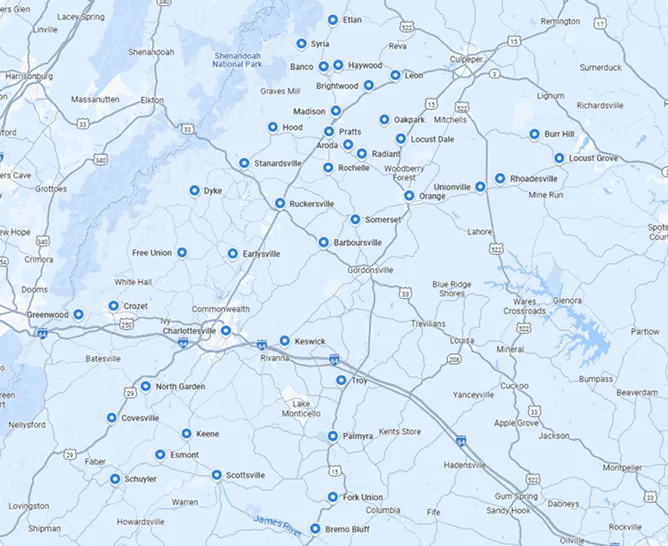
Service areas