

Choose an option to see quick actions and get help faster.
.svg)
Why Every Virginia Homeowner Needs an AC Maintenance Checklist Before Summer
A solid ac maintenance checklist for Virginia homeowners is one of the smartest steps you can take before summer heat arrives in Charlottesville and Central Virginia. Virginia's humid subtropical climate, heavy spring pollen, and rapid temperature swings from cool mornings to sweltering afternoons put real strain on cooling systems — and a system that hasn't been serviced since last season is already working against you.
Nearly half of a home's annual energy bill goes toward heating and cooling, yet fewer than half of homeowners have had their system serviced in the past year. An unmaintained AC can use up to 20% more energy just to keep up — and when it fails on the hottest day of the year, the repair bill hurts a lot more than a spring tune-up ever would.
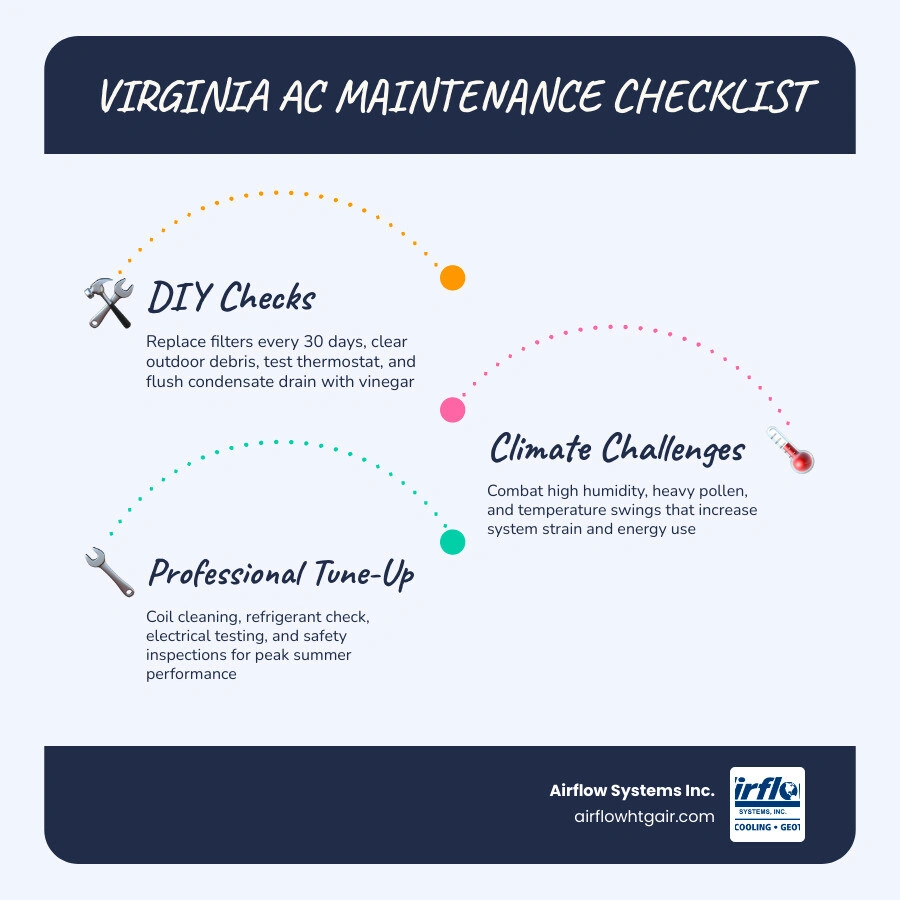
Here is a quick overview of what your Virginia AC maintenance checklist should cover:
Virginia AC Maintenance Checklist — Quick Reference
1. Replace or check the air filter — every 30 days during peak pollen and cooling season
2. Clear debris around the outdoor unit — maintain at least 2 feet of clearance on all sides
3. Open all supply vents and return registers — never close vents in unused rooms
4. Test the thermostat — set it below room temperature to confirm the system kicks on
5. Check the condensate drain line — flush with a vinegar-water mix to prevent clogs
6. Visually inspect the outdoor unit — look for bent fins, rust, loose panels, or debris buildup
7. Schedule professional maintenance — coil cleaning, refrigerant check, electrical testing, and ductwork inspection require a licensed technician
The sections below walk through each of these steps in detail, explain why Virginia's climate makes maintenance especially important, and show you exactly what a professional tune-up includes that you simply cannot do on your own.
Essential DIY Tasks for Your ac maintenance checklist for virginia homeowners
While we always recommend a professional eye for the technical bits, there are several "low-hanging fruit" tasks you can handle yourself as part of your ac maintenance checklist for virginia homeowners. These simple steps keep the air moving and ensure your system isn't "breathing through a straw."
Master the Air Filter

The single most important DIY task is checking your air filter. In Charlottesville, our spring pollen can be brutal, coating everything in a yellow dust that eventually finds its way into your return grilles. We recommend checking your filter every 30 days.
If you have pets or suffer from allergies, look for filters with a MERV (Minimum Efficiency Reporting Value) rating between 8 and 11. These are strong enough to catch fine particles without putting too much strain on your blower motor. If you notice your AC is not cooling properly, a clogged filter is often the first culprit to investigate.
Thermostat Testing and Calibration
Before the first 90-degree day hits, give your thermostat a "test drive." Switch it to cooling mode and set the temperature a few degrees below the current room temperature. Listen for the click of the relay and the hum of the outdoor unit. If the system doesn't kick on, it might be a simple battery issue or a tripped breaker. Be sure to investigate if your AC circuit breaker keeps tripping, as this could signal an electrical draw issue.
Clear the Air Paths
Walk through your home and ensure all supply registers (the ones that blow air) and return grilles (the ones that suck air in) are unobstructed. A common myth is that closing vents in unused rooms saves money. In reality, it increases pressure in your ductwork, leading to leaks and making the system work harder. Keep all vents open to maintain a balanced system.
The Condensate Drain Flush
Virginia's humidity means your AC produces a lot of water. This water exits through a condensate drain line. Over time, algae and "slime" can grow in these pipes. You can prevent a backup by pouring a cup of distilled vinegar mixed with warm water down the drain line access point. This simple trick can prevent your system from shutting down due to a clogged float switch.
Visual Inspection of the Outdoor Unit
Finally, head outside. Your outdoor condenser unit needs to breathe. Ensure there is at least two feet of clearance around the unit. Trim back any shrubs, remove fallen leaves, and clear away any bird nests or pine straw. Check for bent fins or loose panels. If you see ice on the copper lines, turn the system off immediately; ice forming on your AC unit is a sign of a serious airflow or refrigerant issue.
Managing Virginia’s Humidity and High Pollen Counts
Virginia is famous for its "humid subtropical" climate. This means your AC has two jobs: lowering the temperature and removing moisture (latent heat). If the humidity isn't managed, your home will feel "clammy" even if the thermometer says it's 72 degrees.
High pollen counts in the spring act like a blanket over your outdoor coils and indoor evaporator coils. When pollen and dust build up on these coils, they lose their ability to transfer heat. This forces the system to run longer, which is a major reason why your AC bill spikes in Virginia summers. Furthermore, the combination of high moisture and organic dust (pollen) can lead to mold growth inside the air handler, which severely impacts your indoor air quality.
Warning Signs You Need an ac maintenance checklist for virginia homeowners
Sometimes, the DIY steps aren't enough, and your system starts sending out SOS signals. Keep an ear and a nose out for these red flags:
• Short Cycling: If your AC turns on and off every few minutes without completing a full cooling cycle, it’s likely overheating or has a failing sensor.
• Unusual Noises: Banging, hissing, or screeching are never good signs. If your AC is making strange noises, it could be a loose belt, a dying motor, or a refrigerant leak.
• Warm Air: If the air coming out of the vents isn't crisp and cold, you might be low on refrigerant or have a failing compressor.
• Musty Odors: This usually indicates biological growth in the drain pan or ductwork.
• Weak Airflow: This could point to a failing blower motor or significant duct leaks.
• Thermostat Issues: If the system doesn't respond to your settings, it’s time for a professional check.
Ignoring these AC repair red flags can lead to a total system failure. In many cases, a simple maintenance visit can catch a weak capacitor before it blows and leaves you without air on a Saturday afternoon.
Why Professional Service is Critical for Central Virginia Systems
While we love a proactive homeowner, there are parts of your AC system that are dangerous or complicated to service without specialized tools and training. For example, checking refrigerant levels requires a manifold gauge set and a license to handle chemicals.
• Filter Replacement — DIY Capability: Yes — Professional Requirement: Included in Tune-up
• Clearing Debris — DIY Capability: Yes — Professional Requirement: Included in Tune-up
• Checking Refrigerant — DIY Capability: No (Safety/Legal Risk) — Professional Requirement: Yes (Essential)
• Electrical Testing — DIY Capability: No (High Voltage Risk) — Professional Requirement: Yes (Essential)
• Coil Cleaning — DIY Capability: Surface only — Professional Requirement: Deep chemical cleaning
• Duct Inspection — DIY Capability: Visual only — Professional Requirement: Static pressure/Leak testing
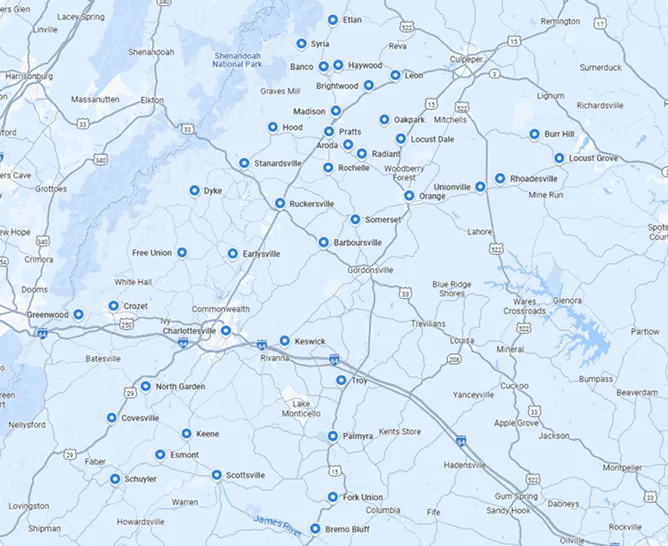
Professional service is especially vital for homes in Charlottesville and Keswick, where older ductwork and high humidity can hide issues like air leaks or failing capacitors.
Professional Steps for Your ac maintenance checklist for virginia homeowners
When we perform a professional tune-up, we go far beyond the surface. Our goal is to return your system to its peak factory specifications.
1. Chemical Coil Cleaning: We use specialized cleaners to remove deeply embedded grime from the evaporator and condenser coils, restoring heat transfer efficiency.
2. Refrigerant Charge Verification: We ensure your system has the exact amount of refrigerant needed. Too much or too little can kill a compressor.
3. Electrical Component Testing: We test capacitors, contactors, and relays. These are the "heart" of the electrical system and often fail during heat waves. If you find your AC not turning on, these components are often to blame.
4. Lubrication: We grease moving parts to reduce friction and noise, extending the life of your motors.
5. Static Pressure Testing: We measure the pressure inside your ducts to ensure your blower motor isn't working too hard to move air. This is a common check for our customers in Ruckersville and Palmyra.
6. System Calibration: We ensure your thermostat and control board are communicating perfectly, so your home stays at the temperature you actually set. This is a standard part of our visits in Stanardsville and surrounding areas.
Frequently Asked Questions about Virginia AC Care
How often should I change my air filter during a Virginia summer?
In the Charlottesville area, you should check your filter every 30 days during the summer. If you have pets, live near a dusty road, or if the spring pollen season is particularly heavy, you will likely need to replace it monthly. A clogged filter is the number one cause of system strain and emergency service calls.
Why is my AC unit leaking water inside my home?
This is almost always due to the high Virginia humidity overloading a compromised drainage system. If your condensate drain line is clogged with algae or debris, the water has nowhere to go but back into your house. Homeowners in Locust Grove often see this when the humidity spikes in July. Ensuring your drain pan is clean and the line is clear is a vital part of maintenance.
When is the best time to schedule professional maintenance in Charlottesville?
Early spring (March and April) is the ideal time. Scheduling early ensures you beat the "summer rush" when HVAC companies are buried in emergency repair calls. It also allows us to find and fix small issues like a weak capacitor or a tiny refrigerant leak before they turn into a total system shutdown during a July heatwave. We recommend our neighbors in Orange and Central Virginia book their appointments as soon as the flowers start to bloom.
Conclusion
Creating and following an ac maintenance checklist for virginia homeowners isn't just about comfort; it's about protecting one of the most expensive investments in your home. By combining simple DIY tasks like filter changes and debris clearing with an annual professional tune-up, you can lower your energy bills, improve your indoor air quality, and ensure your system lasts for its full 15-to-25-year lifespan.
At Airflow Systems Inc., we’ve been serving the Charlottesville and Central Virginia community since 1988. As a family-owned and operated business, we treat your home like our own, providing honest, expert service that keeps you cool when the Virginia humidity is at its worst. Don't wait for the first heatwave to find out your AC isn't ready.
Schedule your professional AC maintenance today and breathe easy knowing your home's comfort is in expert hands.
Book Expert Service Or Contact Us
Our Service Process
A Hassle-Free Service Experience
01
Consultation & Diagnosis
We start by listening to your needs and performing a thorough diagnosis of your system to recommend the best solution.
02
Transparent Quoting
We provide a clear, upfront estimate with no hidden fees, so you know exactly what to expect.
03
Expert Service & Follow-Up
Our factory-trained technicians complete the work to the highest standards, and we follow up to ensure your complete satisfaction.
testimonials
What Our Customers Are Saying
Our customers consistently praise our exceptional service and attention to detail, making us a trusted choice for all your HVAC needs.
where we operate
Service areas