

Choose an option to see quick actions and get help faster.

The Myth of the Dangerous First Fall Heating Cycle
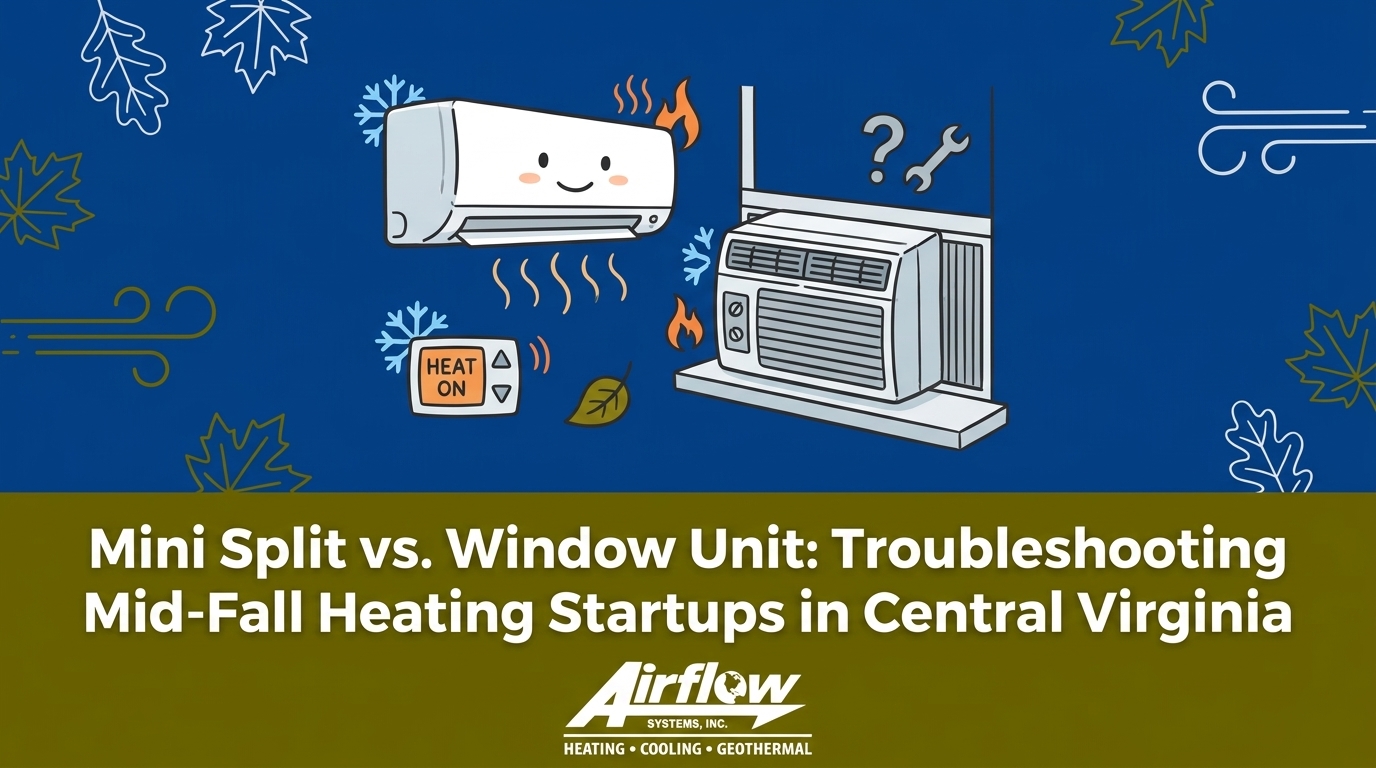
If you are searching for reliable home maintenance tips and troubleshooting, the first thing our team at Airflow Systems, Inc. wants you to know is that a strange odor during your initial autumn heating cycle does not automatically mean your house is catching fire. A common misconception we see among Charlottesville homeowners is that any unusual smell or sound points to an immediate electrical hazard. In reality, a mid-fall October heating startup often produces temporary odors as idle components wake up from their summer hibernation.
The transition from cooling to heating causes physical changes inside your equipment. We often hear from homeowners who feel a wave of anxiety when they switch their thermostat to heat for the first time in months, only to be greeted by a burning smell or a loud popping noise. However, by understanding the objective mechanical differences between various systems, you can easily distinguish normal operation from true hazards.
If you are currently evaluating your mini split cooling options alongside traditional units, knowing how each handles this seasonal shift is a great place to start. A baseline understanding of your system's internal mechanics empowers you to make confident, safe decisions without unnecessary panic.
Mini Split vs. Window Unit: How They Handle the October Transition
When the crisp autumn air finally arrives in Central Virginia, your HVAC equipment has to reverse its entire operational goal. Instead of removing heat from your living space, it must now provide it. Our technicians note that how your specific unit accomplishes this task dictates the types of smells and sounds you will experience during a mid-fall October heating startup.
The Mechanics of a Heat Pump Mini Split
Modern ductless mini splits operate as heat pumps. They do not generate heat by burning fuel or running electricity through glowing red coils. Instead, they use a mechanical component called a reversing valve. When you switch your thermostat to heating mode, this valve shifts, reversing the flow of chemical refrigerant.
The system now absorbs ambient thermal energy from the outdoor air—even on chilly autumn nights—and transfers it inside. Because they do not rely on super-heated electrical elements, the professional mini split systems our team installs generally produce a much milder transition period. The internal coils warm up gradually, which means any dust that settled on them over the summer is warmed gently rather than scorched instantly.
The Mechanics of a Heating-Capable Window Unit
Conversely, most window units that offer a heating mode rely on electric resistance strips. These strips function exactly like the glowing coils inside a pop-up toaster. Throughout the entire summer cooling season, these heating strips sit completely idle inside the chassis, collecting airborne debris, pet dander, and dust.
When you trigger the heating mode for the first time, those electric strips immediately receive full power and heat up to hundreds of degrees in a matter of seconds. The sudden, intense heat aggressively incinerates the accumulated debris, resulting in a sharp, noticeable burning odor. Furthermore, because window units are fully exposed to the outside elements, they often collect more environmental debris than a sealed indoor air handler, making their initial startup significantly more dramatic.
Decoding the Burning Smell When Turning On Heat for the First Time
In our years of conducting pre-winter inspections across the Charlottesville area, the most common cause of panic during a seasonal transition is the unmistakable burning smell when turning on heat for the first time. To troubleshoot this effectively, you must understand the physics of dust accumulation. Over the idle summer months, microscopic particles settle on your heat exchangers, blower wheels, and electric strips.
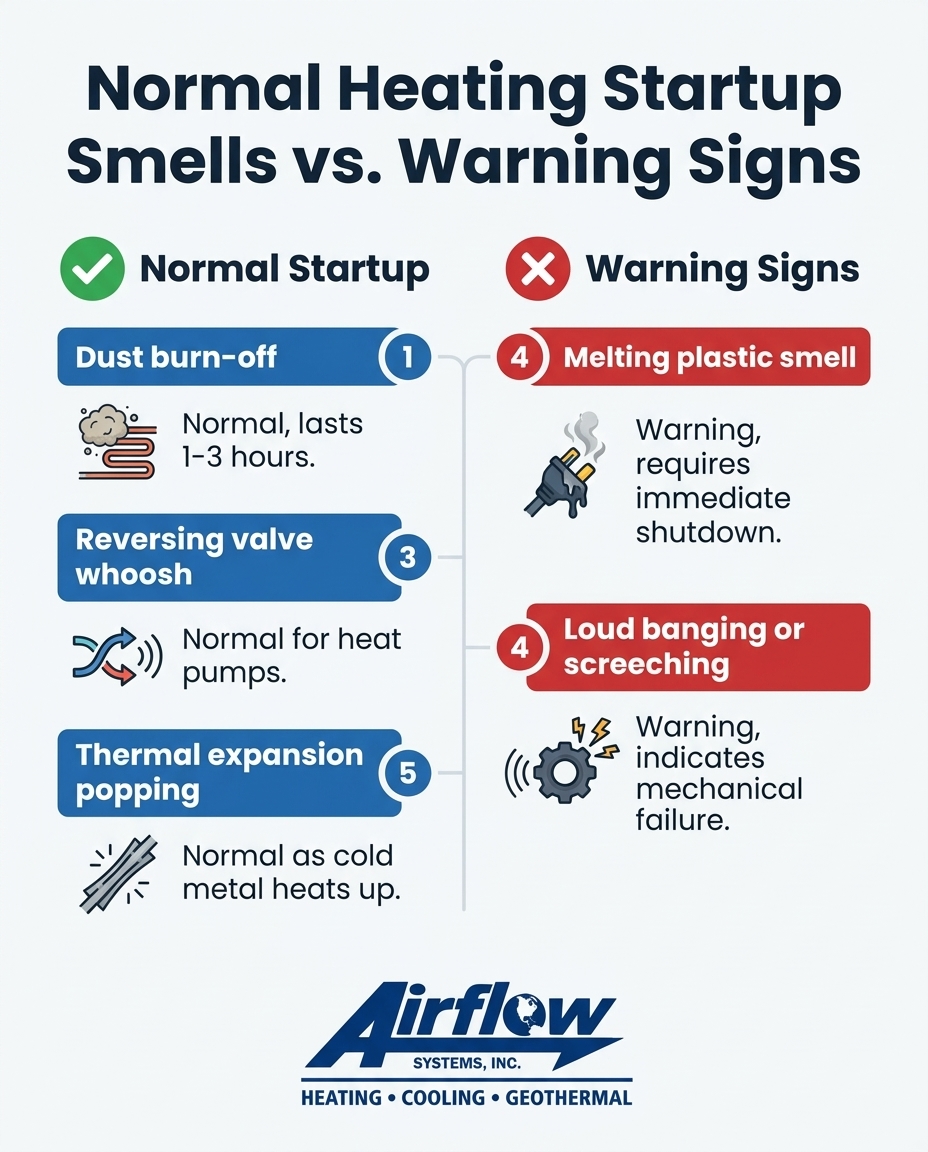
When the heating cycle engages, this layer of organic matter carbonizes. This is known as dust burn-off. Normal dust burn-off is a temporary, expected process. It typically smells like a dusty, dry heat—similar to a hot hair dryer—and should dissipate entirely within one to three hours of continuous operation. If you open a few windows to ventilate the space, the odor should clear out quickly.
However, we always advise our customers to remain vigilant for warning signs of abnormal odors. A smell that resembles melting plastic, acrid chemical smoke, or an electrical fire indicates a serious hazard. These odors suggest that wiring insulation is melting or a motor is overheating. If you detect these sharp, toxic smells, you must shut the system down immediately at the thermostat or breaker panel.
Comparing the Startup Burn-Off Experience
• Wall-Mounted Mini Split — Heating Mechanism: Refrigerant Heat Transfer — Dust Accumulation Zone: Indoor Coil & Blower Wheel — Typical Smell Intensity: Mild to Moderate (warm dust) — Expected Duration: 30 minutes to 1 hour
• Window Unit (Electric Heat) — Heating Mechanism: Electric Resistance Strips — Dust Accumulation Zone: Exposed Heating Elements — Typical Smell Intensity: High (sharp, scorched dust) — Expected Duration: 1 to 3 hours
• Central Heat Pump — Heating Mechanism: Refrigerant & Aux Strips — Dust Accumulation Zone: Air Handler Coils & Ducts — Typical Smell Intensity: Moderate (varies by duct cleanliness) — Expected Duration: 1 to 2 hours
Popping, Banging, and Whooshing: Troubleshooting Startup Noises
Beyond unusual odors, our dispatchers frequently receive calls about a mid-fall October heating startup introducing a symphony of strange noises. Just as with the burning smell, understanding the mechanical source of these sounds alleviates homeowner anxiety.
1. The Reversing Valve "Whoosh"
If you own a heat pump or a mini split, you may hear a distinct "whoosh" or a sudden rush of compressed air when you first switch the system to heating mode. This sound is entirely normal. It is simply the reversing valve shifting position to change the direction of the pressurized refrigerant. You may also hear this sound periodically throughout the winter when the system enters its automatic defrost cycle.
2. Thermal Expansion and "Popping"
Many homeowners report a series of popping or clicking noises coming from their vents, air handlers, or window unit chassis. This is caused by thermal expansion. When cold sheet metal and rigid plastic components suddenly receive a blast of warm air, the materials expand rapidly. As the joints and seams push against one another, they create a popping sound. Once the system reaches a stable operating temperature, this noise usually subsides.
3. Mechanical Warning Signs
While popping and whooshing are normal, other sounds require immediate attention. We strongly recommend actively listening to your system during its first few cycles to establish a baseline of normal operation.
1. Loud Banging or Clanking: This indicates a loose internal component, such as a detached blower wheel or a failing motor mount striking the housing.
2. High-Pitched Screeching: A squealing or screeching sound usually points to a failing fan belt or a blower motor bearing that has seized up due to lack of lubrication.
3. Continuous Clicking: If your system clicks repeatedly but fails to produce heat, it likely has a failing relay switch or a malfunctioning ignition sequence.
If you hear any of these warning signs, turn the system off to prevent further internal damage.
How Charlottesville's Humid Summers Impact Your Fall Heating Startup
As local HVAC experts, we know firsthand that your local climate plays a massive role in how your HVAC system behaves during seasonal transitions. In Central Virginia, the specific weather patterns heavily influence the intensity of the burning smell when turning on heat for the first time.
The Humidity Factor
Charlottesville is known for its highly humid summers. High humidity causes airborne particulate matter—such as pollen, pet dander, and normal household dust—to become heavy and sticky. Instead of simply blowing through your filters, this damp debris cakes stubbornly onto the internal components of your HVAC system, forming a dense paste on blower wheels and heat exchangers.
The Drying and Burning Process
When the weather shifts and you initiate your mid-fall October heating startup, the sudden introduction of heat rapidly bakes this caked-on moisture. Because the debris is tightly adhered to the internal components, it requires a slightly longer and more pronounced burn-off period compared to systems operating in dry, arid climates.
Dehumidification Differences
The type of system you use also impacts this buildup. Modern mini splits offer excellent dehumidification capabilities during the summer, which helps keep the internal chassis slightly cleaner. Window units, on the other hand, often struggle to drain condensation effectively, leading to a much higher concentration of sticky debris by the time autumn arrives. If you rely on aging window units, our team often suggests transitioning to comprehensive air conditioning solutions that manage humidity effectively, which can drastically reduce your fall startup odors. Proper pre-season cleaning is the best way to mitigate these climate-specific challenges before the cold weather sets in.
When to Stop Troubleshooting and Call a Licensed Professional
While understanding normal dust burn-off empowers you to remain calm, you must also establish strict safety boundaries. Troubleshooting has limits, and knowing when to abandon observation and seek expert help is vital for your home's safety.
As your independent, locally-owned company at Airflow Systems, Inc., our focus is on providing honest, safety-first advice. We want to help you avoid unnecessary early-season repair calls for normal dust burn-off, but we also want to ensure you act quickly when a true hazard presents itself.
• Follow NFPA Guidelines: The National Fire Protection Association strongly recommends keeping all flammable materials—such as curtains, furniture, and storage boxes—at least three feet away from all heating equipment, including window units and baseboard heaters.
• Identify Persistent Hazards: If the burning smell when turning on heat for the first time smells like melting plastic, or if it produces visible smoke, turn the system off at the thermostat immediately. If the thermostat is unresponsive, flip the dedicated breaker in your electrical panel.
• Never Open the Cabinet: Opening an air handler cabinet or a window unit chassis to inspect live wiring, capacitors, or internal mechanical failures is strictly for licensed professionals. High-voltage components retain dangerous electrical charges even after the system is powered down.
• Address Continuous Banging: A system that shakes, vibrates violently, or produces continuous loud banging must be inspected by a technician to prevent catastrophic motor failure.
Prompt professional intervention before extreme weather hits ensures your system is safe and reliable. One Charlottesville homeowner we recently worked with experienced this firsthand when their furnace went down right before the winter holidays. Because they reached out promptly, our office staff responded immediately, and our technician Shannon had the system running safely again in short order.
Long-Term Comfort: Upgrading Your System Before Winter Hits
Troubleshooting startup noises and smells is a necessary part of autumn maintenance, but it also provides an opportunity to evaluate your long-term comfort. Relying on aging window units or inefficient electric space heaters becomes increasingly frustrating as temperatures continue to drop.
The Limitations of Temporary Heating
Window units are inherently inefficient during the winter. They leave uninsulated gaps in your window frames, allowing cold drafts to enter the room. Furthermore, their electric resistance heating strips consume massive amounts of electricity, driving up your utility bills without providing consistent, whole-home warmth.
The Benefits of Modern Heat Pumps
Upgrading to a modern heat pump or a ductless mini split system provides consistent, year-round comfort. These systems are engineered to extract heat from freezing outdoor air efficiently. Proper zoning and strategic placement eliminate cold spots in your home, ensuring that every room remains perfectly conditioned regardless of the weather outside. Additionally, federal tax credits may apply to qualifying heat pump installations. We advise readers to verify current programs with their utility or a tax professional to take advantage of available incentives.
If you are tired of loud, rattling window units and intense burning smells during every mid-fall October heating startup, it may be time to consider a permanent upgrade. Discovering the best rooms for a mini split system can help you plan a targeted approach to your home's heating needs.
Another local homeowner struggled with an old HVAC system that could not keep their house warm enough when temperatures dipped to minus 5 degrees. After choosing to have our team install a new heat pump and LP gas furnace system, their home is now consistently comfortable year-round with a significantly lower electric bill. Professional installation ensures that your new system operates safely and efficiently from the very first cycle.
Ensure a Safe and Odor-Free Heating Season
At Airflow Systems, Inc., we believe that understanding the mechanics behind your mid-fall October heating startup empowers you to make confident decisions about your home comfort. By recognizing the difference between normal dust burn-off and a true mechanical failure, you can safely navigate the seasonal transition without unnecessary stress.
While temporary odors and thermal expansion noises are standard, you should never ignore persistent electrical smells or loud, aggressive banging. Professional pre-winter inspections remain the most effective way to ensure long-term safety and operational efficiency. If you have any lingering concerns about your system's transition to heating mode, or if the startup smells refuse to dissipate, scheduling a professional assessment will give you the clarity you need for a safe heating season.
Frequently Asked Questions
Is it normal for a heater to smell like burning when first turned on?
Yes, our technicians confirm it is completely normal for a heater to produce a burning smell during its first cycle of the season. This is caused by dust and airborne particles that have settled on the internal heating components over the summer. When the heat engages, this debris carbonizes, creating a temporary odor known as dust burn-off.
How long does the burning smell last when you turn on the heat?
Normal dust burn-off typically lasts anywhere from one to three hours of continuous operation. The smell should gradually fade as the accumulated dust is completely incinerated. If the smell persists beyond a few hours, or if it smells like melting plastic, you should turn the system off and contact a professional.
Why is my heater making a loud banging noise?
A loud banging noise is usually a sign of a mechanical issue, such as a loose blower wheel, a failing motor mount, or debris trapped in the fan assembly. While minor popping sounds from thermal expansion are normal, aggressive banging requires immediate attention. Shut the system down to prevent further internal damage to the unit.
What does a bad furnace sound like?
A failing furnace often produces high-pitched screeching, heavy grinding, or repetitive clicking sounds that do not result in ignition. Screeching usually points to a worn-out fan belt or seized motor bearings, while grinding indicates metal-on-metal friction. Any of these noises warrant an immediate inspection by a licensed technician.
Do mini splits produce a burning smell during fall startup?
Mini splits can produce a mild burning smell during their first fall startup, but it is generally much less intense than the smell from electric resistance heaters. Because mini splits use a heat pump process rather than glowing hot electric strips, the dust on the indoor coils warms up more gently. The odor is usually faint and dissipates very quickly.
How does summer humidity affect my heating system's first cycle?
High summer humidity causes airborne dust and debris to become sticky, making it cling stubbornly to the internal components of your HVAC system. When you turn on the heat in the fall, this dense, caked-on layer of debris can take slightly longer to burn off. This often results in a more noticeable initial startup smell in humid climates compared to dry regions.
Book Expert Service Or Contact Us
Our Service Process
A Hassle-Free Service Experience
01
Consultation & Diagnosis
We start by listening to your needs and performing a thorough diagnosis of your system to recommend the best solution.
02
Transparent Quoting
We provide a clear, upfront estimate with no hidden fees, so you know exactly what to expect.
03
Expert Service & Follow-Up
Our factory-trained technicians complete the work to the highest standards, and we follow up to ensure your complete satisfaction.
testimonials
What Our Customers Are Saying
Our customers consistently praise our exceptional service and attention to detail, making us a trusted choice for all your HVAC needs.
where we operate
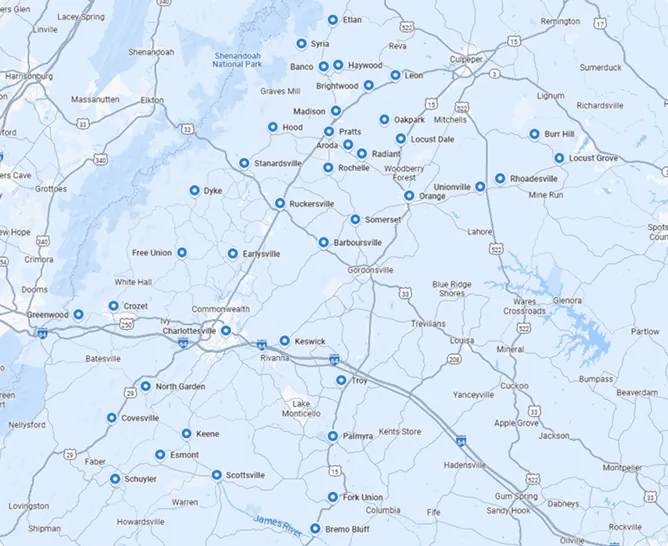
Service areas