


Choose an option to see quick actions and get help faster.
.svg)
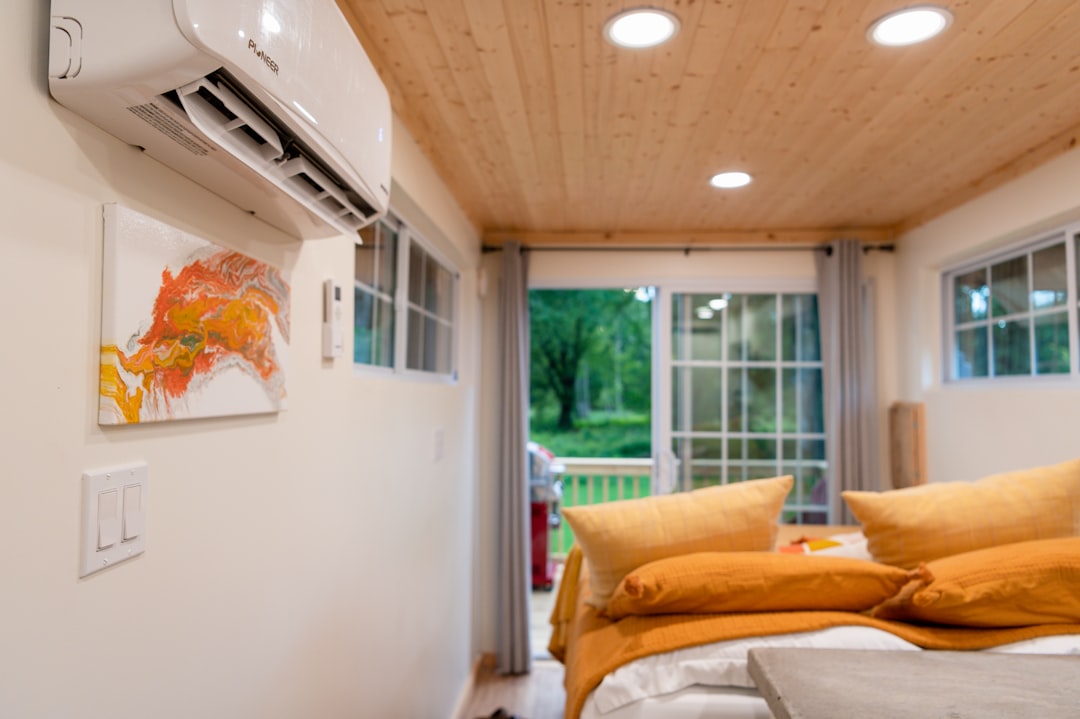
Why Choosing the Right Rooms for a Mini Split System Changes Everything

The best rooms for a mini split system are bedrooms, living rooms, home offices, finished basements, garages, and room additions — especially spaces that are hard to reach with central ductwork or need independent temperature control.
Quick Answer: Best Rooms for a Mini Split System
• Master Bedroom — Why It Works: Quiet operation, precise sleep comfort
• Living Room — Why It Works: High-traffic zone, open layout benefits from zoned cooling
• Home Office — Why It Works: Steady temps protect electronics and boost focus
• Finished Basement — Why It Works: Combats humidity and uneven heating from central HVAC
• Garage / Workshop — Why It Works: Unconditioned space made usable year-round
• Room Addition / Sunroom — Why It Works: Often impossible to connect to existing ductwork
• Converted Attic — Why It Works: Heat rises and collects here — mini splits handle it well
Mini splits work differently than central air. Instead of pushing conditioned air through ducts across your whole home, they deliver targeted comfort room by room. That means you only condition the spaces you actually use — and you stop wasting energy on empty rooms.
For homeowners in Central Virginia, this matters a lot. Older homes, room additions, and finished basements often sit outside the reach of central HVAC. The result? Rooms that are too hot in summer, too cold in winter, and uncomfortable all year long.
The good news is that placement makes all the difference. Put a mini split in the right room — and in the right spot within that room — and it runs efficiently and quietly. Put it in the wrong place, and it works harder than it should, costs more to run, and may not keep you comfortable.
This guide walks you through every key room, placement rule, and sizing decision so your mini split performs exactly the way it should.

The Best Rooms for a Mini Split System
When we look at the layout of a typical home in Charlottesville, we often find "comfort gaps." These are areas where the central furnace or air conditioner just can't keep up. Because mini splits are ductless, they offer a flexible solution for these problematic zones. Whether you are looking for supplemental heating during a chilly Virginia autumn or need to turn a sweltering sunroom into a year-round retreat, identifying the best rooms for a mini split system is the first step toward total home comfort.
In many cases, these systems are the only viable option for room additions where extending bulky ductwork is structurally impossible or prohibitively expensive. By installing a dedicated unit, you gain precise temperature control without putting additional strain on your existing HVAC services.
Master Bedrooms and Guest Suites
We spend nearly one-third of our lives sleeping, yet bedrooms are often the most difficult rooms to keep at a consistent temperature. A mini split is a dream come true for light sleepers because of its whisper-quiet operation. Unlike window units that rattle or central systems that kick on with a loud "thump," a high-quality mini split hums along at noise levels often below 25 dB—quieter than a soft rustle of leaves.
Beyond the silence, these units allow for precision cooling. If you like your bedroom at 68 degrees but want the rest of the house at 74, a mini split makes that possible without a "thermostat war." Furthermore, because these units don't use ducts—which can trap dust, pollen, and pet dander—they significantly improve indoor air quality in the very place you breathe most deeply.
Home Offices and Productive Spaces
With more of us working from home for eight or more hours a day, the home office has become a high-priority zone. Electronics like computers, monitors, and printers generate a surprising amount of heat in a small space. A mini split provides the steady temperatures needed to keep both you and your hardware from overheating.
Humidity control is another hidden benefit. High humidity can be detrimental to sensitive electronics and can lead to a "stuffy" feeling that kills productivity. A mini split acts as a powerful dehumidifier, keeping the air crisp and dry. When you aren't in the office, you can simply turn the unit down or off, ensuring you aren't paying to cool a workspace during dinner time.
Finished Basements and Converted Attics
Basements and attics are the "extreme" zones of any home. In a converted attic, heat rises and collects, often making it 5 to 10 degrees warmer than the ground floor. Conversely, finished basements are naturally cooler but often suffer from moisture issues and poor airflow from central vents located high on the walls.
Mini splits solve these space constraint issues perfectly. In an attic, where ceiling height is at a premium, a low-profile wall unit or ceiling cassette fits where traditional ductwork cannot. In basements, the dehumidification feature helps prevent that "musty" basement smell, transforming a damp lower level into a comfortable media room or guest suite.
Garages, Workshops, and Home Gyms
The garage is often the final frontier of home comfort. Whether you use it as a workshop, a hobby space, or a home gym, these unconditioned spaces are usually at the mercy of the outdoor weather. In Central Virginia, that means freezing winters and humid, heavy summers.
Installing a mini split in a garage allows you to use the space year-round. For home gyms, the ability to rapidly cool the room during a high-intensity workout is a game-changer. Just remember that garages often have less insulation than the rest of the house; we always recommend checking your insulation levels to ensure the mini split can work efficiently without losing all that precious cool air through a thin garage door.
Strategic Indoor Unit Placement for Maximum Efficiency
Finding the best rooms for a mini split system is only half the battle; you also have to put the unit in the right spot within that room. Proper placement ensures that the air circulates effectively, reaching every corner of the space without creating uncomfortable drafts or "hot spots."
Efficiency is heavily dictated by airflow. If the unit is tucked behind a curtain or blocked by a tall bookshelf, it will struggle to "read" the room temperature correctly. This leads to short-cycling, where the unit turns on and off too frequently, wearing out the parts and driving up your energy usage.
• Wall-Mounted — Best Application: Most common; high on the wall — Visual Impact: Visible, but sleek
• Ceiling Cassette — Best Application: Large rooms; open concepts — Visual Impact: Flush with ceiling; discreet
• Concealed Duct — Best Application: Multiple small rooms — Visual Impact: Completely hidden; uses short ducts
Optimal Airflow in the Best Rooms for a Mini Split System
For the best results, we recommend mounting the indoor unit on a central wall. This allows the air to move freely across the room. Whenever possible, we look for a perimeter (exterior) wall for the installation. Why? Because a perimeter wall allows the condensate drainage line to go directly outside without the need for an additional condensate pump.
Height is another critical factor. We aim to mount indoor units 6 to 8 feet above the floor. Since heat rises, placing the unit high allows it to catch the warmest air and replace it with cool air that naturally descends to the living zone. Always ensure there is at least 6 feet of clear, open space in front of the unit. If you place it directly above a large wardrobe or behind a decorative soffit, you’ll lose a significant portion of its cooling power.
Avoiding Common Indoor Placement Mistakes
Even in the best rooms for a mini split system, a few common mistakes can ruin the experience:
• Heat Sources: Never install a unit directly above a kitchen stove, a lamp, or a television. The heat from these devices will trick the unit’s sensors into thinking the room is much hotter than it actually is.
• Direct Sunlight: Avoid walls that receive intense afternoon sun. Solar gain can bake the unit's casing and interfere with accurate temperature readings.
• Proximity to Beds: While you want the bedroom cool, you don't necessarily want cold air blowing directly onto your face while you sleep. We suggest placing the unit on a sidewall rather than directly across from or above the headboard.
• Kitchen Grease: If installing in a kitchen, keep the unit at least 3 feet away from cooking areas to prevent grease buildup on the filters, which can lead to odors and reduced efficiency.
Outdoor Unit Installation and Clearance Guidelines
The outdoor unit (the condenser) is the heart of the system. It’s responsible for exhausting the heat gathered from inside your home. For it to do its job, it needs "breathing room." We recommend a minimum of 1 to 3 feet of clearance on all sides. If the unit is boxed in by dense shrubs or a tight fence, the heat can't escape, causing the system to overheat and eventually fail.
The outdoor unit should be placed on a solid, level surface—usually a concrete or high-density plastic pad—to prevent vibrations and ensure proper oil circulation within the compressor. While the outdoor unit can be placed up to 100 feet away from the indoor unit, keep in mind that efficiency drops slightly as the distance increases.
Selecting the Right Side of the House
In Charlottesville, we have to consider the path of the sun. The ideal location for an outdoor unit is on the shaded side of the house, away from direct midday sun. This helps the unit stay cooler and work more efficiently during the hottest parts of the day.
You should also consider noise and aesthetics. While modern condensers are very quiet, you probably don't want it right under a guest room window or next to your patio seating. We also look for areas protected from high winds, which can interfere with the fan's operation, and areas that are easily accessible for our technicians when it’s time for annual maintenance.
Ground Mounting vs. Wall Mounting
Most homeowners prefer ground mounting on a pad, but wall mounting is a great alternative if you live in an area prone to minor flooding or if you want to keep the unit clear of snow accumulation. If we wall-mount a unit, we use specialized vibration-dampening brackets to ensure that the hum of the compressor doesn't vibrate through your home’s framing.
Sizing and Configuration for the Best Rooms for a Mini Split System
One of the biggest mistakes a homeowner can make is "guessing" the size of the unit. If a unit is too small, it will run constantly and never get the room truly comfortable. If it’s too large, it will cool the room so fast that it doesn't have time to remove the humidity, leaving you feeling cold and clammy.
Sizing Units for the Best Rooms for a Mini Split System
We use BTU (British Thermal Units) ratings to match the system to the space. As a general rule of thumb:
• 6,000 BTU: Ideal for small rooms (100–250 sq. ft.) like a nursery or small office.
• 9,000 BTU: The "sweet spot" for most bedrooms and medium spaces (250–400 sq. ft.).
• 12,000 BTU+: Necessary for large living areas, open-concept basements, or rooms with high ceilings and lots of windows.
When we perform a load calculation, we don't just look at square footage. We also account for the quality of your insulation, the number of windows, and even the local climate in Central Virginia. A sunroom with floor-to-ceiling glass will require a much higher BTU rating than a well-insulated basement of the same size.
Single-Zone vs. Multi-Zone Systems
A single-zone system consists of one indoor unit and one outdoor condenser. This is perfect for a single room addition or a garage. However, if you want to cool three different bedrooms, a multi-zone system is the way to go. This allows you to connect multiple indoor units to a single, larger outdoor condenser.
Each indoor unit maintains its own "thermal profile," meaning the kids can have their playroom at 72 degrees while the master bedroom stays at a crisp 68. This zoning strategy is the ultimate way to maximize both comfort and utility savings.
Frequently Asked Questions about Mini Split Placement
How high should a mini split be mounted from the floor?
Indoor units should be mounted 6 to 8 feet above the floor. This height is optimal because it allows the cool air to descend naturally through the room’s air volume, ensuring that the "living zone" (where you actually sit and stand) stays comfortable without the unit having to work overtime.
Can I install a mini split on an interior wall?
Yes, you can! However, it is more complex. Because an interior wall doesn't lead directly outside, we have to run the refrigerant lines and drainage tubing through the attic or crawlspace. This often requires a condensate pump to push the water uphill or across the house. While we prefer perimeter walls for their simplicity, our team can certainly make an interior wall installation work if that is the best spot for your room's layout.
Where should I avoid placing the outdoor unit?
Avoid spots that are in direct, intense sunlight for most of the day. You should also stay away from areas where roof runoff or "waterfalls" from gutters might pour directly onto the unit. Finally, ensure the unit isn't blocked by a tight fence or dense shrubbery; it needs at least 12 to 24 inches of clear space to "breathe" properly.
Conclusion
Finding the best rooms for a mini split system and ensuring they are placed correctly is the secret to a comfortable, energy-efficient home. Whether you are reclaiming a hot attic, finishing a basement, or just trying to get a good night's sleep in a quiet bedroom, these systems offer a level of control that traditional HVAC simply can't match.
At Airflow Systems Inc., we take the guesswork out of the process. As a family-owned contractor serving Charlottesville and Central Virginia since 1988, we understand the unique architectural challenges of our local homes. Our NATE-certified professionals are experts at performing precise load calculations and identifying the perfect placement for your new system.
Don't settle for rooms you can only use half the year. Ensure your system provides targeted comfort and long-term reliability with a professional assessment. Schedule your professional mini split installation with us today and experience the difference that expert placement makes!
Book Expert Service Or Contact Us
Our Service Process
A Hassle-Free Service Experience
01
Consultation & Diagnosis
We start by listening to your needs and performing a thorough diagnosis of your system to recommend the best solution.
02
Transparent Quoting
We provide a clear, upfront estimate with no hidden fees, so you know exactly what to expect.
03
Expert Service & Follow-Up
Our factory-trained technicians complete the work to the highest standards, and we follow up to ensure your complete satisfaction.
testimonials
What Our Customers Are Saying
Our customers consistently praise our exceptional service and attention to detail, making us a trusted choice for all your HVAC needs.
where we operate
Service areas