


Choose an option to see quick actions and get help faster.
.svg)
What Homeowners Really Want to Know About Ductless Mini Splits
How does a ductless mini split work is simpler than most people expect. Here's the short version:
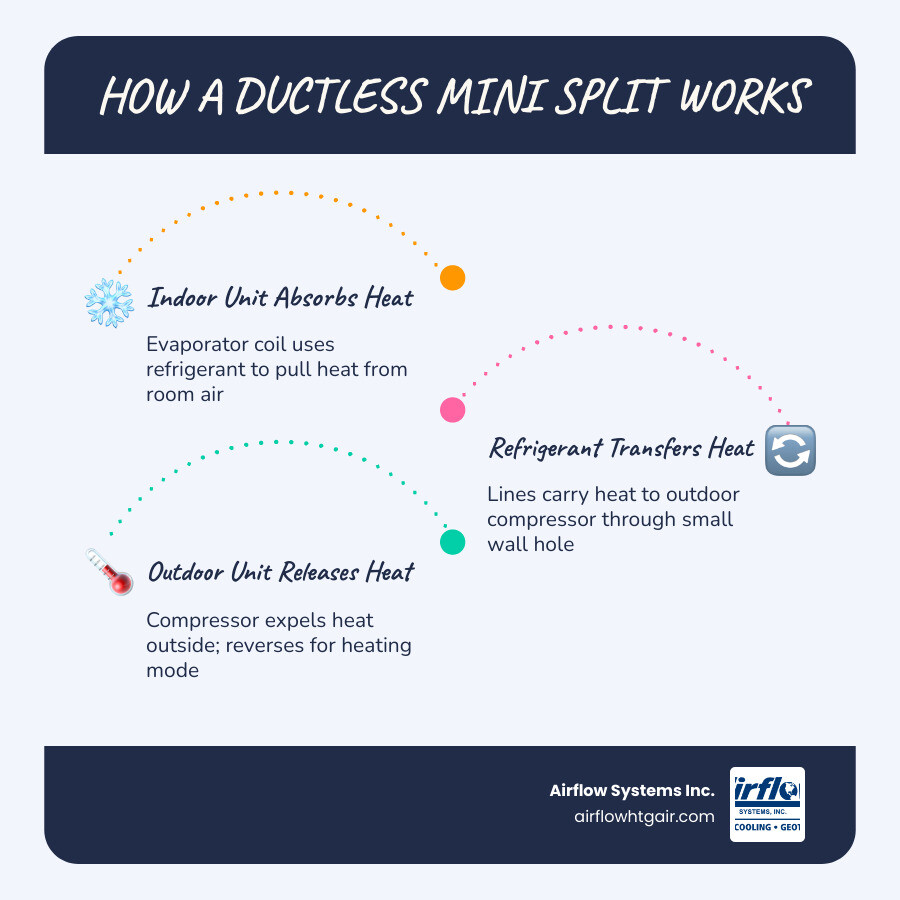
1. Refrigerant lines connect a small indoor unit to an outdoor compressor through a 3-inch hole in the wall
2. The indoor unit absorbs heat from your room air using an evaporator coil and refrigerant
3. The refrigerant carries that heat to the outdoor unit, where it's released outside
4. In heating mode, the process reverses - heat is pulled from outdoor air and brought inside
5. Each indoor unit controls its own zone independently, with no ductwork needed
That's the core of it. No ducts, no major construction, just targeted comfort delivered room by room.
If you've been wondering whether a ductless system could solve the hot and cold spots in your Central Virginia home - or whether it's worth switching from your current setup - you're in the right place. Ductless mini splits have become one of the most popular HVAC solutions for homeowners who want efficient, flexible comfort without tearing into walls to run ductwork. According to energy efficiency data, these systems can be 20 to 30 percent more efficient than traditional ducted systems, and duct losses alone can account for more than 30% of a home's energy use for heating and cooling.
This guide breaks down exactly how these systems work, what they're made of, and whether one makes sense for your home.
How Does a Ductless Mini Split Work?
To understand how does a ductless mini split work, it helps to think of it as a "split" system—meaning the components are divided between the inside and the outside of your home. In a traditional central AC setup, you have one massive indoor unit (usually in an attic or crawlspace) that pushes air through a spiderweb of ducts. A mini split skips the middleman.
The magic happens through the refrigeration cycle. Instead of moving air through long, dusty metal tubes, a mini split moves heat. It uses a chemical called refrigerant that circulates between the indoor and outdoor units. This refrigerant has a very low boiling point, allowing it to change from liquid to gas and back again, absorbing and releasing heat in the process.
One of the most impressive features of modern mini splits is inverter technology. Think of a standard air conditioner like a light switch—it’s either 100% on or 100% off. This leads to those annoying temperature swings and loud "clunks" when the system kicks in. An inverter compressor is more like a dimmer switch. It modulates its speed up or down to match the exact cooling or heating demand of the room. This keeps the temperature rock-steady and saves a massive amount of energy.
For more details on the specific hardware we use, you can explore More info about mini split systems.
Central Air vs. Ductless Mini Splits: A Quick Comparison
• Installation — Traditional Central Air: Invasive; requires extensive ductwork — Ductless Mini Split: Minimal; requires a 3-inch wall hole
• Efficiency — Traditional Central Air: Significant loss (up to 30%) via ducts — Ductless Mini Split: High efficiency (up to 38 SEER2)
• Zoning — Traditional Central Air: One thermostat for the whole house — Ductless Mini Split: Individual control for every room
• Noise — Traditional Central Air: Loud startup and "whooshing" air — Ductless Mini Split: Whisper-quiet indoor operation
• Maintenance — Traditional Central Air: Requires duct cleaning and sealing — Ductless Mini Split: Simple filter cleaning
How does a ductless mini split work to cool a room?
When you click that remote to "Cool," the indoor unit’s fan pulls warm air from your room across a cold evaporator coil. Inside that coil is chilled liquid refrigerant. As the warm air hits the cold coil, the refrigerant absorbs the heat and transforms into a gas.
This process does more than just lower the temperature; it also performs moisture removal. As the air cools, water vapor condenses on the coil (just like a cold soda can on a humid day). This water is collected in a drain pan and sent outside through a condensate line. The result? Crisp, cool, dehumidified air is circulated back into your room, while the heat—now trapped in the gas refrigerant—is pumped outside to the compressor to be released.
How does a ductless mini split work to provide heat?
Most mini splits are actually heat pumps. This means they don't "create" heat through combustion or electric resistance (which is expensive). Instead, they use a reversing valve to flip the refrigeration cycle backward.
In the winter, the outdoor unit acts as the evaporator. Even when it feels freezing outside, there is still heat energy in the air. The system extracts that heat, the compressor pressurizes the refrigerant to make it even hotter, and the indoor unit releases that heat into your home. Modern units are incredibly resilient; some premium models can provide 100% heating capacity even when outdoor temperatures drop well below zero.
System Components and Design Flexibility
A ductless system is a marvel of minimalist engineering. It consists of three primary parts: the outdoor compressor, the indoor air handler, and the "umbilical cord" that connects them, known as the conduit line. This conduit houses the power cable, refrigerant tubing, and the condensate drain.
One of the biggest draws for our neighbors in Charlottesville is the design flexibility. You aren't stuck with a giant white box on the wall if you don't want one. Here are the most common types of indoor units:
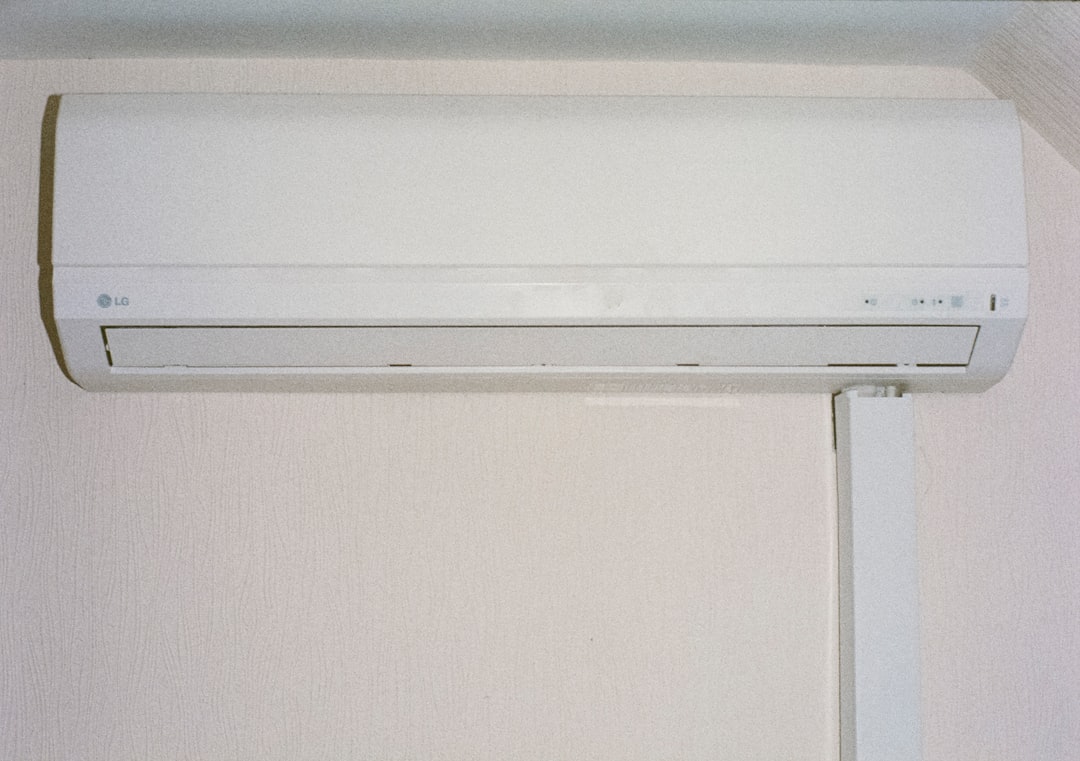
• Wall-Mounted: The most popular and cost-effective option, placed high on a wall.
• Ceiling Cassette: These sit flush with the ceiling, perfect for a sleek, "invisible" look.
• Floor-Mounted: Great for attics with low walls or replacing old baseboard heaters.
• Slim Duct: These allow for very short duct runs to hidden vents, ideal for keeping a historic aesthetic.
Beyond just comfort, these systems are excellent for More info about indoor air quality. Because there are no ducts to collect dust, pollen, or mold, the air stays much cleaner. Each indoor unit has its own dedicated filter, ensuring that you aren't circulating allergens from the basement up into the bedrooms.
Single-Zone vs. Multi-Zone Configurations
When we design a system for a home in Central Virginia, we look at zoning.
• Single-Zone: One outdoor unit connects to one indoor unit. This is perfect for "spot conditioning"—fixing that one bedroom that’s always too hot or cooling a new sunroom addition.
• Multi-Zone: One powerful outdoor unit can support up to eight separate indoor units.
The beauty of a multi-zone setup is independent control. If you like your bedroom at 68 degrees but your spouse wants the home office at 74, you can both be happy. You only pay to condition the rooms you are actually using. To make this even easier, many homeowners pair their units with More info about programmable thermostats or smartphone apps to manage their "zones" remotely.
Sizing, Zoning, and Energy Efficiency Benefits
Getting the size right is everything. If a unit is too small, it will run constantly and never get the room cool. If it's too big, it will "short cycle," turning on and off so fast that it never has a chance to dehumidify the air, leaving you feeling clammy.
We measure the cooling power in BTUs (British Thermal Units). While a professional More info about home energy diagnostics is the best way to be sure, here is a general guide for sizing:
• 12,000 BTU: Ideal for 400 to 650 square feet (a large master suite or family room).
• 18,000 BTU: Ideal for 600 to 1,000 square feet (a small apartment or open-concept living area).
• 24,000 BTU: Ideal for 800 to 1,300 square feet.
Why Ductless Systems Outperform Central Air
The biggest "energy thief" in a standard home is duct leakage. In a typical ducted system, you lose about 20% to 30% of your conditioned air through leaks, cracks, and poor insulation in the ductwork. If your ducts run through a scorching hot attic in the middle of a Virginia summer, your AC has to work twice as hard just to overcome that heat gain.
Ductless systems eliminate this loss entirely. By delivering the air directly into the room, they achieve much higher SEER2 ratings (Seasonal Energy Efficiency Ratio). While a standard ducted heat pump might reach 15 to 25 SEER2, some high-end ductless models boast ratings as high as 38 SEER2. That translates to significantly lower monthly utility bills.
Professional Installation and Maintenance
While there are "DIY" kits on the market, professional installation is vital for the longevity of your system. A certified technician ensures the refrigerant charging is precise—too much or too little refrigerant can kill a compressor in a matter of months.
The installation process is surprisingly clean. We mount the indoor unit, drill a small 3-inch wall hole for the conduit, and connect everything to the outdoor unit. Most single-zone installations can be completed in just a few hours. For more information on how we handle the process, check out More info about AC installations.
Keeping Your System Running Efficiently
Once your system is in, More info about maintenance is mostly a "hands-off" affair for the homeowner, with one major exception: filter cleaning.
Because mini splits move a lot of air through a small space, the filters can get dusty quickly. We recommend popping the front panel and rinsing the reusable filters every month—especially if you have pets or smoke.
Beyond that, you should keep the outdoor unit clear of leaves and debris and schedule an annual professional service. During this visit, we check the electrical connections, clean the coils, and ensure the condensate drain isn't clogged. If you ever run into trouble, our team is always ready for More info about AC repairs or More info about heat pump repairs.
Frequently Asked Questions about Mini Splits
We get a lot of questions about these systems, so let's clear up the most common ones. If you need more comprehensive help, our More info about HVAC services page covers the full spectrum of home comfort.
How long do mini split systems typically last?
With proper care and annual check-ups, you can expect a ductless mini split to last 15 to 30 years. Because they use inverter technology, the components don't experience the "hard starts" that wear out traditional systems, leading to better long-term durability.
Do mini splits require venting or pull air from outside?
This is a common myth! Mini splits do not pull air from the outside. They recirculate and filter the air already inside your room. The only thing passing through that 3-inch wall hole is electricity, refrigerant, and a drain line. There is no "venting" of exhaust gases because there is no combustion involved.
Can mini splits provide enough power for older homes?
Absolutely. In fact, they are the gold standard for retrofitting older homes in the Charlottesville area. Many historic homes don't have the space in the walls or ceilings for bulky ductwork. Mini splits allow us to provide modern comfort while preserving the architectural integrity of the house. They are also excellent as supplemental heating for homes that currently rely on baseboard or radiator heat.
Conclusion
Understanding how does a ductless mini split work reveals why so many Central Virginia families are making the switch. By removing the "drama" of ducts, these systems provide targeted, whisper-quiet, and incredibly efficient comfort. Whether you're looking to cool a garage workshop, finish a basement, or finally fix that one room that never stays comfortable, a mini split is often the smartest solution.
At Airflow Systems Inc., we are proud to be a family-owned, premier contractor serving Charlottesville and the surrounding areas. Our certified professionals stay at the forefront of the latest HVAC technologies to ensure your home stays a sanctuary of comfort all year long.
Ready to see if a ductless system is right for your home? Explore More info about mini split installations and let us help you design the perfect comfort zone.
Book Expert Service Or Contact Us
Our Service Process
A Hassle-Free Service Experience
01
Consultation & Diagnosis
We start by listening to your needs and performing a thorough diagnosis of your system to recommend the best solution.
02
Transparent Quoting
We provide a clear, upfront estimate with no hidden fees, so you know exactly what to expect.
03
Expert Service & Follow-Up
Our factory-trained technicians complete the work to the highest standards, and we follow up to ensure your complete satisfaction.
testimonials
What Our Customers Are Saying
Our customers consistently praise our exceptional service and attention to detail, making us a trusted choice for all your HVAC needs.
where we operate
Service areas