


Choose an option to see quick actions and get help faster.
.svg)
Why Hot, Humid Weather Is Your AC's Biggest Enemy
Getting your air conditioner ready for hot humid weather is one of the most important things you can do before summer arrives in Central Virginia. Here is a quick overview of the key steps:
1. Replace your air filter every 30-60 days during heavy use
2. Clear the outdoor condenser unit - keep at least 3 feet of clearance around it
3. Clean the condensate drain line to prevent clogs and water backup
4. Schedule a professional tune-up in spring before peak heat hits
5. Set your thermostat to 78°F when home and 80°F when away
6. Seal air leaks around doors and windows to keep humid outdoor air out
7. Check for warning signs like weak airflow, unusual noises, or rising energy bills
Most AC systems are engineered to keep your home about 20 degrees cooler than the outdoor temperature - and most new units are designed for days that reach around 95°F. That sounds like plenty of headroom, until you factor in humidity.
High humidity adds what engineers call a latent heat load - the extra work your system has to do to pull moisture out of the air, not just cool it down. As one mechanical engineering expert put it, high outdoor humidity places a "humongous additional load" on an AC system. In other words, a muggy 88°F day in Charlottesville can stress your system far more than a dry 95°F afternoon somewhere else.
When your AC is not properly prepared, that extra strain can lead to reduced efficiency, higher energy bills, uncomfortable indoor air, and - at the worst possible moment - a complete breakdown during a summer heatwave.
The good news? A few focused steps taken before summer arrives can make a real difference in how your system performs all season long.
Why Getting Your Air Conditioner Ready for Hot Humid Weather is Essential
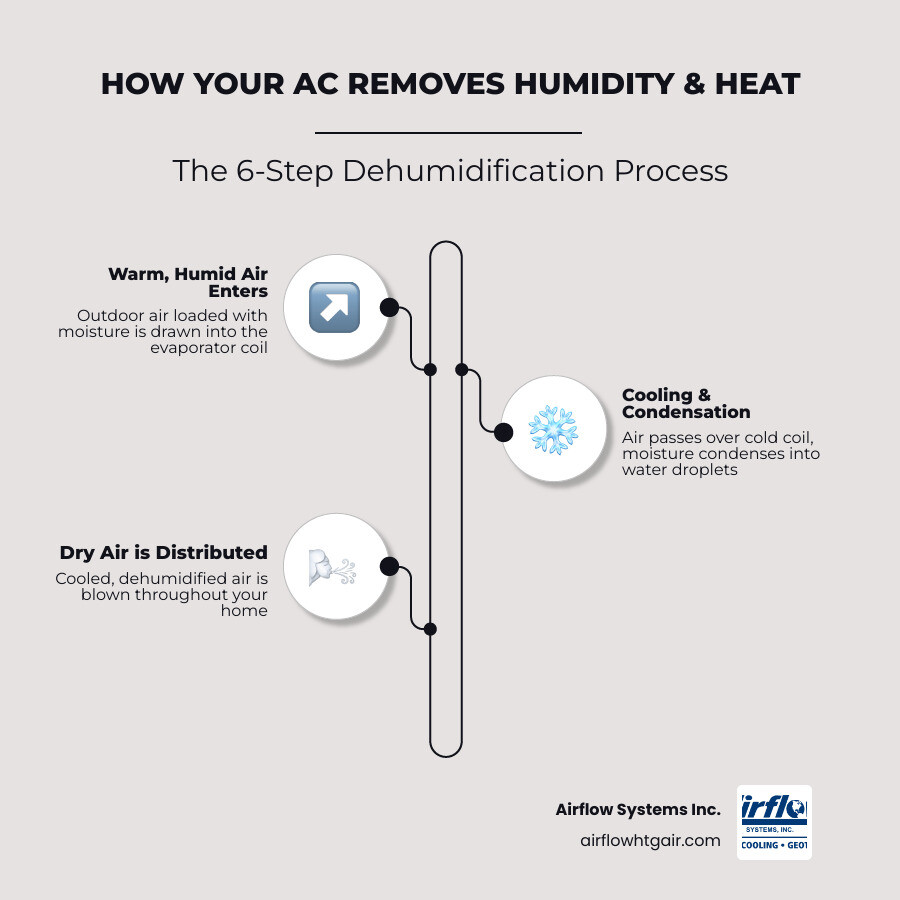
In Central Virginia, we aren't just fighting the heat; we are fighting the "soup" of summer. When the air is thick with moisture, your air conditioner has to work double duty. It acts as both a refrigerator and a giant dehumidifier.
The "20-degree rule" is a standard industry benchmark: most AC systems are designed to maintain an indoor temperature about 20 degrees lower than the outside air. When Charlottesville hits a 95-degree afternoon, your system is already pushing its design limits to keep your living room at 75°F. If the humidity is at 80%, the system spends a massive amount of energy just wringing water out of the air before it can even begin to drop the temperature.
This creates a "latent heat load." Think of it like running a marathon while wearing a heavy, wet wool coat. The compressor has to run longer cycles, and the evaporator coil—the part inside your home that gets cold—becomes a magnet for moisture. If the system isn't optimized, this extra strain can cause components to overheat or the evaporator coil to literally freeze over into a block of ice.
• Compressor — Impact of Dry Heat: High load due to temperature — Impact of Humid Heat: Extreme load; runs longer to remove moisture
• Evaporator Coil — Impact of Dry Heat: Absorbs heat from air — Impact of Humid Heat: Absorbs heat PLUS massive condensation
• Condensate Drain — Impact of Dry Heat: Minimal water flow — Impact of Humid Heat: Constant, heavy water flow; high clog risk
• Fan Motor — Impact of Dry Heat: Standard operation — Impact of Humid Heat: Increased wear due to extended run times
Professional HVAC maintenance is the only way to ensure your system’s internal chemistry and electrical components are prepared for this specific type of seasonal stress. Without it, you’re essentially asking your AC to run that "marathon" without any training.
Essential DIY Steps for Optimizing Performance
While some tasks require a pro, there are several high-impact steps you can take yourself. The goal is simple: maximize airflow. When airflow is restricted, your AC has to work harder and use more electricity to move the same amount of cool air.
The 30-90 Day Filter Rule
Air filters are your system's lungs. A dirty filter is the number one cause of AC "suffocation." During a Virginia heatwave, we recommend checking your filter every 30 days. If you have pets or suffer from allergies, you may need to replace it monthly. At a minimum, standard 1-inch filters should be swapped every 60 to 90 days.
Using high-quality MERV-rated filters (typically MERV 8 to 11 for most homes) can help capture more dust and pollen, but be careful—filters with too high a MERV rating can actually restrict airflow if your system isn't designed for them.
The 3-Foot Vegetation Rule
Your outdoor condenser unit needs to "breathe" to release the heat it gathered from inside your house. If it’s buried under overgrown bushes or piles of mulch, that heat gets trapped.
• Clear the Area: Keep vegetation, weeds, and debris at least three feet away from the unit.
• Check for Obstructions: Ensure there are no bird nests or leaves stuck in the fins.
• Vertical Clearance: Make sure there’s at least five feet of open space above the unit so hot air can rise away freely.
By maintaining this clearance, you ensure the heat exchange process is as efficient as possible, which directly lowers your monthly power bill.
Cleaning the Condensate Drain and Coils
Because a humid summer turns your AC into a water-making machine, your condensate drain line is under a lot of pressure. This line carries the "squeezed out" moisture from your indoor coil to the outside.
• The Vinegar Flush: To prevent algae and slime from plugging the pipe, find the T-shaped access point on your drain line (usually near the indoor unit) and pour in about a cup of distilled white vinegar. Do this once a month in the summer.
• Drain Pan Inspection: Check the emergency drain pan under your unit. If there is standing water, you likely have a clog that needs immediate attention.
• Soft Brush Cleaning: You can gently vacuum the indoor vents and use a soft brush to remove dust from the outdoor unit's exterior fins. However, be extremely careful—those fins are fragile. If they are bent or heavily soiled, it's time for professional AC repairs.
Getting Your Air Conditioner Ready for Hot Humid Weather with Smart Settings
One of the easiest ways to save money while getting your air conditioner ready for hot humid weather is to manage your thermostat wisely.
The Department of Energy (DOE) suggests setting your thermostat to 78°F when you are at home. While that might sound high, using ceiling fans can make 78°F feel like 74°F. When you're away for more than eight hours, bump it up to 80°F or 82°F.
Raising the temperature by just 7 to 10 degrees for eight hours a day can save you up to 10% a year on cooling costs. Modern smart thermostats are excellent for this because they can "recover" the temperature before you get home, and many models even have dedicated "Dehumidification Modes" that run the fan at lower speeds to pull more moisture out of the air without over-cooling the house.
Beyond the Unit: Whole-Home Strategies for Humid Heat
Sometimes the best way to help your AC is to stop heat from getting into your house in the first place. Think of your home as a cooler; if the lid is cracked or the insulation is thin, the ice (your AC) will melt instantly.
Insulation and Shading
According to the EPA, proper insulation can decrease energy consumption by up to 40%. In the attic, where temperatures can soar to 130°F, quality insulation acts as a shield. Properly sealed attic insulation can prevent up to 40% of heat from escaping in the winter and reduce solar heat absorption by as much as 60% during peak summer periods.
On the "sunny side" of your house, use thermal curtains or blackout blinds. Closing your shades during the hottest part of the day can block a massive amount of solar heat gain, reducing the workload on your AC.
The Ceiling Fan Secret
Ceiling fans don't actually lower the room temperature, but they create a "wind chill effect" on your skin.
• Summer Rotation: Ensure your fan is spinning counter-clockwise. This pushes a cool breeze directly down.
• The 4-Degree Difference: A good fan can make you feel up to 4 degrees cooler, allowing you to set the thermostat higher without losing comfort.
• Turn Them Off: Fans cool people, not rooms. If you leave the room, turn the fan off to save energy.
When to Call the Pros for a Summer Tune-Up
While DIY steps are great, there are parts of your system that only a pro should touch. A professional tune-up is like a 30-point inspection for your car; it catches the "small" things before they leave you stranded on the side of the road in 100-degree heat.
During a professional HVAC service visit, we do the heavy lifting:
• Refrigerant Levels: We check for leaks and ensure the "coolant" is at the exact level required. Too little refrigerant makes the system run forever; too much can destroy the compressor.
• Electrical Connections: We tighten all terminals. Heat causes metal to expand and contract, which can loosen wires and lead to electrical fires or component failure.
• Capacitor Health: The capacitor is like a battery that gives your AC the "jolt" it needs to start. These often fail during heatwaves. We test them to ensure they aren't about to give up.
• Duct Sealing: A leaky duct can zap 20% to 40% of your AC system's energy. We can inspect for "energy holes" that are dumping cold air into your crawlspace or attic.
Warning Signs You Need Professional Help Before a Heatwave
Don't wait for the system to stop blowing air entirely. Watch for these red flags:
1. Short-Cycling: If the AC turns on and off every few minutes, it's struggling. This might be an oversized unit or a failing sensor.
2. Hissing Sounds: This often indicates a refrigerant leak, which is a chemical hazard and an efficiency killer.
3. Frozen Coils: If you see ice on the indoor or outdoor lines, stop the unit immediately and call us. Running a frozen unit can lead to a permanent compressor failure.
4. Weak Airflow: This could be a failing blower motor or a major blockage in your ductwork.
5. Unusual Odors: Musty smells often mean mold is growing in the condensate pan due to high humidity.
The Best Time for Getting Your Air Conditioner Ready for Hot Humid Weather
The absolute ideal time to schedule your maintenance is Spring (April to May).
By getting your system checked before the first 85-degree day, you avoid the "summer rush." Once the heat hits, HVAC companies are often booked weeks out with emergency repairs. A pre-season test ensures that when you flip that switch for the first time, the system is ready to handle the load. Plus, it gives us time to order parts if we find a component that is nearing the end of its life. For those looking for long-term efficiency, we also specialize in high-efficiency geothermal systems which are incredible at managing Virginia's humidity.
Frequently Asked Questions about Summer AC Prep
Why does my house feel humid even with the AC on?
This is often caused by an "oversized" unit. If your AC is too big for your home, it cools the air so quickly that it doesn't run a long enough cycle to remove the moisture. This leads to a "cold and clammy" feeling. Other culprits include dirty evaporator coils or air leaks that let humid Virginia air "infiltrate" your home. If you have specific rooms that are always humid, mini-split systems can provide targeted dehumidification.
How often should I change my filter during a heatwave?
Check it every 30 days. During periods of heavy use, the filter captures more dust, pet dander, and pollen. A clogged filter is the fastest way to cause a system breakdown during a heatwave.
Can I shade my outdoor unit to improve efficiency?
Generally, no. While it seems logical, most "shading" attempts (like building a small roof over the unit) actually obstruct airflow or cause the unit to recycle its own hot air. The best "shade" is a clear area that allows for maximum ventilation.
Conclusion
Getting your air conditioner ready for hot humid weather isn't just about comfort—it's about protecting one of your home's most expensive investments. At Airflow Systems Inc., we’ve spent years helping Charlottesville and Central Virginia families stay cool when the humidity hits record highs.
As a family-owned, premier contractor, we pride ourselves on using the latest diagnostic technologies and employing certified professionals who treat your home like their own. Don't wait for the next heatwave to find out your AC isn't up to the task.
Schedule your professional maintenance today and win the war against humidity this summer!
Book Expert Service Or Contact Us
Our Service Process
A Hassle-Free Service Experience
01
Consultation & Diagnosis
We start by listening to your needs and performing a thorough diagnosis of your system to recommend the best solution.
02
Transparent Quoting
We provide a clear, upfront estimate with no hidden fees, so you know exactly what to expect.
03
Expert Service & Follow-Up
Our factory-trained technicians complete the work to the highest standards, and we follow up to ensure your complete satisfaction.
testimonials
What Our Customers Are Saying
Our customers consistently praise our exceptional service and attention to detail, making us a trusted choice for all your HVAC needs.
where we operate
Service areas