

Choose an option to see quick actions and get help faster.


Is That Burning Odor Normal? A Common Homeowner Question Answered
One of the most common homeowner questions answered every fall is: why does my system smell like it is on fire? If your heater smells like burning dust when turned on, it is an incredibly startling moment. A sudden cold snap hits, you adjust the thermostat, and within minutes, a strong burning odor fills the house. The immediate decision point is stressful: do you let the system run and hope the smell goes away, or do you shut it down immediately to prevent a potential fire?
When you are faced with this situation, panic is the natural response. You rely on your heating equipment to keep your family safe and comfortable, not to introduce hazards into your living space. While upgrading to modern solutions through Mini Split Services can sometimes bypass traditional furnace dust issues entirely, diagnosing your current system is always the first priority. This guide will help you separate harmless dust burn-off from dangerous electrical faults, ensuring your home stays safe without encouraging risky do-it-yourself repairs.
The Science of the Mid-Fall October Heating Startup
To understand why this alarming smell happens, we have to look at the mechanics of the mid-fall October heating startup. Your heating system is not a sealed, sterile environment. It continuously pulls air from inside your home, conditions it, and pushes it back out. Over time, this process interacts with the natural environment of your house.
The Anatomy of Household Dust
During the long off-season, airborne particles settle heavily on your heat exchangers and internal heating components. This debris is a combination of skin cells, pet dander, fabric fibers from carpets and furniture, and microscopic outdoor dirt. Because the furnace sits idle for months, this layer of organic material grows surprisingly thick. The metal components inside your furnace, specifically the heat exchanger or the electric heating elements, act like massive dust shelves in the dark.
How Charlottesville Weather Contributes
In our years of maintaining heating systems across the region, the team at Airflow Systems, Inc. has seen firsthand how our local climate plays a significant role in how much dust accumulates and how tightly it sticks. Charlottesville's high summer humidity causes airborne particles to clump together and stick firmly to the metal surfaces inside your ductwork and air handler. When unpredictable October cold snaps finally force you to switch over from cooling, those heating components are coated in a stubborn layer of summer dust.
The very first major heating cycle instantly incinerates this settled debris. When a metal heat exchanger rapidly heats up to hundreds of degrees, the organic matter resting on it literally burns away. This rapid burn-off creates a distinct odor that travels through your ductwork and into your living spaces. For homeowners looking to avoid traditional ductwork and the massive dust accumulation that comes with it, exploring Mini Split System Installation offers a cleaner alternative. But for standard central systems, this seasonal burn-off is a simple, unavoidable matter of physics.
Identifying Harmless Dust Burn-Off
When your heater smells like burning dust when turned on, the first step is to evaluate the specific scent and its duration. Not all burning smells indicate an emergency. Knowing the exact parameters of a normal startup can help you stay calm and avoid an unnecessary emergency service call.
The Normal Scent Profile
The scent profile: Harmless dust burn-off typically has a dry, earthy, or slightly singed organic smell. Many homeowners compare it to the smell of a hot iron resting on a dusty cotton shirt, or a space heater that has just been pulled out of the closet. It does not smell like harsh chemicals, melting plastic, or electrical sparks.
The expected duration: Under normal conditions, this odor peaks during the first 10 to 15 minutes of operation. It should resolve completely within 30 to 60 minutes of the first heating cycle. Once the layer of settled dust is burned away, the heat exchanger is clean, and the smell should not return for the rest of the winter.
The transition phase: Because you are transitioning away from Air Conditioning Services at the end of summer, the system is simply clearing out the accumulated debris from the cooling season. The blower motor has been running for months, pushing air over the cold evaporator coil, but the heating components have been entirely dormant.
The best response: Keep a close eye on the system during this initial hour. Ensure your home is well-ventilated by opening a few windows or turning on ceiling fans to help clear the air if the smell is overwhelming. If the scent matches this earthy description and dissipates quickly, your system is likely functioning normally and safely.

Electrical and Plastic Odors: When to Shut Down Immediately
While dust burn-off is harmless, other odors are critical warning signs that demand your immediate attention. According to data from the National Fire Protection Association (NFPA), heating equipment is a leading cause of home fires. This underscores exactly why safety must always come first during a mid-fall October heating startup. If you notice any dangerous signs, you must take immediate action to protect your home.
Recognizing the Danger Signs
Not all burning smells are created equal. You need to trust your senses. If the odor in your home shifts from "dusty" to "chemical," you are no longer dealing with a dirty heat exchanger.
• Electrical Ozone: This smells sharp, metallic, and slightly similar to the air just after a severe lightning storm. It indicates that wires are overheating, a capacitor is failing, or a motor is burning out.
• Melting Plastic: This is a highly acrid, toxic smell that catches in the back of your throat. It usually means wire casing, a plastic component, or a foreign object inside the ductwork is melting against a hot surface.
• Burning Rubber: Often smelling like hot tires, this usually points to a slipping or degrading rubber fan belt inside older blower motor assemblies.
The Immediate Safety Protocol
If you detect any of these chemical odors, or if you observe secondary warnings like visible smoke coming from the vents, sparking sounds, or your carbon monoxide detector sounding its alarm, follow these steps exactly:
1. Shut down the system at the thermostat: Do not wait to see if a chemical smell goes away. Walk to your thermostat immediately and switch the system from "Heat" to "Off."
2. Cut the power at the breaker: To be completely safe, locate your main home electrical panel. Find the breaker labeled for the furnace, air handler, or heat pump, and flip it to the "off" position. This stops all electrical current from reaching a potentially shorted wire.
3. Ventilate the home: Open doors and windows to clear the toxic odors or potential fumes from your living space.
4. Never attempt DIY internal inspections: Opening a furnace cabinet exposes you to high voltage, moving parts, and potentially raw fuel. Never remove the service panels yourself. Leave all internal inspections to a licensed professional.
What to Do If the Burning Smell Persists
Sometimes, the situation falls into a gray area. You turned on the heat, and while the heater smells like burning dust when turned on initially, the odor has now lasted far beyond the typical 60-minute window. Or worse, it seems to go away, but returns every single time the system cycles on throughout the week.
The Problem: Restricted Airflow
The Cause: A lingering smell usually points to a deeper mechanical or airflow issue, rather than just off-season dust. The most common culprit is a severely clogged air filter. When the filter is packed with dirt, it restricts the amount of cold air pulling over the heat exchanger. Without that steady flow of air to absorb the heat, the metal components overheat. This causes the surrounding dust to continuously smolder, and it can eventually trip the system's high-limit safety switch. Alternatively, a failing blower motor might be struggling to turn due to worn bearings, generating excess friction and heat.
The Solution: Safe Steps and Professional Help
The Solution: The only safe DIY step you should ever take with a heating system is checking and replacing the external air filter. Slide the filter out of its rack; if you cannot see light through it, it is choked with debris and must be replaced immediately. If a fresh filter does not resolve the persistent odor within the next heating cycle, it is time to call for help.
At Airflow Systems, Inc., a pattern we see often during the Charlottesville fall transition is homeowners ignoring a persistent smell until it causes a breakdown. Relying on our local HVAC expertise ensures you receive an honest diagnostic that prioritizes homeowner safety over unnecessary upselling during a panic-inducing situation. One of our certified technicians will safely open the cabinet, test the electrical draw of the motors, verify the integrity of the heat exchanger, and check for hidden blockages without putting your household at risk.
Modern Alternatives for Safe, Odor-Free Heating
Sometimes, a persistent burning smell is a sign that a heating system has simply reached the end of its safe operational life. Aging furnaces or heat pumps that consistently emit odors, frequently overheat, or require constant repairs are no longer just inconvenient—they become genuine safety hazards for your home.
Recognizing When It Is Time to Upgrade
If your mid-fall October heating startup reveals that your current equipment is no longer reliable, continuing to patch it up might cost you more in the long run. Metal heat exchangers expand and contract thousands of times over their lifespan. Eventually, this thermal stress can cause microscopic cracks. A cracked heat exchanger is incredibly dangerous, as it can allow carbon monoxide to leak directly into the air circulating through your home. If a technician flags your system for safety violations, replacement is the only responsible path forward.
Why Ductless Systems Offer a Cleaner Start
There are modern alternatives designed to provide highly efficient, clean heating without the massive dust accumulation associated with old central ductwork. Modern ductless systems, for example, do not rely on a massive central heat exchanger hidden in a dusty basement or attic. Because they deliver heat directly into the room via sleek indoor air handlers, they eliminate the miles of leaky ductwork that harbor summer dust. They offer a much cleaner, odor-free startup experience.
If you are concerned about the safety of an outdated unit, exploring HVAC Replacement Offers can help offset the cost of upgrading to a safer, more efficient system. Federal tax credits or local utility incentives may also apply to qualifying high-efficiency installations, making the transition more accessible. Whether you want to replace the whole central system or just supplement a struggling heater with targeted ductless units, modern technology provides ultimate peace of mind.
Frequently Asked Questions About Heating Startup Odors
Understanding the quirks of your heating system can help you stay calm and safe during the changing seasons. If you are considering adding supplemental heating to avoid central ductwork issues entirely, you might want to read our guide on the Best Rooms For A Mini Split System. Below, we answer the most common questions homeowners have when their heater smells like burning dust when turned on.
Why does my heater smell like burning dust?
During the off-season, airborne dust, pet dander, and household debris settle heavily on your internal heat exchanger. The very first heating cycle of the fall incinerates this settled debris instantly. This rapid burn-off creates a temporary, earthy burning odor as it clears the system.
How long does the burning dust smell last?
A normal dust burn-off typically dissipates within 30 to 60 minutes of activating your heat for the first time. If the smell lasts longer than an hour, or if it returns during subsequent cycles later in the week, it requires professional attention to rule out airflow restrictions.
When should I worry about a burning smell from my heater?
You should worry immediately if the smell resembles melting plastic, electrical ozone, or burning rubber. Additionally, if you see visible smoke coming from your vents or hear sparking and grinding sounds, these are critical warning signs of mechanical failure.
Can a burning smell from a heater cause a fire?
While normal dust burn-off is entirely safe, electrical or mechanical faults are serious fire hazards. Heating equipment remains a leading cause of home fires, which is why unusual, chemical, or persistent smells must be taken seriously and inspected by a professional.
Why does my heat pump smell like it's burning?
Heat pumps also accumulate dust on their indoor coils and air handler components over the summer months. When the weather drops sharply and the system's auxiliary heat strips activate for the first time, they burn off this accumulated debris, producing a similar temporary odor.
Should I open my furnace to find the source of the burning smell?
No, you should never open the furnace cabinet to investigate a burning smell yourself. Doing so exposes you to high voltage, moving blower parts, and potential fire risks that only a licensed professional is trained to handle safely.
Secure Your Home's Safety and Comfort This Fall
Experiencing a burning odor during your mid-fall October heating startup is undoubtedly stressful, but knowing exactly what to look for makes all the difference. While a brief, earthy dust smell is a completely normal part of transitioning into the heating season, any persistent, chemical, or electrical odors require immediate action. By adopting a clear, calming diagnostic approach, you can ensure your home stays safe without taking unnecessary risks.
Your comfort and safety should never be left to chance. If you are ever unsure about your system's safety, or if a burning smell simply will not go away, do not hesitate to schedule a professional inspection with our team at Airflow Systems, Inc. We've spent years helping Charlottesville families stay safe and warm, and we are here to provide honest diagnostics, discuss efficient upgrades, and deliver the clear, calming explanation of normal dust burn-off versus specific warning signs that you need to enjoy a safe, comfortable winter.
Book Expert Service Or Contact Us
Our Service Process
A Hassle-Free Service Experience
01
Consultation & Diagnosis
We start by listening to your needs and performing a thorough diagnosis of your system to recommend the best solution.
02
Transparent Quoting
We provide a clear, upfront estimate with no hidden fees, so you know exactly what to expect.
03
Expert Service & Follow-Up
Our factory-trained technicians complete the work to the highest standards, and we follow up to ensure your complete satisfaction.
testimonials
What Our Customers Are Saying
Our customers consistently praise our exceptional service and attention to detail, making us a trusted choice for all your HVAC needs.
where we operate
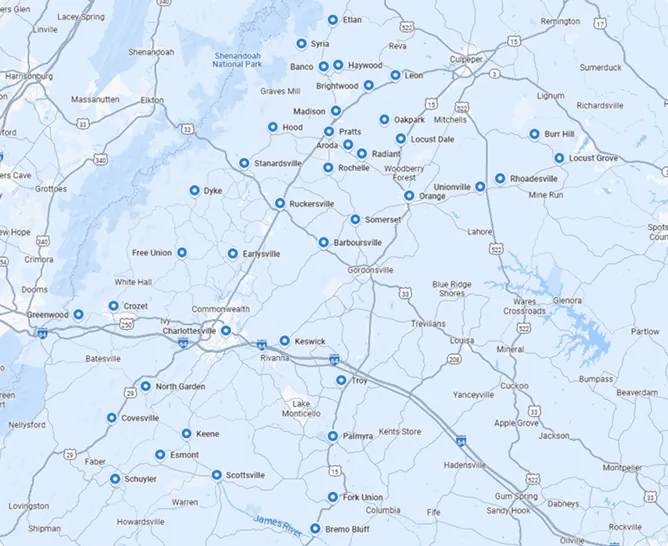
Service areas