How can we help today?Choose an option to see quick actions and get help faster.
Air-Source vs. Geothermal Heat Pumps
Explore the differences between air-source and geothermal heat pumps, including how they work, installation factors, and efficiency ratings.
Compare · Quick answer
Air-source heat pumps extract thermal energy from the outside air, while geothermal systems utilize stable underground temperatures. Geothermal offers higher efficiency and a longer lifespan but requires extensive excavation, whereas air-source units have lower upfront installation costs.
What is the main difference between air-source and geothermal heat pumps?
The primary difference lies in where they transfer thermal energy. Air-source models extract heat from the outside air, while geothermal systems utilize the stable temperatures found underground to heat and cool your home.
Both types of equipment rely on the refrigerant cycle to move thermal energy. During winter, a reversing valve allows the system to absorb exterior heat and transfer it indoors. In summer, the process reverses, pulling heat from your indoor air and releasing it outside. The distinction is the medium used for this exchange. Compare this to traditional cooling in our guide on AC vs. heat pumps.
An air-source unit uses an outdoor fan to pull ambient air across the outdoor coil. Even in cold weather, there is thermal energy present in the air that the refrigerant can absorb. Conversely, a geothermal system uses a network of buried pipes, known as a ground loop. A mixture of water and antifreeze circulates through these pipes, absorbing the consistent thermal energy from the earth and carrying it to the indoor heat exchanger.
How does the installation process compare for each system?
Installing an air-source unit is generally straightforward, requiring an outdoor condenser and indoor air handler. Geothermal installation is more extensive, involving excavation or drilling to place underground loop fields before connecting the indoor equipment.
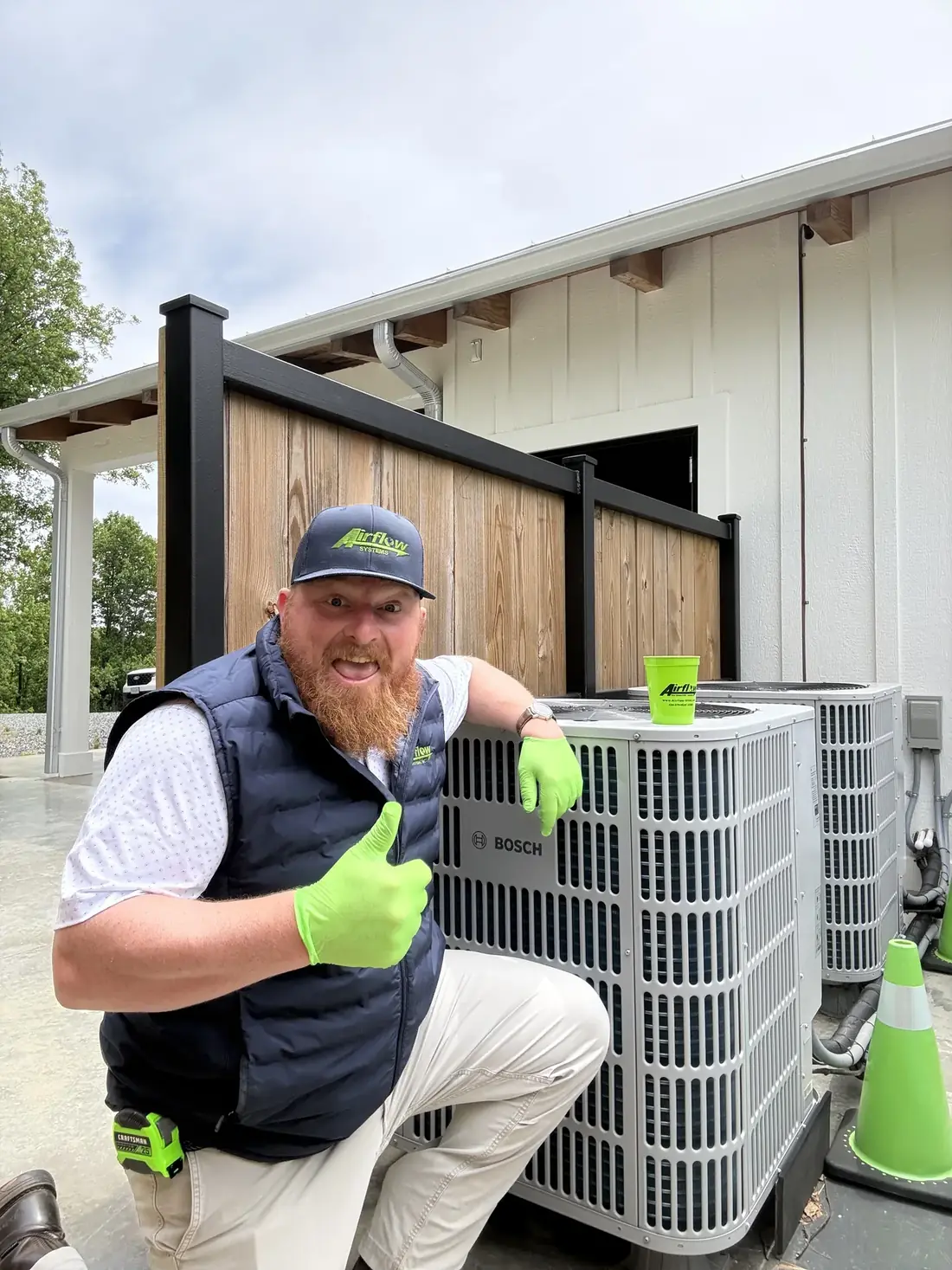
For an air-source system, the physical footprint is relatively small. The outdoor unit sits on a concrete pad near the home, connected to the indoor components via refrigerant lines and electrical wiring. If your home already has compatible ductwork, the installation is often simpler.
Geothermal installations require property modification. Depending on available land, contractors dig shallow trenches for a horizontal loop or drill boreholes for a vertical loop. This involves heavy machinery and planning to avoid underground utilities. Once buried, pipes route into the home and connect to the indoor unit. Learn more about geothermal installation or read how geothermal works.
Which system offers higher energy efficiency?
Geothermal systems generally provide higher efficiency because underground temperatures remain stable year-round. Air-source units work harder during extreme weather.
The efficiency of any heat pump is heavily influenced by the temperature of the source it draws from. Because the earth maintains a relatively constant temperature below the surface, a geothermal system always has a favorable environment for heat exchange. It does not have to overcome extreme freezing temperatures or sweltering heat waves to condition your home.
Air-source systems are rated by SEER2 for cooling and HSPF2 for heating. While technological advancements have made them capable, their efficiency naturally decreases when outdoor temperatures drop significantly. The compressor must work longer cycles to extract enough thermal energy from freezing air. Despite this, they remain an efficient option for many homeowners. For more details on system benefits, see our post on heat pump advantages over traditional HVAC.
What factors influence the upfront installation costs?
Geothermal systems have higher initial costs due to the ground loop excavation and specialized equipment. Air-source units cost less upfront because they only require setting the outdoor unit and connecting it to the indoor system.
The cost of an air-source installation is primarily driven by the capacity of the unit, its SEER2 efficiency rating, and any necessary modifications to your existing ductwork or electrical panel. Because the labor involves standard HVAC practices, the overall investment is generally lower.
Geothermal costs depend on the complexity of the ground loop installation. Soil conditions and property access dictate whether a horizontal or vertical loop is required, impacting excavation expenses. The indoor geothermal units are also specialized equipment. Ask about current utility rebates. The federal 25C and 25D tax credits for heat pumps and geothermal ended December 31, 2025.
How long do these heat pump systems typically last?
Geothermal systems often outlast air-source units because the indoor components are protected from weather, and the underground loops are durable. Air-source units face constant exposure to the elements, which affects their overall lifespan.
An air-source heat pump sits outside year-round. It must endure rain, snow, direct sunlight, and fluctuating temperatures. Over time, this environmental exposure causes wear and tear on the casing, fan motor, and condenser coil. Regular maintenance helps mitigate this, but the outdoor environment eventually takes a toll on the moving parts.
In contrast, a geothermal system's main mechanical components are housed indoors, shielded from weather and debris. The underground ground loop is made of resilient, corrosion-resistant high-density polyethylene pipe. Because the loop is buried and undisturbed, it remains functional for a long time, meaning only the indoor unit eventually needs replacement.
What maintenance is required for each system type?
Both systems require regular filter changes and professional coil cleaning. Air-source units need outdoor debris removal, while geothermal systems require periodic checks of the loop pressure and ground loop pump performance.
For an air-source system, homeowners should regularly check the outdoor unit to verify it is clear of leaves, branches, and tall grass. Restricted airflow forces the compressor to work harder, reducing efficiency and increasing wear. Inside, the air filter must be replaced regularly to maintain proper airflow across the indoor coil.
Geothermal maintenance looks slightly different. Since there is no outdoor fan unit, homeowners do not need to worry about clearing yard debris. However, a professional technician must periodically inspect the ground loop pressure, verify the antifreeze mixture, and check that the circulating pumps are operating correctly. Both types of systems benefit from routine professional care. Consider enrolling in the Annual Tune-Up & System Evaluation.
When should you call a professional for heat pump service?
You should contact a technician if your system makes unusual noises, fails to maintain the set temperature, or short-cycles. A professional can properly diagnose refrigerant leaks, electrical issues, or ground loop complications.
Homeowners can perform basic checks before calling for service. Verify that the thermostat is set correctly, replace a dirty air filter, and make sure that all indoor vents are open and unobstructed. If you have an air-source unit, check the outdoor cabinet to make sure no debris is blocking the coil. You can also look at your electrical panel to see if a breaker has tripped.
However, you should never attempt to open the equipment, repair electrical components, or handle refrigerant. If you notice ice forming on the coils, hear grinding noises from the compressor, or experience a sudden drop in heating or cooling performance, it is time to seek professional help. A qualified technician has the tools to measure refrigerant charge, test electrical relays, and evaluate the overall health of the system.
Whether you are deciding between system types or need repairs for your current setup, talk with Airflow Systems. A professional can help you understand your heating and cooling options. To schedule service, call (434) 979-4328.
Frequently asked questions
Can a heat pump cool my home in the summer?
Yes, both air-source and geothermal heat pumps provide cooling. A reversing valve changes the flow of refrigerant, allowing the system to absorb heat from your indoor air and release it either into the outside air or into the ground loop.
Do geothermal systems require a large yard?
Geothermal installations require adequate space for the ground loop. Horizontal loops need significant land area for shallow trenches, while vertical loops require less surface area but involve drilling deep boreholes. A professional can determine which layout suits your property.
What are SEER2 and HSPF2 ratings?
SEER2 measures the cooling efficiency of an air-source heat pump over a typical season, while HSPF2 measures its heating efficiency. Higher ratings generally indicate that the equipment uses less energy to produce the same amount of heating or cooling.
Why does an air-source heat pump lose efficiency in extreme cold?
An air-source unit extracts heat from the outdoor air. When temperatures drop significantly, there is less ambient thermal energy available. The compressor must run longer cycles to absorb enough heat, which naturally lowers the system's overall efficiency during severe weather.
Is it normal for an air-source heat pump to freeze?
A light layer of frost is normal during winter operation, and the system will run a defrost cycle to clear it. However, a thick block of ice indicates a problem, such as a dirty filter, restricted airflow, or a refrigerant issue.
Ready When You Are.
One call reaches Charlottesville's premier WaterFurnace partner. We repair, replace, and maintain heating, cooling, and geothermal systems across Charlottesville and Central Virginia & the Blue Ridge — Mon–Fri, 7:30 AM – 4:00 PM.
- 100%Satisfaction
- FamilyOwned & operated
- M–F7:30 AM – 4:00 PM