How can we help today?Choose an option to see quick actions and get help faster.
Mini-Splits for Additions, Cabins and ADUs
Explore how ductless mini-split systems provide targeted heating and cooling for room additions, cabins and accessory dwelling units without extending ductwork.
Learn · Quick answer
Ductless mini-splits offer targeted heating and cooling for additions, cabins and ADUs without requiring connected ductwork. These systems consist of an outdoor unit and indoor air handlers, providing independent temperature control for separate living spaces.
What is a ductless mini-split system?
A ductless mini-split is a heating and cooling system that operates without ductwork. It uses an outdoor compressor connected to an indoor air handler to condition specific rooms or separate structures.
Central air conditioning and heating systems rely on a network of ducts to distribute conditioned air. Ductless systems bypass this requirement completely. Instead of pushing air through hidden channels, these systems deliver heated or cooled air directly into the living space.
The connection between the indoor and outdoor components consists of a conduit housing the power cable, refrigerant tubing and a condensate drain line. Because the conduit only requires a hole through an exterior wall, the installation process avoids routing new ductwork.
Mini-splits utilize heat pump technology to provide heating and cooling functions. During warm weather, the system absorbs heat from indoors and releases it outside. During cold weather, the process reverses. You can learn more in our guide on how a heat pump works.
Because each indoor air handler connects directly to the outdoor unit, ductless systems inherently create separate temperature zones. You can install an individual air handler for a specific room or connect additional indoor units to an outdoor compressor to condition different areas.
Why consider a mini-split for a room addition?
Room additions often fall outside the reach of your existing central heating and cooling system. A mini-split provides independent temperature control for the new space without altering your current ductwork.
When you add a room, the existing central HVAC system may not have the capacity to handle the extra square footage. Central systems are sized for the original layout. Forcing an existing system to condition a larger area can lead to uneven temperatures.
Extending existing ductwork into a new addition presents another challenge. Routing ducts through walls or ceilings requires extensive construction work. Furthermore, adding new branches to an existing duct network changes the airflow dynamics of the entire house, changing temperature control in your original rooms.
Installing a ductless system in the addition solves these challenges. The addition gets its own dedicated heating and cooling source, completely separate from the main house. For more on managing different zones, read our article on multi-zone mini-split systems.
How do mini-splits work for accessory dwelling units?
Accessory dwelling units require dedicated heating and cooling for independent living. Mini-splits allow occupants to control their own temperature settings without relying on the main house system.
Accessory dwelling units, such as garage apartments or detached guest houses, function as independent living spaces. Sharing a central HVAC system between a main house and an accessory dwelling unit creates logistical issues. Occupants in different spaces may prefer different settings.
A ductless system gives the accessory dwelling unit complete autonomy. The occupants can set their preferred temperature, switch between heating and cooling modes, or turn the system off entirely when the space is unoccupied. This prevents the main house system from running unnecessarily.
Another factor for accessory dwelling units is air separation. Sharing ductwork means sharing the same circulating air. Odors from cooking in the accessory unit can easily travel into the main house. A ductless system keeps air circulation separate.
Can you use a mini-split for a cabin?
Whether a mini-split can heat an entire cabin depends on the system sizing and layout. They offer a unified system solution for structures that lack the space for extensive ductwork or a traditional furnace setup.
Traditional heating methods for cabins, such as baseboard heaters, can be uneven or require manual effort.
A ductless system provides a streamlined alternative. The indoor air handlers can be mounted high on a wall, suspended from the ceiling, or installed low near the floor, preserving floor space. You do not need separate equipment for different seasons.
The targeted nature of ductless heating and cooling aligns well with cabin usage. The system can be turned on upon arrival to bring the space to the desired temperature. Read more in our guide to HVAC for cabins and rentals.
What should you know about installation requirements?
Installing a mini-split requires an outdoor location for the compressor, indoor wall or ceiling space for the air handlers, and electrical connections. A professional can help you weigh the options.
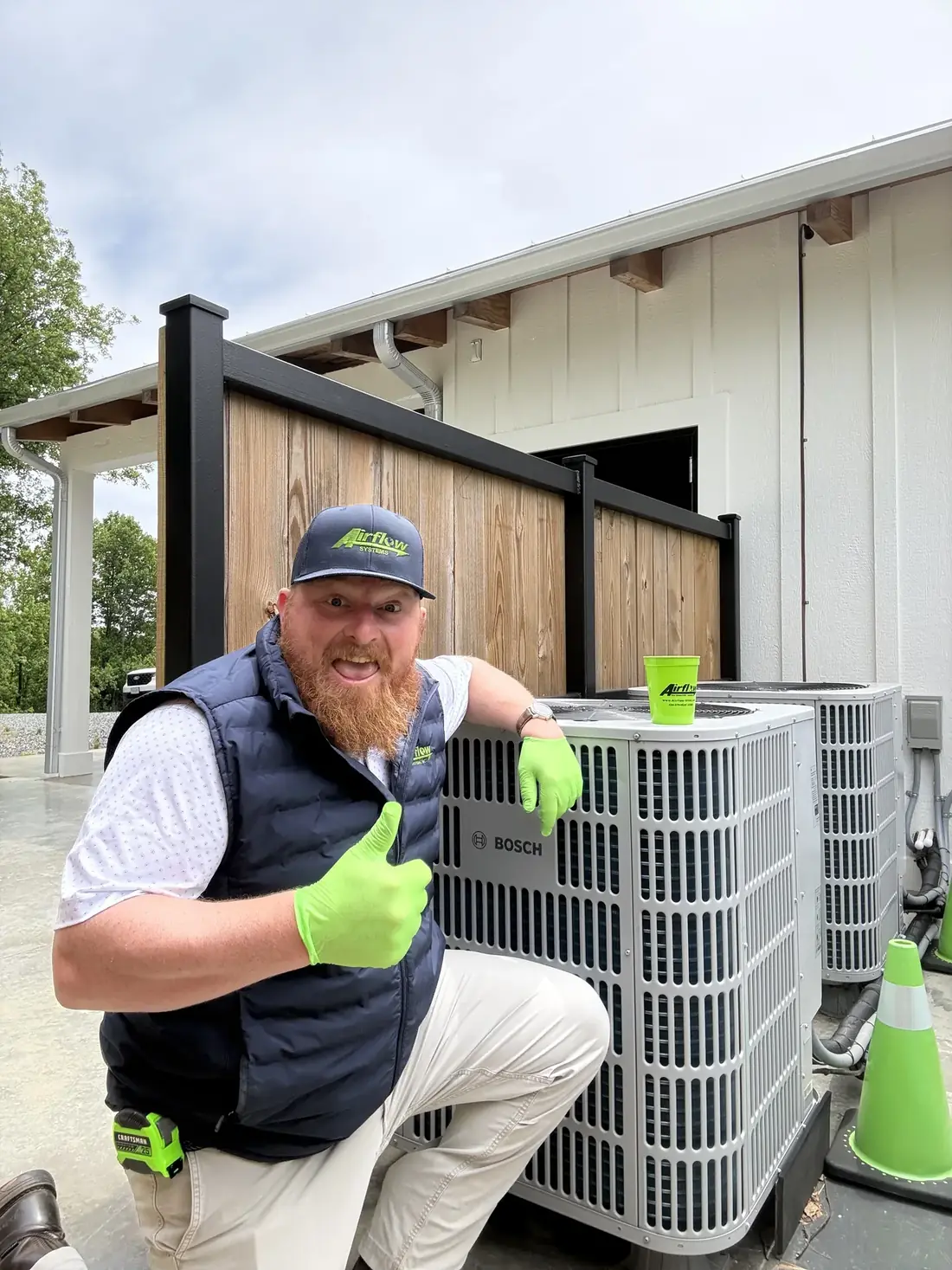
The outdoor compressor needs a clear, unobstructed area to promote adequate airflow. It is typically placed on a concrete pad on the ground or mounted to an exterior wall with brackets. The location should allow for adequate drainage and easy access.
Inside, the placement of the air handler affects how well the conditioned air is distributed. Wall-mounted units are the most common and require clear wall space near the ceiling. The chosen location must allow the air to circulate without obstruction.
Ductless systems require a dedicated electrical circuit. The power runs from your main electrical panel to the outdoor unit, which then supplies power to the indoor air handlers through the connecting conduit. Upgrading your electrical panel may be necessary for the new equipment.
How do you maintain a ductless system?
Regular maintenance involves keeping the indoor air filters clean and keeping the outdoor unit clear of debris. You can wash the reusable indoor filters and clear away leaves outside.
Unlike central systems that use disposable filters, most ductless indoor units feature reusable mesh filters. These filters trap dust and airborne particles before they reach the internal components. You can remove these filters and wash them with water to keep air circulating as intended.
The outdoor compressor also requires attention. Leaves, branches and other debris can accumulate around the unit, restricting the airflow necessary for the heat exchange process. Keeping the area around the outdoor unit clear helps maintain normal operation during heating and cooling seasons.
Beyond these homeowner tasks, talk with Airflow Systems about your options for maintaining the internal components. To learn more about our installation services, visit our mini-split installation and replacement page.
When should you call a professional?
You should contact a professional when you are in the planning stages of your building project. Early coordination helps integrate the heating and cooling equipment smoothly into the new space.
A professional can help you weigh the options for your home, including the layout of your addition, cabin or accessory dwelling unit.
Discussing equipment placement before walls are closed up allows for the installation of the connecting conduit and electrical wiring. Waiting until the construction is finished can limit your options for indoor unit placement and make routing the conduit more difficult.
To discuss heating and cooling for your new space, contact Airflow Systems. You can reach us by visiting our contact page or calling (434) 979-4328.
Frequently asked questions
Can a mini-split heat an entire cabin?
Whether a mini-split can heat an entire cabin depends on the system sizing and layout. It operates without requiring ductwork, making it a practical option for structures with limited utility space or open floor plans.
Do I need ductwork for a room addition?
You usually do not need to extend your existing ductwork for a room addition. Installing a ductless system provides the new space with its own independent heating and cooling source, avoiding the need for invasive construction or altering your central system.
How is an accessory dwelling unit heated and cooled?
An accessory dwelling unit can be heated and cooled independently using a ductless system. This allows the occupants to control their own temperature settings without sharing air or relying on the main house HVAC system.
Where does the outdoor unit go for a mini-split?
The outdoor compressor is typically placed on a concrete pad on the ground or mounted to an exterior wall with brackets. It requires a clear, unobstructed area to promote adequate airflow and allow access for maintenance.
Are ductless mini-split filters washable?
Yes, most indoor air handlers for ductless systems feature reusable mesh filters. You can remove these filters and wash them with water to keep air circulating as intended and trap dust before it reaches the internal components.
Ready When You Are.
One call reaches Charlottesville's premier WaterFurnace partner. We repair, replace, and maintain heating, cooling, and geothermal systems across Charlottesville and Central Virginia & the Blue Ridge — Mon–Fri, 7:30 AM – 4:00 PM.
- 100%Satisfaction
- FamilyOwned & operated
- M–F7:30 AM – 4:00 PM