How can we help today?Choose an option to see quick actions and get help faster.
HVAC for Cabins, Rentals & Second Homes
Managing heating and cooling for a cabin, rental, or secondary home requires planning. Learn about system options and remote management for your property.
Act · Quick answer
Managing HVAC for a cabin, rental, or secondary home involves choosing equipment that handles periods of vacancy and varied usage. Smart thermostats and ductless systems offer flexible control for properties that are not occupied full-time.
What are the main HVAC challenges for a secondary property?
Secondary properties face periods of vacancy, fluctuating occupancy, and remote management needs. Heating and cooling equipment must adapt to these changing conditions without requiring continuous on-site adjustments from the owner.
When a house sits empty, the interior environment still requires regulation to protect plumbing, woodwork, and finishes from extreme temperatures. Conversely, when guests arrive, the system must recover and provide comfort.
A malfunction might go unnoticed until the next visit, potentially resulting in an unconditioned space. This makes remote monitoring and system selection critical components of managing a secondary property.
Which heating and cooling systems work for secondary properties?
Heat pumps, ductless mini-splits, and standard central air conditioning can all serve a secondary property. The right choice depends on the existing infrastructure, the layout of the building, and how the property is used.
Properties with existing ductwork often utilize conventional central air conditioners paired with a furnace or a central heat pump. A central system offers familiar operation for guests and can be paired with a smart thermostat for remote access.
However, some properties lack the space for extensive ductwork. In these situations, ductless systems offer a practical alternative. You can read more about ductless mini-split installation and replacement to understand how these units operate without ducts. Zoned control is useful for a secondary property, as you can condition only the occupied rooms. For more details, review the guide on mini-splits for additions and cabins.
How do smart thermostats help manage a rental or cabin?
A smart thermostat allows you to monitor and adjust temperatures remotely using a mobile device. This connectivity helps you prepare the home for arriving guests or set the system to an energy-conservation mode when vacant.
Remote access transforms how owners interact with their secondary properties. You can adjust the thermostat from your phone before you travel, so the interior reaches a comfortable temperature by the time you arrive.
Smart thermostats offer monitoring features that send alerts to your phone if the indoor temperature drops below or rises above a specified threshold. This notification serves as an early warning sign of a system malfunction. Integrating these controls can tie into broader property management strategies, as discussed in the post about smart indoor air quality management and ventilation.
How should you set the thermostat when the property is vacant?
When a property is unoccupied, you can adjust the thermostat to reduce energy use while still protecting the interior. You want to avoid extremes that could affect plumbing or interior finishes.
Leaving the system running at normal comfort levels while the house is empty uses unnecessary energy. However, turning the system completely off can expose the interior to temperature extremes.
During hot weather, setting the thermostat higher than your normal comfort preference helps reduce the cooling load. The system will still cycle on to prevent the interior from becoming excessively hot and manage indoor humidity.
During cold weather, the primary concern is preventing extremely cold temperatures inside the home. Keep a protective minimum setting so the home does not get cold enough to risk plumbing. A professional can help you weigh the options for your home.
Why is indoor air quality important for a secondary residence?
Closed doors and windows limit fresh air circulation when a home is empty. Managing indoor air quality helps control dust and moisture, keeping the environment comfortable for the next time someone arrives.
Without the routine opening of doors and windows, odors, dust, and airborne particles can accumulate. The heating and cooling system filters and circulates this air, even when the property is vacant.
Moisture control is an important aspect of indoor air quality for secondary properties. In hot weather, high indoor humidity can affect building materials.
The system relies on a clean filter to trap dust and particles. Property owners must remember to check and replace the air filter consistently, even if the home is only used occasionally.
How can you protect the outdoor equipment at a remote property?
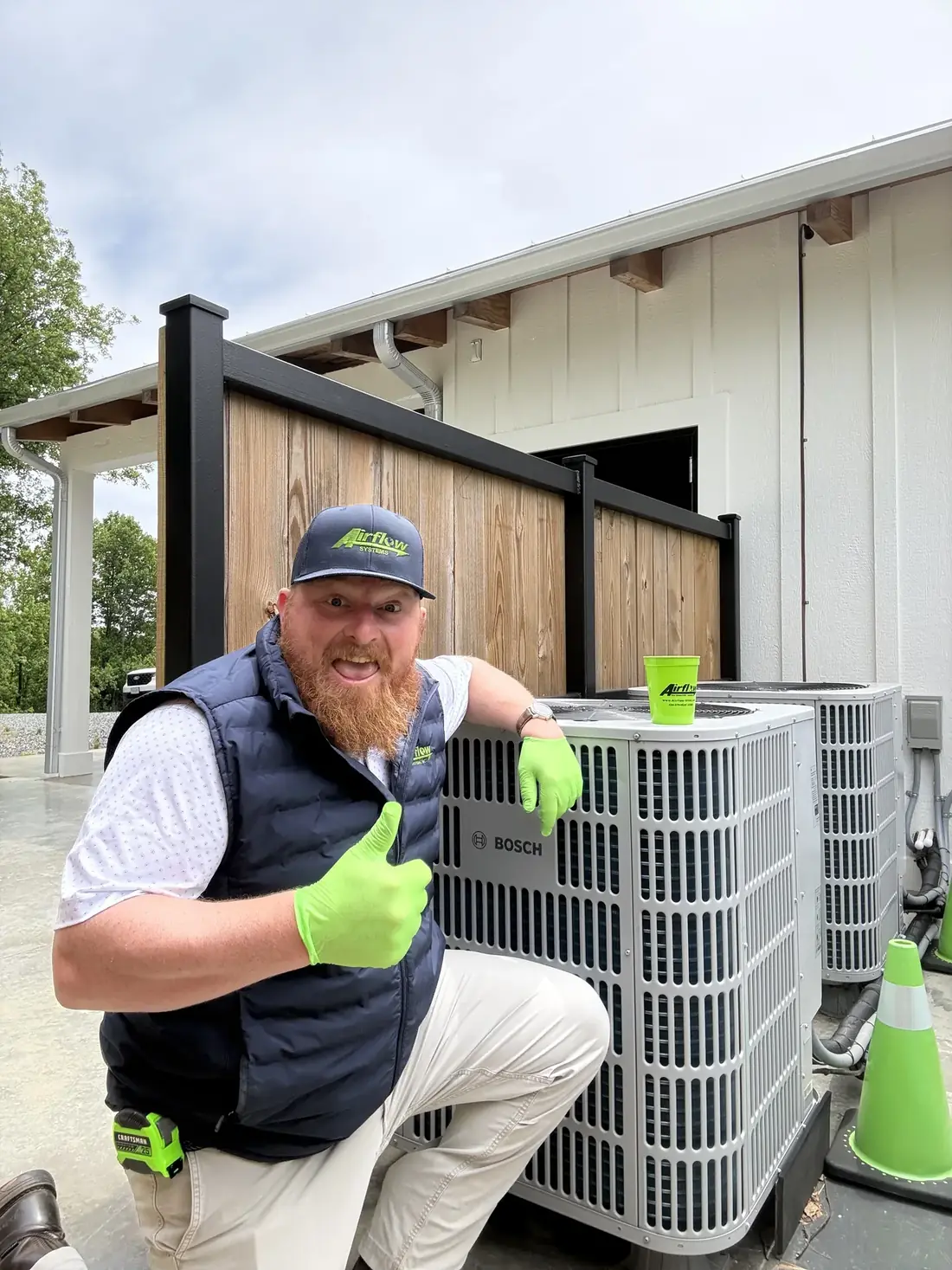
Outdoor units are exposed to the elements and surrounding vegetation. Keeping the area around the equipment clear of debris and overgrowth helps maintain proper airflow and reduces the chance of physical damage.
At a secondary property, landscaping can easily become overgrown between visits. Shrubs, tall grass, and creeping vines can encroach on the unit, obstructing the airflow. When airflow is restricted, the system struggles to transfer heat, which strains the internal components.
Property owners should establish a clear perimeter around the outdoor equipment. During visits, take time to trim back vegetation and remove accumulated leaves, branches, or debris from the base of the unit.
Look for visible obstructions around the outdoor units. Homeowners should limit their interaction to visual checks and clearing the surrounding area. Never attempt to open the cabinet or perform do-it-yourself electrical or refrigerant work.
When should you call a professional for your secondary property?
You should call a professional when the system fails to turn on, makes unusual sounds, or struggles to reach the set temperature. A professional can help you weigh the options for your home and discuss repair or replacement.
If you arrive at the home and find that the system is unresponsive, or if your smart thermostat alerts you to a temperature drop or spike, it is time to seek professional assistance. Unusual sounds, such as grinding or rattling from the units, also indicate a mechanical issue.
An increase in utility bills that does not align with the property's usage may point to a problem. If the home has been vacant but energy costs are high, the system may be running continuously due to a malfunction.
Regular maintenance is a proactive way to manage the equipment at a secondary property. You can schedule the Annual Tune-Up & System Evaluation. Talk with Airflow Systems about your options for keeping the system in good working order.
If you need assistance with the heating and cooling equipment at your cabin, rental, or secondary home, contact Airflow Systems at (434) 979-4328.
Frequently asked questions
Can I turn off the HVAC system when my cabin is vacant?
It is generally not advisable. Turning the system completely off can expose the interior to temperature extremes. Keep a protective minimum setting so the home does not get cold enough to risk plumbing.
Are ductless mini-splits a good option for a secondary property?
Yes, ductless systems offer a practical alternative for cabins or secondary properties that lack space for extensive ductwork. They allow for zoned conditioning, meaning you can heat or cool specific areas independently based on occupancy.
How do smart thermostats help with rental properties?
A smart thermostat allows you to monitor and adjust temperatures remotely using a mobile device. You can prepare the home for arriving guests, set temperature limits to prevent extreme adjustments, and receive alerts about potential system malfunctions.
Why is indoor air quality important for an empty house?
Closed doors and windows limit fresh air circulation, allowing odors, dust, and airborne particles to accumulate. The heating and cooling system filters and circulates this air, and running the system helps manage indoor humidity and maintain a comfortable environment.
How can I protect the outdoor HVAC unit at my secondary home?
Keep the area around the equipment clear of debris and overgrowth to maintain proper airflow. During visits, trim back vegetation and remove accumulated leaves or branches from the base of the unit. Limit your interaction to visual checks and clearing the surrounding area.
Ready When You Are.
One call reaches Charlottesville's premier WaterFurnace partner. We repair, replace, and maintain heating, cooling, and geothermal systems across Charlottesville and Central Virginia & the Blue Ridge — Mon–Fri, 7:30 AM – 4:00 PM.
- 100%Satisfaction
- FamilyOwned & operated
- M–F7:30 AM – 4:00 PM