How can we help today?Choose an option to see quick actions and get help faster.
HVAC Tune-Up in Unionville, VA in Unionville, VA
Learn what a routine HVAC tune-up involves for your heating and cooling system in Unionville. Discover how maintenance affects performance.
A routine HVAC tune-up in Unionville involves a detailed inspection and cleaning of your heating and cooling equipment. Technicians check vital components to confirm everything operates safely and efficiently before extreme weather arrives.
Regular attention prevents small issues from turning into major repairs. During a standard visit, a professional will clean dirty coils, test electrical connections, and verify proper airflow through your ductwork. Scheduling an HVAC maintenance & tune-up gives your system the care it needs to maintain consistent indoor temperatures. This proactive approach helps reduce unnecessary strain on blower motors and compressors while supporting better energy usage.
What does a technician check during an HVAC tune-up?
An HVAC evaluation involves testing the electrical draw, cleaning specific components, and verifying proper airflow. Technicians look for minor issues that could disrupt your comfort later in the season.
Every heating and cooling unit relies on a series of interconnected parts to condition your air. A professional will inspect the ductwork connections, check the condition of the evaporator coil, and verify that the reversing valve shifts correctly on a heat pump. By measuring the electrical current, they can spot a failing compressor before it stops working. This detailed attention keeps your indoor climate stable.
- Measuring electrical current on motors
- Verifying reversing valve operation
- Inspecting ductwork for obvious leaks
- Checking the condition of the evaporator coil
- Testing the ignition system
What are common signs your system needs a tune-up?
Indicators that it is time for a tune-up include longer run times, unusual clicking sounds, and a noticeable drop in overall comfort. These issues typically stem from neglected maintenance.
When a system runs longer than usual without changing the indoor temperature, it is working inefficiently. Clicking sounds from the outdoor unit might mean a capacitor is starting to fail and struggling to start the compressor. You may also notice a buildup of frost on the refrigerant lines, which happens when restricted airflow causes the coil to freeze. A technician can resolve these mechanical struggles.
What safe HVAC checks can homeowners perform?
Homeowners can safely check their thermostat settings, inspect the air filter, and clear debris away from the outdoor unit. These simple tasks help maintain proper airflow between professional visits.
Keeping the area around your outdoor condenser clear of tall grass and leaves allows the equipment to release heat properly. You can also walk through your home to confirm that all supply and return vents are open and unblocked by furniture. If the system fails to turn on, taking a brief look at your electrical panel to see if a breaker has tripped is a safe troubleshooting step.
- Replacing dirty air filters regularly
- Clearing leaves from the outdoor unit
- Confirming vents are open and unblocked
- Checking the thermostat for correct settings
- Looking for tripped breakers in the panel
Should you repair or replace an aging HVAC system?
You must weigh the expense of continuous repairs against the benefits of installing a new system. An aging unit that struggles to keep your home comfortable might be nearing the end of its lifespan.
As heating and cooling technology advances, newer models offer improved SEER2 and HSPF2 ratings for better energy management. If your current equipment frequently breaks down during extreme weather, it may no longer be dependable. A technician can inspect the internal wear and tear to help you understand the remaining life of the machinery. Minor fixes are appropriate for younger systems, while major failures often justify a complete replacement.
Why do heating and cooling systems make unusual noises?
Strange sounds from your climate control equipment typically signal mechanical wear or loose connections. Identifying these noises early helps a professional address the underlying issue before it worsens.
Banging or clanking sounds often mean a component has come loose and is striking other parts. This might be a detached blower wheel or a loose mount on the compressor. A professional evaluation is required to secure the internal parts and prevent them from causing extensive mechanical damage.
Hissing or bubbling noises near the refrigerant lines can indicate a leak in the closed loop. Because refrigerant operates under pressure, a breach in the copper tubing produces distinct sounds. Only a qualified technician should handle refrigerant issues, as it requires specialized tools and training.
- Clanking suggests a detached internal component
- Bubbling indicates issues within refrigerant lines
- Popping relates to ductwork expanding and contracting
What happens when restricted airflow disrupts the refrigerant cycle?
Restricted airflow prevents the system from transferring heat properly, causing the coils to freeze or the compressor to overheat. This disruption forces the equipment to work harder while delivering less conditioned air to your living spaces.
The refrigerant cycle relies on a steady volume of indoor air moving across the evaporator coil. When a clogged filter or closed vents block this movement, the coil absorbs less heat. The refrigerant remains too cold, which can cause condensation to freeze along the coil surface. A frozen coil acts as an insulator, further blocking heat transfer and stopping the cooling process entirely.
If the cycle continues running with restricted airflow, the compressor faces increased strain. The refrigerant returning to the outdoor unit may not be in the correct state, which can cause the compressor to overheat and shut down. Keeping vents open and checking the air filter helps maintain the steady airflow required for the refrigerant cycle to function.
- Clogged filters reduce indoor air movement
- Closed vents block return and supply paths
- Evaporator coils freeze from lack of heat
- Compressors overheat due to improper refrigerant states
How do dirty coils disrupt the heat transfer process?
A layer of dirt prevents the refrigerant inside the coils from interacting with the air blowing across them. This insulating effect disrupts the entire cycle, causing the system to run continuously without improving comfort.
Heat transfer is the core function of any air conditioning or heat pump system. The indoor coil captures heat from the air inside your house, and the outdoor coil expels it. Debris on either coil acts like a blanket, trapping heat where it does not belong and forcing the equipment to push past its normal operating limits.
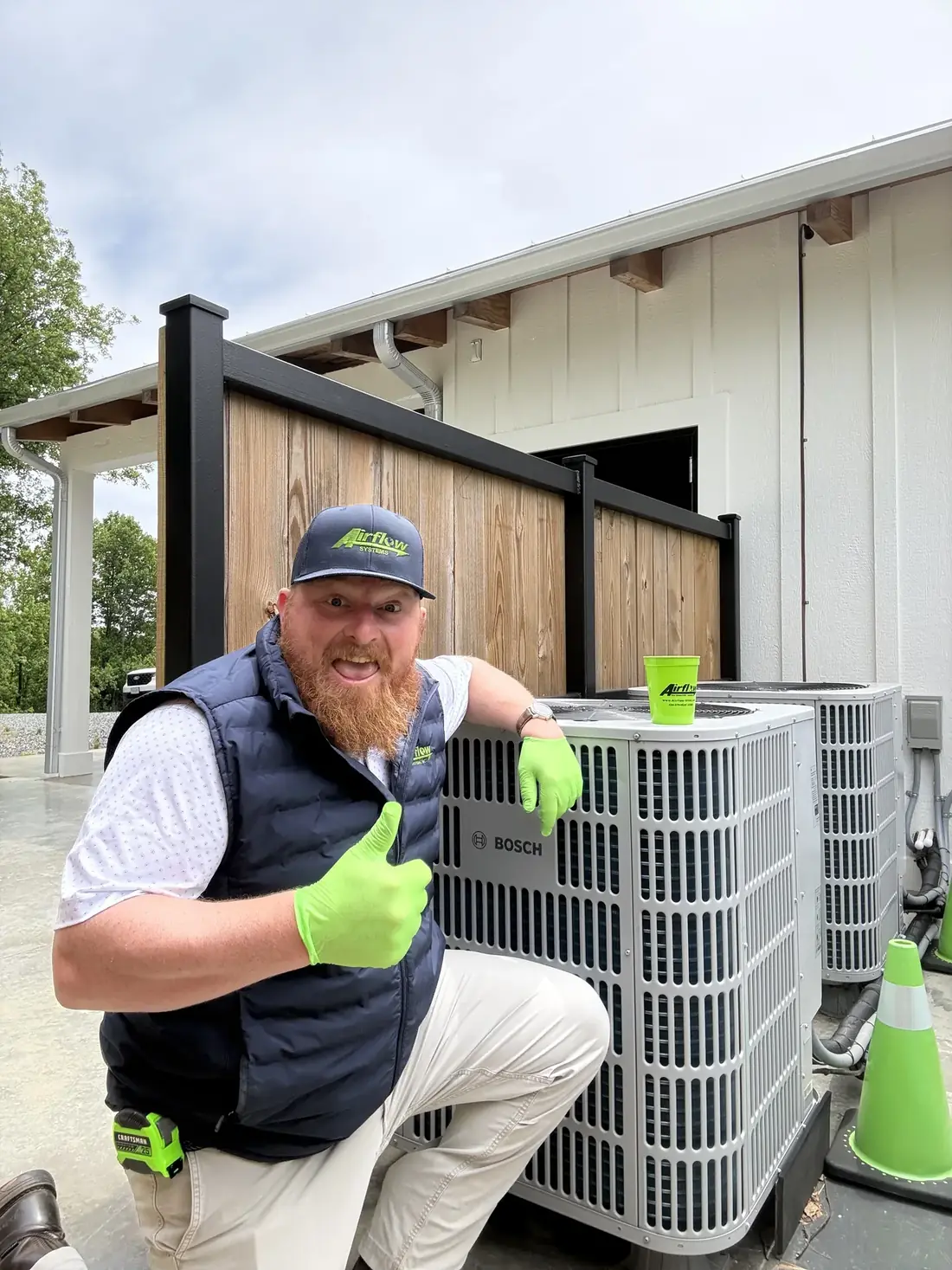
When coils cannot transfer heat properly, the resulting pressure changes can damage the compressor. A technician removes dirt and debris from the delicate metal fins during a maintenance visit. Clean coils allow the refrigerant cycle to function smoothly, reducing unnecessary wear on the moving parts.
- Dirt acts as an insulating blanket
- Heat transfer slows down significantly
- Pressure changes stress the compressor
- Clean fins restore proper refrigerant function
Serving Unionville from our Charlottesville office
Airflow Systems performs heating and cooling work in Unionville by sending vehicles from our Charlottesville office to the Unionville service area between Monday–Friday, 7:30 AM – 4:00 PM.
The Annual Tune-Up & System Evaluation is a maintenance membership option available to customers through Airflow Systems.
HVAC Tune-Up questions from Unionville homeowners
Does clearing the condensate drain matter?
Yes, the condensate drain removes moisture collected by the evaporator coil. If this line becomes clogged with algae or dirt, water can back up and damage your home or cause the system to shut down. Technicians clear this line during maintenance.
Why is my air conditioner freezing up during the summer?
An air conditioner usually freezes due to poor airflow or low refrigerant levels. A dirty filter or a malfunctioning blower motor can stop warm air from reaching the evaporator coil. A technician can inspect the system to locate the exact cause.
Can I clean the HVAC condenser coils myself?
Homeowners can safely brush away leaves and debris from the outside of the condenser cabinet. However, cleaning the delicate internal fins requires specialized tools and coil cleaners. It is safer to have a professional handle this during a routine tune-up.
If you suspect an issue with your system, contact Airflow Systems for a professional diagnosis. You can reach Airflow Systems at (434) 979-4328.
Ready When You Are.
One call reaches Charlottesville's premier WaterFurnace partner. We repair, replace, and maintain heating, cooling, and geothermal systems across Charlottesville and Central Virginia & the Blue Ridge — Mon–Fri, 7:30 AM – 4:00 PM.
- 100%Satisfaction
- FamilyOwned & operated
- M–F7:30 AM – 4:00 PM