


Choose an option to see quick actions and get help faster.
.svg)
A Simple Answer to How to Clean Your AC Condenser Unit Safely
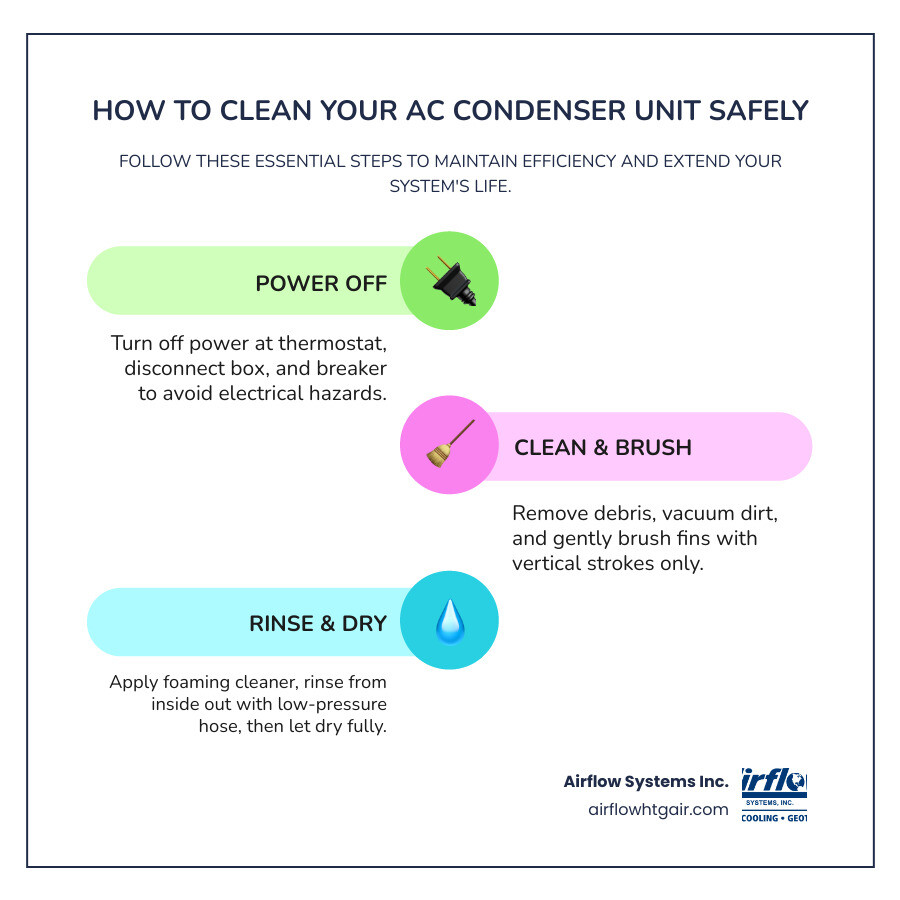
How to clean your ac condenser unit safely comes down to a few key steps that any homeowner can follow with the right tools and precautions:
1. Turn off all power to the unit at the thermostat, outdoor disconnect box, and circuit breaker
2. Clear away debris — leaves, grass, and dirt — from around and on top of the unit
3. Remove the outer panels using a screwdriver to access the coil fins
4. Vacuum loose dirt from inside the unit with a shop vacuum
5. Brush the fins gently using a soft-bristle brush in vertical, up-and-down strokes only
6. Apply a foaming coil cleaner and let it sit for 5–10 minutes
7. Rinse from the inside out using a garden hose at low pressure — never a pressure washer
8. Reassemble the unit, let it dry fully, then restore power
Your outdoor AC condenser works hard every summer — pulling heat out of your home and releasing it outside. Over time, it collects dirt, pollen, grass clippings, and other debris that block airflow and force your system to work harder than it should.
The result? Higher energy bills, longer cooling cycles, and a system that wears out faster than it should. According to industry data, a condenser coil clogged with debris can reduce your AC's cooling capacity by 10–15%. For a system that's supposed to last 10–15 years, that kind of strain adds up quickly.
The good news is that basic condenser cleaning is a manageable DIY task — as long as you follow the right steps and safety precautions. This guide from Airflow Systems Inc. walks you through exactly how to do it.
Why You Must Know How to Clean Your AC Condenser Unit Safely
Understanding how to clean your ac condenser unit safely isn't just about being a handy homeowner; it’s about protecting one of the most expensive appliances in your Charlottesville home. The outdoor unit, or the condenser, acts as the heat-rejection hub for your entire HVAC system. Inside those metal grilles are copper tubes and thousands of thin aluminum fins. Their job is to dissipate the heat that was absorbed from your indoor air.
When these fins get caked with Central Virginia’s famous pollen, dust, or grass clippings from the lawnmower, they become insulated. Instead of the heat escaping into the outdoor air, it gets trapped. This leads to a cascade of problems:
• Reduced Cooling Capacity: A dirty coil can’t shed heat efficiently, meaning your home takes much longer to reach the temperature set on your thermostat.
• Airflow Restriction: Debris acts like a blanket, choking the fan’s ability to pull air through the unit.
• Sky-High Energy Bills: When the system struggles, it runs longer cycles. Longer cycles mean more electricity usage and higher monthly costs.
• Compressor Strain: The compressor is the "heart" of your AC. If the coils are dirty, the compressor has to work at higher pressures and temperatures, which drastically shortens its lifespan.
Clean vs. Dirty Coil Performance Comparison
• Cooling Efficiency — Clean Condenser Coil: 100% (Optimal) — Dirty Condenser Coil: 85-90% (Reduced)
• Energy Consumption — Clean Condenser Coil: Standard — Dirty Condenser Coil: 10-20% Higher
• System Lifespan — Clean Condenser Coil: 12-15+ Years — Dirty Condenser Coil: 8-10 Years
• Indoor Comfort — Clean Condenser Coil: Consistent & Cool — Dirty Condenser Coil: Humid & Inconsistent
• Repair Risk — Clean Condenser Coil: Low — Dirty Condenser Coil: High (Compressor Failure)
Regularly addressing buildup is a core part of comprehensive HVAC maintenance. While a quick rinse helps, knowing the deep-cleaning process ensures your system stays in peak condition for the long haul.
Essential Tools and Safety Precautions Before You Begin
Before you grab the hose, you need to gather the right supplies. Using the wrong tools — like a high-pressure washer or a stiff wire brush — can do more damage than the dirt itself.
The DIY Cleaning Toolkit
• Work Gloves: To protect your hands from sharp metal fins and debris.
• Safety Glasses: To keep dust and cleaning chemicals out of your eyes.
• Garden Hose: A standard hose with a multi-setting nozzle is perfect.
• Soft-Bristle Brush: A specialized coil brush or a soft paintbrush works well.
• Foaming Coil Cleaner: Look for a "no-rinse" or "alkaline-based" foaming spray specifically designed for HVAC use.
• Fin Comb: A small tool used to straighten any bent aluminum fins.
• Screwdriver or Nut Driver: Usually a 1/4-inch or 5/16-inch driver is needed to remove the unit's panels.
• Shop Vacuum: With a brush attachment to suck out loose leaves and spider webs.
Safety First: Protecting Yourself and Your Equipment
Safety is the most critical part of learning how to clean your ac condenser unit safely. These units run on high-voltage electricity (240V), which can be lethal if handled improperly.
1. No Pressure Washers: This is the golden rule. A pressure washer will flatten the delicate aluminum fins instantly, permanently blocking airflow and requiring a costly professional AC repair.
2. Avoid Harsh Chemicals: Do not use bleach, vinegar, or acidic household cleaners. These can corrode the copper and aluminum, leading to refrigerant leaks. Stick to approved HVAC coil cleaners.
3. Electrical Components: While the outdoor unit is designed to sit in the rain, you should never spray water directly into the electrical disconnect box or the control panel inside the unit.
How to clean your ac condenser unit safely: Preparation
Preparation is half the battle. Start by heading to your thermostat and switching the system to "Off." Next, go outside to the unit. You will see a small metal box mounted on the wall nearby — this is the disconnect box. Open it and pull the "pull-out" switch or flip the internal breaker to the "Off" position. For extra safety, we recommend also flipping the dedicated AC breaker in your home's main electrical panel.
Once the power is dead, clear the area. Trim back any bushes or weeds so you have at least two feet of clear space around the entire unit. Remove any large sticks or leaves trapped against the base by hand.
Step-by-Step Instructions for Cleaning Your AC Condenser Safely
Now that the power is off and the area is clear, it’s time for the deep clean. If you feel unsure about any of these steps, it’s always a smart move to contact a professional HVAC technician to handle the job for you.
Step 1: Remove the Outer Panels
Most modern units have protective grilles or "louvers." Use your screwdriver to remove the screws holding these panels in place. Be sure to keep the screws in a safe spot (like a magnetic tray or a plastic cup) so they don't get lost in the grass. Carefully lift the panels away to reveal the coils.
Step 2: Vacuum and Brush
Use your shop vacuum with the brush attachment to gently remove loose dirt, cobwebs, and "cottonwood" seeds from the surface of the coils. Once the heavy stuff is gone, use your soft-bristle brush. Crucial Tip: Always brush in the direction of the fins (usually up and down). Brushing side-to-side will bend the fins and restrict airflow.
Step 3: Straighten the Fins
Take a close look at the aluminum fins. If you see areas that look "crushed" or bent, use your fin comb. Select the side of the comb that matches the "fins per inch" of your unit and gently pull it through the bent areas to open them back up.
How to clean your ac condenser unit safely: The cleaning process
Now we move to the wet portion of the maintenance.
1. Apply the Foam: Shake your foaming coil cleaner well. Spray it onto the coils, starting from the bottom and working your way up. Ensure the foam penetrates deep into the fins.
2. The Dwell Time: Let the foam sit for 5 to 10 minutes (or as directed on the label). You’ll see it start to "fizz" as it breaks down grease and grime.
3. Rinse from the Inside Out: This is a pro secret. If you spray from the outside, you might push the dirt deeper into the unit. If your unit's top fan assembly is easy to remove, lift it out (careful not to strain the wires) and spray the water from the inside of the unit through the coils toward the outside. This flushes the dirt out the way it came in.
4. Gentle Water Pressure: Use a steady stream of water, but keep the pressure moderate. Continue rinsing until the water running out the bottom of the unit is clear.
5. Reassembly: Once the unit has had a chance to drip dry for about 30 to 60 minutes, put the panels back on and secure the screws.
6. Restore Power: Flip the breakers back on and set your thermostat to "Cool."
Maintenance Tips to Prevent Dirt and Debris Buildup
Cleaning your unit once a year is great, but keeping it clean year-round is even better. Here in Central Virginia, we deal with everything from heavy spring pollen to falling leaves in the autumn.
• Establish a Clearance Zone: Keep plants, shrubs, and decorative fences at least 24 inches away from the unit. This ensures the fan can "breathe" properly.
• Mowing Habits: When mowing your lawn, always point the discharge chute away from the AC unit. Freshly cut grass is damp and sticks to condenser fins like glue.
• Seasonal Covers: In the winter, you can use a breathable cover or a simple piece of plywood on the top of the unit to keep out falling leaves and ice. Never wrap the entire unit in plastic, as this traps moisture and causes rust and electrical corrosion.
• Regular Visual Inspections: Once a month, take a quick walk around your unit. If you see a plastic bag or a pile of leaves stuck to the side, pull it off immediately.
• Indoor Filter Changes: Believe it or not, keeping your indoor air filters clean helps the whole system. You can learn more about this by checking out our indoor air quality systems info. A clean system inside means less overall strain on the outdoor unit.
Frequently Asked Questions About AC Coil Cleaning
How often should I clean my outdoor AC unit?
For most homes in Charlottesville, once a year in the early spring is sufficient. However, if you have a lot of cottonwood trees nearby, or if your unit is located near a dusty gravel driveway, you may need to perform a light rinse every three months during the cooling season.
What is the difference between cleaning condenser and evaporator coils?
The condenser coil is the outdoor component we've discussed here; it releases heat. The evaporator coil is located indoors, usually above your furnace or inside your air handler. The evaporator coil absorbs heat and deals with moisture (condensation). Because it is located inside your home's ductwork, cleaning it is much more complex and usually requires professional HVAC services to avoid flooding your home or damaging the delicate drain pan.
When should I call a professional for AC cleaning?
While DIY cleaning is great for surface dirt, there are times when you need the experts at Airflow Systems Inc.:
• Bent Fins: If more than 20% of your fins are crushed, a professional should assess the damage.
• Refrigerant Leaks: If you see oily residue on the coils, you likely have a leak.
• Strange Noises: If the fan or compressor sounds like it's grinding or clicking.
• Persistent Poor Cooling: If the coils are clean but the air coming from your vents is still warm.
• Specialty Systems: Cleaning a mini-split system or a geothermal unit requires specialized knowledge and tools.
Conclusion
Taking the time to learn how to clean your ac condenser unit safely is a smart investment in your home's comfort. By following these steps, you can improve your system's efficiency, lower your energy bills, and avoid the headache of a mid-summer breakdown.
However, a DIY cleaning is only one part of a healthy HVAC strategy. To truly maximize the lifespan of your unit, nothing beats a professional tune-up. At Airflow Systems Inc., our certified technicians perform a comprehensive 20-point inspection that goes far beyond a simple cleaning — checking refrigerant levels, electrical connections, and motor lubrication.
Whether you need a quick repair or a brand-new AC installation, we are here to help our neighbors in Charlottesville and Central Virginia stay cool all summer long.
Ready to ensure your AC is ready for the heat? Schedule your annual AC maintenance with Airflow Systems Inc. today!
Book Expert Service Or Contact Us
Our Service Process
A Hassle-Free Service Experience
01
Consultation & Diagnosis
We start by listening to your needs and performing a thorough diagnosis of your system to recommend the best solution.
02
Transparent Quoting
We provide a clear, upfront estimate with no hidden fees, so you know exactly what to expect.
03
Expert Service & Follow-Up
Our factory-trained technicians complete the work to the highest standards, and we follow up to ensure your complete satisfaction.
testimonials
What Our Customers Are Saying
Our customers consistently praise our exceptional service and attention to detail, making us a trusted choice for all your HVAC needs.
where we operate
Service areas