


Choose an option to see quick actions and get help faster.
.svg)
Don't Get Caught in the Heat: How to Prepare Your AC for Summer
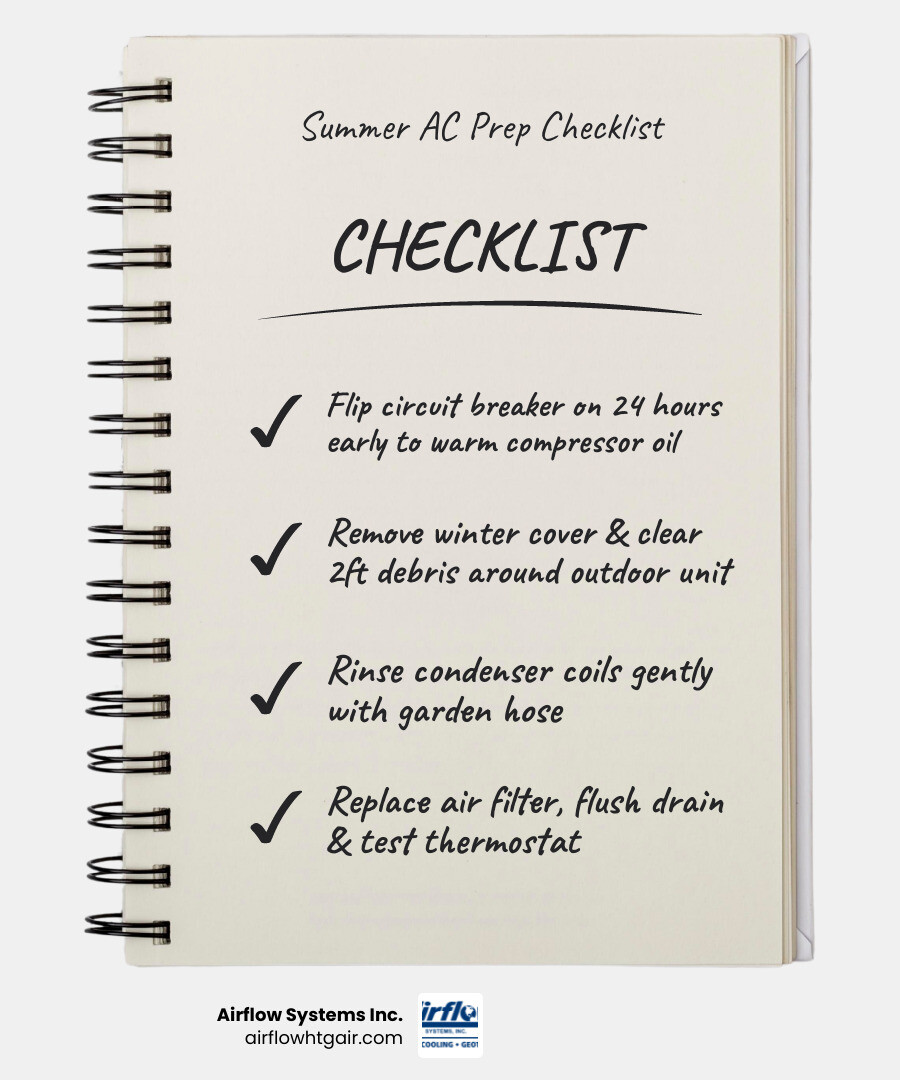
Learning how to prepare your ac for summer is one of the smartest things you can do as a homeowner before temperatures climb. Here's a quick overview of the essential steps:
1. Flip the circuit breaker on 24 hours early to warm the compressor oil
2. Remove any winter cover from the outdoor unit
3. Clear debris and maintain at least 2 feet of clearance around the outdoor condenser
4. Rinse condenser coils gently with a garden hose
5. Replace your air filter (or clean it if reusable)
6. Open and clean all vents and registers
7. Flush the condensate drain line with white vinegar
8. Check refrigerant line insulation for cracks or gaps
9. Test your thermostat in cooling mode
10. Schedule a professional tune-up before the summer rush
Imagine flipping on your AC on the hottest day of July — only to hear nothing but silence, or worse, a grinding noise. It's a situation that plays out in homes across Central Virginia every summer, and it's almost always preventable.
The truth is, most AC systems that fail in peak heat weren't maintained before the season started. A system that sat dormant all winter can accumulate dust, debris, critter damage, and clogged drains without you ever knowing — until it stops working on the one day you need it most.
The good news? A straightforward pre-season checklist can protect your system, lower your energy bills, and keep your family comfortable all summer long. According to the U.S. Department of Energy, routine air conditioner maintenance can reduce cooling costs by as much as 5% to 15% — and that's just from the basics.
This guide from Airflow Systems Inc. walks you through every step, from simple DIY tasks you can do this weekend to the professional checks that keep your system running at its best.
Why You Must Know How to Prepare Your AC for Summer
We often hear from homeowners in Charlottesville who wonder if seasonal maintenance is really necessary. The short answer is yes. Think of your air conditioner like a car; you wouldn’t drive across the country without checking the oil and tires, and you shouldn’t expect your HVAC system to run 24/7 during a Virginia heatwave without a little TLC.
When you understand how to prepare your ac for summer, you aren't just avoiding a breakdown; you’re putting money back in your pocket. Routine maintenance can reduce your cooling costs by 5% to 15%. Furthermore, a clean system doesn't have to work as hard to reach your desired temperature, which significantly extends the lifespan of your expensive equipment.
If you are interested in more comprehensive care, you can learn more about our HVAC maintenance services. Taking these steps now prevents the "feedback loop" of wear and tear, where a small issue like a dirty coil causes the motor to overheat, eventually leading to a total system failure.
• Energy Efficiency — Maintained AC System: High (Uses 5-15% less power) — Neglected AC System: Low (Strains to cool)
• Airflow — Maintained AC System: Strong and consistent — Neglected AC System: Weak or restricted
• Lifespan — Maintained AC System: 15-20 years — Neglected AC System: 8-12 years
• Repair Needs — Maintained AC System: Rare/Minor — Neglected AC System: Frequent/Emergency
• Monthly Bills — Maintained AC System: Predictable and lower — Neglected AC System: Spiking during heatwaves
Essential Safety Steps Before Starting Maintenance
Before we dive into the "how-to," we need to talk about safety. Your AC unit is a powerful electrical appliance. Mixing water, metal tools, and high-voltage electricity is a recipe for disaster if you don't follow the proper protocols.
1. Shut Off the Power: Never perform maintenance while the unit is receiving power. First, turn the thermostat to "Off." Then, go to your home’s main electrical service panel and flip the circuit breaker for the AC to the "Off" position.
2. The Disconnect Box: Most outdoor units have a weatherproof disconnect box located on the exterior wall near the unit. Open this box and pull the "pull-out" switch or flip the internal switch to the "Off" position.
3. Capacitor Discharge: Inside the unit, there is a component called a capacitor that stores an electrical charge even after the power is off. It’s best to wait about 30 minutes after cutting the power before you open any panels to allow this charge to dissipate.
4. Electrical Safety: If you see any charred wires, melted insulation, or signs of a pest infestation (like chewed wires), stop immediately. These are fire hazards that require a professional touch.
Outdoor Condenser Unit and Coil Cleaning
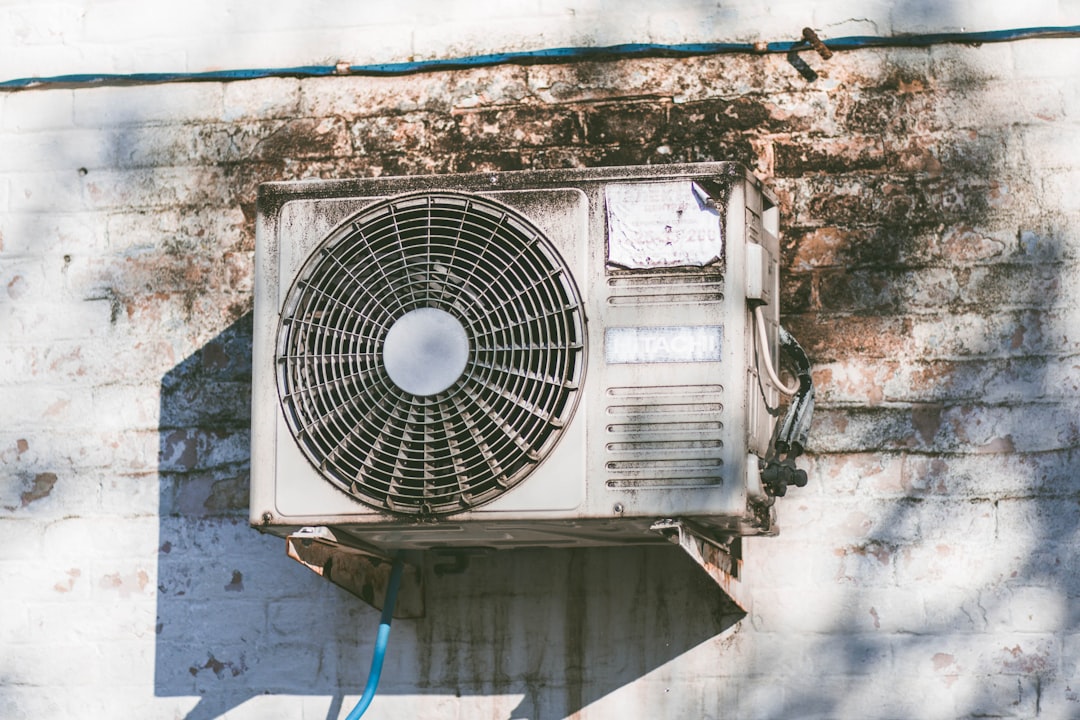
The outdoor portion of your AC is called the condenser. Its job is to release the heat collected from inside your home into the outdoor air. If the coils are covered in dirt, grass clippings, or pollen, that heat gets trapped. This makes your system run longer and hotter, which is the leading cause of compressor failure.
To clean the coils, we recommend using a standard garden hose. Avoid using a pressure washer, as the high pressure can flatten the delicate aluminum fins, permanently restricting airflow. Spray the coils from the inside out if you’ve removed the top panel, or gently rinse from the outside if you're doing a quick surface clean.
While you're out there, check the suction line—that’s the larger of the two copper pipes entering your home. It should be covered in thick foam insulation. If the foam is rotting, cracked, or missing, your system is losing cooling power before the air even reaches your vents. You can easily find replacement foam sleeves or heavy-duty insulation tape at a local hardware store.
If you find that the cleaning process reveals deeper issues, such as bent fins or strange vibrations, you might need AC repairs. Also, take a look at the concrete pad the unit sits on. Over time, the ground in Central Virginia can shift, causing the pad to tilt. An unlevel unit can cause oil to settle improperly in the compressor or put undue stress on the refrigerant lines.
Clearing Debris and How to Prepare Your AC for Summer Airflow
Airflow is the lifeblood of your cooling system. Your outdoor unit needs to "breathe" to dump heat effectively. We recommend maintaining at least a two-foot clearance around the entire unit.
• Trim Vegetation: Spring growth can quickly overtake an AC unit. Trim back any bushes, shrubs, or tall grass that has encroached on that two-foot safety zone.
• Mulch Management: If you use mulch in your landscaping, ensure it isn't packed against the base of the unit. Mulch can trap moisture against the metal and provide a home for insects.
• Remove Covers: If you used a winter cover, remove it completely before turning the system on. Running an AC with a cover on will cause it to overheat and fail within minutes.
• Critter Check: Check inside the unit for bird nests or rodent dens. Rodents cause roughly $1 billion in property damage annually, and they love the warmth and "chewable" wiring insulation found inside HVAC cabinets.
Indoor Maintenance: Filters, Vents, and Drains
Once the outdoor unit is squared away, it’s time to head inside. Many homeowners forget that the indoor half of the system needs just as much attention to maintain high indoor air quality.
One of the most critical checks is the condensate drain line. As your AC cools the air, it also removes humidity. That moisture turns into water that drips into a pan and out through a PVC pipe. Over the winter, algae and mold can grow in this pipe, leading to a clog. A clogged drain can cause water to back up, potentially damaging your floors or ceiling.
To prevent this, find the access port on the drain line (usually a T-shaped pipe near the indoor unit) and flush it with a cup of distilled white vinegar. This kills any burgeoning mold or algae. If you see standing water in the emergency drain pan, you already have a clog that needs professional clearing.
Finally, walk through your home and check every vent and register. Ensure they aren't blocked by furniture, rugs, or curtains that might have been moved during the winter. We also suggest inspecting any visible ductwork in your attic or crawlspace. The EPA estimates that the average home loses 20% to 30% of conditioned air through duct leaks. If you find a small gap, use HVAC-rated aluminum foil tape to seal it—never use standard cloth duct tape, as it dries out and falls off.
Replacing Filters: A Key Part of How to Prepare Your AC for Summer Efficiency
If we could give you only one tip on how to prepare your ac for summer, it would be this: change your air filter. It is the simplest and most effective way to keep your system healthy. A dirty, clogged filter reduces airflow, making the blower motor work twice as hard and potentially causing the evaporator coils to freeze into a block of ice.
Replacing a dirty filter with a clean one can lower your air conditioner’s energy consumption by 5% to 15%. But how do you choose the right one?
• MERV Ratings: Filters are rated on the MERV (Minimum Efficiency Reporting Value) scale from 1 to 16. For most Charlottesville homes, a MERV rating between 8 and 13 is the "sweet spot"—it catches dust, pollen, and pet dander without suffocating your AC's airflow.
• The Schedule: While some filters claim to last six months, we recommend checking yours every 30 days during the peak of summer. If you have pets or suffer from allergies, you will likely need to replace it every month.
• Direction Matters: When you slide the new filter in, make sure the arrows printed on the frame point in the direction of the airflow (toward the unit).
Testing Your Thermostat and System Performance
Now that the cleaning is done, it's time for the "test flight." However, don't just crank the AC the moment you finish.
First, check your thermostat. If it’s an older model, consider if it’s time to learn more about programmable thermostats. Upgrading to a smart thermostat can save you up to 10% annually on cooling costs by automatically raising the temperature when you're away and cooling things down just before you get home. We generally recommend setting your thermostat to 78°F when you’re home for the best balance of comfort and savings.
The 60°F Rule: Do not run your AC in cooling mode if the temperature outside is below 60°F. Doing so can cause the refrigerant to stay too cold, potentially liquid-locking the compressor and causing permanent damage.
The Test Run:
1. Turn the power back on at the breaker and the disconnect box.
2. Set the thermostat to "Cool" and lower the temperature about 5 degrees below the current room temp.
3. Listen to the outdoor unit. It should hum steadily. Any banging, clanking, or shrieking is a sign to turn it off immediately.
4. Feel the air at the vents. Within a few minutes, it should feel crisp and cool.
5. Check the refrigerant lines. If you see frost or ice forming on the copper pipes, turn the system off—this usually indicates a refrigerant leak or a severe airflow restriction.
Frequently Asked Questions about Summer AC Prep
When is the best time to schedule a professional AC tune-up?
The best time is early spring, ideally in March or April. By scheduling before the first major heatwave hits Central Virginia, you avoid the "summer rush" when HVAC companies are at their busiest. A professional tune-up ensures your system is ready for the heavy lifting ahead. If your system is over 10-12 years old and frequently breaking down, this is also a good time to look into AC installations to see if a more efficient model would save you more in the long run.
How often should I replace my AC air filters?
In a typical Charlottesville home, you should replace your filter every 90 days. However, if you have multiple pets, live in a high-pollen area, or have family members with asthma, you should move to a 30-day or 45-day schedule. A gray or "fuzzy" looking filter is a sign that it’s already overdue.
What are the signs that I need professional AC help during the first run?
While DIY maintenance covers the basics, some things require a certified technician. Call for help if you notice:
• Refrigerant Leaks: Hissing sounds or colorful stains near the refrigerant lines.
• Frozen Coils: Visible ice on the indoor evaporator coil or the outdoor lines.
• Short Cycling: The system turns on and off every few minutes without reaching the set temperature.
• Electrical Issues: The circuit breaker keeps tripping, or you smell a distinct "burning plastic" odor.
• Weak Airflow: Even with a new filter, very little air is coming out of the vents.
Conclusion
Taking the time to learn how to prepare your ac for summer is the best way to ensure a stress-free, comfortable season. By following this checklist—clearing debris, changing your filters, and testing your system early—you can protect your investment and keep your utility bills under control.
While these DIY steps are incredibly helpful, they don't replace the deep-cleaning and safety inspections provided by a professional. At Airflow Systems Inc., we’ve been helping our neighbors in Charlottesville and across Central Virginia stay cool for years. Our NATE-certified technicians have the tools and experience to spot the tiny issues that DIY checks might miss, ensuring your system is 100% ready for the Virginia humidity.
Don't wait until the mercury hits 90 degrees to find out your AC isn't up to the task. Schedule your professional AC maintenance with Airflow Systems Inc. today and enjoy the peace of mind that comes with a perfectly tuned cooling system!
Book Expert Service Or Contact Us
Our Service Process
A Hassle-Free Service Experience
01
Consultation & Diagnosis
We start by listening to your needs and performing a thorough diagnosis of your system to recommend the best solution.
02
Transparent Quoting
We provide a clear, upfront estimate with no hidden fees, so you know exactly what to expect.
03
Expert Service & Follow-Up
Our factory-trained technicians complete the work to the highest standards, and we follow up to ensure your complete satisfaction.
testimonials
What Our Customers Are Saying
Our customers consistently praise our exceptional service and attention to detail, making us a trusted choice for all your HVAC needs.
where we operate
Service areas