


Choose an option to see quick actions and get help faster.
.svg)
Why Virginia Summers Demand More From Your AC
Preparing your AC for a Virginia summer is one of the smartest things you can do as a homeowner before the heat arrives. Virginia's summers are no joke — temperatures regularly climb into the upper 80s and 90s, and the humidity makes it feel even worse. That combination puts serious strain on your cooling system, and an AC that hasn't been serviced is far more likely to break down on the hottest day of the year.
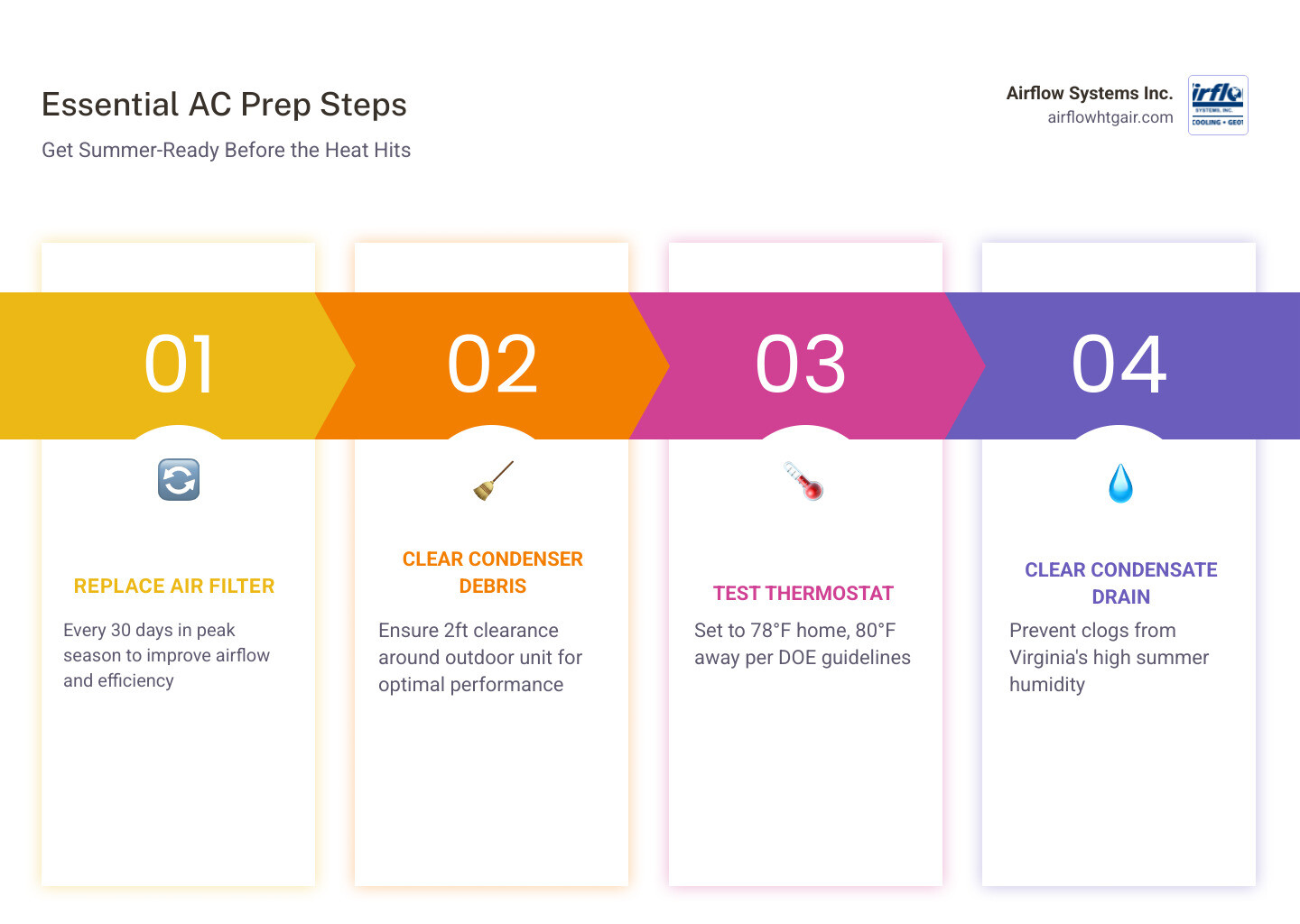
Here's a quick overview of the essential steps to get your AC summer-ready:
1. Replace or check your air filter — every 30 days during peak use
2. Clear debris from your outdoor condenser unit — maintain at least 2 feet of clearance
3. Test your thermostat — set to 78°F when home, 80°F when away
4. Check your condensate drain line — especially important in humid Virginia summers
5. Open and unblock all supply vents — furniture and drapes reduce airflow
6. Schedule a professional tune-up — ideally in early spring before the heat hits
A little preparation now can save you from a sweaty, stressful breakdown in July. Annual AC maintenance can also improve your system's efficiency, which helps maintain consistent comfort over a long Virginia summer.
Why Preparing Your AC for a Virginia Summer is Essential
In Central Virginia and Charlottesville, we live in what is known as a humid subtropical climate. This means our summers aren't just hot; they are heavy with moisture. This humidity plays a massive role in how your air conditioner functions. An AC unit doesn't just "create" cold; it removes heat and moisture from the air inside your home. When the humidity is high, your system has to work twice as hard to achieve the same level of comfort.
Furthermore, Virginia is famous for its dramatic seasonal temperature swings. We can go from a 50-degree morning to a 90-degree afternoon in the blink of an eye. These rapid shifts place extra demand on aging HVAC equipment, many of which in our historic Charlottesville neighborhoods were installed decades ago. Without proper maintenance, these older systems can struggle to keep up with the sudden surge in demand.
Then there is the "pollen factor." Virginia's spring is beautiful, but the high pollen counts can wreak havoc on your indoor air quality systems. Pollen and dust infiltrate your ductwork and clog your filters, suffocating the system. When airflow is restricted, the evaporator coil can actually freeze over, leading to a total system shutdown. By prioritizing preparing your ac for a virginia summer, you aren't just chasing comfort—you’re preventing emergency breakdowns and ensuring your home remains a sanctuary against the sweltering Mid-Atlantic heat.
Essential DIY Steps for Preparing Your AC for a Virginia Summer
You don't need to be a certified technician to perform some basic "TLC" on your cooling system. Taking a few minutes each month to check on your unit can extend its lifespan and keep your system running efficiently.
Your Monthly Maintenance List:
• Air Filter Replacement: This is the single most important DIY task. In Virginia’s high-pollen environment, we recommend checking your filter every 30 days. If you have pets or suffer from allergies, you might need to change it monthly. At a minimum, never go longer than 90 days during the peak cooling season. A dirty filter makes your AC work like a marathon runner trying to breathe through a straw.
• Condensate Drain Line Clearing: Because our air is so humid, your AC produces a lot of water (condensate). This water flows out through a plastic drain line. Over time, algae and gunk can clog this pipe, leading to water damage in your home. A pro tip: use a wet/dry vacuum on the outside end of the drain line to suck out any debris once or twice a year.
• Vent Obstructions: Walk through every room in your house. Ensure that supply vents aren't covered by rugs, heavy drapes, or furniture. Even if you don't use a room, keep the vents open. Closing vents increases the pressure inside your ductwork, which can actually cause leaks and reduce the efficiency of the entire system.
Maintaining Your Outdoor Condenser Unit
The outdoor portion of your air conditioner, known as the condenser unit, is responsible for releasing the heat collected from inside your home. If it’s buried under leaves or overgrown bushes, it becomes a "heat sponge," unable to breathe.
1. Debris Removal: Turn off the power to the unit at the outdoor disconnect box. Hand-pick any leaves, twigs, or grass clippings that have accumulated around the base.
2. The 2-Foot Rule: Ensure there is at least a 2-foot clearance around the entire unit. Trim back any shrubs, hedges, or tall grass that might be encroaching on the equipment.
3. Gentle Coil Rinsing: Using a garden hose on a low-pressure setting, gently rinse the exterior fins of the unit. Do not use a pressure washer, as this will bend the delicate aluminum fins and block airflow.
4. Fin Inspection: If you notice bent fins, you can use a "fin comb" (available at most hardware stores) to gently straighten them, ensuring optimal airflow for the upcoming AC installations or existing setups.
Optimizing Your Thermostat for Virginia Heat
Your thermostat is the "brain" of your cooling system. If it isn't calibrated correctly, your system won't perform at its peak. The Department of Energy (DOE) suggests setting your thermostat to 78°F when you are at home. While that might sound high, using ceiling fans can make the room feel 4 degrees cooler through the wind chill effect.
When you're away for more than a few hours, consider bumping the setting up to 80°F or 82°F. Modern programmable thermostats or smart home integration systems make this easy by allowing you to set schedules from your phone. If you have an older thermostat, don't forget to test the batteries at the start of the season. A dead battery in July is a common cause of "broken" AC calls! For those with year-round needs, ensuring your heat pump installations are correctly synced with your smart thermostat is key to balancing humidity and temperature.
The Benefits of a Professional Pre-Summer Tune-Up
While DIY steps are fantastic, there are some things only a professional can handle. Think of a professional tune-up as a "spa day" for your HVAC system. It catches the small, invisible problems before they turn into a major system failure.
• Change Air Filter — DIY: Yes — Professional: Yes
• Clear Debris from Unit — DIY: Yes — Professional: Yes
• Check Refrigerant Charge — DIY: No — Professional: Yes
• Tighten Electrical Connections — DIY: No — Professional: Yes
• Test Capacitors — DIY: No — Professional: Yes
• Clean Evaporator Coils — DIY: No — Professional: Yes
• Verify Safety Switches — DIY: No — Professional: Yes
• Lubricate Moving Parts — DIY: No — Professional: Yes
During our professional maintenance services, we perform a comprehensive inspection. This includes testing the capacitor—the component that gives your AC the "jolt" it needs to start. Capacitors often weaken during heat waves, and catching a failing one in May prevents a breakdown in August. We also verify refrigerant levels; if they are low, it usually indicates a leak that needs to be sealed to prevent permanent compressor damage. This proactive approach preserves your manufacturer’s warranty and ensures system longevity.
Signs You Need Professional Attention Before the Heat Hits
If you notice any of the following, don't wait for the first 95-degree day to call us:
• Strange Noises: Squealing, grinding, or "gravel-like" sounds can indicate a motor failure or debris caught in the fan.
• Short-Cycling: If your AC turns on and off every few minutes without cooling the house, it’s likely overworking or has a sensor issue.
• Ice on Coils: If you see ice on the outdoor refrigerant lines or the indoor coil, turn the system off immediately and call for AC repairs. This is often caused by restricted airflow or low refrigerant.
• Musty Odors: This often points to moisture buildup or microbial growth in the ductwork, which requires professional cleaning.
• Decreased Efficiency: If your system seems to be running longer than last summer despite similar weather, your system is losing efficiency.
Whether you need furnace repairs in the winter or heat pump repairs in the summer, catching these signs early is the key to avoiding a total system replacement.
Maximizing Efficiency and Indoor Comfort
Beyond your HVAC system, there are several ways to keep your Charlottesville home cool while reducing the load on your AC.
• The Wind Chill Effect: Use ceiling fans in occupied rooms. Fans don't lower the temperature of the room, but they move air over your skin, making you feel much cooler. Remember to turn them off when you leave the room!
• Seal the Leaks: Use caulk or weatherstripping to seal gaps around windows and doors. Our home energy diagnostics can help identify where your conditioned air is escaping.
• Manage the Sun: Close curtains or blinds on the sunny side of the house during the day. This prevents the "greenhouse effect" from heating up your living space.
• Appliance Timing: Run heat-generating appliances like dishwashers, dryers, and ovens at night when the outdoor temperature is lower.
• Consider Modern Upgrades: If you have a room that is always hot, mini-split systems offer an incredibly efficient way to provide targeted cooling without the need for extensive ductwork.
Frequently Asked Questions About Preparing Your AC for a Virginia Summer
How often should I change my air filters in Virginia?
In Central Virginia, we recommend checking your filter every 30 days. During the spring and summer, pollen counts are high, and your AC is running almost constantly. If you have pets, live near a dusty road, or have a large family, you will likely need to replace it every month. For furnace installations that share the same filter system, this habit should continue year-round to protect the blower motor.
How does Virginia humidity impact my AC performance?
Humidity adds "latent heat" to the air. Your AC must first condense that moisture out of the air before it can effectively lower the temperature. This is why a "dry heat" of 90 degrees feels better than a "humid" 85 degrees. If your home feels clammy, you might benefit from geothermal systems or a whole-home dehumidifier to assist your AC in moisture removal.
Is it okay to hose off my outdoor unit?
Yes, but safety first! Always turn off the power at the disconnect switch near the unit before hosing it down. Use a gentle stream of water to wash away dirt, pollen, and "cottonwood" seeds. Never use a high-pressure nozzle, as it can flatten the fins and trap heat inside the unit, leading to extensive HVAC repairs later on.
Conclusion
Preparing your AC for a Virginia summer doesn't have to be a daunting task. By combining simple DIY steps like changing your filters and clearing your outdoor unit with a professional spring tune-up, you can ensure your system runs at peak performance all season long. Not only will you stay cooler, but you’ll also enjoy improved system reliability and the peace of mind that comes with a reliable system.
At Airflow Systems Inc., we are proud to be Charlottesville’s trusted, family-owned HVAC experts. Whether you need a quick tune-up, a complex repair, or a brand-new high-efficiency installation, our certified professionals are here to help. Don't wait for the first heat wave to find out your AC isn't up to the task. Schedule your professional maintenance today and keep your home comfortable all summer long!
Book Expert Service Or Contact Us
Our Service Process
A Hassle-Free Service Experience
01
Consultation & Diagnosis
We start by listening to your needs and performing a thorough diagnosis of your system to recommend the best solution.
02
Transparent Quoting
We provide a clear, upfront estimate with no hidden fees, so you know exactly what to expect.
03
Expert Service & Follow-Up
Our factory-trained technicians complete the work to the highest standards, and we follow up to ensure your complete satisfaction.
testimonials
What Our Customers Are Saying
Our customers consistently praise our exceptional service and attention to detail, making us a trusted choice for all your HVAC needs.
where we operate
Service areas