


Choose an option to see quick actions and get help faster.
.svg)
Why the Mini Split vs Central AC Cost Comparison Is More Complex Than You Think
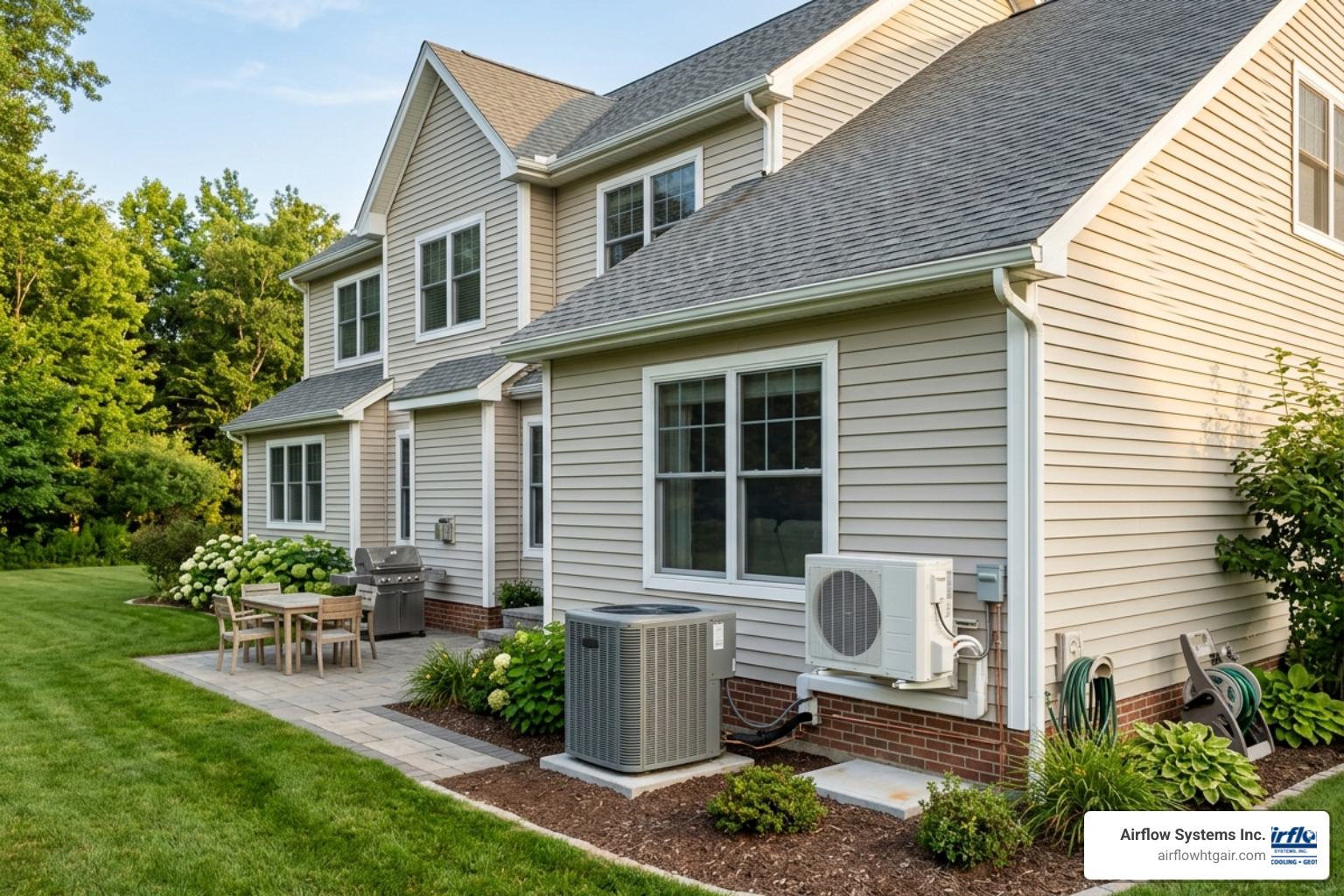
The mini split vs central ac cost comparison is one of the most common questions homeowners face when upgrading or replacing their home's cooling system — and the answer depends on more than just the sticker price.
Here's a quick breakdown to help you decide:
• Best for homes without ductwork — Mini Split: Yes — Central AC: No (costly to add)
• Best for homes with existing ducts — Mini Split: Possible — Central AC: Usually cheaper upfront
• Energy efficiency (SEER2) — Mini Split: 18-30+ — Central AC: 14-20
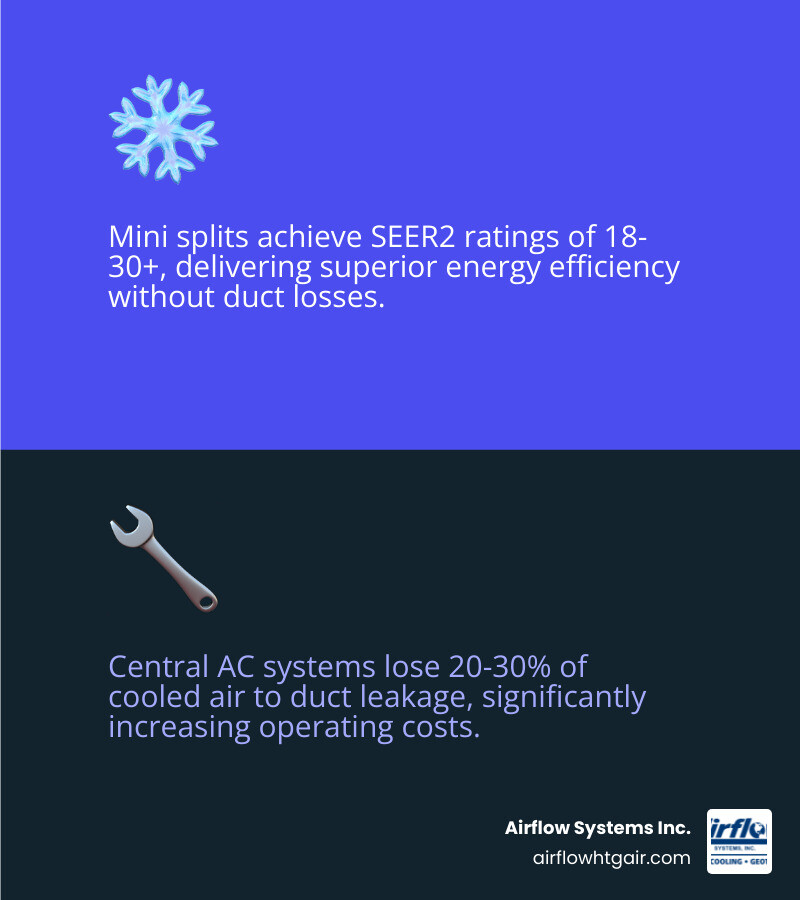
• Duct energy losses — Mini Split: None — Central AC: 20-30% typical
• Zoned temperature control — Mini Split: Built-in — Central AC: Requires add-ons
• Heats AND cools — Mini Split: Yes (heat pump) — Central AC: Cooling only
• Lifespan — Mini Split: 15-20 years — Central AC: 12-15 years
The short answer: If your home already has quality ductwork, central AC is often the lower-cost option upfront. If you need to add ductwork, or want room-by-room control, a mini split system frequently wins on both upfront and long-term costs.
Most homeowners start this comparison focused on installation prices alone. But the real picture only becomes clear when you factor in operating costs, duct energy losses, maintenance needs, and how each system performs through both Central Virginia summers and winters.
That humidity-heavy July afternoon in the Piedmont? Your HVAC system's efficiency rating — and whether it's losing a quarter of its cooled air through leaky ducts before it reaches you — matters far more than most people realize when they're standing in a showroom comparing equipment prices.
In this guide, we walk through every layer of this cost comparison so you can make a confident, informed decision for your home.
Upfront Investment: Mini Split vs Central AC Cost Comparison
When we sit down with families in Charlottesville to discuss a new system, the first question is almost always about the initial check they’ll have to write. It is important to understand that "cost" is a moving target based on the infrastructure already inside your walls.
Equipment-only pricing is just the tip of the iceberg. A central AC system consists of a single large outdoor condenser and an indoor evaporator coil, usually paired with a furnace or air handler. A mini split system, conversely, uses an outdoor unit connected to one or more indoor air handlers via small refrigerant lines.
Labor requirements differ significantly between the two. Central AC installation is often straightforward if the "bones" of the house are ready. However, mini split installations, while less invasive structurally, require "surgically precise" placement of indoor units and careful routing of line sets to ensure they are aesthetically pleasing. Beyond the units themselves, we also have to account for:
• Electrical Panel Upgrades: High-efficiency systems may require a dedicated 220V circuit. If your older Charlottesville home still has a limited amp service, an upgrade might be necessary to handle the new load.
• Permit Fees: Local building codes in Central Virginia require permits for HVAC replacements to ensure safety and compliance with environmental regulations.
• Refrigerant Line Sets: The distance between your indoor and outdoor units affects the amount of copper piping and refrigerant needed.
For those curious about the nuts and bolts of the process, you can find more info about AC installations to see what goes into a professional setup.
The Impact of Existing Ductwork on Mini Split vs Central AC Cost Comparison
This is the "hidden monster" of HVAC budgeting. If you have a home with existing ductwork, central air has a massive head start. However, if those ducts are 20 years old, they may have lost their integrity. Leaky, uninsulated ducts in a hot attic can negate the benefits of even the most expensive high-efficiency unit.
In historic homes throughout the downtown area or older farmhouses in Albemarle County, adding ductwork is often a non-starter. Retrofitting ducts into a house built with plaster walls or limited crawlspace access can be astronomically expensive and structurally damaging. This is where the mini split vs central ac cost comparison swings heavily in favor of ductless. By skipping the ductwork entirely, you avoid the mess, the bulkheads, and the high carpentry costs associated with hiding metal pipes. You can learn more about how we handle these unique challenges in our more info about HVAC services section.
Multi-Zone vs Single-Zone Configurations
Mini splits offer a level of flexibility that central air simply can't match without expensive motorized dampers and complex bypass ductwork.
• Single-Zone: Perfect for a new sunroom, a finished basement, or a "problem" bedroom that never stays cool.
• Multi-Zone: A single outdoor condenser can power multiple indoor air handlers. This allows you to keep the kitchen at 68 degrees while the guest room stays at 74.
While adding more "heads" (indoor units) increases the upfront equipment price, it allows for a "build-as-you-go" approach or a highly customized comfort map of your home. To dive deeper into these configurations, check out more info about mini split systems.
Efficiency and Monthly Operating Expenses
Once the system is installed, the conversation shifts from "What did it cost?" to "What is it costing me now?" In the HVAC world, we measure this using SEER2 (Seasonal Energy Efficiency Ratio).
Mini splits are the undisputed champions of efficiency. While a standard central AC might hover between 14 and 18 SEER2, many mini split systems easily reach 20 to 30+ SEER2. This is largely due to inverter technology.
Think of a traditional central AC like a car that only has two speeds: stopped or floored. It blasts cold air until the thermostat is satisfied, then shuts off. An inverter-driven mini split is more like cruise control; it slows down or speeds up incrementally to maintain a steady temperature. This prevents the massive energy spikes caused by constant on/off cycling. For a deeper look at your home's performance, explore more info about home energy diagnostics.
How Duct Losses Affect Your Mini Split vs Central AC Cost Comparison
Even if you buy a high-SEER central AC, you might not be getting the efficiency you paid for. According to the Department of Energy, the average central vacuum system loses 20% to 30% of its conditioned air through leaks, cracks, and poor insulation in the ductwork.
In the mini split vs central ac cost comparison, ductless systems have a 0% duct loss. The cooling is delivered directly into the room. This means a 16 SEER mini split can actually outperform a 20 SEER central system in real-world conditions because none of the "cool" is being wasted in your attic or crawlspace. Improving your indoor air quality systems often starts with addressing these hidden energy drains.
Seasonal Performance and Climate Impact
Central Virginia presents a unique challenge: high humidity. Our summers aren't just hot; they're "soupy." Mini splits excel at dehumidification because their variable-speed compressors can run for longer, lower-intensity cycles, pulling more moisture out of the air than a central system that cycles off quickly.
We also consider "part-load efficiency." Most days in the Piedmont aren't 100-degree scorchers; they are 82-degree days with high humidity. A mini split can run at 25% capacity to keep you comfortable, while a central AC has to run at 100% just to do a little bit of work. To manage these shifts effectively, many homeowners look into more info about programmable thermostats.
Long-Term Value and Total Cost of Ownership
If you plan on staying in your home for the next decade, the total cost of ownership (TCO) is the most important metric.
• Average Lifespan — Central AC: 12-15 Years — Mini Split: 15-20 Years
• Maintenance — Central AC: Annual Pro Tune-up — Mini Split: Monthly Filter + Annual Pro
• Repair Complexity — Central AC: Moderate (Standard parts) — Mini Split: High (Specialized electronics)
• Efficiency Retention — Central AC: Drops as ducts age — Mini Split: High (Direct delivery)
While central AC has a lower entry price, the higher energy bills and shorter lifespan often make it more expensive over a 15-year period. Mini splits are durable, but they are sophisticated machines. They rely on complex circuit boards (PCBs) that can be sensitive to power surges—a common occurrence during our Virginia summer storms. For those times when things do go wrong, you'll want more info about AC repairs.
Maintenance Requirements and Lifespan
Maintenance is where the "sweat equity" comes in.
• Central AC: You change one or two filters every few months. Every 5-7 years, you might need a professional duct cleaning to remove dust and allergens.
• Mini Splits: These require a bit more hands-on attention. Because the air handlers are in the living space, their filters need to be washed every 2-4 weeks to keep the airflow unrestricted.
Regular professional maintenance is non-negotiable for both. For mini splits, this includes cleaning the indoor blower wheels, which can occasionally develop mold if not properly serviced. For central systems, it involves inspecting the massive network of ducts for signs of rodent damage or disconnected joints.
Heating Functionality and Year-Round Value
One of the biggest "pro-mini split" arguments in the mini split vs central ac cost comparison is that almost all mini splits are heat pumps. They don't just cool; they provide incredibly efficient heat.
In the moderate winters of Charlottesville, where temperatures often hover in the 30s and 40s, a mini split heat pump is significantly cheaper to run than electric baseboard heat or even some propane furnaces. Modern "cold climate" models can even provide heat when it's -13°F outside! If you're looking to eliminate a gas bill entirely, more info about heat pump installations might be the most valuable research you do this year.
Strategic Advantages Beyond the Price Tag
Sometimes, the best choice isn't about the math; it's about the lifestyle.
Zoning is the "killer feature" of mini splits. If you live alone but have a four-bedroom house, why pay to cool the guest rooms all day? You can simply turn off those zones and only cool the kitchen and your bedroom. This can cut your summer electric bills by as much as 50%.
Noise is another factor. Central AC units can be loud, especially when the air handler is located in a closet near a bedroom. Mini split indoor units are "whisper quiet," often operating at 19-30 decibels—quieter than a library. If your system is making more noise than it should, you might need more info about heat pump repairs.
Incentives, Rebates, and Tax Credits
The federal government and local utilities want you to choose high-efficiency systems. Under the Energy Efficient Home Improvement Credit (Section 25C), homeowners can often claim a tax credit of 30% of the project cost, up to $2,000 per year, for heat pumps and mini splits.
Central AC systems also qualify for credits, but usually at a much lower cap (around $600). When you factor in these incentives, the "efficiency premium" of a mini split often pays for itself much faster than you’d expect. For those looking for the ultimate in efficiency, you can also find more info about geothermal systems.
Frequently Asked Questions about AC Costs
Is a mini split more efficient than central air?
Yes, in almost every scenario. By eliminating duct losses (which account for 20-30% of energy waste) and utilizing variable-speed inverter compressors, mini splits deliver more cooling per watt of electricity. While a high-end central AC can be very efficient, it still has to fight the physics of pushing air through long runs of metal or flex duct.
Can a mini split replace a traditional furnace?
In Central Virginia, absolutely. Because our winters are relatively moderate, a high-quality mini split heat pump can handle the vast majority of our heating needs. Some homeowners choose to keep their furnace as a "backup" for those rare sub-zero nights (a hybrid approach), but many are moving toward all-electric solutions. If you are sticking with a traditional setup, we have more info about furnace installations to help you choose.
Which system is better for home additions?
Mini splits are almost always the better value for additions like garage conversions, sunrooms, or attic suites. Extending your existing central AC ductwork into a new space often requires a larger (and more expensive) main unit to handle the extra load, plus the high cost of running new ducts through existing walls. A mini split allows you to treat the new room as its own independent zone. If your current furnace is struggling with an addition, you might need more info about furnace repairs.
Conclusion
Choosing between a mini split and central AC isn't just a matter of finding the lowest price—it's about finding the best fit for your home's unique architecture and your family's comfort needs. Whether you’re looking to save on monthly bills with a high-efficiency ductless system or want to leverage your home's existing infrastructure with a modern central unit, the team at Airflow Systems Inc. is here to help.
As a family-owned contractor serving Charlottesville and Central Virginia, we pride ourselves on providing honest, expert advice tailored to our local climate. We don't just install boxes; we design comfort solutions that last.
Ready to see which system makes the most sense for your property? Contact Airflow Systems Inc. for a professional consultation today, and let’s get your home ready for whatever the Virginia weather throws our way.
Book Expert Service Or Contact Us
Our Service Process
A Hassle-Free Service Experience
01
Consultation & Diagnosis
We start by listening to your needs and performing a thorough diagnosis of your system to recommend the best solution.
02
Transparent Quoting
We provide a clear, upfront estimate with no hidden fees, so you know exactly what to expect.
03
Expert Service & Follow-Up
Our factory-trained technicians complete the work to the highest standards, and we follow up to ensure your complete satisfaction.
testimonials
What Our Customers Are Saying
Our customers consistently praise our exceptional service and attention to detail, making us a trusted choice for all your HVAC needs.
where we operate
Service areas