

Choose an option to see quick actions and get help faster.
.svg)
How AC Refrigerant Changes Affect Homeowners in Charlottesville, VA — and What to Do Next
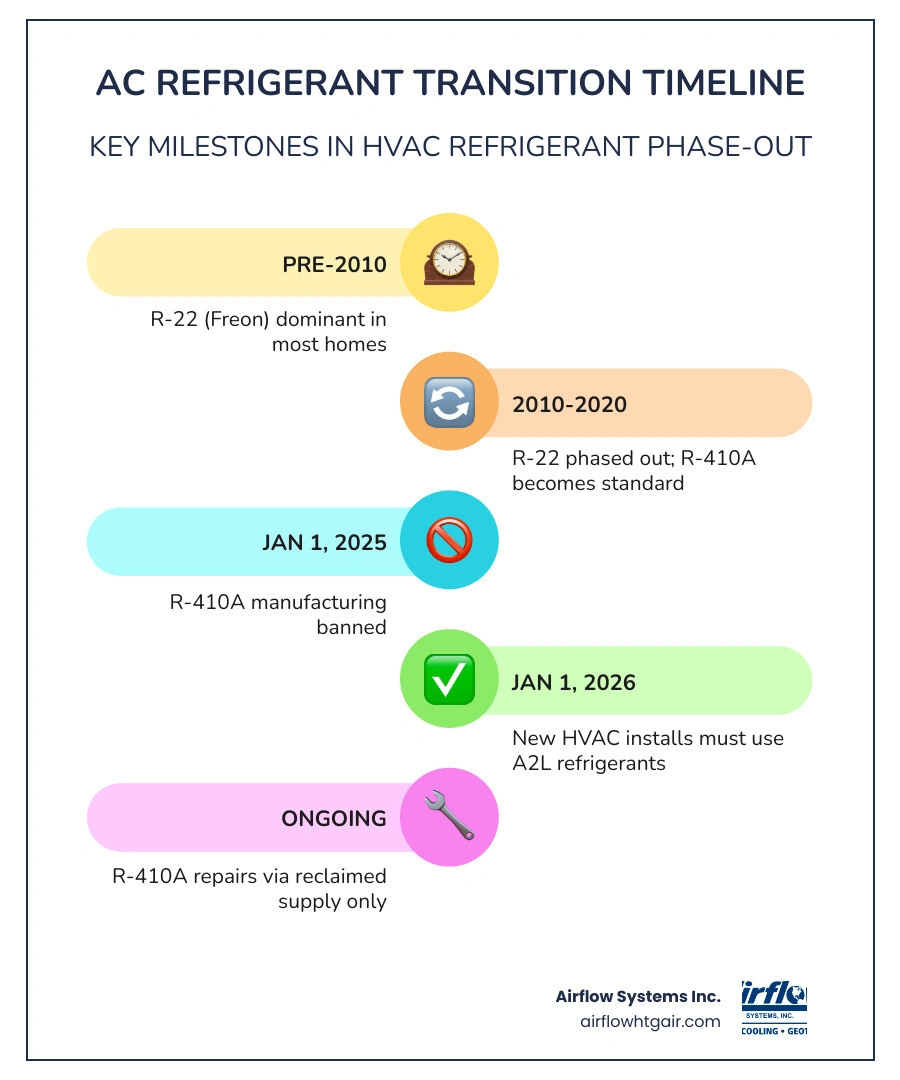
How AC refrigerant changes affect homeowners comes down to a few key points: your existing system is not being forced out, but new regulations mean the refrigerant that powers most Central Virginia homes — R-410A — is no longer being manufactured. Starting January 1, 2025, no new HVAC equipment using R-410A could be produced, and as of January 1, 2026, technicians can no longer install new systems that use it. Here is a quick summary of what that means for you right now:
- Your current system can stay — R-410A units can still be repaired and maintained using reclaimed refrigerant supplies
- New installations must use A2L refrigerants — such as R-454B or R-32, which have a much lower environmental impact
- Repair costs may rise over time — as R-410A supply shrinks, the cost of servicing older systems is likely to increase
- New systems will cost more upfront — equipment using the new refrigerants is projected to be 20% to 30% more expensive due to updated components and safety features
- No immediate action is required — unless your system is aging, inefficient, or already showing problems
If you have a reliable, well-maintained AC system in your Charlottesville home, you do not need to panic. But understanding what is happening in the HVAC industry right now — and why — will help you make smarter decisions before your next repair or replacement comes up.
The change is driven by the federal American Innovation and Manufacturing (AIM) Act of 2020, which directed the EPA to phase down hydrofluorocarbons (HFCs) like R-410A because of their extremely high Global Warming Potential. R-410A has a GWP of 2,088 — more than three times the warming impact of carbon dioxide. The new refrigerants replacing it, R-454B (GWP 466) and R-32 (GWP 675), are far less harmful to the climate, though they come with their own considerations we will cover throughout this guide.
This is not the first time the industry has been through a transition like this. R-22, once the standard refrigerant in homes across Virginia, was fully phased out in 2020 — and homeowners who planned ahead came out in a much better position than those who waited. The current shift follows a similar pattern, just on a faster timeline.
Understanding the 2025 and 2026 HVAC Transition
The landscape of home cooling is shifting beneath our feet, and it all boils down to environmental stewardship. For decades, the HVAC industry has been searching for the "perfect" chemical to move heat. We started with R-22 (Freon), which was great at cooling but terrible for the ozone layer. Then came R-410A (Puron), which saved the ozone but contributed significantly to global warming.
Now, as we move through 2026, we are entering the era of A2L refrigerants. The primary players in this new generation are R-454B and R-32. These chemicals are designed to provide the same refreshing chill on a humid Charlottesville afternoon while being much kinder to the planet. This transition isn't just a suggestion; it’s a federal mandate aimed at protecting our atmosphere for future generations.
If you find yourself needing an AC Repair on an older unit, you might start hearing these terms more often from our technicians. Understanding them now can save you a headache later.

Why the industry is moving away from R-410A
The move away from R-410A is primarily due to its Global Warming Potential (GWP). To put it simply, if R-410A leaks into the atmosphere, it traps heat thousands of times more effectively than carbon dioxide. Under the AIM Act, the EPA is requiring a transition to refrigerants with a GWP of 700 or less. R-410A, with its rating of 2,088, simply doesn't make the cut anymore. This phase-down is a global effort, mirroring successful transitions seen in Europe over the last decade.
The difference between R-32 and R-454B
You might wonder why there isn't just one replacement. Different manufacturers have chosen different paths. R-32 is a single-component refrigerant that has been used globally for years; it is highly efficient and requires a lower volume of gas to cool your home. R-454B is a blend that offers an even lower GWP but contains a small percentage of R-1234yf. While both are excellent at cooling, they are not interchangeable. Each system is specifically engineered to handle the unique pressures and properties of its designated refrigerant.
How AC Refrigerant Changes Affect Homeowners with Existing Systems
If your current air conditioner is humming along just fine, you don't need to rush out and replace it today. A well-maintained system can last 15 to 20 years. However, how ac refrigerant changes affect homeowners becomes most apparent when that system eventually needs a repair involving the refrigerant circuit.
As the production of R-410A stops, the supply will slowly dwindle. While there will be a healthy market for reclaimed and recycled R-410A for many years, the basic laws of supply and demand suggest that the cost to "top off" a leaking system will likely increase. This makes regular maintenance and Heat Pump inspections more critical than ever.
Can I still get service for my R-410A or R-22 unit?
Yes, you can. If you have an R-410A system, we can still provide AC Repair services, including fixing leaks and recharging the system. Even for those very old R-22 units, reclaimed refrigerant is available, though it has become quite expensive. The key is to ensure you are working with a certified professional who recovers old refrigerant responsibly rather than venting it, which is both illegal and harmful to the environment.
Why how ac refrigerant changes affect homeowners' repair decisions
When a major component fails in an older R-410A system, you'll have to weigh the cost of the repair against the rising cost of the refrigerant and the age of the unit. Investing a significant amount into an aging system that uses a phased-out refrigerant might not be as "future-proof" as upgrading to a new, high-efficiency model. Our goal at Airflow Systems Inc. is to provide you with all the Services and information you need to make that call confidently.
The Shift to A2L Refrigerants and Home Safety
The new refrigerants, R-454B and R-32, fall into a category called "A2L." The "A" stands for low toxicity, and the "2L" stands for mild flammability. While the word "flammable" might sound scary, it’s important to keep it in perspective. These substances are incredibly difficult to ignite and are already used safely in millions of cars and refrigerators.
To ensure total peace of mind, the new HVAC systems are built with advanced safety features that weren't necessary in the R-410A era. These systems are smarter and more proactive about Indoor Air Quality Testing and leak detection.
Safety features in systems using new refrigerants
Modern A2L systems come equipped with a Refrigerant Detection System (RDS). If the system senses a leak, it can automatically shut down the compressor and engage the indoor blower fan to dissipate the refrigerant safely, preventing it from reaching a concentration where it could become a hazard. These mitigation boards work behind the scenes to keep your family safe while maintaining your IAQ.
How ac refrigerant changes affect homeowners looking to upgrade
If you are planning an upgrade, you’ll notice that the new units look a bit different on the inside. Because of the safety sensors and the different pressures required by A2L refrigerants, you cannot simply swap out an outdoor condenser and keep your old indoor coil. A full Heat Pump Installation is required to ensure all components are compatible and that the safety systems are fully integrated.
Planning for a New Installation in Charlottesville, VA
When it comes time for a new Furnace Installation or AC upgrade, the good news is that these new systems are remarkably efficient. By moving to a lower GWP refrigerant, you are not only helping the planet but likely lowering your monthly utility bills as well.
In Charlottesville, we have seen some sweltering summers lately, and having a reliable, high-efficiency system is no longer a luxury. Modern units often meet the new SEER2 standards, which measure efficiency under more realistic conditions. Plus, many of these installations qualify for federal tax credits under the Inflation Reduction Act, which can help offset the initial investment.
Maximizing efficiency with new technology
The new refrigerants allow for better heat transfer, meaning the system doesn't have to work as hard to keep you cool. Some systems even require a lower volume of refrigerant to achieve the same cooling capacity. If you're looking for the ultimate in efficiency, you might even consider Geothermal Systems, which use the steady temperature of the earth to provide comfort.
Identifying your current refrigerant type
Not sure what you have? You can usually find out by looking at the nameplate on your outdoor unit. It will list the refrigerant type, usually as R-22, R-410A, or R-454B. If the label is faded or hard to reach, our technicians can verify it for you during a routine visit. Knowing what you have is the first step in planning for the future of your Home.
Frequently Asked Questions about Refrigerant Changes
Do I have to replace my working AC right now?
Absolutely not. There is no law requiring you to replace a functional air conditioner just because the refrigerant standards have changed. You are free to use your current system for the remainder of its natural life. For a full list of our service areas and topics, you can check our Sitemap.
Can my old system be retrofitted for R-454B or R-32?
Unfortunately, no. How ac refrigerant changes affect homeowners includes the reality that these new refrigerants operate at different pressures and require specific lubricants and safety sensors. Attempting to "drop in" a new refrigerant into an old system is dangerous and will likely destroy the compressor.
Will R-410A still be available for repairs?
Yes, for quite some time. While new production has stopped, a massive amount of R-410A exists in current systems. As people upgrade, that gas is reclaimed, cleaned, and put back on the market. However, as the "virgin" supply disappears, expect the market price to fluctuate. If you're concerned about a leak in your current system, Contact Us to discuss your options.
Conclusion
At Airflow Systems Inc., we’ve been helping Charlottesville families stay comfortable since 1988. We’ve seen refrigerant transitions before, and we know they can feel overwhelming. Our family-owned values mean we will always give you an honest assessment of whether it makes more sense to repair your current unit or invest in the new A2L technology.
The transition to R-454B and R-32 is a positive step for our environment, and while it changes how we look at HVAC equipment, it doesn't change our commitment to you. Whether you need a quick tune-up or a brand-new installation, our NATE-certified technicians are trained and ready to handle the latest technology safely and efficiently.
Don't wait for the next heatwave to wonder about your system's health. Schedule your professional air conditioning consultation in Charlottesville today, and let us help you navigate these changes with ease.
Book Expert Service Or Contact Us
Our Service Process
A Hassle-Free Service Experience
01
Consultation & Diagnosis
We start by listening to your needs and performing a thorough diagnosis of your system to recommend the best solution.
02
Transparent Quoting
We provide a clear, upfront estimate with no hidden fees, so you know exactly what to expect.
03
Expert Service & Follow-Up
Our factory-trained technicians complete the work to the highest standards, and we follow up to ensure your complete satisfaction.
testimonials
What Our Customers Are Saying
Our customers consistently praise our exceptional service and attention to detail, making us a trusted choice for all your HVAC needs.
where we operate
Service areas