

Choose an option to see quick actions and get help faster.
.svg)

What to Do When Your AC Won't Turn On in Charlottesville, VA
AC not turning on what to check first is exactly the right question to ask — and the good news is that most of the time, the answer is simpler than you'd expect. You walk into your Charlottesville home on a sweltering April afternoon, the humidity already climbing, and nothing happens when you turn on the AC. No hum, no cool air, no response. That sinking feeling is something a lot of Central Virginia homeowners know all too well.
Before you assume the worst, here are the first things to check:
1. Thermostat — Make sure it's set to COOL mode, the temperature is at least 5 degrees below the current room temperature, and the batteries aren't dead.
2. Circuit breaker — Check your electrical panel for a tripped breaker. It may be in the middle position rather than fully OFF.
3. Indoor and outdoor power switches — Both your air handler and outdoor unit have dedicated shutoff switches that can accidentally get switched off.
4. Air filter — A severely clogged filter can trigger a safety shutoff, preventing the system from starting at all.
5. Condensate drain line — A clogged drain line activates a float switch that shuts the whole system down to prevent water damage.
In many cases, one of these five checks will get your system running again without a service call. The rest of this guide walks you through each step safely and clearly, and tells you exactly when it's time to call in a professional.
Tripped circuit breakers and thermostat problems alone account for the majority of "no power" service calls — meaning a lot of homeowners call for help before checking the simplest things first. That's not a knock on anyone; it's just not obvious where to start when your AC goes silent and the heat is already building indoors.
This guide is designed to change that. Whether your central AC, window unit, or heat pump isn't responding, you'll know what to look at first, what's safe to handle yourself, and what needs a licensed HVAC technician.

Start with the Basics: Thermostat and Power Settings
When we arrive at a home in Charlottesville where the air conditioner isn't responding, the very first place we look is the thermostat. It is the "brain" of your HVAC system, and if the brain isn't sending signals, the body won't move. It sounds simple, but sometimes the most frustrating problems have the most basic solutions.

Troubleshooting the Thermostat: AC Not Turning On What to Check First
If you are staring at a blank thermostat screen, your first move should be to replace the batteries. Even if your thermostat is hardwired into your home's electrical system, many models use batteries as a backup or to power the display. We recommend changing these at the start of every cooling season to avoid a mid-summer blackout.
Beyond the batteries, check your settings. Ensure the system is set to "COOL" and not "HEAT" or "OFF." A common issue occurs when someone in the house gets a bit chilly and flips the system to "OFF" without telling anyone else. Also, check the "5-degree rule": set your desired temperature at least 5 degrees below the current indoor temperature to "force" the system to kick on.
If the screen is on and the settings are correct but the unit remains silent, there could be an issue with the thermostat wiring. Over time, vibrations or even small rodents can loosen or fray the thin wires behind the mounting plate. If you’re noticing Signs Your AC Needs Repair Before Summer, such as a thermostat that won't hold its programming, it might be time for an upgrade.
Checking the Indoor and Outdoor Power Switches
Did you know your AC has "emergency" shutoff switches that look exactly like light switches? It’s true. In many Central Virginia homes, there is a switch located near the indoor air handler (often in an attic, basement, or closet). Because it looks like a light switch, it’s incredibly easy for someone to flip it off accidentally while reaching for a real light.
Outside, your condenser unit has a "disconnect box" mounted on the exterior wall. Inside this box is a switch or a pull-out handle that cuts power to the outdoor unit. If this was turned off during the winter for safety, your AC won't start until it's flipped back to the "ON" position. Getting Your Air Conditioner Ready for Hot, Humid Weather always involves verifying that these power sources are active before the first heatwave hits.
AC Not Turning On What to Check First: The Electrical Panel
If the thermostat and switches are fine, the problem likely lies in your home's electrical panel. Your air conditioner is one of the most power-hungry appliances in your home. During a Charlottesville power surge or a particularly hot day when the grid is strained, your AC might draw too much current, causing the circuit breaker to trip.
How to Safely Inspect and Reset a Tripped Breaker
Open your electrical panel and look for the breaker labeled "AC" or "HVAC." A tripped breaker won't always be in the "OFF" position; usually, it hangs somewhere in the middle. To reset it safely:
1. Flip the breaker completely to the OFF position.
2. Flip it firmly back to the ON position.
Safety Warning: If the breaker trips again immediately after you reset it, do not try a second time. This is a clear sign of a short circuit or a failing component that is pulling dangerous levels of electricity. Repeatedly resetting a tripping breaker can cause an electrical fire. If you find yourself in this situation, check our guide on AC Not Cooling Properly: What to Check First to see if the issue is deeper within the system.
Identifying Blown Fuses in the Outdoor Disconnect
Some outdoor disconnect boxes use fuses rather than a switch. If a power surge occurs—common during our spring thunderstorms in Virginia—these fuses can blow to protect your compressor.
While you can sometimes see a burn mark on a blown fuse, the most reliable way to check is with a multimeter to test for continuity. However, handling high-voltage fuses can be dangerous. If you suspect a blown fuse in your outdoor block, it is usually best to have a professional handle the replacement to ensure the root cause of the surge is identified.
Airflow and Drainage Obstructions
Sometimes, your AC won't turn on because its own safety sensors are doing their job. Modern air conditioners are designed to shut down if they sense a condition that could lead to catastrophic damage, such as a frozen coil or a water leak.
Air Filters and AC Not Turning On What to Check First
We cannot stress this enough: a dirty air filter is the leading cause of AC "suffocation." When the filter is clogged with dust, pet hair, and Central Virginia pollen, the blower motor has to work twice as hard to pull air through. This can cause the motor to overheat and shut down.
Furthermore, restricted airflow causes the temperature of the evaporator coil to drop too low, leading to ice formation. If your system has a low-pressure switch, it will prevent the unit from turning on to protect the compressor from liquid slugging. Check your filter every 30 days. If you can't see light through it, it's time for a change.
• Startup Behavior — Dirty Air Filter: May start, then shut off quickly — Clogged Drain Line: Won't start at all
• Visual Signs — Dirty Air Filter: Dust on vents, ice on lines — Clogged Drain Line: Water in drain pan, damp carpet
• Audible Signs — Dirty Air Filter: Loud whistling or humming — Clogged Drain Line: Gurgling sounds
• Safety Trigger — Dirty Air Filter: Thermal overload or pressure switch — Clogged Drain Line: Float switch (water sensor)
Signs of a Clogged Condensate Drain Line
In our humid Charlottesville climate, your AC removes a massive amount of moisture from the air. This water drips into a pan and flows out through a condensate drain line. Over time, algae and "sludge" can grow in this line, causing a backup.
To prevent your house from flooding, your system likely has a "float switch." If the water level in the pan rises too high, the float lifts and breaks the electrical circuit, instantly shutting down the AC. If you see standing water in the emergency drain pan under your indoor unit, you’ve found your culprit. You can sometimes clear these clogs using a wet/dry vacuum to suck the debris out from the exterior end of the pipe.
Identifying Component Failures and Safety Hazards
If you’ve checked the power, the thermostat, and the filters, and the unit still won't kick on, we are likely looking at a mechanical or electrical component failure. At this stage, you might hear the unit trying to start, which provides valuable clues.
Spotting a Faulty Capacitor or Seized Motor
The most common component to fail in an AC system is the dual-run capacitor. Think of the capacitor like a large battery that gives the motors the "jolt" they need to start spinning.
If you hear a humming sound coming from your outdoor unit, but the fan isn't spinning, the capacitor has likely failed. In some cases, you might see the top of the capacitor bulging like a soda can about to burst. Another sign is a clicking noise, which indicates the contactor is trying to engage but the motors can't get the power they need. If your unit is making these sounds, listen closely and compare them to our guide on AC Making Strange Noises: What They Mean.
What to Do About a Frozen Evaporator Coil
If you see ice on the copper lines leading to your outdoor unit or on the indoor evaporator coil, your system is "frozen." This usually happens due to low refrigerant or restricted airflow.
If your AC won't turn on and you see ice:
1. Turn the system OFF immediately. Running a frozen AC can destroy the compressor.
2. Switch the fan to "ON" (not "AUTO") to help circulate warm air and melt the ice.
3. Wait 24 hours. It takes a long time for the internal components to thaw completely.
4. Call a professional. Ice is a symptom of a deeper problem, like a refrigerant leak, that requires a licensed technician to fix.
When to Call a Professional for AC Startup Issues
While we encourage Charlottesville homeowners to handle basic checks like filters and thermostats, some issues are simply too dangerous or complex for a DIY fix. Your AC uses high-voltage electricity and pressurized chemicals that require specialized tools and training.
Call us immediately if you notice any of the following red flags:
• Repeatedly Tripping Breakers: This indicates a major electrical fault or a "grounded" compressor.
• Burning Odors: A smell of ozone or burning plastic suggests melting wire insulation or a motor burnout.
• Hissing Noises: This is the sound of high-pressure refrigerant escaping through a leak.
• Frayed or Melted Wiring: Never touch exposed HVAC wires; they can carry a lethal charge even if the unit seems "dead."
• The "Hum and Click": If the unit hums and then clicks off without starting, the compressor may be seized.
At Airflow Systems Inc., our NATE-certified technicians have been serving the Central Virginia community since 1988. We understand the specific strain that our local humidity puts on cooling systems, and we have the diagnostic tools to find the problem fast.
Frequently Asked Questions about AC Startup
Why is my AC not turning on after a power outage?
Power outages often come with voltage spikes that can trip your circuit breaker or blow the small 3-amp or 5-amp fuse on your indoor control board. Additionally, many modern systems have a built-in "short-cycle timer" that prevents the AC from restarting for 3 to 5 minutes after power is restored to protect the compressor. Wait at least 10 minutes before panicking!
How do I know if my AC reset button is tripped?
Some outdoor units have a literal "reset" button, usually red and located near the bottom of the service panel. If the unit has overheated, this button will pop out. Pressing it back in may restart the unit, but if it pops out again, it means the system is overheating and needs professional attention.
Can a smart thermostat prevent my AC from starting?
Yes. If your smart thermostat loses its Wi-Fi connection or has a software glitch, it may fail to send the "call for cool" to your air handler. Also, if your smart thermostat doesn't have a "C-wire" (common wire) and relies on "power stealing," it may not be getting enough juice to trigger the AC contactor.
Conclusion
When you're faced with an ac not turning on what to check first, a systematic approach is your best friend. Start with the thermostat, move to the electrical panel, and check your filters and drains. More often than not, the solution is a flipped switch or a dead battery.
However, your comfort and safety are our top priorities. If the basic checks don't get the air moving, don't sweat it out in the Charlottesville heat. Airflow Systems Inc. is a family-owned business built on honesty and local expertise. We’ve spent over three decades keeping Central Virginia cool, and we’re ready to help you too.
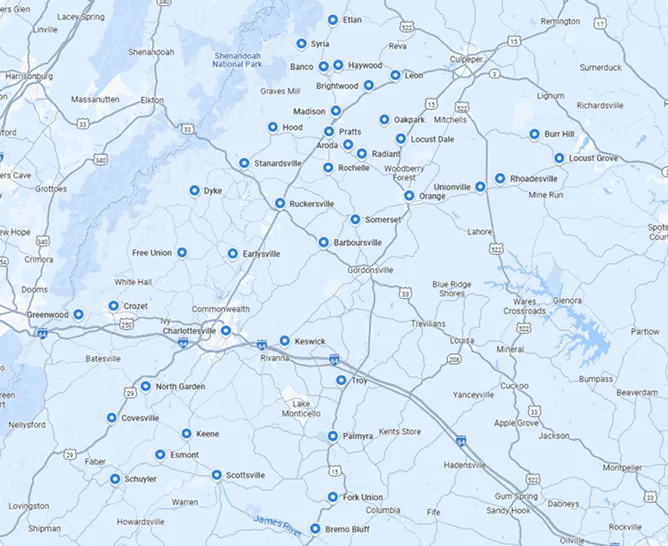
Contact our team for professional air conditioning services in Charlottesville, VA or the surrounding Central Virginia areas today. We’ll get your system back online so you can get back to enjoying your summer.
Book Expert Service Or Contact Us
Our Service Process
A Hassle-Free Service Experience
01
Consultation & Diagnosis
We start by listening to your needs and performing a thorough diagnosis of your system to recommend the best solution.
02
Transparent Quoting
We provide a clear, upfront estimate with no hidden fees, so you know exactly what to expect.
03
Expert Service & Follow-Up
Our factory-trained technicians complete the work to the highest standards, and we follow up to ensure your complete satisfaction.
testimonials
What Our Customers Are Saying
Our customers consistently praise our exceptional service and attention to detail, making us a trusted choice for all your HVAC needs.
where we operate
Service areas