

Choose an option to see quick actions and get help faster.
.svg)
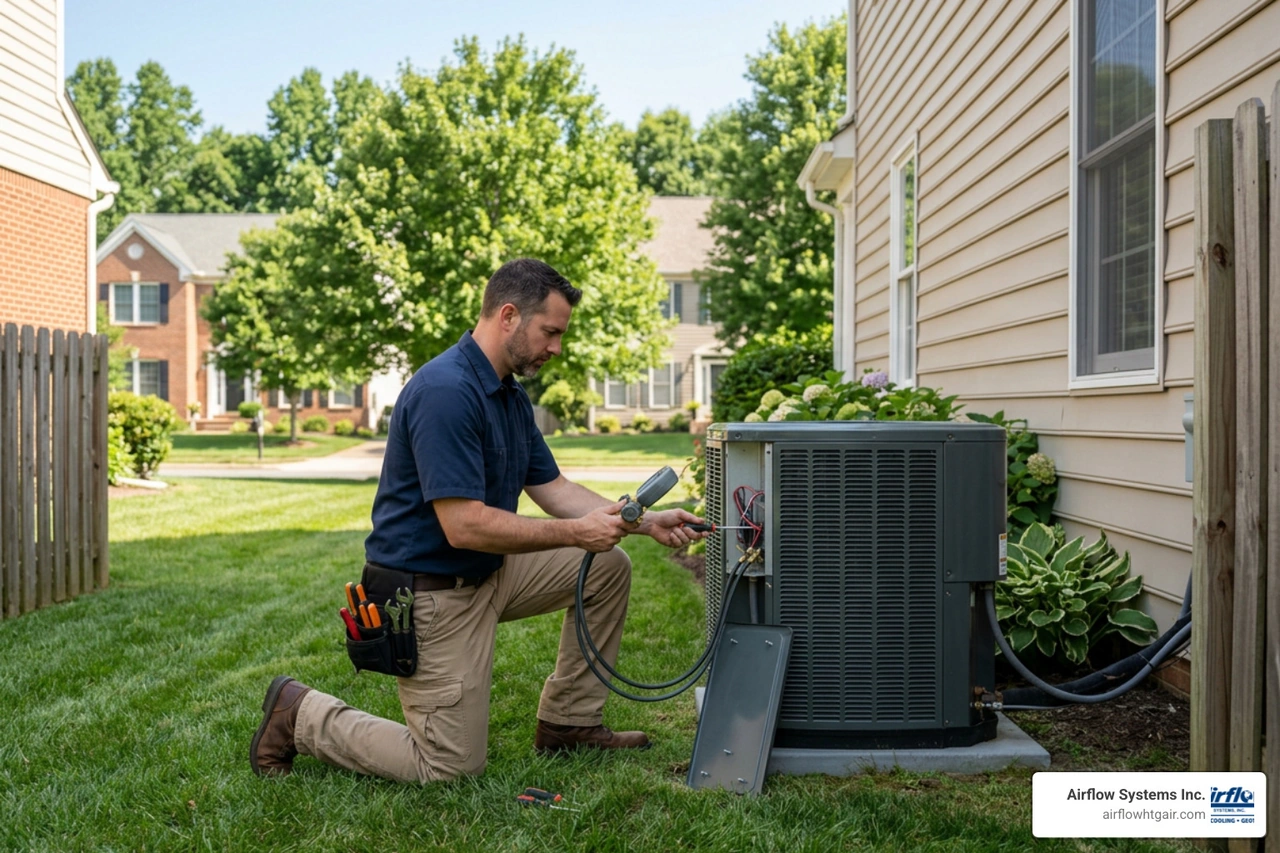
Why Virginia's Mixed-Humid Climate Demands Proactive AC Care
If you want to know how to extend the life of your AC in Virginia, here are the most effective steps:
1. Replace air filters every 30–90 days — more often during high-pollen seasons
2. Schedule a professional tune-up every spring before peak cooling demand
3. Keep the outdoor condenser unit clear of debris, vegetation, and dirt
4. Flush the condensate drain line periodically to prevent clogs and water damage
5. Set your thermostat to 78°F when home and higher when away to reduce system strain
6. Watch for warning signs like weak airflow, strange noises, or rising energy bills
7. Address small problems early before they become expensive breakdowns
Virginia summers are no joke. Charlottesville and the broader Central Virginia region sit in Climate Zone 4A — a mixed-humid zone where temperatures swing from mild spring mornings to sweltering 90°F afternoons, all while humidity levels stay high for months at a time. That combination puts serious, sustained stress on residential air conditioning systems. Add in the region's high pollen counts, which clog filters faster than in drier climates, and it's easy to see why AC units here work harder than almost anywhere else in the country.
The good news? A well-maintained AC unit can last 15 to 20 years — compared to just 8 to 12 years for a neglected one. Regular maintenance can also reduce energy consumption by up to 15% and help prevent the vast majority of unexpected repair calls. For homeowners in Charlottesville and Central Virginia, staying proactive isn't just about comfort — it's about protecting a significant investment in your home. Learn more about how long an AC unit typically lasts in Central Virginia.
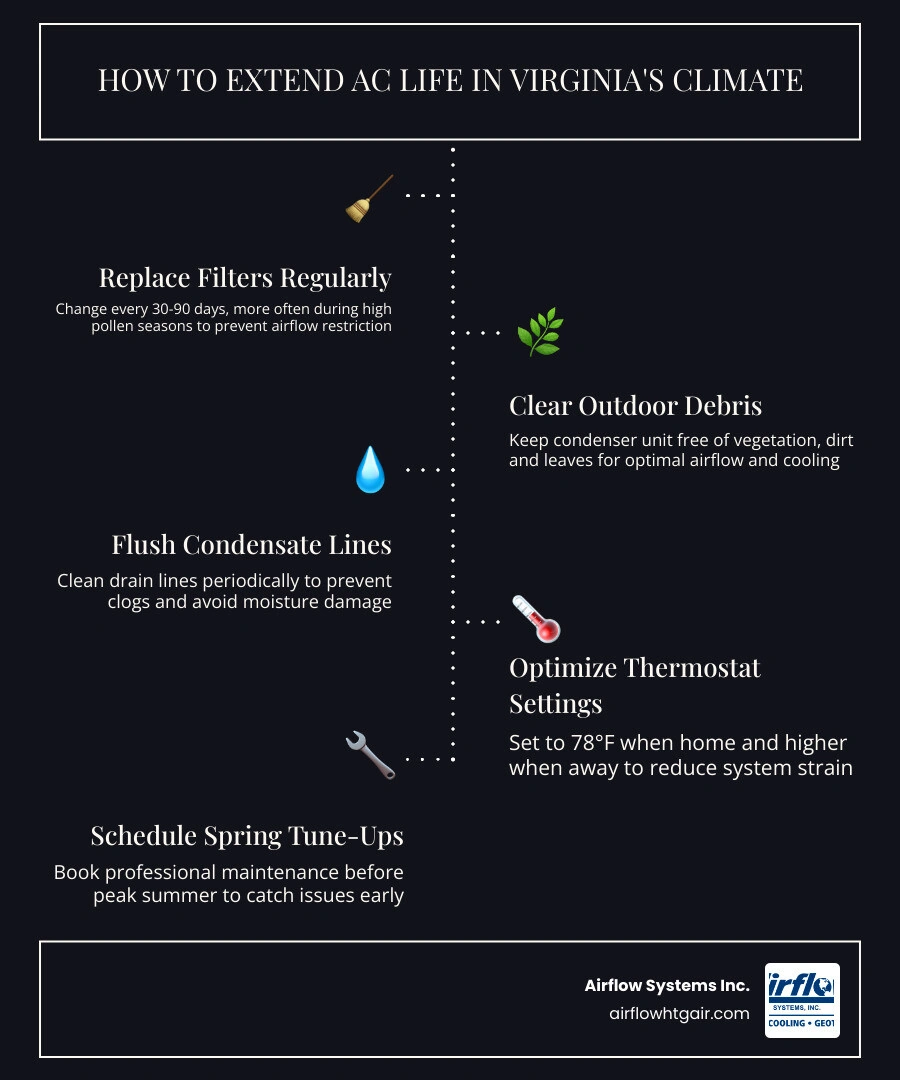
Essential DIY Steps on How to Extend the Life of Your AC in Virginia
While professional technical oversight is crucial, a substantial portion of your system’s longevity depends on the simple, consistent habits you practice at home. By integrating a few straightforward tasks into your routine, you can significantly ease the mechanical burden on your system.
Keep the Air Flowing with Fresh Filters
Think of your air filter as your air conditioner's lungs. When a filter becomes packed with dust, pet dander, and Piedmont clay dust, your system has to work twice as hard to pull air through. It’s like a marathon runner trying to breathe through a straw.
During our heavy spring pollen seasons and the peak of summer, we recommend checking your air filter every 30 days. If you have pets or suffer from seasonal allergies, you’ll likely need to replace it monthly. For standard households, a high-quality pleated filter (typically rated MERV 8 to 11) will last about 60 to 90 days. Replacing a dirty filter is the single easiest way to boost your system's efficiency by up to 15% and prevent the indoor evaporator coil from freezing over.
Clear the Perimeter Around Your Outdoor Condenser
Your outdoor unit needs room to breathe. It works by releasing the heat captured from inside your home out into the surrounding air. If it is choked by overgrown boxwoods, tall weeds, or fallen oak leaves, that heat gets trapped, forcing the compressor to run hotter and longer.
Maintain at least a two-foot clearance zone around your outdoor unit. Trim back shrubs, cut down weeds, and regularly check for leaves or twigs caught in the metal fins. If the metal exterior looks dusty or covered in pollen, turn off the power to the unit at the breaker and gently rinse it with a low-pressure garden hose. Never use a pressure washer, as the intense stream can easily bend the delicate aluminum fins and permanently restrict airflow.
Manage the Steam Room: Condensate Drain Lines
In Central Virginia, cooling your home is only half the battle; the other half is removing moisture. On a humid 90°F July day, your AC can pull several gallons of water out of your indoor air every single day. This water collects in a drain pan and flows outside through a small PVC condensate line.
Over time, the warm, dark, damp environment inside this pipe becomes a breeding ground for algae and mold. If a clog forms, water can back up into your home, causing expensive ceiling damage or triggering your system's safety switch to shut the AC down entirely. To prevent this, flush your drain line once or twice a summer with a half-cup of plain white vinegar. If you suspect a clog has already formed, you can often use a wet/dry vacuum attached to the outdoor end of the pipe to safely pull the blockage free.
Optimize Your Thermostat Settings
Setting your thermostat to 68°F when it's 95°F outside won't cool your home any faster—it just guarantees your system will run continuously without a break, causing rapid wear and tear.
For the perfect balance of comfort and mechanical longevity, aim to set your thermostat to 78°F when you are home. When you leave for work or head out for the weekend, raise the setting by 7 to 10 degrees. Utilizing ceiling fans can make a room feel up to 4 degrees cooler through the wind-chill effect, allowing you to keep the thermostat set higher without sacrificing comfort. Just remember: fans cool people, not rooms, so turn them off when you leave.
For more step-by-step tips on getting your cooling system ready for our region's humid summers, check out our guide on preparing your AC for a Virginia summer.
Your Monthly DIY AC Maintenance Checklist
• Check the Air Filter: Inspect monthly; replace if dirty or at least every 90 days.
• Clear Outdoor Debris: Ensure a 2-foot perimeter around the condenser unit.
• Inspect Vents and Registers: Keep all supply vents open and unobstructed by furniture or drapes to maintain proper static pressure.
• Check the Condensate Line: Ensure water is flowing freely from the outdoor drain pipe.
• Wipe Down the Thermostat: Keep the sensor clean and replace batteries annually.
The Role of Professional Maintenance in Preventing Costly Breakdowns
While DIY care keeps the path clear, there are highly technical elements of your air conditioner that require professional diagnostic tools and training. An annual professional tune-up doesn't just keep your home cool—it acts as an early warning system, catching minor component wear before it spirals into a catastrophic summer breakdown.
Consider this: up to 95% of emergency AC repair calls can be prevented through regular, proactive maintenance. During a professional visit, a certified technician will check your electrical connections, measure refrigerant charge, clean the internal coils, and calibrate your system’s controls. This ensures every component is operating within its exact manufacturer specifications, reducing friction and electrical strain across the entire system.
To keep your system running smoothly, explore our comprehensive AC Maintenance Charlottesville VA services.
• Replace Air Filters — DIY Homeowner: Yes (Every 30–90 days) — Professional Technician: Included in service
• Clear Debris & Trim Vegetation — DIY Homeowner: Yes (Maintain 2-ft clearance) — Professional Technician: Yes
• Clean Condenser Coils — DIY Homeowner: Gentle rinse with garden hose — Professional Technician: Deep chemical/pressure rinse
• Check & Flush Condensate Drain — DIY Homeowner: Yes (Vinegar flush/wet-dry vac) — Professional Technician: Yes (Deep flush & clearing)
• Measure Refrigerant Levels — DIY Homeowner: No (Requires EPA certification) — Professional Technician: Yes (Check for leaks & charge)
• Tighten Electrical Connections — DIY Homeowner: No (High voltage risk) — Professional Technician: Yes (Inspect and tighten)
• Test Capacitors & Relays — DIY Homeowner: No (Requires multimeter/safety gear) — Professional Technician: Yes (Preventative replacement)
• Calibrate Thermostat — DIY Homeowner: No — Professional Technician: Yes
When to Schedule Your Annual AC Tune-Up
Timing is everything. The absolute best time to schedule your professional AC tune-up is in the early spring, before the first major heatwave hits.
Scheduling during the spring "shoulder season" ensures you get an appointment at a time that works best for your schedule. If you wait until July to call, local technicians are often booked solid dealing with emergency breakdowns. A spring tune-up ensures that when that first humid 90-degree day arrives, your system is fully prepared to handle the load. Learn more about the best time of year to schedule your AC tune-up.
How Professional Tune-Ups Help to Extend the Life of Your AC in Virginia
When a professional technician inspects your system, they look at how individual parts are interacting. For example, if your run capacitor is weakening, it forces the compressor to draw more electrical current to start up. Over time, this extra heat degrades the compressor's internal insulation, leading to premature motor failure. By catching and replacing a worn capacitor early, a technician saves the heart of your air conditioning system.
Furthermore, professional maintenance protects your manufacturer’s warranty. Nearly all major HVAC brands require proof of annual professional servicing to honor parts warranties. If a critical component fails within the warranty period but you cannot show service records, you could be left paying out-of-pocket for a replacement. Dive deeper with our complete AC Tune-Up Guide for Central Virginia Homeowners.
Recognizing Warning Signs Before Premature System Failure
Air conditioning systems rarely fail without warning. Usually, they drop subtle hints that something is wrong. Learning to recognize these red flags can mean the difference between a quick, minor fix and a complete system replacement in the middle of August.
• Weak Airflow: If you feel lukewarm air or barely a breeze coming from your vents, your system is struggling. This can be caused by a failing blower motor, a heavily clogged filter, or leaking ductwork.
• Strange Noises: While no AC is silent, loud squealing, grinding, rattling, or clanking noises are immediate causes for concern. Squealing often points to a failing belt or motor bearing, while clanking suggests loose internal components.
• Frequent Cycling: If your AC turns on and off every few minutes (known as short-cycling), it is experiencing rapid wear. This can be caused by an oversized system, low refrigerant, or a malfunctioning thermostat.
• Unusual Odors: Musty smells indicate mold or mildew growth inside the ductwork or on the evaporator coil. A burning metallic smell suggests electrical wiring is overheating.
• Moisture Pools: Water pooling around your indoor furnace or air handler is a clear sign of a clogged condensate drain or a frozen coil that is melting.
Don't wait until your system stops working entirely. Read about the signs your AC needs repair before summer.
Troubleshooting Tips and Knowing When to Call a Professional
Before you pick up the phone to call for service, there are a few basic checks you can perform to rule out simple issues:
1. Check the Thermostat: Ensure it is set to "Cool" and the fan is set to "Auto" rather than "On" (which runs the fan continuously even when the system isn't cooling). If the display is blank, try replacing the batteries.
2. Inspect the Electrical Panel: Look for a tripped circuit breaker. If the breaker has flipped, reset it once. If it trips again immediately, do not reset it a second time—this indicates a dangerous electrical fault that requires professional attention.
3. Examine the Air Filter: A completely blocked air filter can cause the system to overheat and shut down. Replace it and see if performance improves.
If these steps don't resolve the issue, it’s time to call in the professionals. Attempting to handle complex electrical components or refrigerant lines without proper training and licensing is dangerous and can permanently damage your equipment. Review our list of AC troubleshooting tips before calling a pro.
Deciding Between AC Repair and Replacement
When an older system breaks down, homeowners face a tough choice: do you fix it again, or is it time to invest in a new system?
To make an informed decision, we recommend using the 50% Rule. If the cost of a single repair exceeds 50% of the value of a brand-new system, replacement is almost always the smarter financial move. You should also consider the age of your system. If your AC is over 10 to 12 years old and requires frequent, costly repairs, continuing to patch it up is simply pouring money into a dying machine.
Additionally, older systems manufactured before 2010 often rely on R-22 refrigerant. Because R-22 has been phased out due to environmental regulations, repairing leaks and recharging these systems is incredibly expensive. Upgrading to a modern, high-efficiency system will immediately lower your monthly utility bills and restore peace of mind. For more guidance on this decision, read about the AC repair red flags that mean you need a new system.
Frequently Asked Questions
What is the most effective DIY task for how to extend the life of your AC in Virginia?
The single most effective DIY task is replacing your air filter regularly. In Virginia's high-pollen and humid climate, filters clog quickly. A dirty filter restricts airflow, forcing the blower motor and compressor to work harder, which generates excess heat and accelerates mechanical wear. Keeping a fresh filter in place protects your equipment, maintains energy efficiency, and improves indoor air quality.
How often should I schedule professional AC maintenance in Central Virginia?
You should schedule professional AC maintenance at least once a year, ideally in the spring. If you use a heat pump system that provides both heating in the winter and cooling in the summer, we highly recommend bi-annual maintenance—once in the spring for the cooling system and once in the fall for the heating system.
Is it worth repairing an older AC unit, or should I replace it?
It depends on the system's age, repair history, and overall efficiency. If your unit is over 10 years old and the repair is major, replacing it is often the most cost-effective choice in the long run. Modern systems offer significantly higher efficiency ratings, which translates to lower energy bills and fewer breakdowns. Learn more about AC repairs that are not worth doing on an old unit.
Conclusion
Extending the life of your air conditioner in Central Virginia doesn't require technical expertise—it just requires consistency. By staying on top of simple DIY tasks like monthly filter checks, keeping your outdoor unit clear, and scheduling an annual professional tune-up, you can keep your home comfortable for years to come while keeping your monthly operating costs as low as possible.
At Airflow Systems Heating & Air, we’ve spent decades helping our neighbors throughout Charlottesville and Central Virginia stay comfortable in every season. As a family-owned business, we pride ourselves on delivering honest advice, expert craftsmanship, and preventative care that keeps your home systems running safely and efficiently.
Ready to schedule your spring tune-up or need expert advice on your cooling system? Contact us today to explore our trusted air conditioning services and keep your home cool all summer long.
Book Expert Service Or Contact Us
Our Service Process
A Hassle-Free Service Experience
01
Consultation & Diagnosis
We start by listening to your needs and performing a thorough diagnosis of your system to recommend the best solution.
02
Transparent Quoting
We provide a clear, upfront estimate with no hidden fees, so you know exactly what to expect.
03
Expert Service & Follow-Up
Our factory-trained technicians complete the work to the highest standards, and we follow up to ensure your complete satisfaction.
testimonials
What Our Customers Are Saying
Our customers consistently praise our exceptional service and attention to detail, making us a trusted choice for all your HVAC needs.
where we operate
Service areas