

Choose an option to see quick actions and get help faster.
.svg)
Is Your AC Running Nonstop? Here's What It Could Mean for Your Charlottesville Home
When constant AC running signals a problem, it usually comes down to a handful of root causes — and spotting them early can save you from a much bigger headache before the Central Virginia summer gets into full swing.
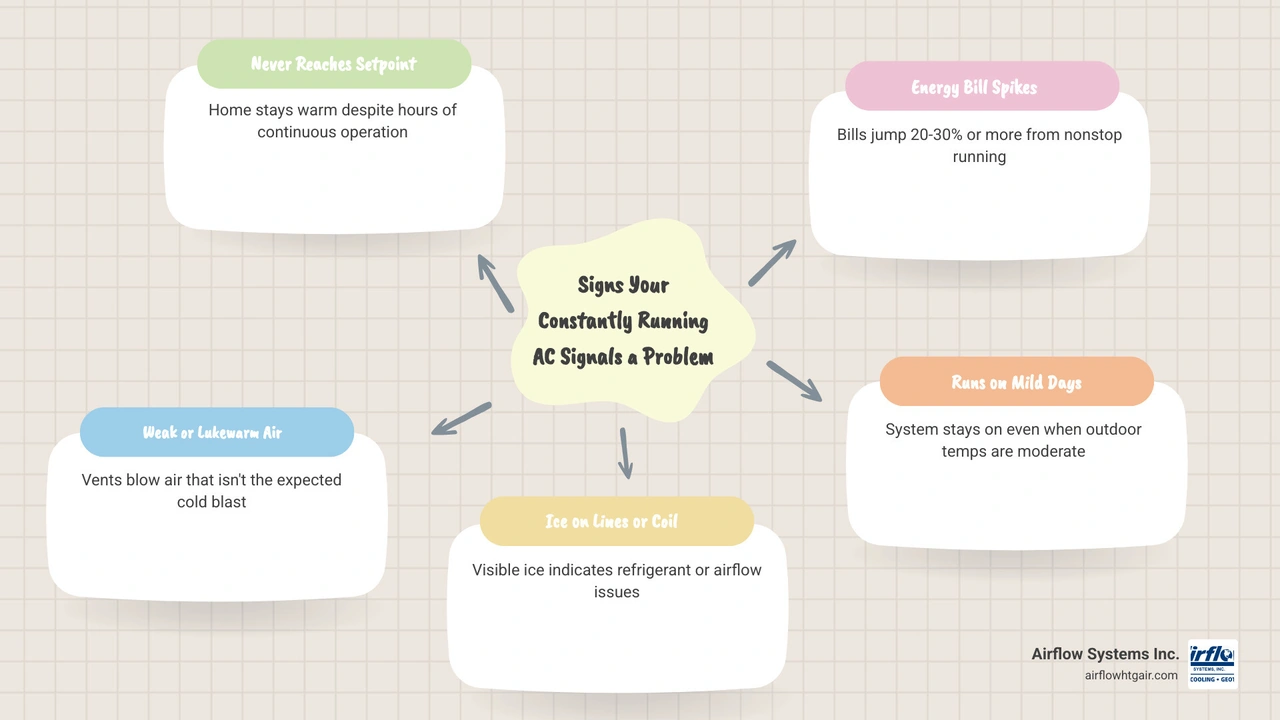
Here's a quick look at the most common signs that your nonstop AC is more than just hard work:
• Your home never reaches the thermostat setpoint — the AC runs and runs, but the temperature won't drop
• The air coming from your vents feels weak or lukewarm — not the cold blast you'd expect
• You notice ice forming on the refrigerant lines or indoor unit — a clear sign something is wrong
• Your energy bills have spiked unexpectedly — continuous operation can push bills up 20–30% or more
• The AC runs nonstop even on mild days — not just during a heat wave
A properly working AC should run in cycles of about 15–20 minutes, turning on and off 2–3 times per hour. If yours is running far longer than that — or never shuts off at all — something deserves a closer look.
At Airflow Systems Heating & Air, we've been helping Central Virginia homeowners stay comfortable since 1988. We know how punishing a Charlottesville summer can be, and we know the difference between an AC that's working hard and one that's quietly failing. This guide walks you through five straightforward methods to diagnose what's going on with your system — before a minor issue turns into a costly repair.
Normal Runtime vs. When Constant AC Running Signals a Problem
It is a hot July afternoon in Charlottesville, and the outdoor temperature is pushing past 95°F. You notice your air conditioner has been humming along for hours without taking a break. Is this normal?
To an extent, yes. Air conditioners are designed to cool your home to a specific "design temperature"—typically 15 to 20 degrees cooler than the outdoor air. When Central Virginia experiences extreme summer heat waves, a properly sized, healthy AC system might run almost continuously during the hottest parts of the afternoon to maintain your comfort. This is simply the system operating at its maximum design capacity.
However, there is a distinct boundary between an AC working overtime on a hot day and a system struggling due to mechanical failure. If your AC is running nonstop during a mild 78°F evening, or if it runs all day but your indoor temperature remains stubbornly high, you are dealing with a system issue. Recognizing these early Signs Your AC Needs Repair Before Summer peaks can prevent a total system breakdown when you need cooling the most.
To help you tell the difference, we have put together a quick comparison:
• Cycle Length — Normal AC Operation: 15–20 minutes per cycle, 2–3 times per hour. — Problematic Constant Running: Runs for 40+ minutes continuously or never shuts off.
• Thermostat Setpoint — Normal AC Operation: Quickly or steadily reaches the desired temperature. — Problematic Constant Running: Runs constantly but indoor air remains warm or humid.
• Air Temperature — Normal AC Operation: Blows crisp, cold air (approx. 16–22°F cooler than room air). — Problematic Constant Running: Blows lukewarm, weak, or room-temperature air.
• Outdoor Weather — Normal AC Operation: May run longer during peak afternoon heat (95°F+). — Problematic Constant Running: Runs nonstop even during cool mornings, evenings, or mild days.
• System Condition — Normal AC Operation: Quiet operation with dry, clear copper lines outside. — Problematic Constant Running: Excessive noise, hissing, or visible ice on refrigerant lines.
5 Easy Methods to Diagnose Your Constantly Running AC
If you suspect your system is running too much, you do not have to wait around in the heat. There are several simple diagnostic steps you can take right now to narrow down the cause.

Before calling in our certified professionals, try these five straightforward troubleshooting methods. For a complete list of pre-service checks, you can also review our guide on AC Troubleshooting Tips Before Calling a Pro.
Method 1: Check for Restricted Airflow and Clogged Filters
Air conditioning relies entirely on moving a large volume of air across your indoor evaporator coil to extract heat from your home. If that airflow is restricted, your system cannot absorb heat efficiently, forcing it to run continuously to compensate.
1. Locate your return air filter. This is usually found in a dedicated slot in your ductwork near the indoor air handler or behind a large return vent grille in your wall or ceiling.
2. Pull the filter out and inspect it. Hold it up to a light source. If you cannot see light passing through the fibers, or if it is covered in a thick layer of grey dust, pet hair, and dander, it is clogged.
3. Replace the filter immediately. A dirty filter increases static pressure within your ductwork, straining the blower motor and preventing the system from cooling properly. If you want to know more about how airflow restrictions impact your comfort, check out our article on AC Not Cooling Properly: What to Check First.
Method 2: Inspect Thermostat Settings and Placement
Sometimes, the issue is not with the cooling equipment itself, but with the control center directing it. A malfunctioning or poorly placed thermostat can send incorrect signals to your system.
1. Verify the fan setting. Ensure your thermostat is set to "Cool" and the fan is set to "Auto" rather than "On." When the fan is set to "On," the indoor blower motor runs continuously 24/7, even when the AC compressor outside is resting. This can make it feel like your AC never stops running.
2. Check the thermostat's location. Is your thermostat mounted on a wall that receives direct sunlight? Is it near a drafty window, a warm kitchen appliance, or a supply register? Direct heat sources can trick the thermostat's internal sensor into reading the room as much warmer than it actually is, causing the AC to run nonstop. If your system is completely unresponsive to thermostat changes, refer to our AC Not Turning On: Complete Guide.
Method 3: Examine the Outdoor Condenser for Debris
The outdoor unit, or condenser, is responsible for releasing the heat absorbed from inside your home into the outdoor air. If the condenser coils are caked in dirt, grass clippings, or surrounded by overgrown shrubs, that heat transfer process is severely restricted.
1. Walk outside and inspect the metal cabinet. Look for accumulated leaves, twigs, dirt, or cottonwood fluff stuck to the delicate metal fins.
2. Check the clearance. Ensure there is at least a two-foot clear zone around the entire unit. Hiding your AC behind dense bushes or decorative fences traps hot air around the system, forcing it to work twice as hard.
3. Clean the area. Gently brush away loose debris or wash down the coils with a garden hose on a low-pressure spray setting (never use a pressure washer, which can flatten the aluminum fins). Keeping these coils clean is a primary focus of preventative care, which you can read about in our breakdown of What Does a Professional AC Tune-Up Include.
Method 4: Look for Ice and Signs of Low Refrigerant
When your system lacks adequate airflow or runs low on refrigerant, the temperature of the indoor evaporator coil drops below freezing. Moisture in the air condenses on the coil and quickly turns to ice, choking off what little airflow remained.
1. Inspect the indoor air handler. Look at the copper refrigerant lines entering the unit. Do you see frost or ice building up on the copper pipes or the brass valves?
2. Listen closely. Do you hear an unusual hissing or bubbling sound coming from the indoor or outdoor unit? This often indicates a refrigerant leak.
3. Turn off the system. If you see ice, turn your thermostat to "Off" immediately and switch the fan to "On." Running a frozen AC can cause liquid refrigerant to flood back into the compressor, causing permanent mechanical failure. For help identifying strange system behaviors, see our guide on AC Making Strange Noises: What They Mean.
Method 5: Measure the Temperature Split (Delta T)
An excellent way to verify if your AC is actually cooling your air is to measure the temperature split, also known as Delta T. This is the difference in temperature between the air entering your system and the air leaving it.
1. Obtain a standard digital thermometer.
2. Measure the return air. Place the thermometer against your main return air vent (where air enters the system) and record the temperature after a few minutes.
3. Measure the supply air. Place the thermometer inside the closest supply register (where cold air blows out) and record the temperature.
4. Calculate the difference. Subtract the supply temperature from the return temperature. A healthy, properly functioning AC system should produce a temperature split of 16 to 22 degrees Fahrenheit. If your split is less than 15 degrees, your system is not absorbing heat effectively, explaining why it has to run constantly.
Common Mechanical Causes of Nonstop Operation
While basic troubleshooting can help you identify symptoms, understanding the underlying mechanical issues can help you make informed decisions about your home's comfort.
How a dirty air filter leads to when constant ac running signals a problem
It is easy to overlook a simple air filter, but a clogged filter is the root cause of many HVAC emergencies. When constant AC running signals a problem, a dirty filter is often the first culprit we check.
As dust builds up on the filter fibers, it restricts the volume of warm air passing over the cold evaporator coil. Without enough warm indoor air to heat it up, the refrigerant inside the coil gets colder and colder. Eventually, the coil drops below 32°F, causing atmospheric moisture to freeze solid on the metal fins.
Once iced over, the coil acts as an insulated barrier, completely blocking heat transfer. Your home's temperature will begin to climb, and because the thermostat setpoint is never met, the compressor will run continuously without relief, risking major motor strain.
Low refrigerant levels and the risk of when constant ac running signals a problem
Refrigerant is the lifeblood of your air conditioner. It operates in a closed loop, constantly circulating between the indoor and outdoor units to absorb and release heat. Refrigerant is never "used up" or consumed like fuel; if your system is low, it means you have a leak.
When a leak occurs, the drop in pressure reduces the system's cooling capacity. The AC must run much longer to remove the same amount of heat from your home. Eventually, the system will run 24/7 without ever reaching your desired temperature. Worse yet, low refrigerant levels reduce the cooling of the compressor motor itself, which can lead to overheating and catastrophic compressor failure. Finding and repairing these leaks early is essential to protecting your equipment.
Undersized systems and poor home insulation
Sometimes, the issue isn't a broken component, but a system that was never a good match for your home's heat load.
An undersized air conditioner simply lacks the cooling capacity to keep up with hot summer afternoons in Central Virginia. It will run continuously at 100% capacity, struggling against the heat entering your home through drafty windows, uninsulated attics, and unsealed doors.
To prevent this, our team performs detailed load calculations before any installation. If you are wondering whether your current system is reaching the end of its natural lifespan or was poorly installed in the past, explore these helpful resources:
• How Long Does an AC Unit Last in Central Virginia
• How Proper AC Installation Affects Long-Term Performance
• When Should You Replace Your Air Conditioner
Constant Running vs. Short Cycling: Why the Difference Matters
While a constantly running AC is a serious concern, it should not be confused with another common HVAC issue: short cycling. Both behaviors indicate a system in distress, but they stem from entirely different root causes and affect your equipment in different ways.
• Constant Running: The system turns on and stays on for hours at a time, often because it cannot lower the indoor temperature to the thermostat setpoint. This puts continuous, long-term wear on the compressor and fan motors, leading to high energy consumption.
• Short Cycling: The system turns on, runs for a brief 3 to 5 minutes, shuts off, and then turns back on again a few minutes later. This cycle repeats continuously. It is usually caused by an oversized AC unit, a failing thermostat sensor, or severe airflow blockages.
Short cycling is incredibly damaging to an air conditioner. The startup surge—the "inrush current" required to start the compressor motor—draws an immense amount of electricity and generates significant internal heat. Frequent starting and stopping accelerates electrical wear, wears out capacitors, and can cause premature motor failure.
Understanding these differences is crucial when deciding whether to repair or replace a struggling system. If you are dealing with an older system experiencing these issues, read our guide on AC Repairs That Are Not Worth Doing on an Old Unit to help guide your next steps.
Frequently Asked Questions About Constant AC Operation
Is it normal for my AC to run all day during a Central Virginia heatwave?
To a certain degree, yes. When outdoor temperatures climb into the mid-to-high 90s, the thermal load on your home is immense. A properly sized AC system is designed to keep your home comfortable up to its design limit (usually around 15 to 20 degrees cooler than the outdoor temperature). On a 95°F day, maintaining a steady 75°F indoors means your system may run almost continuously in the afternoon. However, if the outdoor temperature drops in the evening and your AC still refuses to cycle off, or if your home is staying warm and humid, it is time to investigate.
Can a constantly running AC cause the unit to freeze up?
Yes, absolutely. Constant running is often a direct symptom of restricted airflow or low refrigerant. Both of these issues cause the temperature of your indoor evaporator coil to drop below freezing. As moisture from your indoor air passes over the freezing coil, it turns to ice. This ice acts as a thick insulator, blocking any further heat absorption and creating a vicious cycle of longer runtimes, more ice, and eventually, a complete system shutdown.
How does an undersized AC unit affect my electricity bill?
An undersized air conditioner must work at 100% capacity continuously because it can never remove enough heat to satisfy the thermostat. Because it never cycles off, it draws electricity constantly. This continuous operation can easily increase your monthly cooling bills by 20% to 30% or more, while failing to provide the indoor comfort you expect.
Conclusion
When your air conditioner runs nonstop, it is more than just a minor annoyance—it is a clear warning sign that your system is working under severe stress. Whether the culprit is a simple clogged air filter, a hidden refrigerant leak, or a failing electrical component, ignoring the issue can lead to skyrocketing energy bills and premature system failure. By using our five simple diagnostic methods, you can catch minor issues early and take control of your home's comfort.
Since 1988, Airflow Systems Heating & Air has been the trusted name for honest, family-owned HVAC care in Charlottesville, VA, and across Central Virginia. Our certified technicians are always ready to provide the professional repairs, thorough maintenance, and energy-efficient system installations you need to keep your home cool all summer long.
If your air conditioner is running constantly and you are ready for expert assistance, do not wait for a complete breakdown. Explore our professional Air Conditioning Services or reach out to us today to schedule your system inspection!
Book Expert Service Or Contact Us
Our Service Process
A Hassle-Free Service Experience
01
Consultation & Diagnosis
We start by listening to your needs and performing a thorough diagnosis of your system to recommend the best solution.
02
Transparent Quoting
We provide a clear, upfront estimate with no hidden fees, so you know exactly what to expect.
03
Expert Service & Follow-Up
Our factory-trained technicians complete the work to the highest standards, and we follow up to ensure your complete satisfaction.
testimonials
What Our Customers Are Saying
Our customers consistently praise our exceptional service and attention to detail, making us a trusted choice for all your HVAC needs.
where we operate
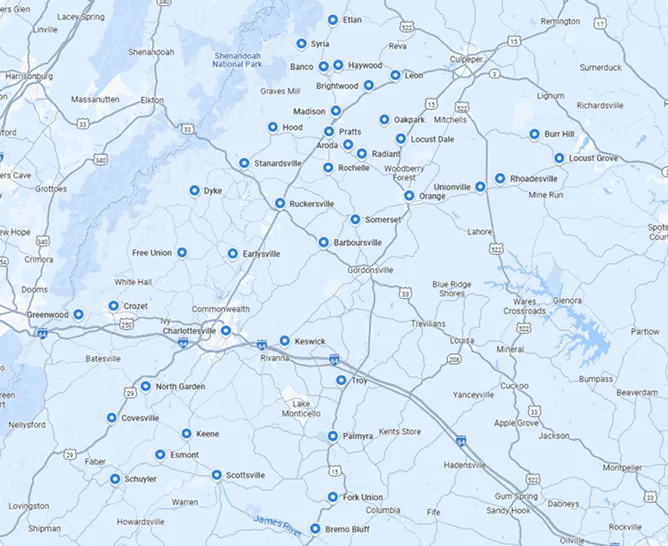
Service areas