

Choose an option to see quick actions and get help faster.
.svg)
The Late-Summer Puddle: Should You Be Worried?
August in Charlottesville brings a heavy, unmistakable humidity, and right at the end of the cooling season, you might notice something alarming outside your home. You walk out to the yard, look down, and see a large puddle of water pooling directly underneath your outdoor heat pump or air conditioning unit. The immediate question most homeowners ask is, "Is It Normal for My Mini Split Condenser to Drip Water Outside?" When you rely heavily on your ductless mini split systems to keep your living space comfortable, spotting a sudden leak can easily trigger panic about an impending breakdown.
The good news is that understanding how these advanced systems handle atmospheric moisture can save you a lot of unnecessary stress. The primary decision point you face is determining whether this dripping water is simply normal condensation runoff—a byproduct of your system doing its job—or if it is melting ice indicating a serious refrigerant leak. While some puddles mean your system is working perfectly, others mean it is time to schedule professional AC repair. By learning a few simple visual cues, you can confidently evaluate the health of your outdoor unit without second-guessing every drop of water.
The Short Answer: Yes, Condensation is Usually Normal
If you are searching for the answer to the common query, "Is It Normal for My Mini Split Condenser to Drip Water Outside?" the short answer is absolutely yes. When your system is actively running in cooling mode, water dripping from the outdoor condenser unit is completely normal. In fact, it is a strong indicator that your equipment is successfully doing exactly what it was designed to do: removing heat and excess moisture from the indoor air.
To put your mind at ease, here is a quick breakdown of why this happens:
• Active dehumidification: As your system cools the indoor air, it simultaneously pulls moisture out of that air.
• Safe drainage routing: That collected indoor moisture has to go somewhere, and it is typically routed through a condensate drain line that empties near the outdoor condenser.
• Temperature differentials: The outdoor unit itself contains cold components that can sweat when exposed to warm outside air, adding to the dripping.
While clear water dripping during the cooling cycle is perfectly fine, there is one major caveat to keep in mind. Water is normal, but melting ice is a definitive warning sign. If the puddle beneath your unit is being created by thick frost or ice melting off the copper refrigerant lines, your system requires professional attention.
How High Humidity Creates Heavy Condensation
To truly understand why your outdoor unit produces so much water, it helps to look at the physics of cooling. Air conditioners and heat pumps do not just lower the temperature of your home; they actively condition the air by removing humidity. When warm, moist indoor air is pulled over the freezing cold indoor evaporator coils, the moisture in that air condenses into liquid water. Think of it like a cold glass of lemonade sitting on a patio table on a hot day—water beads up on the outside of the glass because the cold surface is pulling moisture out of the surrounding warm air.
The Impact of Charlottesville's August Climate
This process becomes incredibly obvious during August and late-summer weather. Charlottesville experiences a muggy, humid subtropical climate, meaning the air is heavily saturated with moisture. When your mini split fights this local Virginia humidity, it works in overdrive to wring that moisture out of your living space. A properly sized system can remove multiple pints of moisture from the air every single hour it runs.
All of that extracted water flows into a drain pan inside the indoor wall unit. From there, gravity (or a small condensate pump) pushes the water through a PVC or flexible tube that runs alongside your refrigerant lines right through the wall to the outside. This tube typically terminates right next to or underneath the outdoor condenser. So, the heavy sweating and dripping you see outside actually proves that your system is successfully fighting the indoor humidity and keeping your home comfortable.
Visual Cues: Normal Runoff vs. Problematic Leaks
Because a puddle of water can mean two very different things, giving your outdoor unit a quick visual inspection is the best way to determine your next steps. Homeowners need clear go/no-go criteria to avoid panicking over healthy condensation.
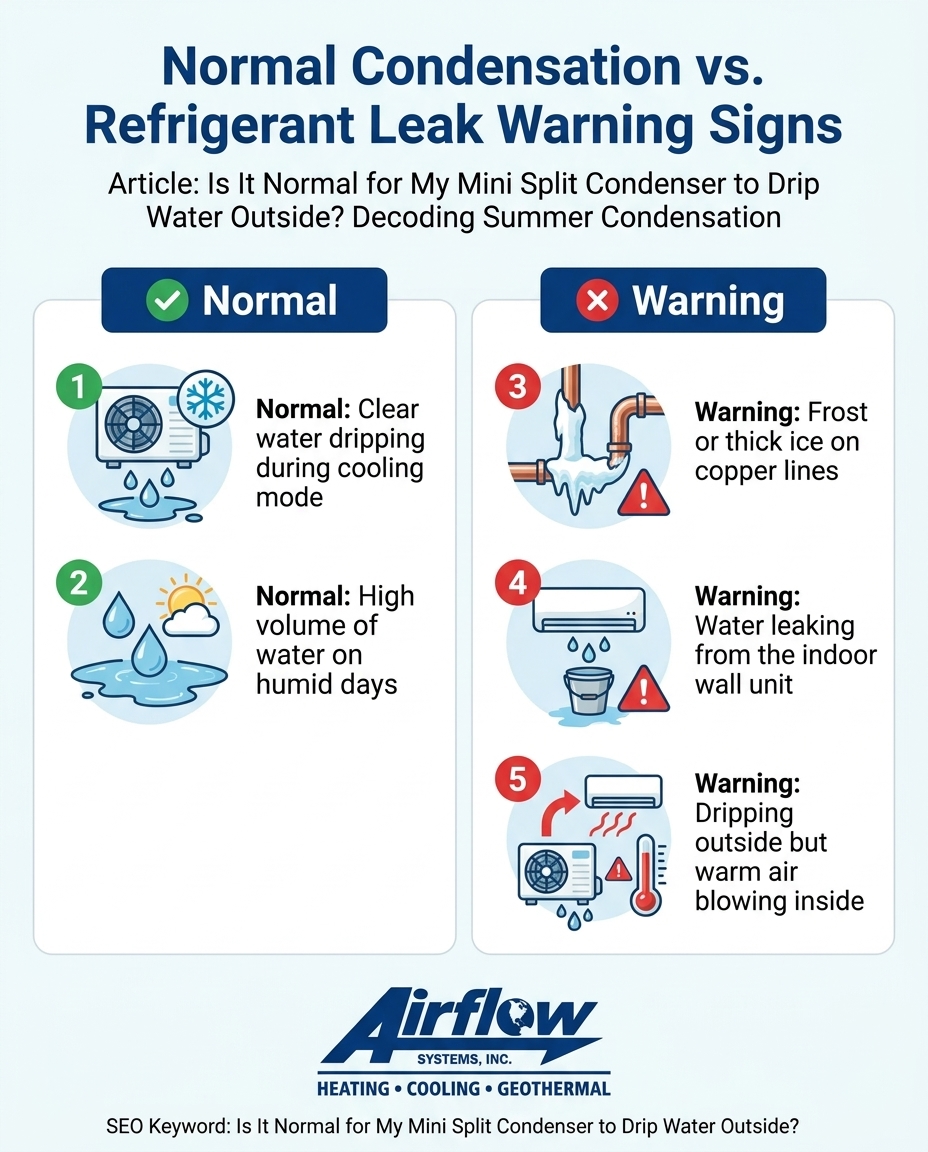
The signs of normal runoff: A normal puddle consists of clear water. You will notice a consistent, steady dripping coming from the end of the condensate drain tube while the indoor unit is actively running in cooling mode. On particularly humid days, the volume of water will increase significantly, and the puddle may grow larger. The outdoor unit's metal casing might also feel slightly damp or have light condensation on it, which is harmless.
The signs of problematic leaks: Trouble usually presents itself as visible frost or thick, white ice accumulating on the copper refrigerant lines attached to the side of the outdoor unit. While ice melting creates a puddle that looks identical to normal condensation, the presence of the ice itself indicates a severe airflow restriction or a refrigerant issue. One local homeowner experienced this firsthand when they noticed unusual moisture pooling indoors. After reaching out for help, a technician figured out the problem—a leaking coil in the air handler—and repaired it as soon as the replacement part arrived, resolving the issue efficiently and restoring good service. This highlights why catching the right visual cues matters.
If you want to be proactive about your system's drainage, inspecting your condensate drain line regularly can help you ensure water is flowing freely away from your foundation.
• Clear water dripping from the plastic tube during operation — Likely Cause: Normal indoor dehumidification — Required Action: None. The system is working correctly.
• Heavy pooling on a very humid day — Likely Cause: High moisture removal rate — Required Action: None, unless water is pooling against the home's foundation.
• Frost or ice on the outdoor copper lines — Likely Cause: Refrigerant leak or restricted airflow — Required Action: Turn off the system and call a professional.
• Water leaking from the indoor wall unit — Likely Cause: Clogged condensate drain line or cracked pan — Required Action: Turn off the system to prevent water damage and schedule service.
When Dripping Means Trouble: Time to Call a Pro
While the vast majority of outdoor puddles are harmless, there are specific scenarios where dripping or pooling water actually requires immediate HVAC service. Ignoring these warning signs can lead to severe system damage or secondary water damage to your home's drywall and flooring.
Here are the primary warning signs that indicate your system is struggling:
1. Water is leaking indoors: If you see water dripping down your interior walls from the indoor mini split head, this is never normal. It usually points to a severe clog in the condensate drain line, causing the water to back up and overflow the internal drain pan.
2. Poor indoor cooling performance: If the outdoor unit is dripping heavily but the air blowing out of your indoor vents feels lukewarm or weak, the system is failing to transfer heat correctly. Over the summer, another customer noticed poor cooling performance alongside unusual drainage. A technician found and corrected the AC problem quickly, and even fixed other underlying issues caused by the original installer. The work was explained clearly, and the system was back to peak performance.
3. Hissing or bubbling noises: If you hear strange sounds coming from the refrigerant lines near the puddle, you likely have a pressurized leak.
The Danger of DIY Diagnostics
We strongly warn against any DIY attempts to check or refill refrigerant levels. Handling refrigerants requires specialized licensing, tools, and environmental certifications. If you spot ice on your lines or experience a sudden drop in cooling power, the safest and most effective route is to rely on professional air conditioning services. A trained technician can safely measure refrigerant pressures, locate microscopic leaks, and clear stubborn drain line clogs without risking further damage to your expensive equipment.
Frequently Asked Questions About Mini Split Condensation
We receive many questions from homeowners trying to understand their HVAC systems better. Keeping up with routine HVAC maintenance can prevent many of these concerns, but if you are currently staring at a puddle in your yard, these answers will help clarify what is happening.
Why is water dripping from my mini split outside unit?
It is the natural byproduct of the dehumidification process during the cooling cycle. When your mini split cools your home, it extracts moisture from the warm indoor air. That collected moisture is then routed through a drain line that typically empties outside, right next to the condenser unit. The dripping you see is simply that indoor humidity being expelled outdoors.
How much condensation is normal for a mini split?
It varies greatly depending on the indoor humidity and outdoor weather, but anywhere from several pints to a few gallons a day is common in muggy weather. On a particularly humid late-summer day, you might see a near-constant drip or a small stream of water while the unit runs. As long as the water is clear and the system is actively cooling, this continuous dripping is entirely expected and healthy.
How do I know if my mini split has a refrigerant leak?
Look for ice buildup on the outdoor coils or the copper refrigerant lines connecting to the unit. A refrigerant leak lowers the pressure in the system, causing the coils to drop below freezing and turn normal condensation into solid ice. You should also listen for faint hissing sounds near the connections and note if the air blowing inside your home is no longer cold.
Is it normal for a heat pump to leak water outside in summer?
Yes, in summer cooling mode, the outdoor unit expels the moisture gathered from inside the house. Because heat pumps function exactly like air conditioners during the summer—reversing the flow of refrigerant to pull heat out of your home—they also pull out humidity. The resulting water drainage is a standard part of the cooling process.
Can a clogged drain line cause water to pool outside?
Usually, a clogged drain line causes water to back up and leak inside the home, rather than outside. However, if the drain line is improperly routed, damaged, or partially obstructed near the exit, it might create unexpected pooling near the foundation instead of draining away smoothly. If the water is pooling against your siding or foundation rather than draining into the soil, the line may need to be extended or redirected.
Honest Diagnostics for Your Peace of Mind
Finding a puddle under your HVAC equipment does not have to ruin your week. As we have seen, most late-summer puddles are completely harmless signs of a hard-working system battling the August humidity. By knowing the difference between normal runoff and the frosty warning signs of a refrigerant leak, you can protect your home and avoid unnecessary panic.
As an independent, local HVAC company, Airflow Systems is committed to providing honest diagnostics. We will gladly tell you if a drip is perfectly normal rather than using a standard puddle as an excuse to push an unnecessary repair. However, if you do spot warning signs like ice on your lines or experience a sudden drop in cooling power, do not wait for the problem to worsen. Reach out to our team today for a thorough, transparent evaluation, and let us ensure your system runs smoothly for the rest of the season.
Book Expert Service Or Contact Us
Our Service Process
A Hassle-Free Service Experience
01
Consultation & Diagnosis
We start by listening to your needs and performing a thorough diagnosis of your system to recommend the best solution.
02
Transparent Quoting
We provide a clear, upfront estimate with no hidden fees, so you know exactly what to expect.
03
Expert Service & Follow-Up
Our factory-trained technicians complete the work to the highest standards, and we follow up to ensure your complete satisfaction.
testimonials
What Our Customers Are Saying
Our customers consistently praise our exceptional service and attention to detail, making us a trusted choice for all your HVAC needs.
where we operate
Service areas