

Choose an option to see quick actions and get help faster.
.svg)
Charlottesville Homeowners: How Should I Prepare for the Shift to Low-GWP Refrigerants?
If you're trying to figure out how to prepare for the shift to low GWP refrigerants, here's the short answer:
1. Check your current system - Find the refrigerant label on your AC or heat pump and note the type (R-22 or R-410A) and installation year.
2. Know the rules - As of January 1, 2025, new AC and heat pump equipment must use refrigerants with a GWP below 700. R-410A (GWP 2,088) no longer qualifies for new systems.
3. Understand your options - Existing R-410A systems can keep running and be serviced, but you cannot simply swap in a new refrigerant. Replacement means a full new system.
4. Plan ahead - If your system is 10+ years old or needs frequent repairs, now is the right time to plan a replacement before equipment availability becomes more limited.
5. Work with a qualified local HVAC professional - New low-GWP refrigerants like R-454B and R-32 require specially designed equipment and updated handling practices.
The HVAC industry is in the middle of one of its biggest shifts in decades. Starting January 1, 2025, the EPA began requiring that all new residential and light commercial air conditioning and heat pump systems use refrigerants with a global warming potential (GWP) below 700. That single rule effectively ends the era of R-410A — the refrigerant found in the vast majority of AC systems and heat pumps installed across Charlottesville, VA and Central Virginia over the past 20 years.
R-410A carries a GWP of 2,088 — nearly 2,100 times more potent than CO2 as a greenhouse gas. And it leaks. Residential heat pumps lose roughly 5% of their refrigerant charge every year, meaning a typical system loses the equivalent of its entire original charge and then some over its lifetime. For homeowners, this transition isn't just an environmental story — it's a practical one involving equipment choices, system planning, and understanding what your next AC or heat pump replacement will actually look like.
The good news is that low-GWP alternatives like R-454B (GWP 466) and R-32 (GWP 675) are already available in new equipment hitting the market right now. The challenge is that these are not drop-in replacements — they require systems specifically designed for them. That means the decisions you make about your aging HVAC system in the next year or two will have real consequences for your home's comfort, your planning timeline, and your options down the road.

What Charlottesville Homeowners Need to Know About the 2025–2026 Low-GWP Refrigerant Rules
Navigating federal environmental regulations can feel like reading a foreign language. However, the basic framework driving today's HVAC changes is relatively straightforward. The transition is governed by the Environmental Protection Agency (EPA) under the American Innovation and Manufacturing (AIM) Act, which mandates a phasedown of hydrofluorocarbons (HFCs)—the chemical family that includes R-410A.
This phasedown is not a sudden ban on owning or operating older equipment. Instead, it is a controlled restriction on manufacturing and installing systems that use older, high-GWP refrigerants. For comprehensive support with system planning, you can explore More info about HVAC services to see how our team guides local families through these regulatory updates.
The EPA Deadline That Changed New AC and Heat Pump Equipment
The EPA established a strict 700 GWP limit for all new residential and light commercial air conditioning and heat pump systems.
• The Production Cutoff: After January 1, 2025, manufacturers could no longer produce new HVAC systems designed to run on R-410A.
• The Installation Window: To prevent supply chain waste, the EPA allowed a temporary "sell-through" period. Equipment manufactured before the January 1, 2025 deadline was permitted to be installed until January 1, 2026.
• The Current Reality (June 2026): We have officially passed both the production and installation deadlines. Any brand-new air conditioning or heat pump system installed in your Central Virginia home today must utilize a compliant, low-GWP refrigerant.
To learn more about modern system choices, check out More info about Air Conditioning services.
New Systems vs. Existing Systems: What Actually Changes
A common point of confusion is whether homeowners are forced to rip out their perfectly functional R-410A systems. The simple answer is no.
If your home currently uses an R-410A air conditioner or heat pump, you are legally permitted to run and service that equipment for the rest of its natural operational life. Servicing will continue to rely on recovered and reclaimed R-410A supplies.
However, you must keep these key factors in mind:
• No Drop-In Swaps: You cannot simply drain R-410A and refill the system with a newer low-GWP refrigerant like R-454B. The physical properties, operating pressures, expansion valves, and compressor oils are entirely different.
• Inevitable Replacement: When your current system eventually suffers a major component failure—such as a burnt-out compressor—repairing it with limited R-410A supplies may not support the long-term reliability you need. At that point, you will need a full system replacement designed around the new low-GWP standards.
If you are considering your options, you can find More info about Heat Pump services.
Why the Transition Matters in Central Virginia Homes
In Charlottesville and the surrounding Central Virginia counties, our weather demands a lot from our home comfort systems. Our hot, humid summers put immense pressure on cooling equipment, while our chilly winters rely heavily on heat pump efficiency.
Because local cooling demands are high, system wear and tear is inevitable. Over time, vibration and thermal expansion cause small refrigerant leaks to develop. Since residential systems lose a small percentage of their charge annually, keeping an older, leaking R-410A system running will become increasingly difficult as the supply of virgin R-410A continues to shrink under the federal phasedown schedule.
By understanding how to prepare for the shift to low GWP refrigerants, local homeowners can protect their comfort, ensure system reliability, and avoid being caught flat-footed during a mid-summer heatwave. For more details on local seasonal impacts, read More info about why AC bills spike in Virginia summers.
Which Low-GWP Refrigerants Are Replacing R-410A?
As the industry moves away from R-410A, manufacturers have settled on a few primary alternatives. These new options are classified based on their safety, environmental impact, and physical performance.
• R-410A — GWP Rating: 2,088 — Safety Classification: A1 (Non-flammable, low toxicity) — Primary Use Case: Legacy residential/commercial systems — Temperature Glide: Negligible
• R-454B — GWP Rating: 466 — Safety Classification: A2L (Mildly flammable, low toxicity) — Primary Use Case: New residential & commercial split systems — Temperature Glide: ~1.0°C
• R-32 — GWP Rating: 675 — Safety Classification: A2L (Mildly flammable, low toxicity) — Primary Use Case: New ductless mini-splits & select VRF systems — Temperature Glide: Zero (Single-component)
• CO2 (R-744) — GWP Rating: 1 — Safety Classification: A1 (Non-flammable, low toxicity) — Primary Use Case: Commercial transcritical refrigeration — Temperature Glide: Zero
• Ammonia (R-717) — GWP Rating: 0 — Safety Classification: B2L (Mildly flammable, toxic) — Primary Use Case: Large-scale industrial cold storage — Temperature Glide: Zero
• Propane (R-290) — GWP Rating: 3 — Safety Classification: A3 (Highly flammable, low toxicity) — Primary Use Case: Small, self-contained commercial refrigeration — Temperature Glide: Zero
R-454B and R-32 for Residential and Light Commercial HVAC
For residential homes in Central Virginia, the two dominant replacements for R-410A are R-454B and R-32. Both belong to a safety classification known as A2L.
• R-454B (Opteon XL41): With a GWP of just 466, R-454B represents a 78% reduction in global warming impact compared to R-410A. It has operating pressures and performance characteristics very similar to R-410A, making it the preferred choice for many major residential HVAC manufacturers' split systems and ducted heat pumps.
• R-32: Carrying a GWP of 675, R-32 is a single-component refrigerant with zero temperature glide, which simplifies servicing. It has been used globally in millions of units and is highly popular in ductless mini-split systems.
To explore how these options fit into modern home heating, read More info about Residential Heat Pump Installation Repair Efficiency.
Natural Refrigerants in Commercial Refrigeration and Specialty Systems
While residential homes rely on A2L synthetic blends, commercial and industrial sectors often look to "natural" refrigerants. These substances exist naturally in the environment and have virtually zero GWP.
• Carbon Dioxide (R-744): With a baseline GWP of 1, CO2 is increasingly used in supermarket refrigeration and advanced heat pump water heaters. It operates at very high pressures (up to 100 bar), requiring heavy-duty piping and specialized system designs.
• Ammonia (R-717): Carrying a GWP of 0, ammonia is highly efficient but toxic. Its use is strictly limited to large, unpopulated industrial settings like food processing plants and cold storage warehouses.
• Propane (R-290): Propane has an ultra-low GWP of 3 and is highly efficient. However, because it is classified as an A3 (highly flammable) gas, its use is strictly limited to small, hermetically sealed systems—like commercial reach-in coolers—with precise charge limits to ensure safety.
Performance, Safety, and Compatibility: The Homeowner-Friendly Comparison
The biggest practical shift from R-410A to R-454B or R-32 is the change in safety classification from A1 (non-flammable) to A2L (mildly flammable).
What does "mildly flammable" actually mean for your home? A2L refrigerants are incredibly difficult to ignite. They require a high-energy ignition source and a high concentration of gas in the air to catch fire. Even if they do ignite, their burning velocity is exceptionally slow (under 10 cm per second), meaning they behave more like a lazy, self-extinguishing flicker than a rapid flame.
Despite these safety profiles, modern systems designed for A2L refrigerants incorporate built-in mitigation strategies. New indoor coils often feature integrated leak detection sensors. If a leak is detected, the system automatically shuts down the compressor and engages the indoor blower fan to safely circulate and dilute the refrigerant concentration below any flammability limits.
How to Prepare for the Shift to Low GWP Refrigerants: The Homeowner Checklist
Preparing for this transition doesn't require technical expertise—just a bit of proactive planning. By taking a structured approach, you can avoid emergency breakdowns and make informed decisions on your own schedule. For routine system care, you can read More info about AC Tune Up Guide for Central Virginia Homeowners.
Here is your practical, step-by-step readiness checklist:
• [ ] Locate your system's nameplate: Find the metal label on your outdoor condenser or heat pump.
• [ ] Identify the refrigerant type: Note whether your system runs on R-22, R-410A, or a newer low-GWP gas.
• [ ] Record the installation year: Determine the age of your equipment (systems over 10–12 years old deserve closer attention).
• [ ] Review your service history: Look for past repairs, particularly recurring leak issues or compressor struggles.
• [ ] Assess your long-term comfort goals: Decide if you want to transition to high-efficiency heat pumps or multi-zone mini-splits when your current system retires.
How to Prepare for the Shift to Low GWP Refrigerants by Checking Your Current System
Your first step is to perform a simple "refrigerant audit" on your home. Walk outside to your air conditioner or heat pump and look for the manufacturer's nameplate label. This label contains vital information:
1. Refrigerant Type: It will clearly state whether the system uses R-22 (an older, banned ozone-depleting gas), R-410A, or a newer option.
2. Manufacture Date: This helps you calculate the system's exact age.
3. Model and Serial Numbers: Keep these on hand for any service calls.
If your system is running on R-22, parts and refrigerant are already extremely scarce, making an immediate upgrade plan highly advisable. If it runs on R-410A, check your service records for any history of low refrigerant charges. If your system has a history of leaks, finding a permanent fix or planning an upgrade is critical. For self-guided troubleshooting, check out More info about AC Troubleshooting Tips Before Calling a Pro.
How to Prepare for the Shift to Low GWP Refrigerants When Your AC Is Aging
If your air conditioner or heat pump is more than 10 to 12 years old, it is approaching the end of its typical operational lifespan. Aging systems are prone to major component failures, such as compressor burnouts or severely corroded coils.
When an older R-410A system experiences a major breakdown, you face an important decision. Because a compressor replacement is a complex, intensive repair, it often makes more sense to choose a complete system replacement. Replacing the entire system resets your warranty, dramatically improves your home's energy efficiency, and transitions your household to a modern, future-proof low-GWP refrigerant.
To understand why a major repair can trigger a replacement decision, read More info about How Compressor Replacement Often Means Full System Replacement.
Plan Around Comfort, Availability, and Seasonal Timing
The worst time to replace an HVAC system is in the middle of a sweltering July afternoon when your AC suddenly stops working. Emergency replacements often lead to rushed decisions, limited equipment availability, and temporary discomfort.
Instead, plan your system upgrades during the mild "shoulder seasons" of spring and autumn. This timing offers several distinct advantages:
• Flexible Scheduling: Local technicians have more open availability, allowing you to schedule installations at your convenience.
• Better Equipment Choice: You have ample time to select the exact system capacity, efficiency rating, and brand that fits your home.
• Stress-Free Decisions: You can research smart thermostats, zoning options, and indoor air quality add-ons without the pressure of an active heatwave.
For smart ways to manage your seasonal energy use, check out More info about thermostat strategies for efficient summer cooling.
What Changes for Maintenance, Safety, and Everyday Home Comfort?
While the core mechanics of how your home stays cool remain the same, the shift to low-GWP systems brings subtle updates to installation safety standards and routine maintenance.
These systems are installed and verified according to rigorous national safety codes, including ASHRAE 15 and 34, UL 60335-2-40, and local fire protection regulations. These standards ensure that every A2L installation is physically configured to prevent any safety risks, giving you total peace of mind.
What Homeowners Should Expect During Low-GWP Equipment Installation
When our team installs a new low-GWP system in your Central Virginia home, the process is highly precise. Because A2L refrigerants require specialized handling, our experienced professionals use dedicated, spark-proof tools, digital manifolds, and recovery machines specifically rated for these gases.
Key steps during a modern installation include:
• True Component Matching: Ensuring the indoor coil, outdoor condenser, and copper refrigerant lines are perfectly matched and rated for the specific low-GWP gas.
• Rigorous Leak Testing: Performing high-pressure nitrogen tests followed by deep vacuum pull-downs to guarantee a perfectly sealed system.
• Sensor Verification: Testing any built-in safety sensors and automatic ventilation controls to ensure they function flawlessly.
To see what a professional installation looks like from start to finish, check out More info about Heat Pump Installation.
Maintenance Priorities for R-410A and New Low-GWP Systems
Whether you are keeping an existing R-410A system running or maintaining a brand-new R-454B heat pump, regular preventative maintenance is the single best way to protect your system.
Our professional multi-point inspections focus on:
1. Early Leak Detection: Identifying and sealing tiny refrigerant leaks before they lead to efficiency loss or system shutdown.
2. Coil Cleaning: Keeping indoor and outdoor coils free of dirt and debris to maximize heat transfer.
3. Airflow Optimization: Checking blower motors, duct connections, and air filters to ensure proper system breathing.
To learn the warning signs of a system under stress, read More info about How to Tell if Your AC Compressor is Failing.
Indoor Air Quality, Smart Controls, and Whole-Home Efficiency During the Transition
A refrigerant transition is also an excellent opportunity to look at your home's comfort as a complete, interconnected system. When planning an upgrade, consider pairing your new low-GWP heat pump with modern home performance improvements:
• Smart Thermostats: Advanced controls optimize runtimes, manage humidity levels, and provide system status alerts directly to your phone.
• Indoor Air Quality (IAQ) Solutions: Integrating whole-house air purifiers, humidifiers, or energy recovery ventilators (ERVs) ensures your indoor air is as clean as it is comfortable.
• Insulation and Air Sealing: Improving your home's thermal envelope reduces the overall heating and cooling load, allowing you to install a right-sized, more efficient HVAC system.
To explore modern indoor air solutions, read More info about Automated Smart Indoor Air Quality. You can also learn how to pinpoint energy waste by reviewing More info about Home Energy Audits.
Best Opportunities for Early Low-GWP Adoption in Homes and Small Commercial Spaces
Certain situations present the perfect "low-hanging fruit" for transitioning to modern, low-GWP systems. Identifying these opportunities can help you improve efficiency and enjoy a seamless comfort upgrade.
Residential Heat Pumps and Central AC Replacements
If you own a home in Charlottesville or Central Virginia with an aging central air conditioner or an inefficient, older heat pump, upgrading to a new low-GWP system is a highly rewarding move. Modern variable-speed heat pumps provide incredibly precise temperature control, outstanding humidity removal during sticky Virginia summers, and reliable, efficient heating even during winter cold snaps.
For a closer look at how modern heat pumps keep your home comfortable year-round, check out More info about Heat Pump.
Ductless Mini Splits and Multi-Zone Comfort Projects
For older homes in Charlottesville—especially historic properties without existing ductwork—ductless mini-split systems are a game-changer. Mini-splits use a very small, highly concentrated refrigerant charge, making them inherently eco-friendly. They allow you to heat and cool individual rooms independently, improving efficiency and solving localized comfort issues in bonus rooms, additions, or primary suites.
To understand the mechanics behind these versatile systems, read More info about Mini Split Systems and More info about How Does a Ductless Mini Split Work.
Small Businesses and Light Commercial Buildings
For local small businesses, office spaces, and retail shops, planning a proactive transition for rooftop units or light commercial split systems is essential for business continuity. Unplanned commercial HVAC downtime can disrupt daily operations, impact customer comfort, and create avoidable service interruptions.
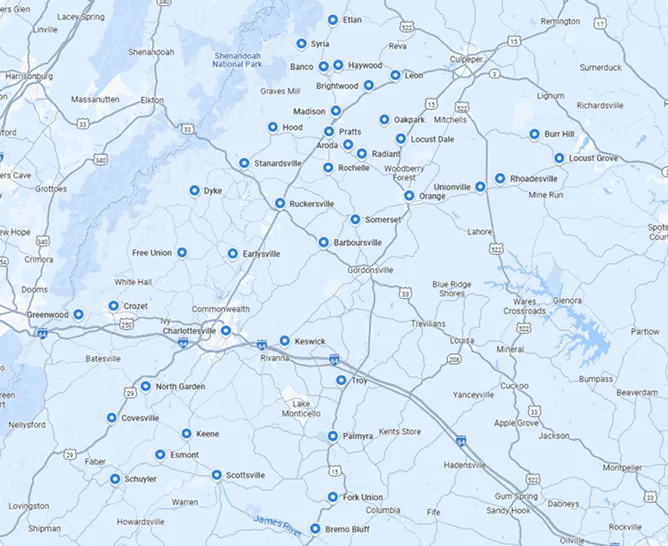
By inventorying your commercial assets and planning scheduled replacements during mild weather, you can protect daily operations and ensure uninterrupted service. For details on our commercial service reach, check out More info about Service Areas.
Frequently Asked Questions About How to Prepare for the Shift to Low GWP Refrigerants
Can I Keep Using My Existing R-410A Air Conditioner or Heat Pump?
Absolutely. There is no law requiring you to replace a functional R-410A system. You can continue to run, maintain, and repair your existing system for its entire operational lifespan. Servicing will remain available using supplies of reclaimed and recycled R-410A.
Is R-454B or R-32 a Drop-In Replacement for R-410A?
No. R-454B and R-32 are not drop-in replacements. They operate under different physical parameters and carry an A2L safety classification, meaning they require systems specifically designed with matched compressors, expansion valves, and integrated safety controls.
Which HVAC Systems in My Home Use Refrigerant?
Any system in your home that provides active cooling or heat transfer relies on a closed refrigerant loop. This includes central air conditioners, electric heat pumps, ductless mini-splits, and geothermal heat pump systems.
To learn more about configuring multi-zone comfort loops in your home, check out More info about Multi Zone Mini Split Whole House Guide.
Conclusion: Get Ready for Low-GWP Refrigerants Before Your Next AC Replacement
As the HVAC industry completes its transition to low-GWP refrigerants, being proactive is the best way to protect your home's comfort and your planning timeline. At Airflow Systems Inc., we believe in providing honest, family-owned guidance to our neighbors throughout Charlottesville, VA and the surrounding Central Virginia areas.
Whether you need to keep your existing R-410A system running at peak efficiency with a professional tune-up, or you want to discuss a seamless, future-proof heat pump upgrade, our experienced team is here to help. We make sure you understand your options, avoid emergency headaches, and enjoy reliable comfort for years to come.
Ready to plan your next step? Schedule AC service or replacement guidance with our friendly team today!
Book Expert Service Or Contact Us
Our Service Process
A Hassle-Free Service Experience
01
Consultation & Diagnosis
We start by listening to your needs and performing a thorough diagnosis of your system to recommend the best solution.
02
Transparent Quoting
We provide a clear, upfront estimate with no hidden fees, so you know exactly what to expect.
03
Expert Service & Follow-Up
Our factory-trained technicians complete the work to the highest standards, and we follow up to ensure your complete satisfaction.
testimonials
What Our Customers Are Saying
Our customers consistently praise our exceptional service and attention to detail, making us a trusted choice for all your HVAC needs.
where we operate
Service areas