

Choose an option to see quick actions and get help faster.
.svg)
The September Dilemma: Facing an HVAC Replacement Before Heating Season
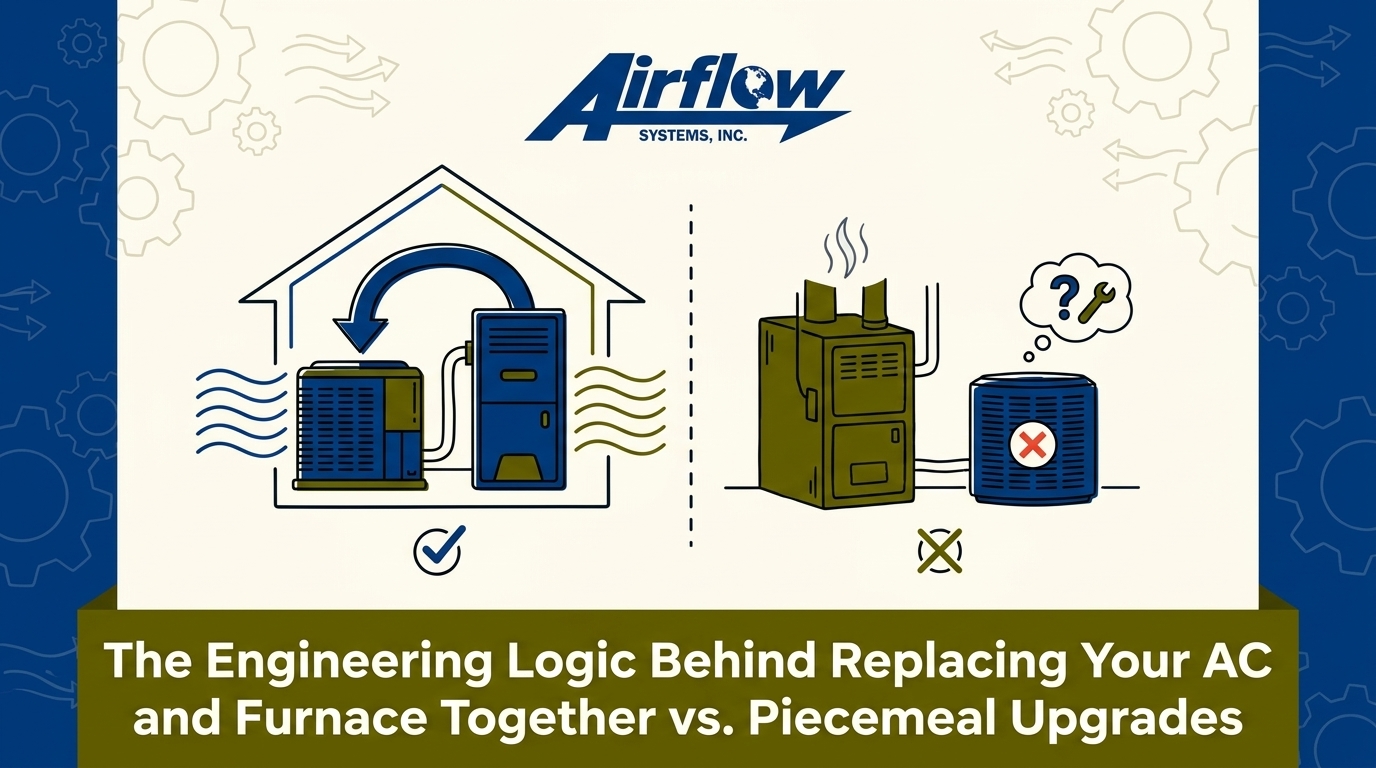
The air conditioner has been struggling all summer, and now it has completely shut down just as the leaves are starting to turn. When an aging cooling unit fails in early fall, the next logical consideration is the heating equipment sitting right next to it. You are suddenly faced with the complex decision of Replacing Your AC and Furnace Together vs. Piecemeal Upgrades.
Here in Charlottesville, the September transition to heating season brings a unique set of challenges. At Airflow Systems, Inc., our team frequently sees homeowners who still need reliable cooling to handle lingering hot afternoons, but who also must ensure their heating equipment is fully prepared for the upcoming cold snaps. Addressing an equipment failure at this time of year forces a critical evaluation of your entire HVAC system.
Many homeowners initially lean toward replacing only the broken air conditioner to minimize immediate expenses. While this piecemeal approach solves the immediate cooling crisis, our technicians find that it often overlooks the mechanical relationship between the indoor and outdoor units. The decision ultimately requires balancing upfront cash flow against long-term system performance, energy efficiency, and total labor costs over the next decade.
Making the right choice means looking beyond the outdoor compressor and understanding how the entire thermal envelope of your home operates. By examining the engineering logic behind system matching, you can make an informed, data-backed decision that protects both your indoor comfort and your financial investment.
The Physics of System Matching: How an Old Furnace Degrades a New AC
To understand why upgrading a single component can be problematic, we often explain the physics of how your climate control equipment actually works to our customers. An air conditioner does not operate independently; it relies entirely on the indoor furnace's blower motor to circulate cooled air throughout your ductwork.
The Role of the Indoor Blower Motor
The outdoor unit (the condenser and compressor) is responsible for releasing heat absorbed from inside your home. However, the indoor unit (the evaporator coil and the furnace blower) is what actually conditions the air and pushes it into your living spaces. If you install a brand-new, high-efficiency air conditioner but connect it to a fifteen-year-old furnace, you are forcing advanced cooling technology to rely on an outdated, inefficient delivery mechanism.
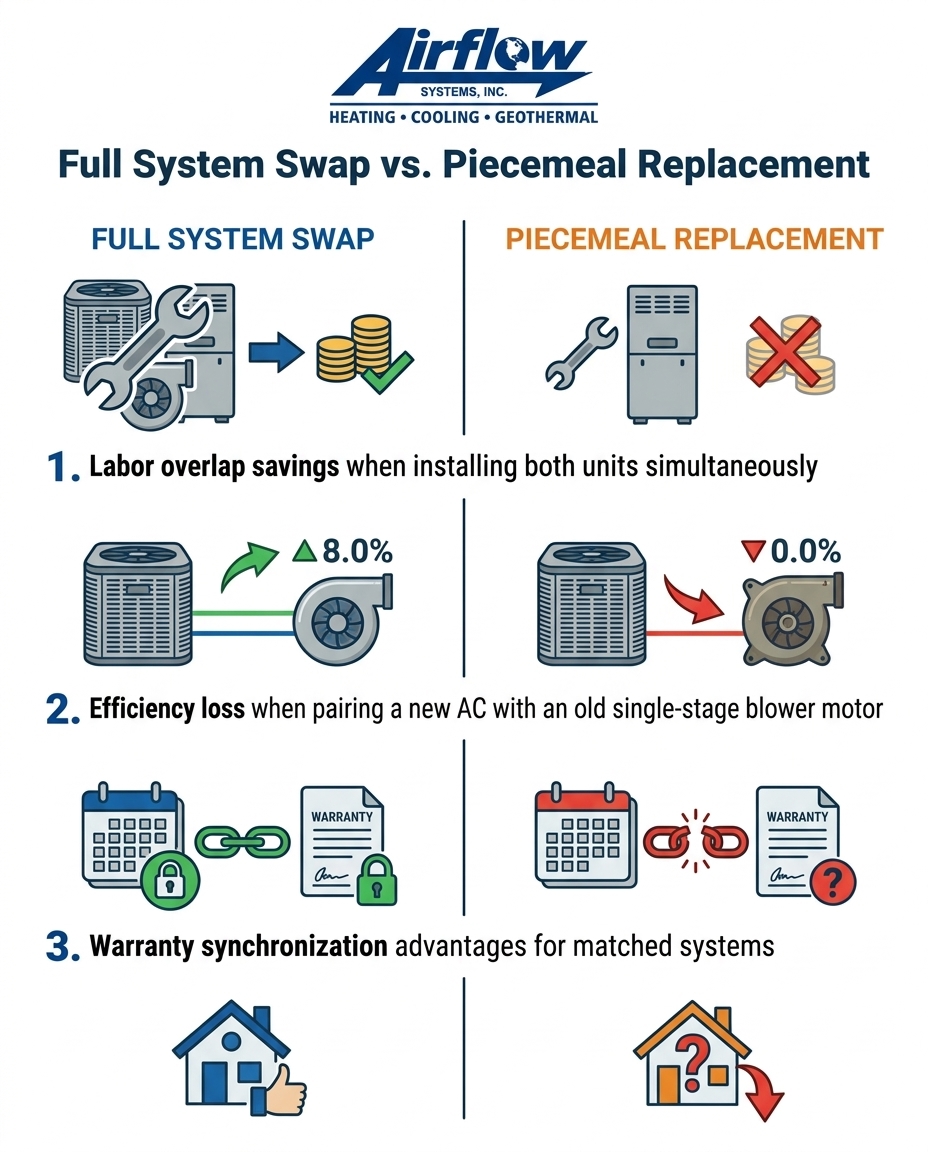
The problem with single-stage blowers: Older furnaces typically feature single-stage blower motors that only operate at one speed: maximum capacity. Modern air conditioners are designed to operate in precise, variable increments. When you pair a new AC with an old single-stage blower motor, the system cannot modulate airflow effectively. This mechanical bottleneck restricts the efficiency of the brand-new cooling unit, essentially downgrading its performance to match the limitations of the old furnace.
AHRI Standards and SEER2 Ratings
The Air-Conditioning, Heating, and Refrigeration Institute (AHRI) sets strict standards for equipment matching. When a manufacturer advertises a specific SEER2 (Seasonal Energy Efficiency Ratio) rating for an air conditioner, that rating is achieved in a laboratory setting using a specifically matched indoor coil and blower motor.
If you install that same air conditioner with an incompatible, older furnace, the true operating efficiency will be significantly lower than the advertised SEER2 rating. You are paying for high-efficiency performance but receiving standard-efficiency results. This mechanical mismatch is a primary reason why replacing a failed compressor often leads to a full system replacement. To unlock the energy savings you are paying for, you must utilize matched variable-speed blower motor systems that communicate seamlessly with the outdoor unit.
Managing Humidity and Temperature Extremes with a Unified System
Optimal indoor comfort requires more than just lowering the temperature; it requires precise moisture removal. This is especially true given our local climate demands. Charlottesville's hot, humid summers require a perfectly matched evaporator coil and variable-speed blower motor for adequate dehumidification.
The Mechanics of Dehumidification
When an air conditioner removes humidity from the air, it does so by passing warm indoor air over a freezing cold evaporator coil. For maximum moisture removal, this process needs to happen slowly. Matched variable-speed blower motor systems are designed to run at lower speeds during high-humidity days, allowing the air to spend more time in contact with the cold coil.
An older, mismatched furnace will blast air over the new coil too quickly, cooling the house down before sufficient humidity has been extracted. This leaves the home feeling cold but uncomfortably clammy, forcing you to lower the thermostat even further and waste energy.
Real-World Comfort Upgrades
Modern, unified systems communicate constantly between the thermostat, the indoor blower, and the outdoor compressor to manage these indoor climates perfectly. This level of synchronization eliminates hot and cold spots and prevents the need for window units or portable space heaters.
Our installation team recently worked with a Charlottesville homeowner dealing with a 30-plus-year-old oil heat and AC system who experienced this transformation firsthand. After maintaining the old, struggling setup for years, we helped them convert to a unified dual-fuel system with natural gas, replacing everything but the existing ductwork. The result was a home climate that functioned better than ever, completely eliminating their previous reliance on supplemental cooling units. When the indoor and outdoor components are engineered to work together, the air conditioning replacement delivers a fundamentally different level of comfort.
Installation Efficiencies and the Labor Advantage of a Full Swap
Beyond the technical mechanics of airflow and humidity, there is a significant logistical component to consider. A substantial portion of any HVAC upgrade goes toward labor, setup, and custom sheet metal fabrication. Understanding how these costs overlap can heavily influence your decision.
Breaking Down the Installation Process
Replacing an air conditioner or a furnace is not a simple plug-and-play operation. It requires a highly coordinated effort by licensed technicians. Consider the steps involved in a standard replacement:
• Site preparation: Technicians must protect the flooring, stage the equipment, and set up safety perimeters.
• Ductwork modification: The sheet metal plenum that connects the equipment to your home's ductwork must be custom-fabricated to fit the exact dimensions of the new unit.
• Electrical and venting: High-voltage wiring, low-voltage control wires, and exhaust flues must be safely disconnected and reconnected.
• System testing: The final phase involves charging refrigerants, testing gas pressures, and calibrating the thermostat.
The Financial Logic of Labor Overlap
If you choose a piecemeal upgrade, you are paying for this entire intensive labor process twice. You pay for the technicians to modify the ductwork and calibrate the system for the new AC today, and then you pay them to repeat the exact same setup process when the furnace inevitably fails a few years later.
Simultaneous installation drastically reduces total labor hours. Because the technicians are already on-site, already have the ductwork opened up, and are already modifying the electrical connections, swapping the furnace at the same time adds only a fraction of the labor cost compared to a standalone furnace installation down the road.
This proactive approach provides immense peace of mind, especially when severe weather strikes. We often share the story of a local family who faced a severe winter temperature drop due to an old, failing setup. By having our crew proactively install a new, matched AC and gas furnace system, their home became consistently comfortable year-round, and their overall energy consumption dropped significantly. The September transition to heating season is the ideal window to secure this level of reliability before extreme weather arrives.
Cash Flow Considerations: When a Piecemeal Upgrade Makes Sense
While the engineering and labor advantages heavily favor a full system swap, we must acknowledge the upfront financial realities. Replacing both the heating and cooling units simultaneously requires a higher initial investment. As your local consultative partner, our team at Airflow Systems, Inc. provides objective system matching logic and flexible financing options to protect your cash flow, offering a pressure-free alternative to the standard 'must buy both' upsell.
Scenarios Justifying a Piecemeal Approach
There are specific situations where replacing only the broken air conditioner is the most logical and financially sound decision. A piecemeal upgrade makes sense if:
• The furnace is relatively new: If your furnace was replaced within the last five to seven years, it still has a significant portion of its operational lifespan remaining.
• The blower motor is compatible: If the existing furnace already features a variable-speed blower motor that meets modern efficiency standards, it can likely support a new high-efficiency AC without restricting airflow.
• AHRI standards can be met: If your technician can verify that the new evaporator coil and condenser will achieve their rated efficiency when paired with your specific model of furnace, a partial replacement is viable.
If your situation does not meet these criteria, but upfront costs are a concern, exploring financing alternatives is crucial. Staggering payments over time allows you to install matched variable-speed blower motor systems today, capturing the long-term energy savings and labor discounts without draining your savings account during the September transition to heating season.
Warranty Synchronization and Long-Term Reliability
The final critical factor in the replacement decision is the long-term ownership experience, specifically regarding manufacturer warranties and ongoing maintenance. Modern climate control equipment represents a significant investment, and protecting that investment requires strict adherence to manufacturer guidelines.
The Risk of Voided Warranties
Major HVAC manufacturers engineer their components to operate under specific tolerances. If you pair a brand-new air conditioner with a fifteen-year-old furnace, the old blower motor may fail to provide adequate airflow over the new evaporator coil. This can cause the indoor coil to freeze, which in turn sends liquid refrigerant back to the outdoor compressor—a failure known as liquid slugging.
If the outdoor compressor is destroyed because it was paired with an incompatible indoor unit, the manufacturer may void the warranty on the new equipment. They will argue that the failure was caused by improper system design, leaving you responsible for the massive repair costs.
The Benefit of a Single Timeline
When you replace the entire system at once, you synchronize the warranties. Both the heating and cooling components begin their coverage on the exact same day, usually lasting ten years for parts. This unified timeline simplifies maintenance and ensures that any mechanical issues that arise over the next decade are fully covered.
Summary Comparison
• Upfront Investment — Full System Swap: Higher initial cost, but lower overall cost when factoring in future labor. — Piecemeal Replacement: Lower immediate cost, but significantly higher total cost over two separate installs.
• System Efficiency — Full System Swap: Maximum SEER2 efficiency achieved through matched variable-speed blower motor systems. — Piecemeal Replacement: Restricted performance; new AC efficiency is limited by the old furnace blower.
• Warranty Coverage — Full System Swap: Synchronized warranties; no risk of denial due to mismatched components. — Piecemeal Replacement: Staggered coverage; potential for voided warranties if old parts damage new ones.
• Labor Overlap — Full System Swap: Maximum labor savings; technicians only modify ductwork and connections once. — Piecemeal Replacement: Zero labor savings; paying for travel, setup, and duct modification twice.
Frequently Asked Questions About HVAC Replacements
Should I replace my furnace when I replace my air conditioner?
The short answer is usually yes, especially if the furnace is over ten years old. Replacing both units simultaneously ensures you benefit from matched variable-speed blower motor systems, which maximize energy efficiency and indoor comfort. It also saves a significant amount of money on labor costs compared to scheduling two separate installations a few years apart.
Will an old furnace degrade the performance of a new AC?
Yes, an old furnace can severely restrict a new air conditioner. The outdoor AC relies on the indoor furnace's blower motor to circulate air. If the old furnace uses an outdated single-stage motor, it cannot provide the precise airflow required by modern, high-efficiency cooling equipment, resulting in higher energy consumption and poor humidity control.
What happens if you have a mismatched HVAC system?
A mismatched system forces new technology to operate at the limitations of older components. This mechanical bottleneck leads to increased wear and tear on the new compressor, higher utility bills, and inconsistent indoor temperatures. Additionally, the strain caused by the mismatch can cause premature breakdowns and potentially void the manufacturer's warranty on the new equipment.
How do AHRI matching standards affect my new AC warranty?
AHRI matching standards certify that specific indoor and outdoor components are engineered to work together to achieve a specific efficiency rating. Manufacturers require these matched setups to honor their warranties. If a new AC compressor fails because it was paired with an incompatible, non-AHRI-certified older furnace, the manufacturer will likely deny the warranty claim.
Can I upgrade my AC now and my furnace next year?
While physically possible, upgrading the AC now and the furnace next year is highly inefficient financially. You will pay for the extensive labor, ductwork modification, and system calibration twice. Unless you are utilizing flexible financing to manage cash flow, it is almost always more cost-effective to replace both units during a single installation appointment.
Make an Informed Decision for Your Home's Comfort
Deciding between a full system swap and a piecemeal upgrade is a significant choice that impacts your home's comfort and your family's budget for the next decade. The right choice ultimately depends on the exact age of your existing equipment, the compatibility of your current ductwork, and your household financial goals. The September transition to heating season is the perfect time to evaluate these factors before extreme weather limits your options.
You do not have to make this complex engineering decision alone. We encourage you to reach out to our team at Airflow Systems, Inc. for an objective, no-pressure system evaluation. Our technicians will assess your current blower motor, verify AHRI matching standards, and provide clear, data-backed recommendations tailored specifically to your home. Schedule a professional consultation today to ensure your climate control system is engineered for maximum reliability and efficiency.
Book Expert Service Or Contact Us
Our Service Process
A Hassle-Free Service Experience
01
Consultation & Diagnosis
We start by listening to your needs and performing a thorough diagnosis of your system to recommend the best solution.
02
Transparent Quoting
We provide a clear, upfront estimate with no hidden fees, so you know exactly what to expect.
03
Expert Service & Follow-Up
Our factory-trained technicians complete the work to the highest standards, and we follow up to ensure your complete satisfaction.
testimonials
What Our Customers Are Saying
Our customers consistently praise our exceptional service and attention to detail, making us a trusted choice for all your HVAC needs.
where we operate
Service areas