

Choose an option to see quick actions and get help faster.
.svg)
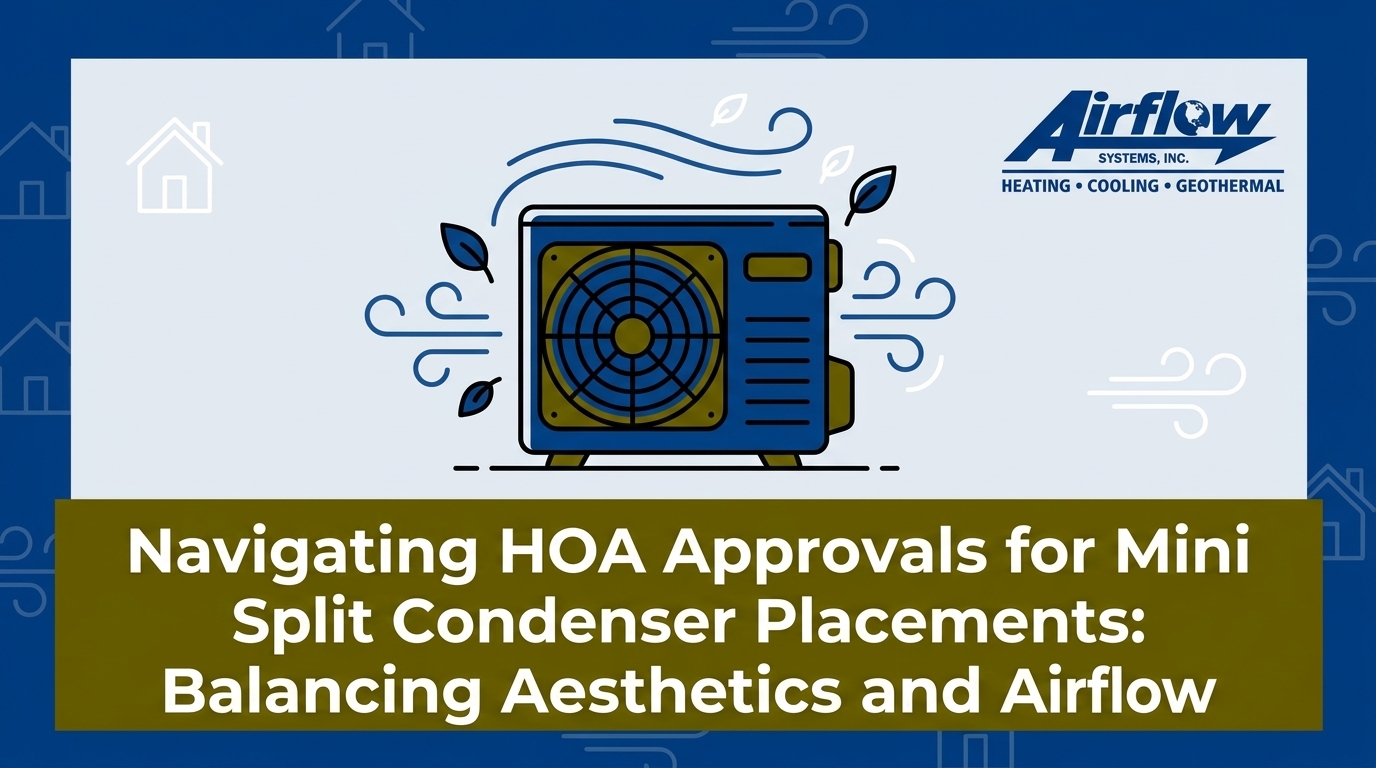
The Hidden Challenge of Upgrading HVAC in Regulated Neighborhoods
Your home is uncomfortably warm, but navigating HOA approvals for mini split condenser placements can feel like a daunting roadblock. You know you need better cooling, yet the homeowners association has strict rules about what can sit outside your house. This creates a frustrating tension between the strict aesthetic demands of your neighborhood board and the technical clearance requirements of modern HVAC equipment.
Securing Architectural Review Board (ARB) approval without compromising the outdoor unit's airflow is a concrete problem many homeowners face. In many Charlottesville HOA communities, residents find themselves caught in a balancing act. The board wants the equipment completely hidden from street view, but the manufacturer requires open space for the system to breathe. If you hide the unit too well, you choke the airflow, which leads to poor performance and premature breakdowns.
The critical decision point comes down to finding the optimal outdoor unit location and a screening method that satisfies both the architectural board and the manufacturer. Setting the stage for a smooth approval process means understanding exactly what documentation and planning are required before you ever purchase equipment. By taking the right steps early, you can secure approval for your mini split services without sacrificing the efficiency of your new system.
Understanding Architectural Review Board (ARB) Expectations
To successfully navigate the approval process, you must first understand the general mindset and aesthetic priorities of homeowners associations when they review exterior modifications. ARBs exist to prioritize neighborhood uniformity, protect property values, and minimize the visual impact of mechanical equipment. They look at your home from the perspective of a passerby, focusing heavily on how new additions alter the established look of the community.
One of the most common aesthetic concerns involves visible line-hide routing on home exteriors. Line-hide is the protective casing that covers the refrigerant lines, electrical wires, and drain tubes running from the outdoor condenser to the indoor air handlers. If these lines are routed poorly—such as running diagonally across a prominent brick wall—the ARB will almost certainly reject the proposal. Similarly, prominent equipment placement near property lines, sidewalks, or front elevations raises immediate red flags for review boards.
Securing pre-approval before beginning any installation is absolutely necessary. Skipping this step to rush an installation can result in heavy fines, stop-work orders, or even forced removal of the equipment at your own expense. However, ARBs are generally very receptive to energy-efficient upgrades when presented with a well-planned visual mitigation strategy. If you can prove that the equipment will blend seamlessly into the environment, boards in Charlottesville HOA communities are much more likely to stamp your application approved.
• Maximum cooling efficiency — ARB Priority: Completely hidden equipment — The Compromise Solution: Breathable, louvered screening panels
• Shortest refrigerant line runs — ARB Priority: No visible exterior conduits — The Compromise Solution: Paintable line-hide routed along existing trim
• Cost-effective placement — ARB Priority: Placement away from property lines — The Compromise Solution: Strategic side-yard placement with landscaping
The Danger of Over-Screening During Late-Summer Heat
The problem: Homeowners often try to appease strict architectural boards by completely boxing in their new outdoor unit or burying it behind thick, dense bushes. While this satisfies the aesthetic requirement, it creates a severe operational hazard. Heat pumps and air conditioners do not create cold air; they remove heat from inside your home and exhaust it outside. If that exhaust heat cannot escape, the system cannot cool your home.
The cause: Standard manufacturer specifications dictate strict breathing room for outdoor units. Most modern systems require 20 to 24 inches of unobstructed front clearance and 4 to 6 inches of rear clearance. When you use dense, HOA-mandated landscaping or solid enclosures, you choke this necessary airflow. The hot exhaust air bounces off the solid screen and gets sucked right back into the unit. This forces the condenser to overwork, drastically reducing cooling efficiency and driving up energy usage.
The solution: Maintaining proper clearance is critical, especially considering the local climate. Hot, humid late-summer August heatwaves severely impact condensers that are improperly screened by dense vegetation. When temperatures soar, your system needs every bit of breathable airflow it can get to reject heat effectively. Restricted airflow during these peak temperatures causes premature system wear, frozen coils, and unexpected breakdowns. You must advocate for screening solutions that allow hot air to disperse freely, ensuring your system survives the late-summer August heat without failing.
HOA-Approved Methods for Hiding Your Condenser
Finding a screening solution that keeps the architectural board happy while letting your equipment breathe is highly achievable. There are several actionable, ARB-friendly screening solutions that maintain necessary airflow while completely obscuring the unit from street view. When integrating new equipment placements alongside existing traditional air conditioning solutions, the goal is to minimize new visual disruptions on the property line.
Here are the most reliable methods for hiding your condenser effectively:
1. Louvered Fencing: Installing a small, three-sided fence with angled louvers is one of the best solutions. The angled slats visually block the unit from the outside, but the gaps between the slats allow hot exhaust air to escape easily. This method is highly favored by both review boards and HVAC manufacturers.
2. Slatted Wood or Vinyl Covers: Similar to louvered fencing, pre-fabricated slatted covers can be placed over the unit. Ensure the slats are spaced widely enough to meet the manufacturer's airflow requirements. These covers can often be painted or stained to match the home's exterior siding or decking.
3. Breathable Landscaping: Strategic landscaping placements can work perfectly if chosen correctly. Opt for spaced ornamental grasses or tall, airy perennials rather than dense, solid boxwood bushes. You want plants that break up the visual outline of the unit without creating a solid wall that traps heat.
4. Lattice Screens with Climbing Vines: A well-placed lattice screen offers excellent airflow. If you choose to plant climbing vines, you must carefully maintain them so they do not grow directly into the condenser's coil fins or internal fan.
A strong warning: Never use solid wooden boxes, unventilated brick enclosures, or tightly wrapped materials to hide your unit. These methods trap intense heat, severely damage the compressor, and will instantly void your manufacturer warranty. Always prioritize airflow alongside aesthetics.
Addressing HOA Noise Concerns with Modern Technology
Beyond visual aesthetics, architectural boards frequently worry about new HVAC equipment violating noise ordinances or disturbing neighbors. In tightly packed planned communities, the distance between homes can be minimal, making property line noise a valid concern for the association. Many board members base their noise concerns on older, traditional central air conditioners that roar to life and rattle loudly throughout the day.
You can easily debunk the myth that modern ductless units are loud by providing concrete data for your ARB applications. Modern outdoor units typically operate at 40 to 50 decibels. To put that into perspective, this noise level is quieter than a normal conversation and significantly softer than the ambient noise of a quiet suburb.
Including this specific decibel data in your ARB application proactively neutralizes noise-related rejections. When the board sees official documentation proving the equipment operates at a whisper-quiet volume, they are far less likely to push back on property line placements.
• Library / Quiet Room — Approximate Decibel Level (dB): 30 - 40 dB
• Modern Mini Split Condenser — Approximate Decibel Level (dB): 40 - 50 dB
• Normal Conversation — Approximate Decibel Level (dB): 60 dB
• Traditional Older AC Unit — Approximate Decibel Level (dB): 70 - 80 dB
What to Include in Your HOA Mini Split Application
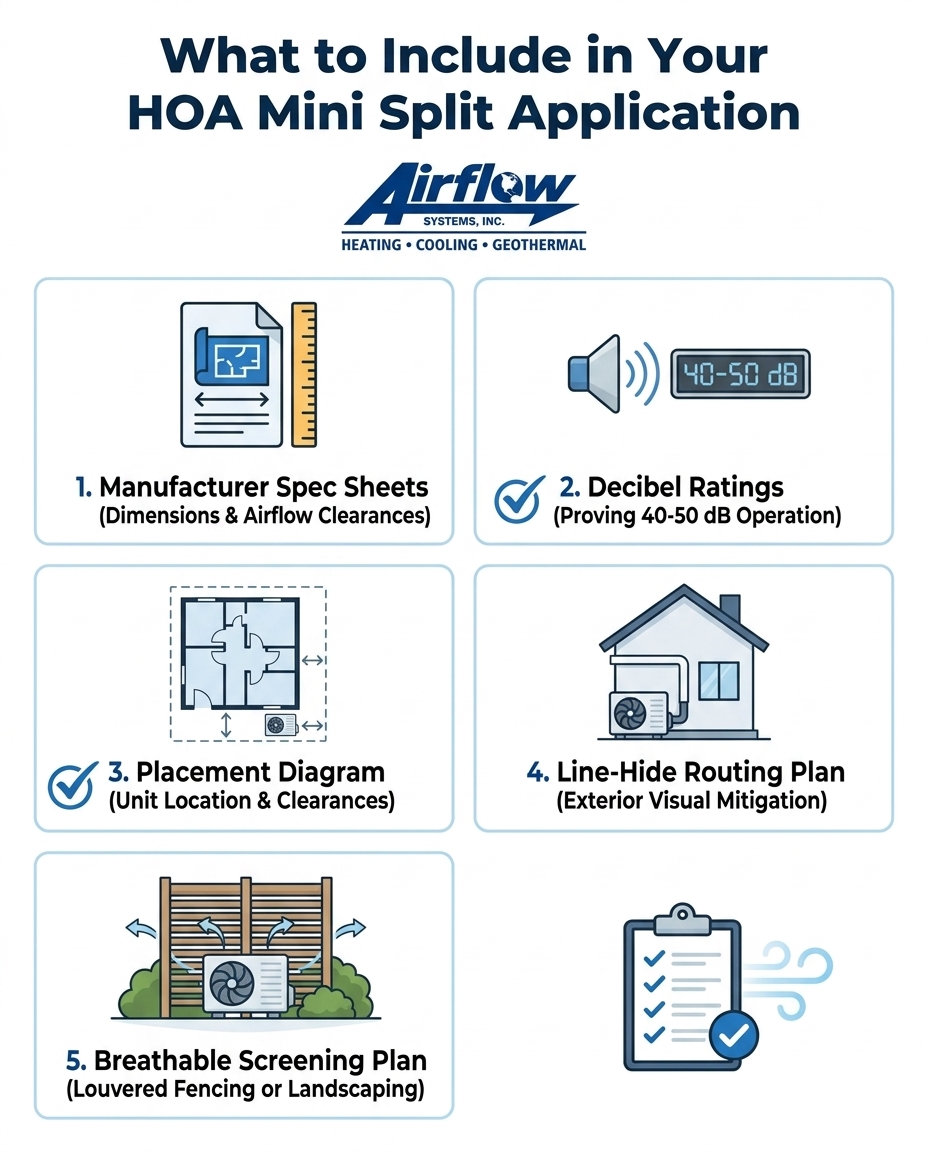
Submitting a thorough, professional application is the fastest way to get your project approved. Boards review dozens of applications, and they often reject or delay requests simply because information is missing. Providing a comprehensive list of documents expedites the ARB review process and shows the board that you have carefully considered their guidelines.
Your application should leave no room for guesswork. When the board can clearly visualize exactly where the unit will sit, how it will be hidden, and how quiet it will be, they can confidently stamp their approval. This meticulous planning is just as important as deciding on the best rooms for a mini split system inside your home.
Technical Specifications and Decibel Ratings
Gather official manufacturer documentation before you submit your packet. The board does not want to take your word for it; they want to see the official spec sheets. Highlight the specific dimensions of the unit and the manufacturer's required airflow clearances. This proves to the board why the unit cannot be completely enclosed in a solid box. Additionally, highlight the specific sound levels on the spec sheet to preempt any neighbor complaints about noise ordinances.
Visual Placement and Line-Hide Diagrams
A visual placement diagram is often the most critical piece of the application. Map out the exact path of the refrigerant lines on a printed photo of your home's exterior. Show exactly where the outdoor unit will sit in relation to property lines and existing landscaping. Detail how the line-hide will be painted or routed to match the home's exterior trim, ensuring the board understands that visual disruptions will be kept to an absolute minimum.
Partnering with Local Experts for Seamless ARB Approvals
Navigating strict architectural guidelines is not something you have to do alone. There is immense value in choosing an HVAC partner who understands the specific nuances of local Charlottesville service areas and their strict architectural boards. A contractor who has worked in these neighborhoods knows exactly what the boards look for and what triggers an automatic rejection.
As a local expert, Airflow Systems proactively supplies homeowners with the exact technical documentation and line-hide aesthetic plans needed to satisfy strict Charlottesville ARBs. Instead of hunting down spec sheets and drawing diagrams yourself, a knowledgeable contractor handles the technical heavy lifting. They will provide the decibel ratings, the clearance requirements, and the routing maps necessary to build a bulletproof application.
This expert partnership prevents the frustration and delays of denied applications. When you submit a packet that is professionally prepared, the board recognizes that the work will be done to a high standard. A professional installation ensures both aesthetic compliance with the neighborhood rules and long-term mechanical reliability for your home's comfort.
Frequently Asked Questions About HOA Approvals for Mini Splits
Can an HOA deny a mini split installation?
Yes, an HOA can deny an installation if it violates their established architectural guidelines. Most denials occur because the application lacks detail, places the unit in a highly visible area, or fails to address how exterior lines will be hidden. However, if you submit a well-planned application that balances aesthetic screening with proper airflow, boards are generally willing to approve energy-efficient upgrades.
How do you hide a mini split outside unit without blocking airflow?
The best way to hide an outside unit while maintaining airflow is by using louvered fencing or slatted covers. These structures visually obscure the equipment from street view while allowing hot exhaust air to escape through the gaps. You can also use spaced ornamental landscaping, provided the plants are kept trimmed and do not grow directly against the unit's intake coils.
What is the clearance required around a mini split outdoor unit?
Most manufacturers require a minimum of 20 to 24 inches of completely unobstructed clearance in front of the unit. The rear of the unit typically requires 4 to 6 inches of clearance from the exterior wall. Side clearances vary by model but generally require at least 10 to 12 inches to allow technicians access for maintenance and to ensure proper air circulation.
Are mini splits loud outside?
No, modern ductless outdoor units are remarkably quiet. They typically operate between 40 and 50 decibels, which is quieter than a normal conversation and significantly softer than older, traditional central air conditioners. This low noise profile makes them excellent choices for planned communities with strict noise ordinances and tight property lines.
What documentation does an HOA need for a mini split application?
A complete application should include the manufacturer's technical spec sheets detailing dimensions and airflow requirements. You also need to provide official decibel ratings, a clear placement diagram showing the unit's location on your property, and a detailed plan for routing and painting the exterior line-hide. Finally, include your proposed screening method, such as louvered fencing or landscaping plans.
What happens if I install an HVAC unit without ARB approval?
Installing exterior equipment without pre-approval can lead to severe consequences from your homeowners association. The board can issue heavy fines, place a lien on your property, or issue a stop-work order. In many cases, they can legally force you to remove the equipment and restore the exterior to its original condition at your own expense, making pre-approval absolutely essential.
Streamline Your Mini Split Installation and Approval Today
Balancing HOA aesthetic demands and critical airflow requirements is highly achievable with the right planning and documentation. You do not have to choose between keeping the neighborhood board happy and keeping your home comfortable. By understanding clearance needs, utilizing breathable screening, and submitting a thorough application, you can enjoy efficient cooling without the administrative headache.
Do not wait until the late-summer August heat makes supplemental cooling an absolute emergency. Reach out for professional assistance in selecting the right equipment and preparing a flawless ARB application. Schedule a consultation today to explore your options for mini split systems, and let local experts guide you toward clear, actionable advice, a smooth approval process, and lasting home comfort.
Book Expert Service Or Contact Us
Our Service Process
A Hassle-Free Service Experience
01
Consultation & Diagnosis
We start by listening to your needs and performing a thorough diagnosis of your system to recommend the best solution.
02
Transparent Quoting
We provide a clear, upfront estimate with no hidden fees, so you know exactly what to expect.
03
Expert Service & Follow-Up
Our factory-trained technicians complete the work to the highest standards, and we follow up to ensure your complete satisfaction.
testimonials
What Our Customers Are Saying
Our customers consistently praise our exceptional service and attention to detail, making us a trusted choice for all your HVAC needs.
where we operate
Service areas