

Choose an option to see quick actions and get help faster.
.svg)
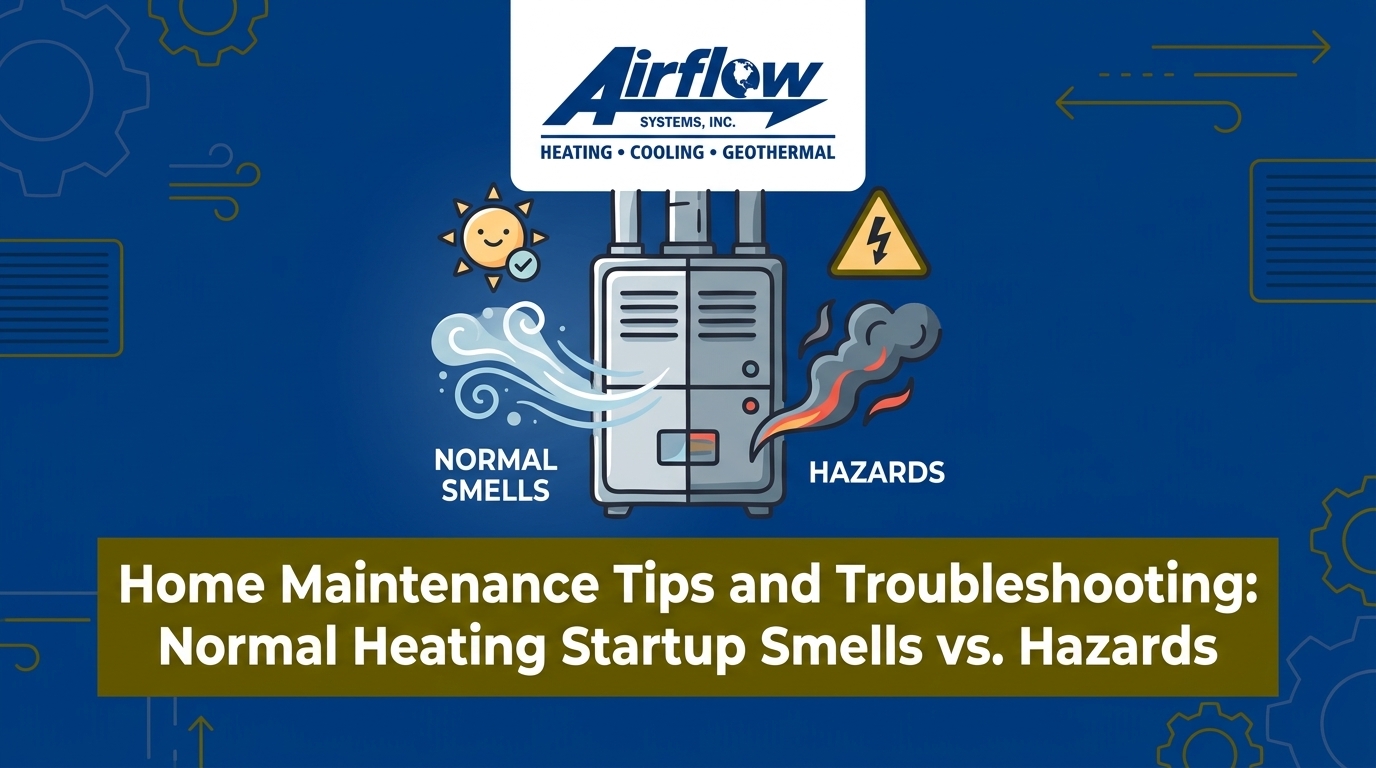
Is That Burning Smell Normal When Turning On the Heat?
Why does the air coming from the vents suddenly smell like something is burning? Here at Airflow Systems, Inc., we find that navigating effective home maintenance tips and troubleshooting often begins with that sudden moment of panic during a mid-fall (October) heating startup. The weather has finally turned chilly, you adjust the thermostat to call for heat, and within minutes, an alarming odor fills the hallways. For most homeowners, this sensory warning triggers immediate concern about electrical fires or catastrophic equipment failure.
The short answer is that initial startup odors are incredibly common, but distinguishing between a harmless seasonal symptom and a genuine hazard requires careful observation. Whether you rely on a traditional gas furnace or a mini split transitioning into heating mode for the first time in months, the system is waking up from a long dormant period. The internal components have been sitting idle, and the sudden introduction of high temperatures naturally produces a distinct scent.
Addressing this immediate anxiety means stepping back and evaluating the situation with a clear, analytical mindset. A burning smell does not automatically equal danger, but it does demand your attention. The primary decision point you face is differentiating between a routine seasonal dust burn-off and a genuine electrical or combustion hazard. By understanding exactly how your heating equipment operates during its first cycle of the year, you can set a neutral, expert baseline for what is normal, ensuring your household remains safe without causing unnecessary panic or rushing to shut off the breaker prematurely.
The Culprit Behind the Scent: Understanding Dust Burn-Off
To understand why your heating equipment produces a burning smell, you have to look at what happens during the long, idle summer months. Even advanced mini split systems and traditional central air handlers pull air from inside the home, passing it over internal components. While the air filter catches the majority of debris, microscopic household dust, pet dander, and airborne particles inevitably settle directly onto the heat exchanger and heating elements.
In our years of serving the community, our technicians consistently see how Charlottesville's high summer humidity and elevated dew points cause airborne dust to cake more stubbornly onto idle heating components. This often makes the initial fall burn-off smell much more pronounced here than it might be in drier climates. Moisture in the air acts almost like an adhesive, binding the settled particles tightly to the cold metal surfaces of the furnace.
When the thermostat triggers the first heating cycle, the heat exchanger rapidly climbs in temperature. The initial ignition incinerates this accumulated layer of dust and dander almost instantly. Because the system is blowing air directly over these components and into your living spaces, that incinerated dust smell is distributed throughout the entire house.
The 15-30 Minute Rule:
• The beginning: The smell will be strongest during the first five minutes of operation.
• The middle: As the dust layer burns away, the odor should steadily decrease in intensity.
• The threshold: A 15-30 minute typical duration for harmless dust burn-off is the standard metric. If the smell resolves within this window, the system is operating normally.
During this initial startup phase, the smartest approach is to keep a window slightly cracked to ventilate the harmless odor while closely monitoring the system. If the smell is strictly related to seasonal dust, the fresh air will clear the house quickly, and subsequent heating cycles will be completely odorless.
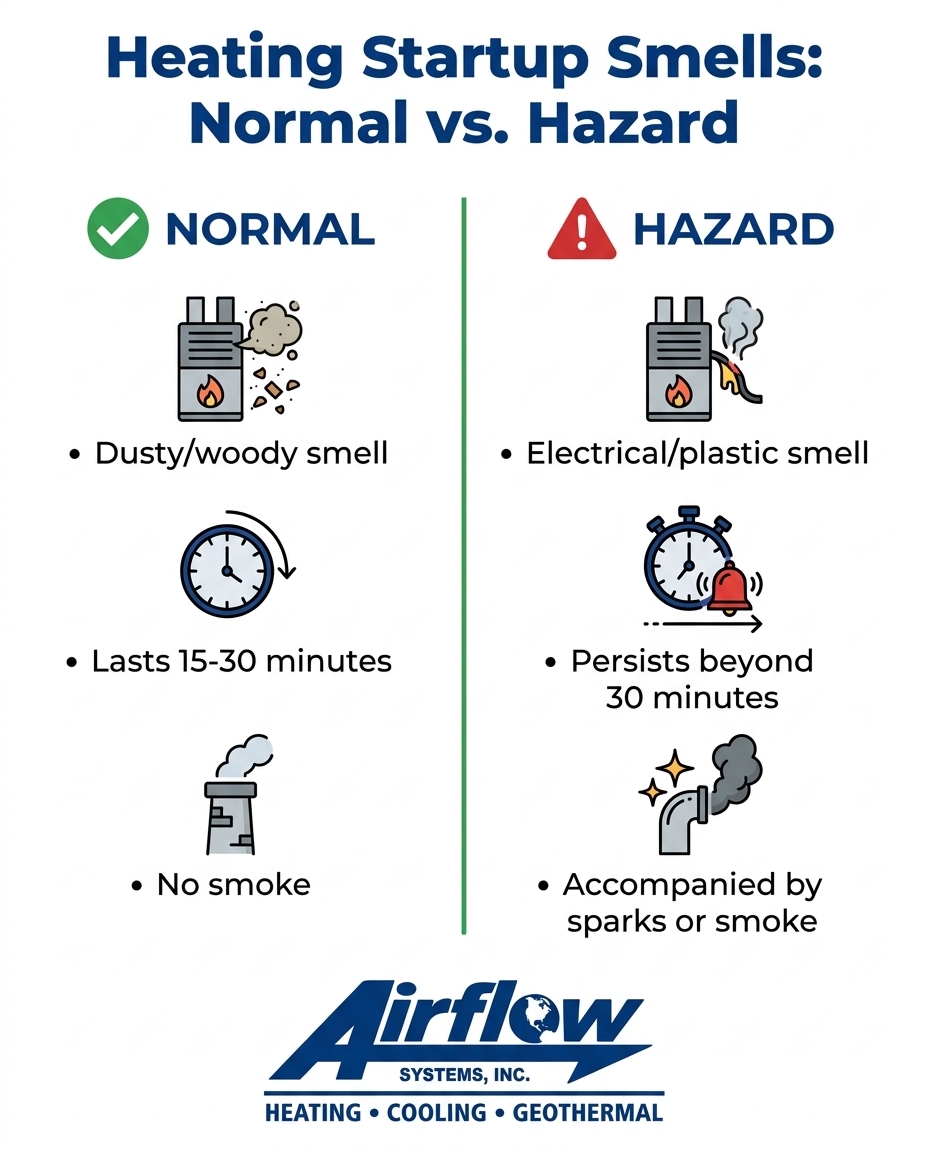
Comparing Heating Startup Smells: Normal vs. Hazard
Empowering yourself to diagnose your specific situation safely requires a definitive comparison framework. Not all burning smells are created equal. The specific scent your system produces is the most accurate diagnostic tool you have for determining whether you are dealing with a routine mid-fall (October) heating startup symptom or an active emergency.
A normal dust burn-off has a very specific profile. It often smells "dusty," slightly "woody," or similar to a space heater that has just been turned on. It is a dry smell that fades steadily. In stark contrast, an electrical or combustion hazard produces an acrid, sharp, and highly unnatural chemical odor that assaults the senses and refuses to dissipate.
Just last fall, our team responded to a local household that experienced a complete furnace shutdown right before the winter holidays because they ignored a persistent acrid odor. Catching genuine hazards early prevents these catastrophic mid-winter system failures and ensures your home remains warm when temperatures drop below freezing.
• Odor Profile — Normal Dust Burn-Off: Dusty, dry, slightly woody, or similar to a hot radiator. — Potential Safety Hazard: Melting plastic, burning rubber, electrical ozone, or sulfur (rotten eggs).
• Duration — Normal Dust Burn-Off: Fades steadily and disappears entirely within 15-30 minutes. — Potential Safety Hazard: Persists beyond 30 minutes, remains constant, or grows stronger.
• Visual Cues — Normal Dust Burn-Off: None. The air coming from the vents is completely clear. — Potential Safety Hazard: Visible smoke from vents, sparking near the unit, or soot buildup.
• System Behavior — Normal Dust Burn-Off: Runs a smooth, continuous cycle until the thermostat is satisfied. — Potential Safety Hazard: Repeatedly shuts off (short-cycling), trips the circuit breaker, or fails to ignite.
Signs It Is Time to Shut Down the System
While patience is key for dust burn-off, certain red flags require immediate action. If the odor persists beyond the 30-minute mark without fading, you have crossed the threshold of normal operation. A smell that resembles burning rubber or melting wires strongly indicates a failing blower motor or compromised electrical wiring. Furthermore, a sulfur or rotten egg smell is the universal warning sign for a gas leak. In any of these scenarios, or if the system repeatedly short-cycles and trips the circuit breaker, shut the system down immediately at the thermostat and contact a professional.
Troubleshooting Unusual Heating Noises
Expanding your diagnostic framework means paying attention to auditory symptoms as well as smells. During a mid-fall (October) heating startup, unusual noises often accompany the initial odors, adding to a homeowner's concern. Just like smells, mechanical sounds can be categorized into harmless operational quirks and critical component failures.
Understanding the thermal dynamics of your home helps explain the normal sounds. When a furnace pushes hot air through cold sheet metal ductwork, the metal naturally expands. This rapid temperature shift creates a slight popping or pinging sound echoing through the walls or floors. This is a harmless byproduct of thermal expansion and typically subsides once the ductwork reaches a consistent temperature.
However, hazard sounds require a different level of attention. If you hear a loud booming or banging sound immediately upon ignition, this is often a symptom of delayed ignition. Gas builds up in the combustion chamber before the igniter catches, causing a small, unsafe explosion. This is a serious issue that requires a technician to clean and adjust the burners.
Another critical sound is a loud, metal-on-metal squealing or screeching. This almost always points to failing blower motor bearings. Interestingly, a failing blower motor can produce both a burning electrical smell (as the motor overheats and insulation melts) and a loud screeching noise simultaneously. When our technicians encounter a combination of electrical odors and grinding noises, we typically find the central air handler is compromised. Evaluating these severe mechanical failures with our team might eventually lead to exploring new air conditioning options and heating configurations if the existing unit is beyond safe repair. If an upgrade is necessary, keep in mind that generic federal tax credits or utility incentive programs may apply to qualifying high-efficiency installations, though we always advise readers to verify current programs with their utility provider or a tax professional.
Safe DIY Home Maintenance Tips vs. Professional Intervention
Establishing strict safety boundaries is critical when evaluating heating system performance. While homeowners want to take a proactive role in maintaining their property, the line between safe DIY upkeep and dangerous interference must be respected. Modern heating equipment utilizes high voltage electrical components and volatile combustible gases, making improper handling incredibly dangerous.
Safe DIY Maintenance Tasks:
• Changing the air filter: Always replace the filter before turning on the heat for the first time. A clogged filter restricts airflow, causing the heat exchanger to overheat and worsening the burning dust smell.
• Checking the vents: Walk through the house and ensure all supply and return registers are fully open and unblocked by furniture or rugs.
• Verifying the thermostat: Ensure the thermostat is set correctly to "Heat" and that the fan is set to "Auto" rather than "On" to prevent blowing cold air between cycles.
Strict Safety Warnings:
• Never remove the furnace cabinet panel: The internal cabinet houses sensitive safety switches, high-voltage capacitors, and the combustion chamber.
• Never attempt to clean the heat exchanger manually: Scrubbing or vacuuming the heat exchanger without professional tools can cause micro-cracks, leading to deadly carbon monoxide leaks into the home.
• Never test electrical components: Testing flame sensors, igniters, or circuit boards requires specialized multimeters and a thorough understanding of HVAC electrical schematics.
The risks of carbon monoxide exposure or severe electrical shock from improper handling cannot be overstated. As a local, family-owned company, our team at Airflow Systems, Inc. provides honest, pressure-free guidance on when to simply open a window and wait, versus when a professional safety inspection is genuinely required. Reassuringly, seeking professional guidance for uncertain smells or noises is always the smartest, most responsible safety protocol a homeowner can follow.
Preventing Startup Odors with Routine Maintenance
The most effective way to manage a mid-fall (October) heating startup is to shift from reactive troubleshooting to proactive prevention. Waiting for a burning smell to appear before thinking about your heating system often leads to unnecessary stress. Highlighting the value of professional fall tune-ups is about recognizing that preventative care eliminates the vast majority of seasonal startup issues before they ever reach your living room.
A professional fall tune-up involves a licensed technician safely accessing the internal cabinet to clean the heat exchanger, burners, and blower assembly before the first ignition of the year. By professionally removing the accumulated summer dust, pet dander, and debris, the heavy dust burn-off smell is virtually eliminated. Our technicians will also test the electrical draw of the motors, verify the integrity of the heat exchanger to prevent carbon monoxide leaks, and ensure the gas pressure is calibrated correctly.
The long-term benefits of these semi-annual check-ups extend far beyond odor prevention. Regular maintenance significantly extends the lifespan of the equipment, lowers monthly energy consumption by ensuring optimal efficiency, and drastically improves overall indoor air quality. One of our long-term customers has relied on our team for regular twice-yearly check-ups for almost eight years, ensuring their equipment is maintained in good working order with expert advice before every seasonal shift.
It is important to remember that homes utilizing ductless solutions for specific zones may have slightly different maintenance requirements than traditional ducted systems, though the need for clean coils and clear filters remains universal. Having a trusted local technician from our team serving the Charlottesville area verify system safety before the freezing weather arrives provides a level of confidence that DIY checks simply cannot match.
Exploring Zoned Alternatives
For homeowners who are continually frustrated by central ductwork spreading dust odors throughout the entire house every fall, alternative zoned heating and cooling can offer a much cleaner air delivery method. Because ductless units operate without the long, dusty runs of sheet metal, they often provide superior indoor air quality and more precise temperature control. If you are considering upgrading a specific space, understanding the best rooms for a mini split system can help optimize your home's comfort while minimizing the seasonal maintenance headaches associated with traditional central air handlers.
Frequently Asked Questions
Why does my heater smell like burning dust when I turn it on?
During the summer months, household dust and airborne particles settle on the internal components of your heating system. When you turn the heat on for the first time, the heat exchanger rapidly warms up and incinerates this accumulated layer of debris. The resulting smell is simply the byproduct of this dust burning off and being pushed through your vents. It is a completely normal part of the seasonal transition.
How long should a heater smell like burning dust?
A 15-30 minute typical duration for harmless dust burn-off is the standard expectation. The smell will be most intense during the first five minutes and should steadily dissipate as the system runs. If the odor continues past the 30-minute mark without fading, it may indicate a deeper issue requiring professional attention.
Is it safe to run my heater if it smells like burning?
If the smell is dusty or woody and occurs during the first use of the season, it is generally safe to let the system run for up to 30 minutes to clear the dust. However, if the smell resembles melting plastic, electrical ozone, or burning rubber, it is not safe. You should immediately turn off the system at the thermostat to prevent electrical damage or fire risks.
What does an electrical fire smell like in a heating system?
An electrical hazard produces a sharp, acrid, and highly unnatural chemical odor. It often smells like melting polymer wire insulation, burning rubber, or metallic ozone. Unlike a dry dust smell, an electrical odor is harsh on the nose and will persist or worsen as long as the system has power.
Can a dirty air filter cause a burning smell?
Yes, a severely clogged air filter can absolutely contribute to a burning smell. When airflow is restricted, the heat exchanger cannot properly dissipate its heat into the home, causing the internal cabinet to overheat. This bakes the surrounding dust and can even cause the system's high-limit safety switch to trip, shutting down the furnace to prevent a fire.
When should I call an HVAC professional for a furnace smell?
You should call a professional if the burning smell lasts longer than 30 minutes, if it smells like electrical components or sulfur, or if it is accompanied by loud banging noises, smoke, or sparking. Additionally, scheduling a proactive fall tune-up with a professional can safely clean the system beforehand, preventing the smell entirely.
Reliable Heating Solutions for the Season Ahead
Understanding the clear threshold between a harmless 15-30 minute dust burn-off and a persistent hazard empowers you to operate your system safely. If that startup odor refuses to fade, or if you want to bypass the stress entirely with a proactive tune-up, the Airflow Systems, Inc. team is just a call away. Ensure your home remains safe, warm, and comfortable all winter long.
Book Expert Service Or Contact Us
Our Service Process
A Hassle-Free Service Experience
01
Consultation & Diagnosis
We start by listening to your needs and performing a thorough diagnosis of your system to recommend the best solution.
02
Transparent Quoting
We provide a clear, upfront estimate with no hidden fees, so you know exactly what to expect.
03
Expert Service & Follow-Up
Our factory-trained technicians complete the work to the highest standards, and we follow up to ensure your complete satisfaction.
testimonials
What Our Customers Are Saying
Our customers consistently praise our exceptional service and attention to detail, making us a trusted choice for all your HVAC needs.
where we operate
Service areas