

Choose an option to see quick actions and get help faster.
.svg)
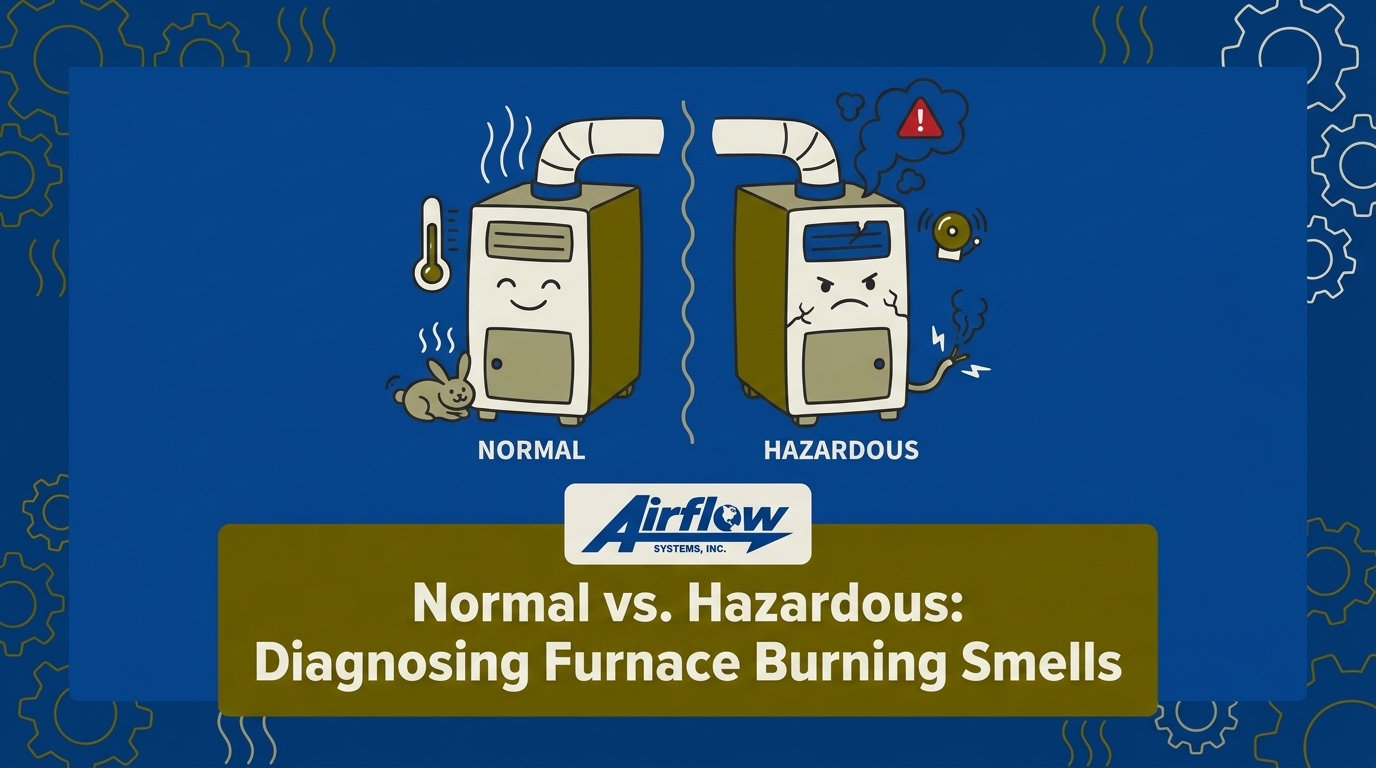
Why Does My Heater Smell Like Burning? Making the Right Call
Is your furnace filling the house with a strange odor the moment it kicks on? At Airflow Systems, Inc., our team fields dozens of panicked calls every fall about this exact issue. Mastering basic home maintenance tips and troubleshooting starts with knowing how to react to this specific warning sign. Addressing the immediate alarm you feel when smelling smoke or burning odors from your vents is a critical part of your October heating startup. When the temperature drops in Charlottesville VA and you finally turn on the heat, catching a whiff of something burning is unsettling. You are forced to make a rapid decision: do you wait it out, or do you shut the system down immediately?
Many homeowners assume the worst, fearing an imminent house fire. The short answer is that while some odors are harmless seasonal side effects of a system waking up from hibernation, other smells demand immediate attention. Setting the stage for a safety-first diagnostic approach to HVAC troubleshooting prevents panic while protecting your property. Whether your home relies on a traditional furnace or a modern mini split, understanding these system odors is critical for your family's safety.
The Science of the First Fall Startup: Dust and Your Heat Exchanger
To understand why your heating system smells like it is burning, you have to look at what happens inside the cabinet during the long summer months. Idle HVAC components gather organic debris, pet dander, and household dust while the heating cycle is turned off.
The Problem: Summer Humidity and Settled Dust
Throughout the summer, Charlottesville's high summer humidity and high dew points cause damp air to circulate through your ductwork. In our years of inspecting local HVAC systems, we frequently see how this moisture makes ordinary household dust heavy and sticky. Instead of blowing straight through the system, this damp dust clings tightly to the cold, idle metal surfaces of your furnace's heat exchanger. By the time autumn arrives, your heat exchanger is coated in a thin, stubborn layer of organic material.
The Cause: High-Temperature Incineration
When you turn on the thermostat for that initial October heating startup, the burners ignite, and the heat exchanger rapidly climbs to temperatures exceeding 140 degrees Fahrenheit. The sticky layer of dust that accumulated over the summer is instantly baked and incinerated. The blower fan then pushes the resulting scent of burning dust straight through your ductwork and out of your supply vents. This is why the entire house suddenly smells like a dusty campfire.
The Solution: Routine Maintenance and Patience
This normal burn-off process is temporary. Our technicians generally advise that the timeline for a harmless dust burn-off is 30 to 60 minutes. Once the accumulated debris is completely incinerated, the smell will dissipate naturally. You can minimize this seasonal nuisance by scheduling routine heating maintenance before the cold weather hits, allowing a professional to clean the internal components before that first startup.
Normal Burn-Off vs. Electrical Hazard: A Side-by-Side Comparison
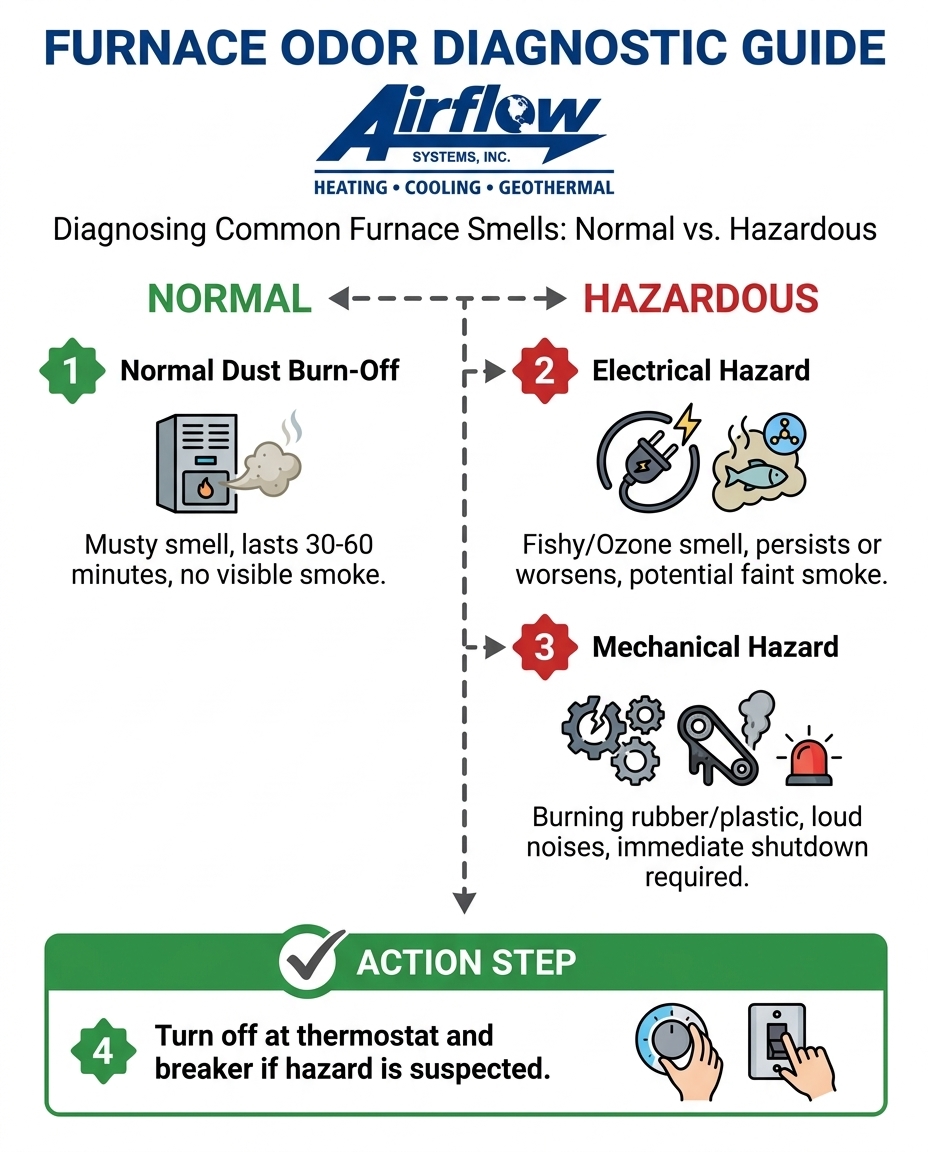
Making a confident, safety-first decision during your October heating startup requires knowing exactly what to look, smell, and listen for. A normal dust burn-off is a temporary annoyance, but an electrical or mechanical failure is a serious hazard. Use this comparison table to determine if your system is experiencing a standard seasonal transition or a dangerous malfunction.
• Odor Profile — Normal Dust Burn-Off: Musty, dry, smells like warm dirt or a dusty radiator. — Hazardous System Failure: Acrid, metallic, smells like fish, ozone, or melting plastic/rubber.
• Duration — Normal Dust Burn-Off: Fades entirely within 30 to 60 minutes of the first startup. — Hazardous System Failure: Persists longer than an hour, or worsens the longer the system runs.
• Visual Cues — Normal Dust Burn-Off: No visible smoke or haze anywhere in the home. — Hazardous System Failure: Faint wisps of smoke at the registers or a visible haze in the furnace room.
• Auditory Cues — Normal Dust Burn-Off: Standard operating sounds (click, whoosh of air, steady fan). — Hazardous System Failure: Grinding, screeching, loud buzzing, or repeated clicking without ignition.
• When to Shut It Down — Normal Dust Burn-Off: No shutdown required. Open a window and let it pass. — Hazardous System Failure: Turn off immediately at the thermostat and the breaker panel.
Warning Signs: When to Shut Down Your System Immediately
While dust burn-off is harmless, other odors indicate a critical failure inside your heating equipment. Ignoring these red flags can lead to total system failure right when temperatures drop in Charlottesville VA, leaving your home freezing. Our dispatch team recently took an emergency call from a local homeowner whose furnace went down right before a major cold snap; fortunately, our responsive office staff and fast-acting technicians got the system repaired and running quickly before the house grew dangerously cold. To avoid an emergency shutdown in the dead of winter, you must act decisively if you notice any of the following warning signs during your October heating startup.
1. Identify melting wire insulation: If you smell burning plastic or rubber, you are likely smelling wire casing melting away due to an electrical short or an overheating blower motor. This is a severe fire hazard.
2. Watch for signs of a cracked heat exchanger: A cracked heat exchanger allows toxic combustion gases, including carbon monoxide, to mix with the breathable air in your home. While carbon monoxide is odorless, the crack often alters how the flames burn, producing a sharp, chemical-like exhaust smell inside the house.
3. Turn off the system at the thermostat: If you detect any hazardous odors, immediately switch your thermostat from "Heat" to "Off." Do not wait to see if the smell improves.
4. Cut power at the breaker: For added safety, especially if you suspect an electrical issue, locate your home's main electrical panel and flip the breaker dedicated to your furnace to the "Off" position.
Recognizing Electrical Odors
Electrical failures have a highly distinct scent profile. When electrical components overheat, they often emit a strange, "fishy" odor or the sharp, metallic smell of ozone. This happens frequently when blower motors seize up. When our technicians pull out old blower motors, we often see that the bearings have dried out and locked into place after months of inactivity during the summer. When the thermostat calls for heat, the system sends electricity to the motor, but because the motor cannot spin, that electrical energy converts entirely into intense heat. This rapidly melts the surrounding wire insulation and internal components, producing that unmistakable electrical burning smell.
Home Maintenance Tips and Troubleshooting: What You Can Check Safely
If your system is emitting a strange odor, there are several safe, external checks you can perform before calling a professional. Empowering yourself with basic diagnostic steps ensures your equipment has the best possible environment to operate efficiently during your October heating startup. Proper airflow is just as critical for winter heating as it is for summer air conditioning.
• Verify your thermostat settings: Ensure the thermostat is set to "Heat" and that the fan is set to "Auto" rather than "On." If the system is short-cycling (turning on and off rapidly), it may be overheating and shutting itself down as a safety precaution.
• Inspect and replace the air filter: A clogged, dirty air filter severely restricts airflow into the furnace. Without enough cold air moving over the heat exchanger to cool it down, the internal temperature skyrockets. This excessive heat can bake the dust inside the cabinet and eventually trigger the high-limit safety switch. Replacing a filthy filter is the easiest way to resolve a hot, dusty smell.
• Ensure all supply and return vents are unblocked: Walk through every room in your home and verify that no heavy furniture, thick rugs, or long curtains are blocking the airflow from your registers. Blocked vents create dangerous back-pressure inside the ductwork, forcing the blower motor to work harder and run hotter.
• Check the external exhaust pipes: If you have a high-efficiency gas furnace, check the PVC exhaust pipes outside your home. Ensure they are not blocked by fallen autumn leaves, snow, or debris, as an obstructed exhaust will force the system to shut down safely.
The Dangers of DIY: Why Internal Diagnostics Require a Pro
While changing an air filter and checking vents are excellent homeowner responsibilities, opening the furnace cabinet to investigate a burning smell crosses the line from routine maintenance into dangerous territory. Explicitly, you should never attempt to perform internal diagnostics or electrical repairs on your own heating system.
According to the National Fire Protection Association (NFPA), heating equipment is a leading cause of home fire deaths in the United States. Modern furnaces are complex machines that combine high-voltage electricity, highly pressurized natural gas or propane, and intense combustion. Taking the front panel off your furnace exposes you to live electrical terminals and moving mechanical parts. Furthermore, tampering with internal components almost universally voids the manufacturer's warranty.
Licensed professionals have the specialized tools required to diagnose these systems safely. A technician uses a multimeter to measure precise voltage drops across a circuit board, ensuring a blower motor is receiving the correct power. They use digital combustion analyzers and infrared inspection cameras to examine the heat exchanger for microscopic cracks that are invisible to the naked eye. As a trusted, independent local authority in Charlottesville VA, our team at Airflow Systems, Inc. prioritizes homeowner safety and proper, code-compliant diagnostics over the generic, highly risky DIY advice often found online. When you smell melting plastic or ozone, trusting a professional is the only way to guarantee your home remains safe.
When Repair Isn't Enough: Upgrading to Safer Heating Technology
Sometimes, a severe burning smell during your October heating startup signals the end of the line for your equipment. Traditional gas and oil furnaces have an expected lifespan of 15 to 20 years. When an older system suffers a catastrophic electrical failure or a cracked heat exchanger, repairing it is often a poor investment compared to replacement. For example, our installation crew recently helped a local customer replace a 30-year-old oil heat and AC system. By converting to a modern dual-fuel natural gas setup, their home climate became better than ever, completely eliminating the need for supplemental cooling units.
If safety is your primary concern, modern, combustion-free alternatives offer incredible peace of mind. Upgrading to mini split systems entirely removes the risk of carbon monoxide leaks and gas combustion hazards from your living space. These systems use electricity to transfer heat rather than burning fossil fuels to create it. Additionally, federal tax credits and local utility incentives may apply to qualifying heat pump installations, making this a great time to upgrade. We always advise checking with your utility provider or a tax professional to see what generic programs currently apply.
Unpredictable Virginia winters make versatile heat pump capabilities highly advantageous for year-round comfort. A dual-fuel setup combines a high-efficiency heat pump with a gas furnace backup, utilizing the ultra-safe heat pump for the majority of the mild autumn and early winter, only switching to gas during extreme freezes. Because proper sizing and installation are critical for long-term safety and efficiency, consulting with an expert ensures you select the right technology for your home's unique layout. If you are considering this route, researching the best rooms for a mini split system can help you plan a safer, more efficient heating strategy.
Prioritizing Your Family's Safety This Heating Season
Navigating your October heating startup in Charlottesville VA doesn't have to be a stressful experience. The golden rule we share with our customers is simple: if the burning smell is musty and fades within an hour, it is likely just normal dust burn-off. However, if the smell lasts longer than an hour, smells like melting plastic, or is accompanied by strange noises, shut the system down immediately at the thermostat and the breaker.
You should never have to guess whether your home is safe. A professional inspection provides immediate peace of mind, ensuring that every wire, motor, and heat exchanger is operating exactly as the manufacturer intended. If you are unsure about the odors coming from your vents, schedule a comprehensive diagnostic with Airflow Systems, Inc. today to guarantee safe, reliable warmth all winter long.
Frequently Asked Questions
Why does my heater smell like it's burning?
Your heater smells like it's burning because dust and debris settle on the heat exchanger during the idle summer months. When you turn the heat on for the first time in autumn, the internal components reach high temperatures and incinerate that settled dust. This creates a temporary, musty burning odor that travels through your ductwork.
How long does furnace burn off smell last?
In our experience, a normal furnace dust burn-off smell should last between 30 and 60 minutes. Once the accumulated organic debris has been completely incinerated by the heat exchanger, the odor will fade naturally. If the smell persists for several hours, it indicates a mechanical or electrical problem rather than normal dust.
Is it safe to run a furnace if it smells like burning?
It is safe to run a furnace if the burning smell is musty, dusty, and occurs only during the first startup of the season. However, if the smell resembles melting plastic, burning rubber, or electrical ozone, it is not safe. You must shut the system down immediately to prevent a fire hazard or carbon monoxide exposure.
What does an electrical fire in a furnace smell like?
An electrical fire in a furnace smells sharp, acrid, and metallic. Most homeowners describe the odor as smelling like melting plastic, burning rubber, ozone, or even a strange "fishy" scent. This distinct smell is caused by wire insulation and internal components melting down due to overheating.
Can a dirty air filter cause a burning smell in the house?
Yes, a severely dirty air filter can absolutely cause a burning smell in the house. A clogged filter blocks cold air from entering the furnace, which prevents the heat exchanger from cooling down properly. The excessive heat buildup can bake the surrounding dust and cause the system to overheat, triggering a burning odor.
When should I call a professional for a furnace smell?
You should call a professional if the burning smell lasts longer than an hour, grows stronger the longer the system runs, or smells like melting plastic or electricity. Additionally, if the smell is accompanied by loud grinding noises, visible smoke, or a system that repeatedly clicks without turning on, leave the system off and contact our experts immediately.
Book Expert Service Or Contact Us
Our Service Process
A Hassle-Free Service Experience
01
Consultation & Diagnosis
We start by listening to your needs and performing a thorough diagnosis of your system to recommend the best solution.
02
Transparent Quoting
We provide a clear, upfront estimate with no hidden fees, so you know exactly what to expect.
03
Expert Service & Follow-Up
Our factory-trained technicians complete the work to the highest standards, and we follow up to ensure your complete satisfaction.
testimonials
What Our Customers Are Saying
Our customers consistently praise our exceptional service and attention to detail, making us a trusted choice for all your HVAC needs.
where we operate
Service areas