


Choose an option to see quick actions and get help faster.
.svg)
The Big Fall Question: Does Your AC Condenser Need a Winter Coat?
Are you looking out at your yard, watching the temperatures drop, and wondering, should I cover my outdoor AC unit during the fall and winter? It is a question almost every homeowner asks as the seasons change. You have invested a significant amount of money into your home cooling equipment, and your natural instinct is to protect it from harsh weather. Buying a heavy-duty tarp or a custom-fit vinyl wrap seems like the responsible thing to do before the freezing weather arrives.
Here is the reality: wrapping your outdoor AC condenser in a heavy tarp is one of the most common mistakes homeowners make. While you might believe a tight cover protects the machinery from snow and ice, it actually creates a hidden, destructive environment. A full cover traps ground moisture inside the unit and provides a warm, wind-free shelter that invites rodents to move in and chew on your electrical wiring. The decision point comes down to understanding what your equipment actually needs to survive the off-season. Across Charlottesville and the Blue Ridge foothills, leaving the unit largely exposed is almost always the safer choice.
If you are looking for professional guidance on maintaining your air conditioning systems as the seasons shift, our team is ready to help you prepare the right way.
Why Outdoor AC Units Are Built to Brave the Elements
Most homeowners do not realize that outdoor air conditioning units are engineered specifically to live outside year-round. They are not delicate indoor appliances that accidentally ended up in the yard. The manufacturers know these units will face torrential rain, baking sun, heavy snowfall, and freezing temperatures over their 15-to-20-year lifespan.
Enrolling in a routine HVAC maintenance plan is a much better way to protect your investment than wrapping it in plastic. When you look at the anatomy of your condenser, you can see exactly how it is built to handle the weather:
• Weatherized components: The internal compressor, fan motor, and electrical contactors are housed in sealed, weatherproof enclosures designed to repel water.
• Durable exterior materials: The outer cabinet is typically constructed from heavy-gauge galvanized steel or aluminum, finished with a baked-on powder coat that resists rust and UV fading.
• Built-in drainage: The base pan of the unit features specific drainage holes so that rainwater and melting snow flow right out the bottom.
• Airflow requirements: Department of Energy (DOE) and major manufacturer guidelines emphasize that the unit needs to "breathe." Open air circulation is what keeps the internal components dry.
When you wrap the unit tightly in a cover, you override all of these built-in defensive designs. The system relies on natural wind and sunlight to evaporate moisture. By blocking that airflow, you are forcing the equipment to sit in a damp, stagnant environment for months at a time.
The Hidden Danger of Tarps: Trapped Moisture and Rust
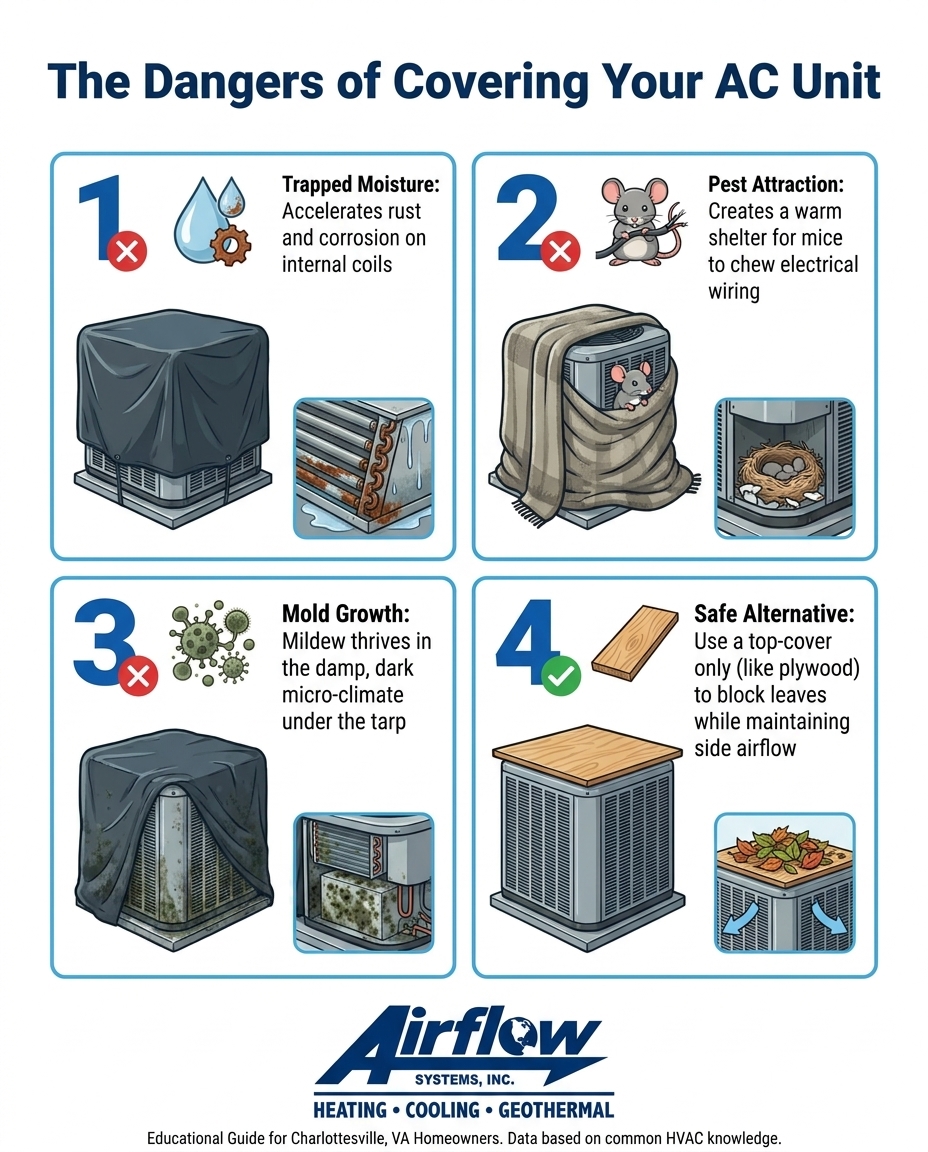
The Problem: The biggest threat to your air conditioner during the winter is not falling snow—it is trapped condensation. When you wrap a non-breathable vinyl or plastic tarp around the condenser, you create a destructive micro-climate inside the cabinet.
The Cause: Even during the coldest months, ground moisture continuously evaporates into the air. Charlottesville's winter mix of freezing temperatures and damp conditions creates the perfect storm for this issue. When that ground moisture rises, it hits the inside of your heavy tarp and condenses into water droplets. Because the tarp blocks the wind, those water droplets never dry. Your expensive copper coils, aluminum fins, and steel components are now locked in a dark, humid greenhouse from November until April.
The Solution: Leave the sides of the unit completely exposed to the open air. This constant dampness accelerates galvanic corrosion—a chemical process that eats away at the metals and causes premature rust. Furthermore, this trapped moisture creates an ideal breeding ground for mold and mildew to grow on the internal wiring and fan blades. Snow accumulation on an uncovered unit is harmless because it eventually melts and drains away. Trapped moisture under a tarp, however, relentlessly corrodes the system day after day.
How Full Covers Turn Your AC Into a Winter Rodent Hotel
Moisture is not the only threat hiding under that winter cover. A fully tarped AC unit acts as a giant, flashing vacancy sign for local wildlife. As the weather turns bitterly cold, mice, rats, and chipmunks begin desperately searching for a dry, wind-protected place to build their winter nests.
When you wrap your condenser, you provide them with the perfect shelter. The tarp blocks the biting wind, and the inside of the unit offers a dry, secure cavity away from predators. Once rodents move in, the real destruction begins. Mice are notorious for chewing on anything they can find to file down their growing teeth and gather nesting materials. Chewed electrical wiring is one of the most common and frustrating repairs technicians face in the spring.
Rodents will strip the insulation right off your high-voltage wires, gnaw through the low-voltage control wires, and pack the fan blades tight with dried grass and debris. Because your cooling equipment often shares circuitry with your winter systems, a severe short circuit in the outdoor unit can sometimes disrupt your heating services inside the home.
The easiest way to keep pests away is to make the unit unappealing. An exposed, uncovered AC unit is cold, drafty, and completely exposed to the elements. Rodents have zero interest in nesting in a metal box where the wind blows straight through.
Safe Alternatives to Protect Your Unit from Heavy Debris
While a full tarp is a bad idea, the concern about falling debris is entirely valid. During the early fall leaf drop, pine needles, twigs, and heavy wet leaves can fall through the top fan grille. If organic matter builds up inside the base pan, it can block the drainage holes and cause a different kind of moisture problem.
You can protect the top of the unit without suffocating the sides. If you want to clean your AC condenser unit safely and keep it clear through the autumn, follow these proven steps:
1. Measure the top grille: Take a tape measure and find the exact dimensions of the fan guard on top of your condenser.
2. Cut a piece of plywood: Cut a sturdy piece of plywood so it extends about one inch past the edges of the top grille. This will act as a solid roof.
3. Weigh it down: Place the plywood flat on top of the unit and secure it with a heavy brick or a cinder block so winter winds do not blow it away.
4. Leave the sides open: Do not drape anything over the side louvers. The plywood blocks falling leaves and ice chunks, while the open sides allow the wind to keep the internal components perfectly dry.
5. Clear the perimeter: Take a rake and clear a two-foot perimeter around the base of the unit. Removing tall grass, weeds, and piled-up leaves ensures excellent ventilation and removes hiding spots for pests.
Why Generic Big-Box Covers Fail in Central Virginia
Every autumn, big-box hardware stores set up massive displays pushing "one-size-fits-all" vinyl AC covers. They market these products aggressively, making homeowners feel negligent if they do not buy one. However, these generic retail products ignore the realities of local climates.
As an independent, local HVAC company, Airflow Systems provides practical advice tailored to Central Virginia's climate, protecting equipment better than generic big-box solutions. We see the aftermath of these store-bought covers every spring. Here is how the marketing concept compares to the harsh reality:
• Material — Generic Big-Box Cover Marketing: Heavy-duty vinyl protects against all weather. — The Central Virginia Reality: Non-breathable plastic traps ground moisture and accelerates coil rust.
• Airflow — Generic Big-Box Cover Marketing: Snug fit keeps the cold wind out completely. — The Central Virginia Reality: Zero ventilation means condensation never evaporates, breeding mold.
• Pest Control — Generic Big-Box Cover Marketing: Ties tight at the bottom to keep the unit clean. — The Central Virginia Reality: Creates a warm, wind-proof tent that actively attracts nesting mice.
• Protection — Generic Big-Box Cover Marketing: Guards the entire unit from snow and ice damage. — The Central Virginia Reality: Causes more internal wire and metal damage than open snow ever could.
Professional Fall Preparation: What Your System Actually Needs
The best winter protection for your cooling equipment is not a piece of plastic—it is a thorough, professional pre-season inspection. Having a trained technician look over the system ensures it is shut down correctly and ready to hibernate safely.
Real protection comes from proactive care. For example, one local homeowner scheduled their regular twice-yearly maintenance last spring, noting that the thorough check-up and valuable advice provided total peace of mind for the season ahead. The exact same principle applies right now as we head into colder weather. Regular, twice-a-year check-ups are the proven way to extend the lifespan of your equipment.
A proper fall shutdown involves a detailed checklist that a DIY cover simply cannot replace:
• Clearing internal debris: A technician will open the cabinet and safely remove any leaves, dirt, or pine needles that accumulated inside the base pan over the summer, ensuring the drainage holes are wide open.
• Checking electrical connections: Loose wires can arc and cause damage. Tightening all connections prevents electrical failures when you start the system back up next year.
• Testing components: Checking the capacitor and contactor before winter means you will not be caught off guard by a failed part on the first hot day of spring.
• Verifying refrigerant levels: Ensuring the system is fully sealed and holding its charge prevents long-term compressor damage.
Frequently Asked Questions About AC Winterization
We receive many inquiries about the best ways to handle outdoor equipment as the weather turns cold. If you have frequently asked HVAC questions, you are not alone. Here are the clear, direct answers to the most common winterization concerns.
What happens if I don't cover my AC unit in the winter?
Nothing harmful. The unit is designed by the manufacturer to be completely exposed to the elements year-round. It will safely weather heavy rain, freezing rain, and snow while avoiding the severe risks of trapped moisture and internal rust. Leaving it uncovered is exactly what the engineers intended.
Should I put a piece of plywood on top of my AC?
Yes. Placing a sturdy piece of plywood on top of the unit, weighted down with a brick, is a highly recommended and safe method. It effectively prevents heavy autumn leaves, falling branches, and sharp ice chunks from dropping into the fan grille. Most importantly, it leaves the sides completely open so the system can breathe.
Can rain damage my AC unit?
No. Rain will not damage the unit in any way. The internal electrical components, fan motor, and compressor are heavily sealed and weatherproofed at the factory. In fact, heavy rain can actually be beneficial, as it helps wash away light dust, dirt, and spring pollen from the exterior aluminum fins.
How do I protect my AC unit from snow?
You generally do not need to. Normal snowfall will not harm the durable exterior or internal parts of the condenser. If you experience a massive blizzard and snow drifts heavily against the side panels, simply take a broom and brush it away gently to maintain natural airflow around the cabinet.
Do mice live in AC units during winter?
Yes, but usually only if the unit is covered. When you wrap the equipment tightly with a tarp, you create a warm, wind-blocking tent that is incredibly attractive to rodents looking for winter shelter. Leaving the unit uncovered keeps the interior cold and drafty, which strongly deters pests from building nests and chewing on your wires.
When is the best time to schedule fall HVAC maintenance?
Early fall is the ideal time. You want to schedule your appointment before the first freezing temperatures arrive in the area. This timing ensures your cooling system is properly cleaned out and safely retired for the off-season, while also confirming your heating system is prepped and ready for winter operation.
Skip the Tarp and Schedule Your Fall AC Inspection
When you ask yourself, should I cover my outdoor AC unit during the fall and winter?, the answer is a resounding no. Leaving the condenser exposed is the safest, smartest choice to avoid accelerated rust, trapped moisture, and destructive rodent infestations. If you are worried about the heavy autumn leaf drop, a simple piece of plywood on top is all the protection you need.
Instead of spending money on a generic big-box cover that will only damage your equipment, invest in proper seasonal care. Talk to a local expert to ensure your system is clean, secure, and properly maintained for the changing seasons. Reach out today to schedule your fall inspection and enjoy true peace of mind all winter long.
Book Expert Service Or Contact Us
Our Service Process
A Hassle-Free Service Experience
01
Consultation & Diagnosis
We start by listening to your needs and performing a thorough diagnosis of your system to recommend the best solution.
02
Transparent Quoting
We provide a clear, upfront estimate with no hidden fees, so you know exactly what to expect.
03
Expert Service & Follow-Up
Our factory-trained technicians complete the work to the highest standards, and we follow up to ensure your complete satisfaction.
testimonials
What Our Customers Are Saying
Our customers consistently praise our exceptional service and attention to detail, making us a trusted choice for all your HVAC needs.
where we operate
Service areas