

Choose an option to see quick actions and get help faster.
.svg)
The Hidden Cause of Extreme Temperature Swings in Older Homes
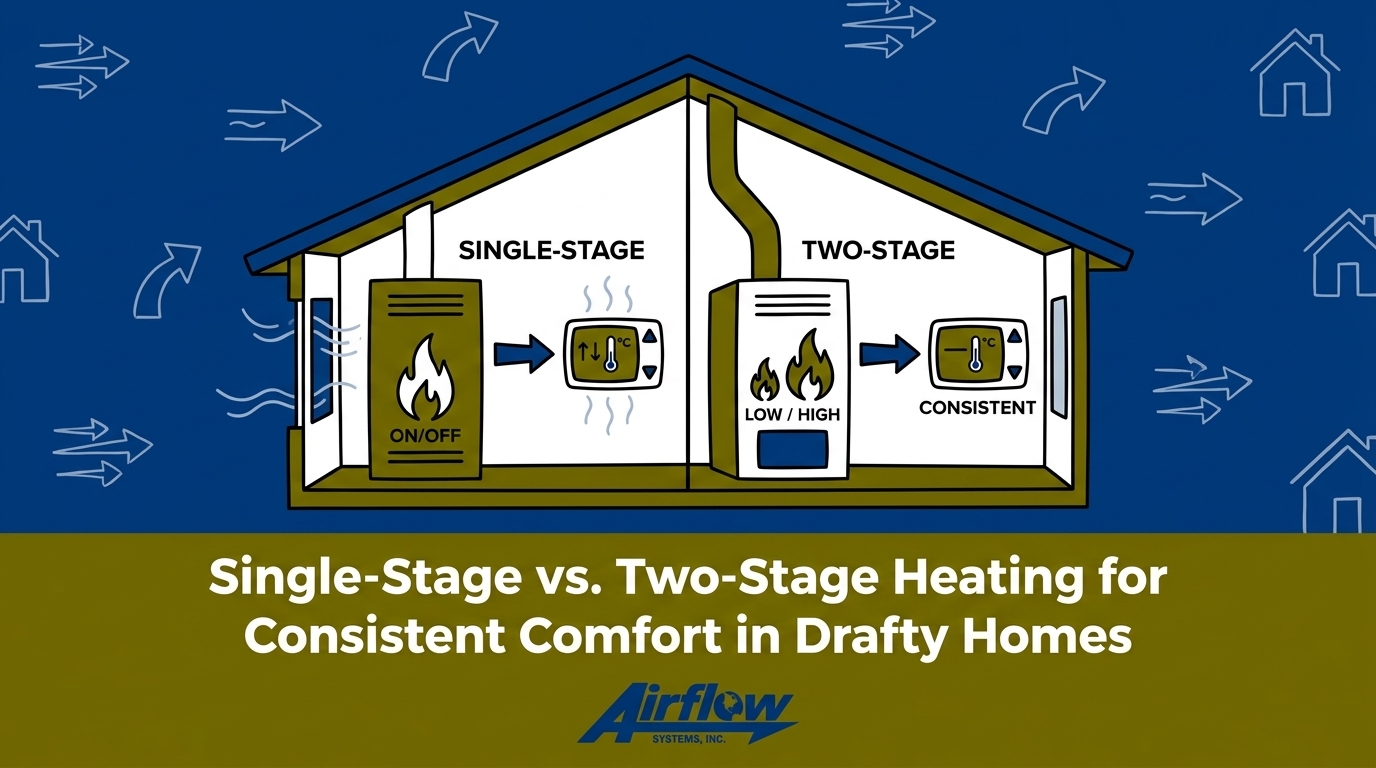
A common myth among homeowners is that a bigger, more powerful furnace is the ultimate fix for cold spots, but analyzing single-stage vs. two-stage heating for consistent comfort in drafty homes reveals a different reality. Many people assume that if a room feels chilly, the heating system simply lacks the muscle to push warm air that far. In truth, standard furnaces blasting at full capacity actually exacerbate the physical sensation of drafts the moment they abruptly shut off. If you are deciding whether to replace an aging furnace with a standard single-stage unit or upgrade to a two-stage system, understanding how these different technologies interact with your home's unique footprint is the most important step you can take. Taking action during the September pre-heating season gives you the time to properly evaluate your options before the first major freeze hits.
For comprehensive support with your home's climate control, exploring professional heating services ensures your system is properly matched to your floor plan.
How Single-Stage Furnaces Highlight Your Home's Drafts
To understand why certain rooms never seem to stay warm, you have to look at the mechanics of standard heating equipment. A traditional single-stage furnace only knows one speed: maximum capacity. Whenever the thermostat calls for heat, the system turns on at 100 percent power, blasts hot air through your ductwork until the target temperature is reached, and then shuts down completely. This creates a relentless "hot-blast / cold-chill" cycle that can make your living spaces feel incredibly uneven.
The thermal contrast problem: When a furnace rapidly satisfies the thermostat, the sudden halt in airflow makes the surrounding air feel stagnant and cold by comparison. In Charlottesville historic and older homes, this issue is magnified. Older architecture often lacks modern, airtight insulation, meaning the house loses heat rapidly during the furnace's off-cycle. As the warm air dissipates, cold air from outside seeps in through older window frames, unsealed baseboards, and poorly insulated attics. Because the furnace is completely off, there is no warm air circulating to counteract these creeping drafts.
The recovery penalty: Charlottesville's unpredictable fall and winter temperature swings interact poorly with historic housing stock when relying on a system that only blasts full heat. During a sudden evening temperature drop, the house loses heat so fast that the single-stage furnace is forced to kick on again almost immediately. This rapid cycling not only makes the physical sensation of drafts more severe but also forces the HVAC system to work much harder to recover lost temperatures. If you are considering a new furnace installation, it is critical to recognize that replacing an old single-stage unit with a new single-stage unit will not solve this specific comfort issue.
The Mechanics of Two-Stage Heating: A Continuous Blanket of Warmth
Two-stage heating technology fundamentally changes how warm air is delivered to your living spaces. Instead of operating purely on an on-or-off basis, a two-stage gas valve and blower motor allow the furnace to run at two distinct capacities. This staging capability actively works to mask drafts by changing the rhythm of your home's airflow.
1. The primary stage (60% to 65% capacity): Most of the time, a two-stage furnace operates in its first, lower stage. It runs at roughly 60 to 65 percent of its total capacity. This results in a longer, slower, and much gentler heating cycle.
2. Continuous air circulation: Because the system runs longer on a lower setting, it provides a steady, continuous flow of warm air. This constant circulation actively pushes back against cold spots, preventing drafts from settling into poorly insulated rooms.
3. The secondary stage (100% capacity): The system reserves its second, high-capacity stage strictly for extreme temperature drops or rapid recovery needs. If the outdoor temperature plummets or you bump the thermostat up several degrees at once, the system automatically shifts into high gear to meet the demand.
Modern temperature controls communicate seamlessly with this staging technology to prevent severe indoor climate fluctuations. Upgrading to smart thermostats allows the equipment to calculate exactly how much heat is needed to maintain the current temperature, rather than simply reacting once the house is already cold.
Eliminating the Off-Cycle Chill
The primary benefit of a longer, lower-capacity run time is that the home rarely experiences a complete lack of airflow. One Virginia homeowner reached out after struggling with an older system that simply couldn't keep up during a bitter winter freeze, with temperatures plummeting to minus five degrees. After upgrading to a staged Trane heat pump and LP gas furnace combination, they noticed an immediate shift. The new system maintained continuous, year-round comfort without the drastic temperature swings, proving that a steady, low-level heat distribution effectively prevents cold air from overtaking a room.
Acoustic Advantages for Homes with Poor Sound Insulation
Beyond physical temperature swings, older homes often suffer from a major secondary pain point: loud mechanical noise. Traditional single-stage furnaces require a powerful blower motor to push a massive volume of air all at once. In homes built before modern acoustic insulation standards, the sudden "whoosh" of the furnace kicking on can be highly disruptive, interrupting conversations, waking light sleepers, and echoing through metal ductwork.
The benefit of low-speed operation: Running at 60 percent capacity means the blower motor operates at a significantly lower, quieter speed. The initial startup is gradual rather than explosive. The air moves through the vents gently, reducing the friction and vibration that cause acoustic disturbances.
A quieter background presence: The gentle circulation of a two-stage system fades into the background, vastly improving overall living comfort. Another homeowner needed to replace an aging heat pump located in relatively close quarters during the fall season. A team of skilled installers swapped the old system for a new Bosch unit and integrated an electrostatic air cleaner. Because modern staged systems operate at lower capacities most of the time, the homeowner noted that the new equipment runs exceptionally well while remaining noticeably quieter than the old, disruptive unit. For tight floor plans or homes where the utility closet is near a bedroom, this acoustic advantage is a major quality-of-life upgrade.
Comparing the Impact on Indoor Air Quality and System Lifespan
The advantages of longer run cycles extend far beyond basic temperature control. The way a furnace operates has a direct ripple effect on the air you breathe and how long the mechanical components survive before requiring major intervention.
• Improved indoor air filtration: Your heating system is also your home's primary air filtration system. Longer heating cycles mean indoor air passes through the HVAC filter much more frequently. A single-stage furnace that only runs for ten minutes an hour leaves the air stagnant for fifty minutes. A two-stage system that runs for forty minutes an hour continuously pulls dust, pet dander, and airborne allergens out of your breathing space.
• Reduced mechanical stress: The hardest part of a mechanical cycle is the startup phase. Fewer hard starts and stops reduce the immense torque and stress placed on the blower motor, the gas valve, and the heat exchanger.
• Fewer unexpected breakdowns: Constant short-cycling in a single-stage unit accelerates premature wear and tear. By running at a steady, manageable pace, a two-stage system experiences less thermal fatigue, which can decrease the likelihood of needing emergency furnace repair during the coldest weeks of the year.
Side-by-Side Comparison: Combating Heat Loss in Drafty Environments
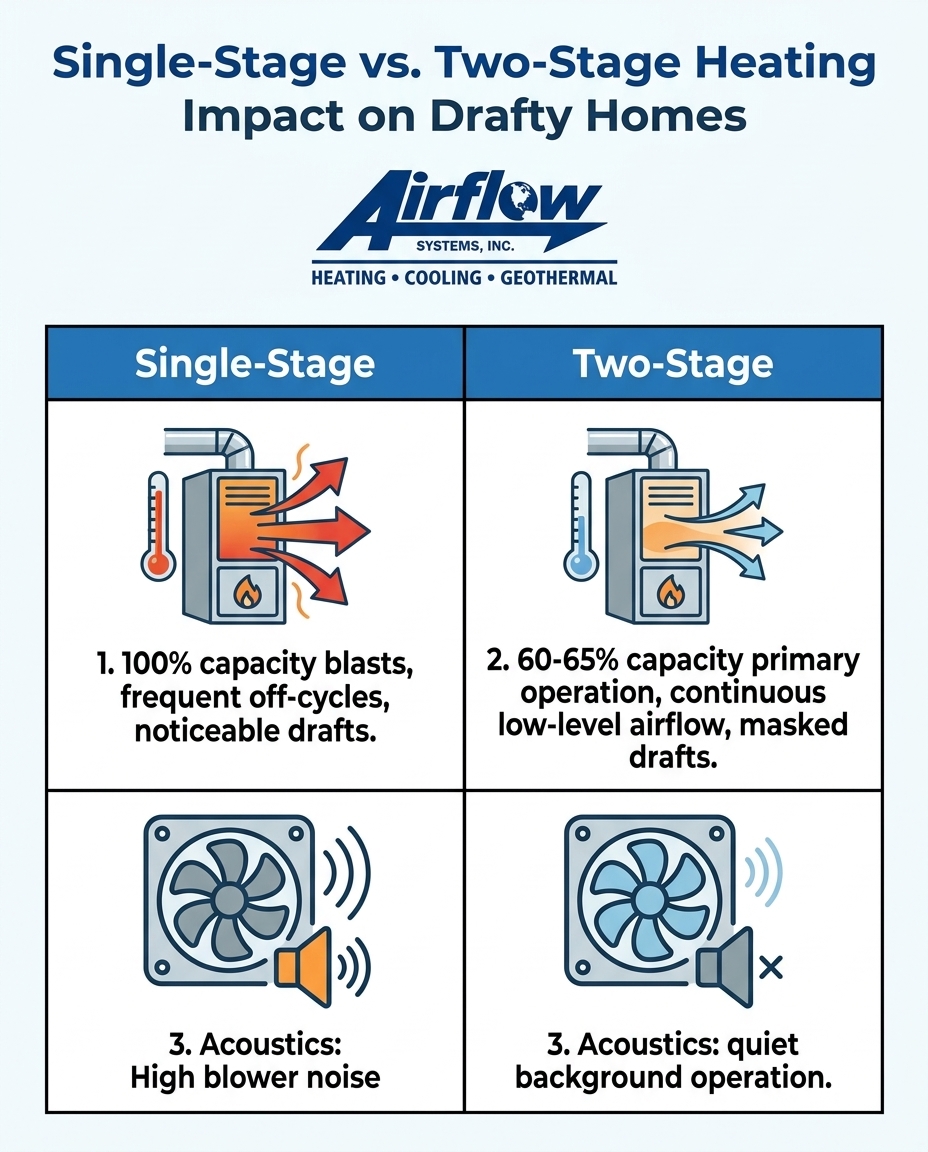
When evaluating which technology is right for a home that struggles with heat retention, seeing the mechanical differences side-by-side helps clarify the decision. Here is how single-stage and two-stage systems handle the specific challenges of older architecture.
• Temperature Consistency — Standard Single-Stage Furnace: Noticeable hot and cold swings as the system cycles on and off. — Advanced Two-Stage Furnace: Even, continuous warmth maintained by low-level operation.
• Draft Sensation — Standard Single-Stage Furnace: Exacerbated during off-cycles when airflow completely stops. — Advanced Two-Stage Furnace: Actively masked by constant, gentle warm air circulation.
• Acoustic Noise Levels — Standard Single-Stage Furnace: Loud, abrupt starts with high-velocity airflow through vents. — Advanced Two-Stage Furnace: Quiet, background operation that rarely disrupts the home.
• Energy Consumption Profile — Standard Single-Stage Furnace: High-draw rapid cycles that demand maximum fuel instantly. — Advanced Two-Stage Furnace: Efficient, sustained low-capacity runs that optimize fuel use.
Pre-Season Fall Prep: Making the Right Upgrade Choice Now
Timing is everything when it comes to upgrading your home's climate control. The September pre-heating season is the optimal time to evaluate your current heating performance and schedule replacements. Waiting until the first major freeze hits often forces homeowners into rushed, emergency decisions based on whatever equipment happens to be in stock on a Friday night.
The value of proactive replacement: Scheduling an upgrade in the early fall allows ample time for proper load calculations. A system that is too large will short-cycle constantly, while a system that is too small will run endlessly without ever satisfying the thermostat. Proactive planning ensures the equipment is sized perfectly for your home's specific square footage, window layout, and insulation levels.
Evaluating your options: Understanding your home's unique footprint is critical when evaluating the choice between different heating technologies. If you are weighing multiple fuel sources alongside staging capabilities, deciding between a heat pump and a gas furnace requires looking closely at your local climate trends and your home's existing ductwork infrastructure.
Achieve Consistent Winter Comfort with a Custom Assessment
The mechanics are clear: two-stage heating physically solves the hot blast and cold draft cycle, providing a tangible comfort upgrade for drafty properties. By maintaining a steady, low-capacity flow of warm air, these systems prevent the drastic temperature drops that make older homes feel so uncomfortable during the winter months.
However, proper staging recommendations depend heavily on a thorough evaluation of the home's specific airflow and insulation profile. Airflow Systems takes a custom assessment approach, ensuring we take the time to properly evaluate your home's specific heating load needs rather than just pushing a premium product. We look at your ductwork, your insulation, and your historical comfort complaints to design a tailored solution. Schedule a home assessment today to find the exact heating technology required to keep your living spaces consistently warm and quiet all season long.
Frequently Asked Questions
Does a two-stage furnace run constantly?
A two-stage furnace runs more frequently than a single-stage unit, but it does not run constantly without stopping. It operates at a lower, 60 to 65 percent capacity for longer periods to maintain an even temperature. This longer run time is highly efficient and prevents the drastic temperature drops that trigger rapid on-and-off cycling. When the home reaches the target temperature, the system will still shut down.
Why is my drafty house so cold between furnace cycles?
Your house feels cold between cycles because standard single-stage furnaces shut off completely once the thermostat is satisfied, stopping all warm airflow. In older or drafty homes, heat escapes rapidly through poorly insulated walls and windows during this off-cycle. Without continuous warm air circulation to push back against the incoming cold, drafts quickly settle into the living space.
Is a two-stage furnace better for an older home?
Yes, a two-stage furnace is generally much better suited for older homes. Because older architecture often lacks airtight insulation, it loses heat quickly. The continuous, low-level airflow of a two-stage system actively combats this rapid heat loss, masking drafts and keeping the temperature far more consistent than a system that blasts heat and abruptly stops.
Is upgrading to a two-stage furnace worth the investment for historic homes?
Upgrading is often highly beneficial for historic homes because it solves specific comfort issues that standard furnaces cannot fix. The gentle, sustained heating cycle prevents the extreme hot-and-cold swings common in drafty historic properties. Additionally, the lower blower speed operates much more quietly, which is a significant advantage in homes lacking modern sound insulation.
What is the disadvantage of a two-stage furnace?
The primary disadvantage of a two-stage furnace is the initial upfront equipment cost, which is higher than a basic single-stage unit. The internal components, such as the two-stage gas valve and variable-speed blower motor, are more complex. However, this initial investment is often offset by improved comfort, better indoor air quality, and more efficient fuel usage over the lifespan of the system.
How does a two-stage furnace improve indoor air quality?
A two-stage furnace improves air quality by running for longer, sustained periods at a lower speed. Because your heating system also circulates air through your HVAC filter, longer run times mean the indoor air is filtered more frequently throughout the day. This constant circulation captures more dust, pet dander, and airborne particles than a system that sits idle for long stretches.
Book Expert Service Or Contact Us
Our Service Process
A Hassle-Free Service Experience
01
Consultation & Diagnosis
We start by listening to your needs and performing a thorough diagnosis of your system to recommend the best solution.
02
Transparent Quoting
We provide a clear, upfront estimate with no hidden fees, so you know exactly what to expect.
03
Expert Service & Follow-Up
Our factory-trained technicians complete the work to the highest standards, and we follow up to ensure your complete satisfaction.
testimonials
What Our Customers Are Saying
Our customers consistently praise our exceptional service and attention to detail, making us a trusted choice for all your HVAC needs.
where we operate
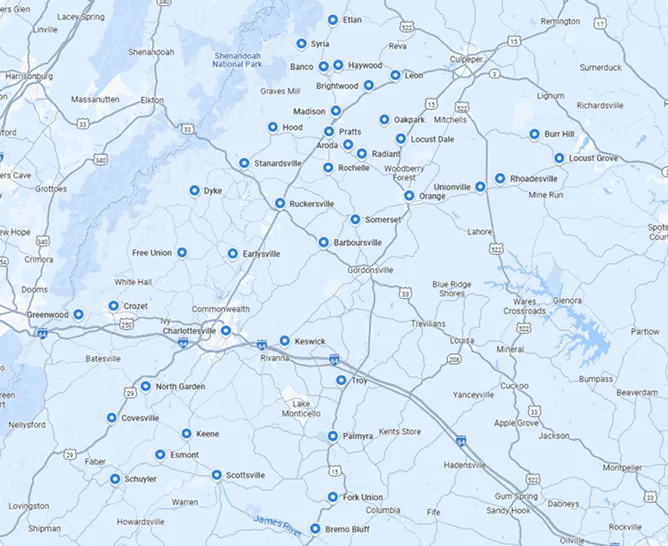
Service areas