


Choose an option to see quick actions and get help faster.
.svg)
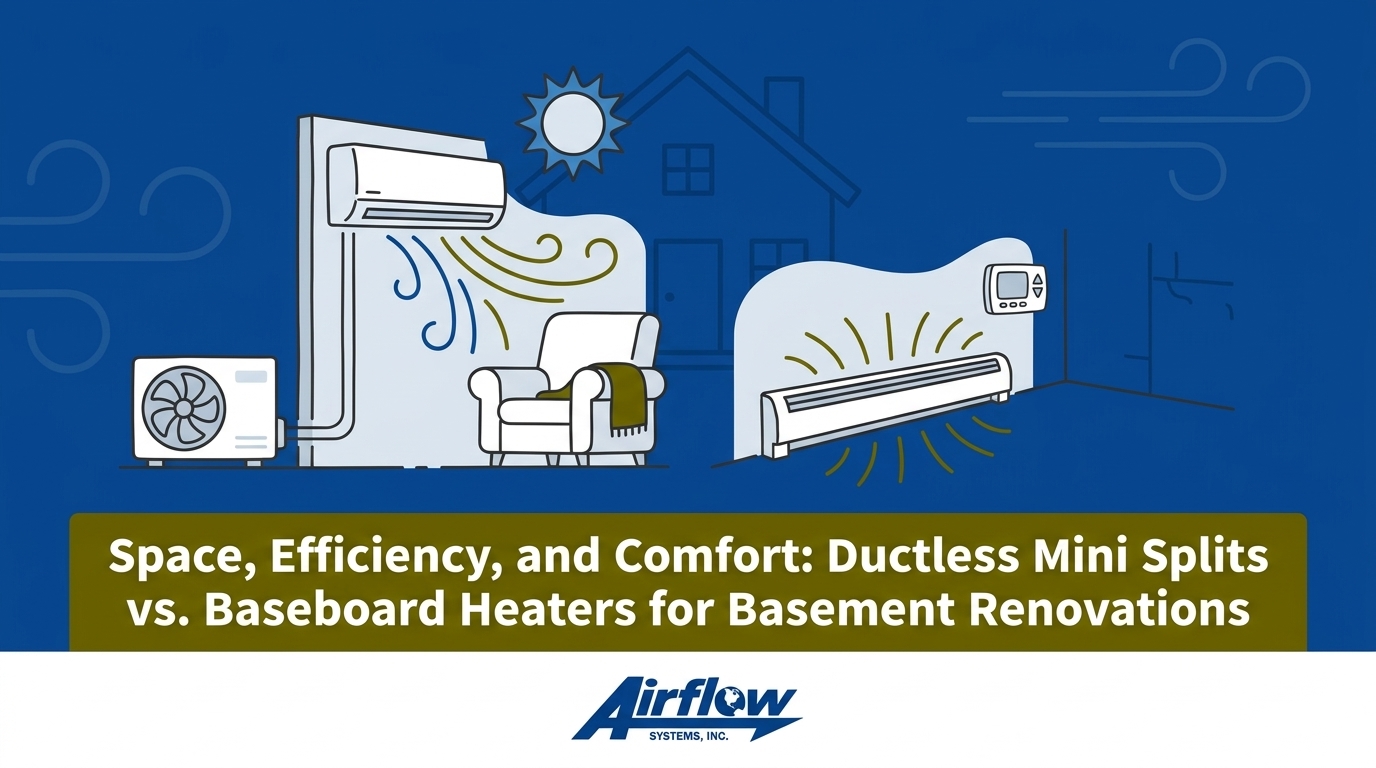
Why Your Fall Basement Renovation Demands a Strategic Heating Choice
At Airflow Systems, Inc., the biggest misconception we see homeowners face when weighing Ductless Mini Splits vs. Baseboard Heaters for Basement Renovations is the assumption that any standard electric strip is "good enough" for a newly finished space. Many homeowners pour their budget into high-end flooring, drywall, and custom lighting, only to treat the basement's climate control as an afterthought. This oversight inevitably leads to rooms that are too cold to use in January and too damp to enjoy in July.
As you finalize your project during the September pre-heating season, the urgency to lock in the right HVAC strategy cannot be overstated. Once the winter weather arrives, contractor schedules fill up with emergency repair calls, leaving renovation projects stalled. If you wait until the first freeze to realize your basement is uncomfortably chilly, retrofitting a proper system becomes significantly more difficult and disruptive to your newly finished walls.
This critical decision usually comes down to two primary contenders: traditional electric baseboard heaters and modern ductless mini splits. While both operate independently from your home's central furnace, our team consistently sees them deliver vastly different results when it comes to long-term operating costs, wall space preservation, and year-round comfort.
Choosing the right mini split system installation now prevents your significant remodeling investment from turning into a cold, unusable below-grade storage area. A strategic choice ensures that your new home theater, guest suite, or playroom remains just as comfortable as your main living floor, regardless of what the weather is doing outside.
Reclaiming Wall Real Estate: Furniture Placement and Aesthetics
When you finish a basement, every square foot of usable space matters. Below-grade footprints are often restricted by utility rooms, support columns, and stairwells, making layout planning a challenge. The physical footprint of your chosen heating system will dictate exactly where you can place your furniture, electronics, and decor.
Electric baseboard heaters require strict, non-negotiable clearances to operate safely and effectively. Because they rely on radiant heat and natural convection, they must sit at floor level and cannot be blocked. This severely limits your layout options in confined basement spaces. You cannot push a sofa flush against a wall with a baseboard heater. You cannot drape long curtains over them, and you certainly cannot place wooden entertainment centers or electronics directly in front of the heating element.
The quick fix: Elevating your climate control. Contrast the baseboard's limitations with ductless air handlers, which mount high up on walls or can even be recessed directly into the ceiling. By utilizing previously unused upper-wall space, ductless systems free up your valuable floor and lower-wall real estate.
Clearance Requirements Compared
In our years of serving the Charlottesville area, we've found that understanding the spatial demands of each system is critical for maximizing the return on investment of your basement renovation.
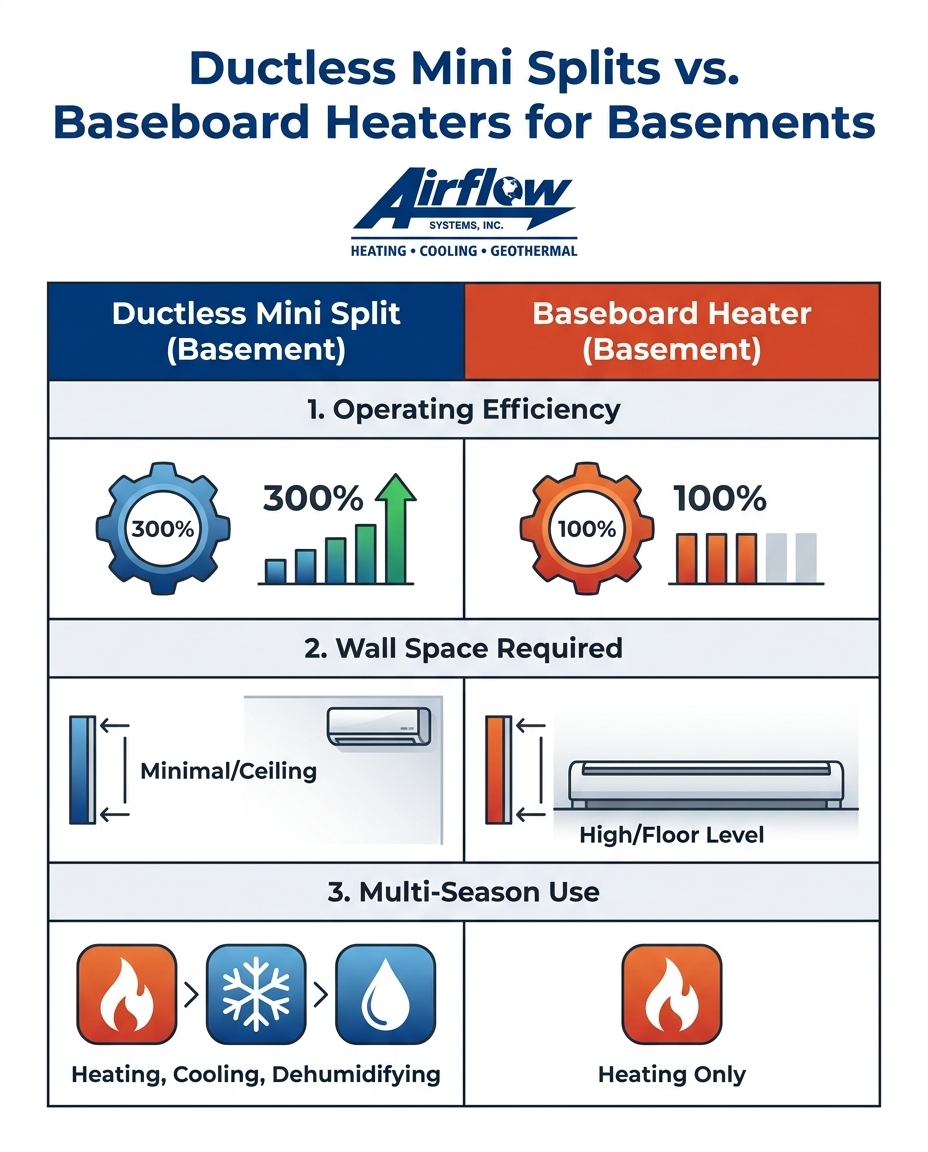
• Electric Baseboard — Wall Space Required: High (Runs along the bottom of the wall) — Furniture Clearance Needed: Minimum 12 inches in front, 6 inches to sides — Layout Impact: Severely restricts where couches, beds, and desks can go
• Ductless Mini Split — Wall Space Required: Minimal (Mounted high near the ceiling) — Furniture Clearance Needed: None at floor level — Layout Impact: Allows furniture to sit flush against any wall
Beyond physical space, the aesthetic impact is undeniable. Modern, sleek indoor mini-split units blend quietly into the background of a contemporary room. Traditional metal baseboard units, on the other hand, often look dated, collect visible dust, and are prone to denting if accidentally kicked or struck by a vacuum cleaner. Maximizing your usable space and maintaining a clean, modern aesthetic is a key component of a successful basement remodel.
Operating Efficiency Showdown: Managing Winter Utility Bills
The upfront material profile of an electric baseboard heater is undeniably low. However, evaluating a heating system solely on its initial hardware cost is a critical error that we see homeowners pay for every month on their utility bills. The stark difference in energy consumption between these two systems becomes glaringly obvious as soon as the temperature drops.
Electric resistance baseboard heaters operate at exactly 100% efficiency. While that number sounds impressive, it simply means that one unit of electricity is converted directly into one unit of heat. Because they generate heat through electrical resistance—much like the glowing coils inside a standard toaster—they require a massive, continuous draw of electrical power to warm a large, uninsulated basement space.
Heat pumps, conversely, do not generate heat from scratch. Instead, they operate by moving existing heat energy from one place to another through a closed-loop refrigerant cycle. Even in the dead of winter, ambient heat energy exists in the outside air. A ductless heat pump absorbs this energy, compresses it to a higher temperature, and transfers it directly into your basement. Because moving heat requires far less electricity than creating it, heat pumps can deliver up to three times more heat energy to a room than the electrical energy they consume.
Our technicians recently helped a local homeowner who experienced this exact inefficiency during a bitter winter when temperatures plummeted. Their old, inadequate heating system struggled to keep up with the cold, leading to shockingly high utility bills. After our team upgraded them to a modern AC and heat pump system, they found their home stayed consistently comfortable year-round, and their monthly electric bills were effectively cut in half.
While baseboards might seem cheaper at the hardware store, the long-term operational cost savings of a heat pump quickly offset the initial difference. Furthermore, general federal tax credits or local utility rebate programs may apply to qualifying high-efficiency heat pump installations, improving the long-term financial value of the upgrade even further. Securing these installations during the September pre-heating season ensures your system is dialed in before the heavy winter usage begins.
Solving the Damp Basement: Dehumidification and Summer Cooling
One of the major flaws in choosing baseboard heaters for a below-grade space is that they are strictly single-season appliances. Once winter ends, a baseboard heater sits entirely dormant, offering absolutely no relief from the heat and humidity that plagues basements throughout the warmer months.
Here in Charlottesville, our team knows firsthand that the specific mix of cold, damp winters and humid summers makes below-grade moisture control a year-round necessity, not just a seasonal luxury. Because basements are surrounded by cool earth, any humid air that makes its way downstairs quickly condenses against the cool concrete foundation walls. This condensation leads to musty odors, damp carpets, and eventual drywall damage if left unmanaged.
Ductless systems provide a comprehensive, multi-season solution to this exact problem. By reversing their refrigerant cycle, heat pumps become highly efficient air conditioners during the summer. More importantly, they feature built-in dehumidification modes (often labeled as "Dry Mode") that actively extract excess below-grade moisture without overcooling the room.
Multi-season benefits of a ductless system include:
• Active Dehumidification: Pulls gallons of moisture out of the air daily, protecting your drywall, furniture, and flooring from dampness.
• Dedicated Cooling Zoning: Provides a separate thermostat for the basement, so you aren't forced to freeze the upstairs bedrooms just to cool the downstairs living area.
• Air Filtration: Continuously circulates and filters the basement air, removing dust and airborne particles that settle in lower levels.
• Seamless Integration: Avoids the cumbersome and noisy alternative of comparing mini splits to window units or emptying heavy, portable dehumidifier buckets every day.
By addressing both temperature and moisture simultaneously, a mini-split ensures your basement renovation remains a comfortable, inviting space regardless of the humidity index outside.
Safety and Maintenance in Newly Finished Below-Grade Spaces
When designing a space that will likely be used as a family room, home theater, or children's playroom, evaluating the safety profiles of your equipment is a top priority. Baseboards and elevated ductless units present entirely different safety considerations and upkeep requirements.
Electric baseboard heaters generate intense, concentrated heat along their metal fins. These units can become incredibly hot to the touch, presenting a direct burn risk in areas with crawling infants, toddlers, or curious pets. Furthermore, because they sit directly on the floor, they are highly susceptible to fire hazards. A stray blanket, a dropped piece of clothing, or improperly placed furniture resting against an active baseboard can quickly create a dangerous situation.
Elevated ductless air handlers eliminate these ground-level risks entirely. Mounted high on the wall or ceiling, the equipment remains completely out of reach of children and pets. The unit itself remains cool to the touch, dispersing conditioned air evenly throughout the room without creating hazardous hot spots.
Maintenance routines also differ significantly between the two technologies:
• Baseboard Maintenance: Requires frequent, careful vacuuming of the delicate metal fins. If dust, pet hair, and debris are allowed to accumulate inside the heating element, it not only reduces efficiency but creates a distinct burning smell when the unit cycles on.
• Ductless Maintenance: Involves simply popping the front panel open and rinsing the reusable, washable air filters in the sink every few weeks. No delicate metal fins are exposed to the living space.
Proper airflow maintenance ensures either system operates safely. However, the elevated nature and enclosed design of a mini-split make it the inherently safer, lower-maintenance option for a busy Charlottesville household.
Installation Timelines for Your Autumn Remodel
Timing your HVAC installation correctly is a critical element of project management. September is widely considered the ideal pre-heating season window to finalize basement HVAC installations. During this brief transition period, you can schedule extensive work before contractor availability vanishes entirely under the weight of winter emergency calls.
We recently worked with a client who found themselves pressed for time due to a strict real estate contract. They needed a reliable heating and cooling solution installed quickly to finalize the property. Our installation team was able to route and mount the new system promptly, leaving them with an ultra-efficient setup that worked better than they originally anticipated. This kind of swift, non-invasive installation is a hallmark of ductless technology.
Installing a ductless mini-split is surprisingly straightforward and preserves the hard work you've already put into your remodel. Rather than tearing up newly finished drywall to run bulky ductwork, the system requires only a small, three-inch hole through the exterior wall. This connects the indoor air handler to the outdoor compressor via a slim conduit containing the refrigerant lines and power cables.
How our licensed technicians handle a non-invasive installation:
1. Load Calculation: Our team evaluates the basement's square footage, insulation levels, and layout to select the correct unit size.
2. Mounting the Bracket: We secure the indoor mounting plate to a wall stud, requiring no major drywall demolition.
3. Routing the Line Set: A small hole is drilled through the rim joist or exterior wall to pass the refrigerant and electrical lines outside.
4. Connecting the Compressor: The outdoor unit is safely placed on a small pad and connected to the indoor handler, completing the closed loop.
Contrast this with the electrical routing required for baseboards. Heating a large basement often requires multiple baseboard units, each demanding dedicated 240V circuits routed from the main electrical panel, through the joists, and down into the walls before the drywall is closed up.
Relying on local, independent Charlottesville HVAC expertise ensures your newly finished space is equipped with home heating solutions that meet regional efficiency standards. Securing these upgrades now prevents the frustrating delays that could stall your entire renovation project just as the holidays approach.
Frequently Asked Questions About Basement Heating Choices
Are mini splits more efficient than baseboard heaters?
Yes, mini splits are significantly more efficient than baseboard heaters. While baseboards convert electricity to heat at a 1:1 ratio (100% efficiency), mini splits use a refrigerant cycle to move existing heat into the room. This allows them to deliver up to three times more heat energy than the electricity they consume, drastically lowering winter utility bills.
What is the best way to heat a finished basement?
The best way to heat a finished basement is typically with a ductless mini-split heat pump. This system operates independently from your main central HVAC, allowing you to control the basement temperature precisely. It frees up floor space, operates quietly, and provides the added benefit of summer cooling and dehumidification.
Do mini splits dehumidify basements?
Yes, mini splits are excellent at dehumidifying below-grade spaces. Most modern ductless systems feature a dedicated "Dry Mode" that actively pulls excess moisture out of the air. In a humid climate like Charlottesville, this continuous moisture control prevents dampness, musty odors, and potential damage to your newly finished drywall and flooring.
Can a mini split heat a basement effectively in extreme cold?
Modern cold-climate heat pumps are engineered to heat effectively even when outdoor temperatures drop well below freezing. Advanced inverter technology allows the compressor to extract ambient heat from the outside air down to sub-zero temperatures, ensuring your basement remains warm and comfortable through the harshest winter nights.
Do I need special electrical upgrades to replace baseboard heaters with a mini split?
Mini splits generally require a dedicated 220V or 110V circuit, depending on the unit's size, routed to the outdoor compressor. If you are replacing existing electric baseboards, your electrical panel likely already has the necessary capacity. An HVAC professional can easily repurpose the existing breaker space to power the new, highly efficient outdoor unit.
Finalize Your Basement Upgrade Before Winter Arrives
While traditional electric baseboards might seem like a quick fix at the hardware store, they fall short when it comes to maximizing the potential of your newly finished space. Ductless systems clearly offer superior space utilization, significantly lower operating costs, and the vital year-round comfort of added summer cooling and dehumidification.
As the September pre-heating season winds down, finalizing your plans now ensures your basement is warm, dry, and ready for family use before the harsh winter weather arrives. Don't let your renovation investment turn into a damp, freezing storage room. Schedule a professional consultation with Airflow Systems, Inc. today to evaluate your basement layout and discover how a strategic upgrade will deliver a comprehensive combination of operating efficiency, comfort, and space utilization that perfectly satisfies your home's needs.
Book Expert Service Or Contact Us
Our Service Process
A Hassle-Free Service Experience
01
Consultation & Diagnosis
We start by listening to your needs and performing a thorough diagnosis of your system to recommend the best solution.
02
Transparent Quoting
We provide a clear, upfront estimate with no hidden fees, so you know exactly what to expect.
03
Expert Service & Follow-Up
Our factory-trained technicians complete the work to the highest standards, and we follow up to ensure your complete satisfaction.
testimonials
What Our Customers Are Saying
Our customers consistently praise our exceptional service and attention to detail, making us a trusted choice for all your HVAC needs.
where we operate
Service areas