

Choose an option to see quick actions and get help faster.
.svg)
Understanding How Heat and Humidity Drive Up Your Cooling Costs
How heat and humidity drive up your cooling costs is one of the most important things to understand as a homeowner in Central Virginia — especially when summer arrives and your electric bill suddenly jumps. Here is a quick breakdown of exactly what is happening:
• Humidity forces your AC to do two jobs at once — lower the air temperature and remove moisture from the air
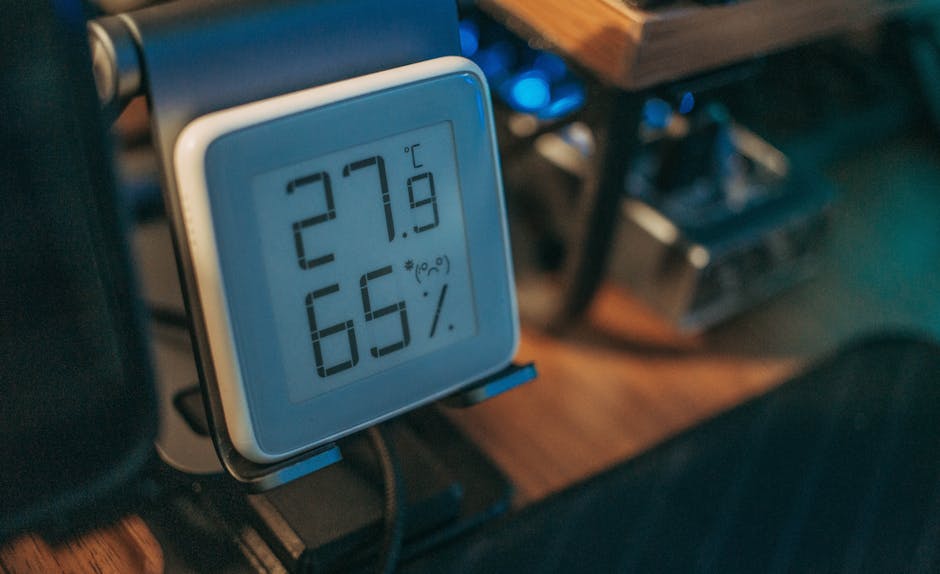
• Damp air feels warmer — 75°F at 70% relative humidity can feel like 78–80°F, pushing you to turn the thermostat down
• Every degree lower costs more — dropping your thermostat one degree adds roughly 6–8% to your cooling bill
• High humidity makes your AC run longer — extended cycles mean more energy used and more wear on your system
• Removing moisture takes enormous energy — cooling a 2,200 sq ft home from 75°F at 80% humidity to a comfortable 70°F at 50% humidity requires more than twice the energy compared to starting at lower humidity levels
Charlottesville, VA and the surrounding Central Virginia region regularly see summer humidity levels above 70%, which means your air conditioning system is fighting a two-front battle every single day from June through September.
Most homeowners focus entirely on temperature. They set the thermostat, hear the AC kick on, and assume the system is handling everything. But temperature is only half the story. The moisture hanging in the air — invisible and easy to ignore — is quietly driving your energy use up, stressing your equipment, and making your home feel uncomfortable even when the numbers on the thermostat look fine.
Think of a typical muggy July afternoon in Charlottesville. The thermometer reads 75°F inside, but the air still feels heavy and sticky. That is not your imagination. That is humidity at work, and it is costing you real money every hour your system runs.
The good news is that once you understand the science behind it, there are clear, practical steps you can take to bring those costs back down.

To get a handle on your bills, we first need to look at the invisible physics happening inside your home. In HVAC, we talk about two different types of heat: sensible heat and latent heat. Sensible heat is what you see on the thermometer—it’s the actual temperature of the air. Latent heat, however, is the energy stored in water vapor.
When your air conditioner pulls air across the evaporator coil, it isn't just cooling the air. It’s also performing a condensation process. As warm, moist air hits that cold coil, the water vapor turns back into liquid water (just like the beads of sweat on a cold glass of sweet tea). This phase change releases energy, and your AC has to work to absorb that extra heat. This is why high relative humidity makes your system work twice as hard; it has to deal with the temperature and the water.
The energy penalty of high moisture levels
The energy difference between cooling dry air and humid air is staggering. Let’s look at a real-world watt-hour comparison for a typical 2,200-square-foot home in Central Virginia.
If your home starts at 75°F with a relative humidity (RH) of 80%, it requires roughly 4,475 Wh of energy to reach a comfortable 70°F and 50% RH. However, if your home was already at a drier 50% RH, reaching that same 70°F goal would only take 2,101 Wh.
• 75°F / 80% RH (Humid) — Target Conditions: 70°F / 50% RH — Energy Required: 4,475 Wh
• 75°F / 50% RH (Dry) — Target Conditions: 70°F / 50% RH — Energy Required: 2,101 Wh
Starting with humid air requires more than twice the energy! This happens because your system must spend the first part of its cycle removing that "latent heat" before it can effectively lower the "sensible" air temperature.
The Physics of Comfort: Why Damp Air Feels Hotter
We’ve all heard the phrase, "It’s not the heat, it’s the humidity." While it’s a cliché, it is scientifically accurate. The human body cools itself through sweat evaporation. When moisture evaporates off your skin, it carries heat away, providing biological cooling.
However, when the air is already saturated with water (high vapor pressure), your sweat can’t evaporate. It just sits there, leaving you feeling "sticky" and "muggy." This is what we call the apparent temperature or the heat index.
When the air is damp, your body can't shed heat efficiently, so you feel much hotter than the room actually is. If you find yourself constantly feeling clammy, it might be time for indoor air quality testing to see if your home is trapping too much moisture. Understanding this is key to getting your air conditioner ready for hot humid weather, as comfort is about more than just a number on a wall.
How heat and humidity drive up your cooling costs by affecting the heat index
The "felt" temperature is what usually leads to the biggest spike in your electric bill: thermostat adjustments.
When a room is 75°F at 50% humidity, it feels like a pleasant 76°F. But if that same 75°F room has 70% humidity, it can feel like 78°F to 80°F. Most homeowners respond to that sticky feeling by walking over to the thermostat and bumping it down several degrees.
This is a costly habit. Industry data shows that every single degree you lower your thermostat increases your energy costs by 6-8%. If you drop the temperature by four degrees to compensate for the humidity, you could be looking at a 25-30% jump in your monthly bill. Using smart thermostats can help manage these shifts, but the root cause remains the moisture in the air.
The Hidden Strain on Your HVAC System
Beyond the immediate hit to your wallet, how heat and humidity drive up your cooling costs involves the long-term health of your equipment. High humidity increases the refrigerant pressure within your system, forcing the compressor—the heart of your AC—to work much harder.
This extra stress leads to premature component wear and can significantly shorten the system longevity of your unit. If your system is struggling, you might start hearing AC making strange noises, which is often a sign of mechanical strain from overwork. In these cases, a professional AC repair is necessary to prevent a total breakdown during a Charlottesville heatwave.
Why high humidity drives up your cooling costs through longer cycles
Air conditioners are designed to run in cycles. To effectively remove moisture, a system needs to run for a significant amount of time so the coils stay cold enough to cause condensation.
However, high humidity often leads to longer runtimes, where the unit stays on for hours just to keep up with the moisture load. On the flip side, some homes suffer from oversized units. A "bigger" AC might cool the room temperature down very quickly and then shut off (known as short-cycling). Because it didn't run long enough, it never had a chance to remove the humidity, leaving you in a home that is cold but damp—the "cave effect."
Maintaining a consistent maintenance plan ensures your system is sized correctly and operating at the right cycle length to balance both temperature and moisture.
Negative impacts beyond the electric bill
The costs of high humidity aren't always found in the utility bill. Excess moisture is an invitation for:
• Mold and mildew growth in closets, basements, and behind furniture.
• Musty odors that linger in the air and fabrics.
• Ductwork condensation, which can lead to water damage or mold inside your ventilation.
• Structural damage, such as wood floors warping or door frames swelling.
Catching these signs your AC needs repair before summer can save you thousands in remediation costs down the road.
Strategies to Control Moisture and Lower Energy Bills
Now that we know the problem, how do we fix it? The goal for any Central Virginia home should be a 30-50% relative humidity target. Achieving this allows you to set your thermostat higher while remaining perfectly comfortable.
Start with the basics:
1. Use exhaust fans in the kitchen and bathroom to vent moisture directly outside.
2. Seal air leaks around windows and doors with fresh weatherstripping to keep the Virginia humidity where it belongs—outdoors.
3. Check your ventilation to ensure your home isn't "breathing" in too much humid air through the attic or crawlspace.
For many homeowners, a heat pump installation is a great way to upgrade to a system that is inherently better at managing moisture than older, traditional models.
Advanced technology for humidity management
Modern HVAC technology has come a long way in fighting the "swelter." In 2026, we are seeing incredible results from:
• Variable Capacity Systems: Unlike older units that are either "on" or "off," these systems can run at lower speeds for longer periods, acting as a constant, high-efficiency dehumidifier.
• Dehumidifying Heat Pipes: These are specialized components that pre-cool the air before it hits the evaporator coil, allowing for maximum moisture removal without over-cooling the room.
• SEER2 Standards: New federal efficiency regulations ensure that modern systems are tested under real-world pressures, meaning they are better equipped to handle the humid Southeast climate.
If you find your AC not cooling properly, it might not be a broken part—it might simply be an outdated system that can't handle the modern humidity loads of a Central Virginia summer.
Frequently Asked Questions about Humidity and Cooling
What is the ideal indoor humidity for Central Virginia homes?
For most homes in Charlottesville and the surrounding areas, the "sweet spot" is between 30% and 50% relative humidity. This range is high enough to prevent dry skin and static electricity, but low enough to stop mold growth, inhibit dust mites, and ensure your AC runs efficiently.
Can an oversized AC actually make my home feel more humid?
Yes! This is a very common issue. An oversized unit has too much "sensible capacity" (cooling power) and not enough "latent capacity" (drying power). It hits the temperature goal so fast that it shuts down before it can pull the water out of the air. This results in that "cold and clammy" feeling that is both uncomfortable and expensive.
How does a whole-home dehumidifier save energy?
A whole-home dehumidifier works alongside your HVAC system to take over the "moisture job." By handling the humidity independently, it allows your AC to focus solely on the temperature. This can lead to a 35% reduction in cooling costs because you can comfortably set your thermostat 3 or 4 degrees higher without feeling any warmer.
Benefits of a whole-home dehumidifier include:
• Lower monthly energy bills
• Protection for wood furniture and flooring
• Improved air quality and reduced allergens
• Extended lifespan for your main AC unit
Conclusion
At Airflow Systems Inc., we’ve been helping our neighbors in Charlottesville and Central Virginia stay comfortable since 1988. As a family-owned business, we know exactly how the local climate can stress your home and your budget. We believe in honest service and using the latest technology to solve the "Science of the Swelter."
Understanding how heat and humidity drive up your cooling costs is the first step toward a more efficient home. Whether you need a simple tune-up, a humidity assessment, or a new air conditioning system, our certified professionals are here to help you find the right balance of comfort and savings.
Book Expert Service Or Contact Us
Our Service Process
A Hassle-Free Service Experience
01
Consultation & Diagnosis
We start by listening to your needs and performing a thorough diagnosis of your system to recommend the best solution.
02
Transparent Quoting
We provide a clear, upfront estimate with no hidden fees, so you know exactly what to expect.
03
Expert Service & Follow-Up
Our factory-trained technicians complete the work to the highest standards, and we follow up to ensure your complete satisfaction.
testimonials
What Our Customers Are Saying
Our customers consistently praise our exceptional service and attention to detail, making us a trusted choice for all your HVAC needs.
where we operate
Service areas