


Choose an option to see quick actions and get help faster.
.svg)
Why the Single Zone vs Multi Zone Mini Split Comparison Matters for Your Home
The single zone vs multi zone mini split comparison is one of the most common questions homeowners face when upgrading their home comfort — and for good reason. The right choice can mean the difference between a system that fits your home perfectly and one that wastes energy or leaves certain rooms uncomfortable.
Here is a quick breakdown to answer the core question:
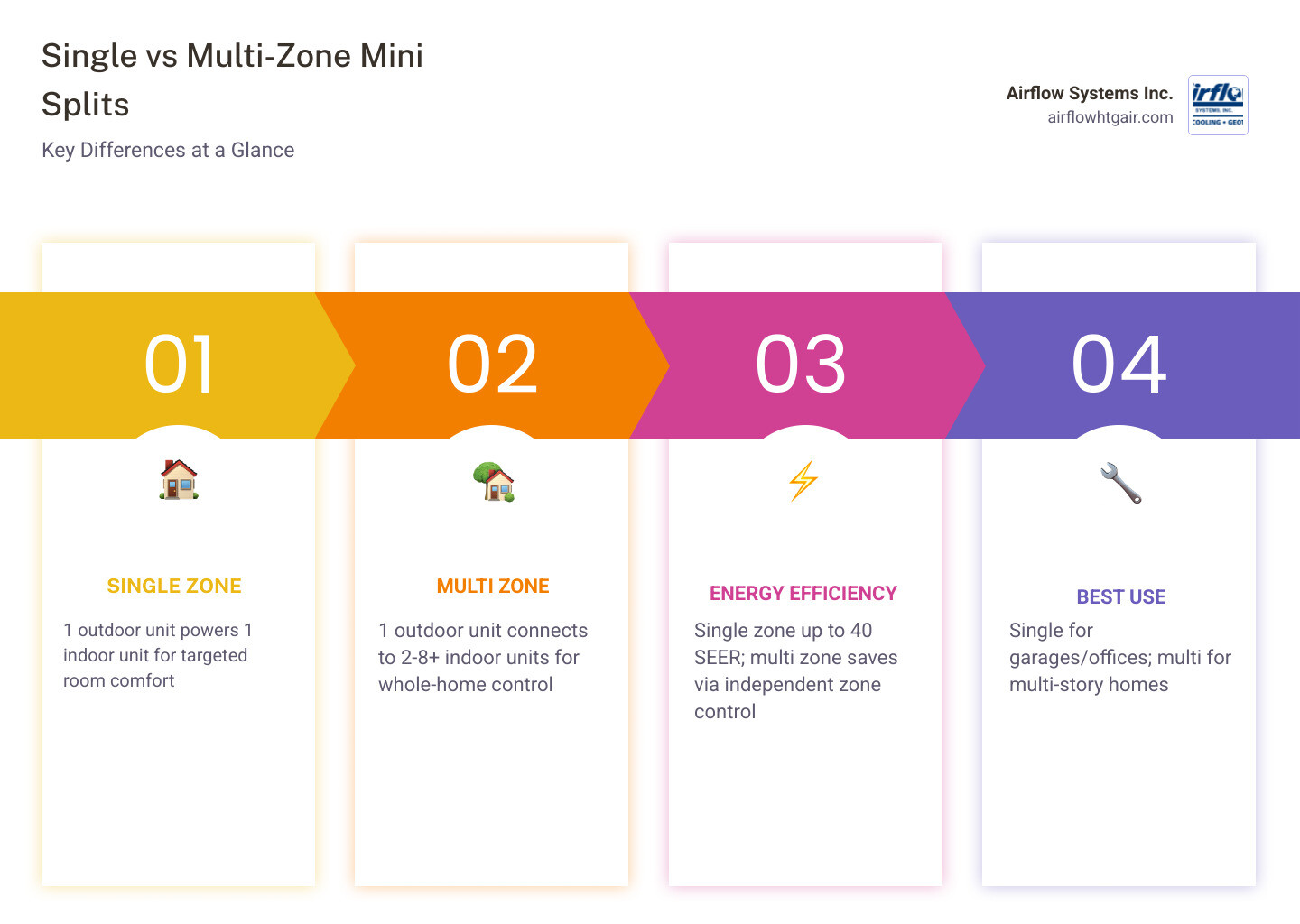
| Feature | Single Zone | Multi Zone |
|---|---|---|
| Outdoor units | 1 per room | 1 shared unit |
| Indoor units | 1 | 2 to 8+ |
| Best for | 1 room or space | Multiple rooms |
| Control | One thermostat | Independent per room |
| Installation complexity | Simple | More complex |
| Energy efficiency | Very high SEER (up to 40) | Slightly lower per unit, but zone savings |
| Upfront cost | Lower | Higher |
| Ideal use case | Garage, office, sunroom | Multi-story home, whole-home comfort |
Mini splits in general are a smart upgrade from traditional ducted systems, which can lose up to 25% of their energy through leaky ductwork. Ductless systems eliminate that waste entirely. But choosing between a single zone and a multi zone setup depends on your home's layout, your comfort goals, and how many spaces you need to heat or cool.
Whether you are dealing with one room that never gets comfortable or a whole house with different temperature needs on every floor, there is a mini split configuration designed for your situation.
Understanding the Basics: Single Zone vs Multi Zone Mini Split Comparison
At its core, a mini split system is a heat pump that moves heat into or out of your home using refrigerant. Unlike a traditional furnace or central AC, it doesn't need bulky metal ducts to get the job done. Instead, it uses a small conduit—requiring only a 3-inch hole in the exterior wall—to connect the outdoor compressor to the indoor air handler.

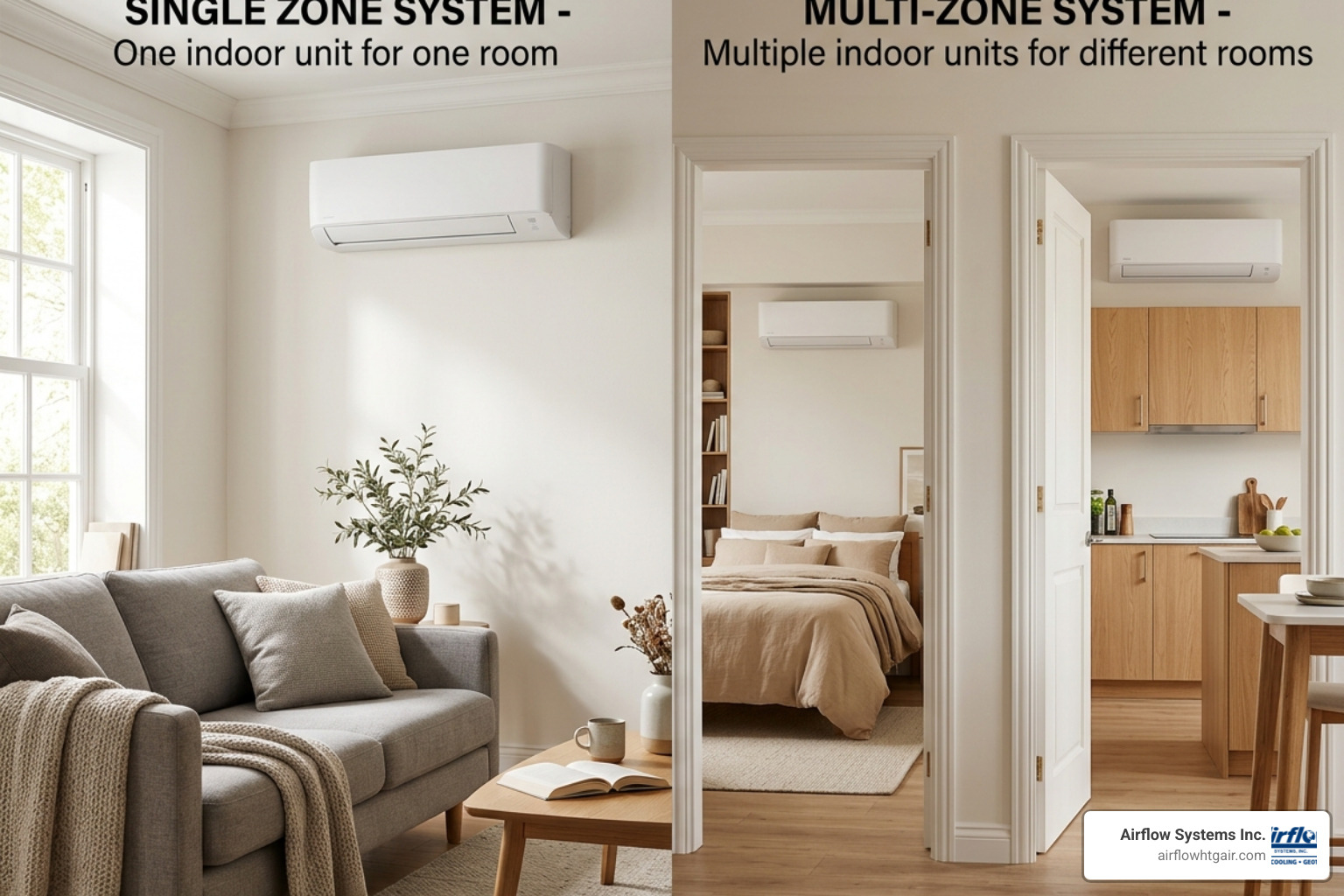
When we look at the single zone vs multi zone mini split comparison, we are really looking at how many indoor units are connected to that one outdoor compressor.
- Single Zone Systems: These consist of one outdoor unit paired with exactly one indoor air handler. They are designed to condition the air in one specific area. Because the outdoor unit is perfectly matched to the indoor unit’s load, these systems often achieve the highest possible efficiency ratings.
- Multi Zone Systems: These feature a single, larger outdoor condenser that powers multiple indoor units (anywhere from two to eight, depending on the model). Each indoor unit has its own thermostat, allowing you to set the bedroom to 68 degrees while keeping the living room at 72.
Both configurations utilize advanced inverter technology. Think of it like a dimmer switch for your HVAC. Instead of the system being "all on" or "all off," the inverter allows the compressor to speed up or slow down to maintain a precise temperature. This results in incredibly quiet operation and significant energy savings for Charlottesville homeowners. For a deeper dive into the mechanics, you can read more about Ductless Mini-Split Systems Explained.
When a Single Zone System is the Right Choice
A single zone system is the "surgical" solution for home comfort. It is designed to solve a specific problem in a specific space without affecting the rest of the house.
In our experience serving Central Virginia, we find single zone setups are the champion of the "problem room." Common scenarios include:
- Home Offices: With more people working from home in 2026, many Charlottesville residents have converted spare rooms into offices. These rooms often get hot from computers and equipment. A single zone unit provides targeted cooling right where you need it.
- Sunrooms and Attic Conversions: These spaces are notoriously difficult to heat and cool with a central system. A single zone mini split can handle the extreme heat of a July afternoon in Virginia without straining your main HVAC.
- Garage Workshops: If you spend your weekends tinkering in the garage, a single zone unit can make that space usable year-round.
- Small Additions: When you add a room, extending ductwork is often expensive and inefficient. A single zone mini split is often the simplest way to add climate control.
Single zone units are famous for their high SEER2 (Seasonal Energy Efficiency Ratio) ratings, sometimes reaching as high as 40 SEER. This makes them significantly more efficient than window units. If you are debating between the two, check out our Mini-split vs Window Unit Comparison. They also have a very compact footprint, making them easy to tuck away on the side of your home. To see if your specific room is a candidate, look at our guide on the Best Rooms for a Mini-Split System.
The Advantages of Multi Zone Mini Split Systems
If you need to condition multiple rooms or an entire floor of your home, the single zone vs multi zone mini split comparison leans heavily toward the multi zone side. This is the ultimate "whole-home" solution that offers a level of customization that central air simply cannot match.
The primary advantage is zone control. In a traditional home, everyone has to agree on one temperature for the whole house. With a multi zone system, the "thermostat battles" end. Each indoor unit acts as its own zone with its own remote or smart control.
- Multi-Story Homes: Heat rises, making upstairs bedrooms uncomfortable while the downstairs remains chilly. A multi zone system allows you to balance this perfectly.
- Basement Apartments: If you have a tenant or an in-law suite, they can control their own comfort without affecting your settings upstairs.
- Energy Savings through Usage: You can turn off the units in guest rooms or the dining room when they aren't being used, which can significantly lower your monthly utility bills.
- Reduced Outdoor Clutter: Instead of having four or five separate outdoor units lining your home's exterior, you only have one. This keeps your landscaping cleaner and minimizes noise outside.
When looking at Adding Cooling Without Ductwork: Options Compared, multi zone Mini Split Systems stand out for their scalability. While the installation is more complex—requiring multiple refrigerant lines and potentially branch boxes—the long-term comfort and flexibility are often worth the initial effort.
Key Considerations for Central Virginia Homeowners
Choosing between these two isn't just about the number of rooms; it's about how your home functions in the Charlottesville climate. We deal with damp winters and humid, warm summers, which makes humidity management a top priority.
| Feature | Single Zone | Multi Zone |
|---|---|---|
| Home Layout | Best for isolated rooms or open-concept studios. | Best for homes with many walls and separate rooms. |
| Redundancy | If one unit fails, only that room is affected. | If the outdoor unit fails, all connected rooms lose air. |
| Expansion | Harder to add to later; usually requires a new system. | Can often add more indoor units if the outdoor unit has extra ports. |
| Maintenance | One filter, one coil, simple annual check. | Multiple filters and units to clean; slightly more upkeep. |
In Central Virginia, we recommend homeowners consider the "load" of each room. A sun-drenched living room with vaulted ceilings has a much higher cooling demand than a shaded north-facing bedroom. A professional Mini Split assessment includes a "Manual J" load calculation to ensure your system is sized correctly. If a multi zone system is oversized, it might "short cycle," turning on and off too quickly, which fails to remove humidity from the air—leaving you feeling clammy even if the temperature is right.
With proper professional installation and regular maintenance, both systems can have a lifespan of 20 years or more.
Frequently Asked Questions
How many indoor units can a multi-zone system support?
Most residential multi zone outdoor condensers are designed to support between two and five indoor units. However, some high-capacity systems can support up to eight or even ten indoor air handlers. It is important to remember that the total BTU (British Thermal Unit) capacity of the indoor units should be matched to the capacity of the outdoor compressor. If you plan on adding zones later, we recommend installing an outdoor unit with extra ports from the start.
Is a single zone vs multi zone mini split comparison relevant for energy efficiency?
Yes, but the "winner" depends on how you use the system. Single zone units often boast higher individual SEER2 and HSPF2 (Heating Seasonal Performance Factor) ratings because the components are perfectly tuned to one another. However, a multi zone system can be more efficient for a whole house because it allows you to stop conditioning unused spaces. By only cooling the rooms you are currently in, you avoid the 25-30% energy loss common in traditional ducted setups. Both rely on inverter technology to maximize every watt of electricity. Check out our Mini Split Systems page for more on efficiency.
What is the best single zone vs multi zone mini split comparison for small homes?
For a small home with an open floor plan, like a studio or a small cabin, a single zone system is often sufficient. If the air can flow freely between spaces, one powerful wall-mounted unit (perhaps assisted by a ceiling fan) can keep the entire square footage comfortable. However, if that small home has separate bedrooms with closed doors, a multi zone system is necessary to ensure every room reaches the desired temperature. You can explore more about room-specific needs in our guide on the Best Rooms for a Mini-Split System.
Conclusion
Deciding on the single zone vs multi zone mini split comparison comes down to your unique home and how you live in it. If you have one stubborn room that is always too hot or too cold, a single zone unit is a fast, efficient, and cost-effective fix. If you are looking for a comprehensive way to bring modern comfort to your entire home while ending the thermostat wars, a multi zone system is the way to go.
At Airflow Systems Inc., we’ve been helping our neighbors in Charlottesville and Central Virginia find the perfect HVAC solutions since 1988. As a family-owned business, we pride ourselves on honest service and local expertise. We can help you navigate the technical details of port capacities, BTU loads, and SEER ratings to ensure you get a system that keeps you comfortable for decades to age.
Ready to transform your home comfort? Explore our Mini Split Systems or reach out to us today for a professional home assessment.
Book Expert Service Or Contact Us
Our Service Process
A Hassle-Free Service Experience
01
Consultation & Diagnosis
We start by listening to your needs and performing a thorough diagnosis of your system to recommend the best solution.
02
Transparent Quoting
We provide a clear, upfront estimate with no hidden fees, so you know exactly what to expect.
03
Expert Service & Follow-Up
Our factory-trained technicians complete the work to the highest standards, and we follow up to ensure your complete satisfaction.
testimonials
What Our Customers Are Saying
Our customers consistently praise our exceptional service and attention to detail, making us a trusted choice for all your HVAC needs.
where we operate
Service areas