

Choose an option to see quick actions and get help faster.
.svg)
The Reality of Winter Grid Outages for Central Virginia Homes
Your standby generator kicks on during a freezing winter night, but the moment your heat pump tries to start, the whole system overloads and goes dark. Preparing rural properties in Orange and Keswick for winter power reliability is a critical priority for homeowners who live beyond the reach of the main city grids. When severe weather hits, being situated at the end of a rural utility line means you are often the last to see power restored. While many homeowners assume that purchasing a standard standby generator is a foolproof solution for winter outages, the reality of running heavy-draw residential heating equipment on off-grid power is far more complex. Evaluating your generator's compatibility with your HVAC system is a crucial decision point that must be addressed long before freezing temperatures arrive.
Need immediate assistance with your heating systems? Our team is ready to help you secure your off-grid comfort.
The False Security of Oversized Generators
A typical pattern we see is homeowners investing heavily in large portable or standard standby generators, assuming the sheer wattage rating will easily cover their winter heating needs. However, the challenge of running heavy-draw heating equipment on residential standby generators is rarely about the continuous running power. Instead, the vulnerability lies in the massive, instantaneous spike of electricity required to jump-start a compressor in freezing weather.
For homes located along the Orange and Keswick end-of-grid rural routes, a generator failure during a winter storm isn't just an inconvenience; it is a serious risk to the property. Strategic HVAC modifications offer a much more reliable and efficient solution than simply attempting to buy an excessively oversized generator. By addressing how the heating system consumes power, rather than just throwing more raw power at the problem, you can build a resilient, winter-ready home that stays warm regardless of what is happening on the main utility lines.
Understanding the Vulnerability of End-of-Grid Infrastructure
Living in the beautiful, wooded landscapes of Central Virginia comes with specific infrastructural trade-offs. The local power grid operates like a circulatory system, with high-capacity transmission lines acting as the main arteries and smaller, rural routes functioning as the capillaries. When you live at the very end of one of these lines, the quality and reliability of your electrical supply behave differently than they do in a dense suburban subdivision.
The Physics of Rural Power Delivery
To truly prepare your property, you have to understand the specific localized grid challenges that make standard heating setups struggle during extended outages. Heavily wooded rural routes are statistically far more vulnerable to infrastructure damage.
• Tree-fall line damage: Central Virginia's heavy, wet snow and ice storms frequently coat the branches of towering pines and oaks, causing them to snap and take down local distribution lines.
• Voltage drop realities: The concept of "end-of-grid" voltage drop means that properties furthest from the substation already experience slightly lower voltage under normal conditions. This compounds dramatically with heavy electrical draws from home appliances.
• Multi-day restoration times: Because utility companies prioritize repairs that restore power to the largest number of customers simultaneously, remote rural routes are often scheduled last, making long-term generator-HVAC compatibility essential.
As an independent, locally-owned provider, Airflow Systems brings a localized authority to this issue. We understand the specific grid behavior of Orange and Keswick rural routes because we work on them every day. We know that a minor flicker in town can mean a multi-day blackout for homes just a few miles away. This localized knowledge is exactly why we emphasize optimizing your home's heating equipment to interact safely with backup power sources. If you ever find yourself needing emergency HVAC support during Orange grid spikes, knowing how your system responds to fluctuating voltage is half the battle.
Locked Rotor Amps vs. Running Watts: What Overloads Your Generator
To understand why standard generators fail during winter outages, we have to look at the technical mechanics of how a heat pump or air conditioner consumes electricity. The numbers printed on the side of your generator rarely tell the whole story when it comes to HVAC compatibility. The core issue boils down to the massive difference between the power required to keep a system running and the power required to wake it up.
The Surge That Trips the Breaker
Every electric motor in your heating system has two distinct electrical ratings that dictate its behavior on off-grid power:
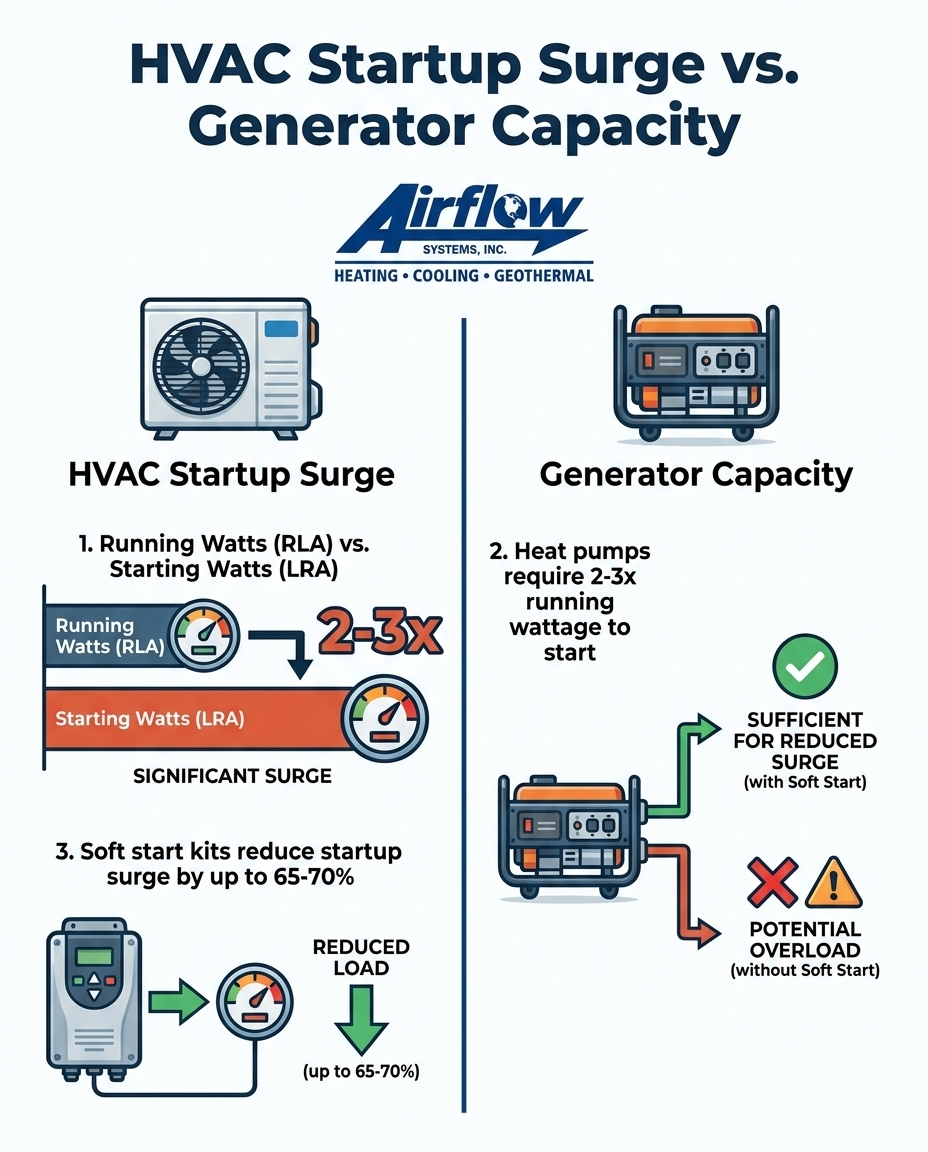
• Running Watts (RLA) — What It Means: Rated Load Amps: The continuous amount of electricity required to keep the compressor and blower motor running smoothly once started. — Impact on Backup Generators: Usually well within the capacity of a standard home standby generator.
• Starting Watts (LRA) — What It Means: Locked Rotor Amps: The massive, instantaneous surge of electricity required to break the physical inertia of the dormant compressor. — Impact on Backup Generators: Often exceeds the maximum surge capacity of the generator, causing immediate overloads and tripped breakers.
Heat pumps and air conditioners typically require two to three times their running wattage just to start up. If your heat pump requires 3,000 watts to run, it might demand a sudden spike of 9,000 watts for a fraction of a second to get the compressor moving. This sudden LRA surge is the primary cause of generator overloads and tripped breakers during an outage.
When a generator is hit with an LRA demand that exceeds its alternator capacity, the voltage drops drastically. This brownout condition forces the HVAC compressor to strain against locked inertia, generating immense heat and potentially causing permanent electrical damage to both the generator and the heating equipment. Addressing this startup surge is a non-negotiable step in any heat pump installation designed for off-grid reliability. The September pre-heating season transition is the perfect time to evaluate these metrics, ensuring your generator's surge rating actually aligns with your equipment's LRA requirements.
Taming the Surge: Professional Soft Start Kit Solutions
If your current heat pump's Starting Watts exceed your generator's capacity, you do not necessarily have to replace the entire heating system or buy a massive industrial generator. The most effective, targeted solution to resolve generator overload issues is the integration of a professional soft start kit.
How a Soft Start Kit Protects Your Grid
A soft start kit is an advanced electronic device wired directly into the compressor circuit of your outdoor unit. Unlike a basic capacitor that just dumps raw energy into the motor, a soft starter intelligently manages the electrical draw. Here is exactly how it alters the power demand during an outage:
1. Current Staging: Instead of allowing the compressor to demand its full Locked Rotor Amps instantly, the soft starter micro-stages the electrical current, ramping it up over several milliseconds.
2. Inertia Reduction: By easing the motor into its rotational cycle, the physical mechanical stress on the compressor is drastically reduced.
3. Surge Suppression: Professionally installed soft start kits can reduce an HVAC system's startup electrical surge by up to 65-70%.
4. Generator Stabilization: Because the massive LRA spike is flattened out into a gentle curve, a standard-sized standby generator can successfully start the heat pump without tripping its internal breakers or bogging down the engine.
The Danger of DIY Electrical Work
While the concept of a soft start kit is straightforward, the execution is highly technical. We strongly advise against any DIY electrical modifications to your heating equipment. Opening the electrical cabinet of a high-voltage heat pump and altering the compressor circuits carries severe risks of electrical shock and fire. Furthermore, improper installation will instantly void your manufacturer equipment warranties. During the September pre-heating season transition, a licensed professional can safely size, hardwire, and test a soft start kit to ensure seamless integration with your specific generator model.
Dual-Fuel System Upgrades for Maximum Off-Grid Reliability
While soft start kits are excellent for managing electrical surges, the ultimate solution for rural properties facing extended winter outages is a dual-fuel system upgrade. If you live on the Orange and Keswick end-of-grid rural routes, minimizing your reliance on electricity altogether during a severe ice storm provides the highest level of security.
How Dual-Fuel Bypasses the Compressor Surge
A dual-fuel system pairs a high-efficiency electric heat pump with a secondary gas or propane furnace. Under normal grid conditions, the heat pump handles the heating load efficiently. However, when the grid fails and your standby generator takes over, the system's logic board can be set to lock out the heavy-draw electric heat pump entirely.
Switching to gas or propane heating during an outage drastically reduces the electrical load required from a standby generator. Instead of trying to power a massive outdoor compressor, the generator only needs to supply a few hundred watts to run the indoor blower motor and the electronic ignition. This leaves plenty of backup power available for your well pump, refrigerators, and lighting.
We frequently see this transition make a massive difference for homeowners in our local service areas. During a bitter winter stretch when temperatures dipped to minus five degrees, one local homeowner struggled with an aging HVAC setup that simply could not keep the house warm. They ultimately upgraded to a new Trane AC and heat pump paired with an LP gas furnace. Not only did the dual-fuel setup keep their home consistently comfortable year-round, but it also halved their electric bills—and drastically reduced their reliance on heavy generator power during outages. This upgrade provides profound peace of mind for properties located far from main utility arteries, offering incredible efficiency benefits even when the grid is functioning normally.
Timing Your Pre-Winter HVAC Strategy
Understanding the mechanics of generator overloads and dual-fuel systems is only half the equation; the other half is timing. Waiting until the first major ice storm is forecasted is the worst possible time to discover that your standby generator cannot handle your heat pump's startup surge. Early fall is the critical window to test generator-HVAC integration and make necessary modifications.
Securing Your Spot Before the Freeze
During the September pre-heating season transition, weather conditions are mild, and technicians are readily available to perform complex installations without the frantic rush of emergency no-heat calls.
Your Pre-Winter Rural Property Checklist:
• Request a load test: Have a professional evaluate your heating system's exact electrical draw (both LRA and RLA) prior to the first freeze.
• Test the generator hand-off: Simulate a power outage to observe exactly how your heat pump reacts when the backup power engages.
• Stage major upgrades: Use the mild fall weather to stage dual-fuel systems or safely wire in soft start kits without leaving your home exposed to freezing temperatures during the installation.
• Schedule comprehensive maintenance: Incorporate these specific electrical checks into a dedicated preventative maintenance plan to ensure every capacitor, contactor, and relay is operating at peak efficiency.
By taking proactive steps in the early fall, you eliminate the guesswork of winter grid failures, ensuring your rural property remains a safe, warm haven regardless of the weather outside.
Frequently Asked Questions
What size generator do I need to run a heat pump?
Sizing a generator requires looking at the Starting Watts (Locked Rotor Amps), not just the Running Watts. Most standard 3-ton heat pumps require between 10,000 and 15,000 starting watts to break the compressor's inertia. A professional evaluation is necessary to match your specific unit's surge requirements to the correct standby generator capacity.
How do I reduce the starting watts of my HVAC system?
The most effective way to reduce starting watts is by having a licensed technician install a soft start kit. This device micro-stages the electrical current, easing the compressor into its cycle rather than hitting it with full power instantly. A quality soft starter can reduce the initial electrical surge by up to 70%.
Can a backup generator damage my heating system?
Yes, if the generator is undersized for the heat pump's startup surge, it can cause severe damage. When the generator cannot supply enough power, voltage drops rapidly, causing the HVAC compressor to stall and overheat. This "brownout" condition can permanently damage the compressor windings and the generator's alternator.
Will a portable generator run my home heating system?
Most portable generators max out around 7,000 to 9,000 watts, which is rarely enough to handle the starting surge of a central electric heat pump. However, if you have a dual-fuel system running on a propane furnace, a portable generator can easily power the small indoor blower motor to keep the house warm.
Are dual-fuel systems better for rural properties with frequent power outages?
Dual-fuel systems are highly recommended for remote rural properties. Because they can switch to burning gas or propane during an outage, the electrical demand drops to a fraction of what a heat pump requires. This allows you to heat your home comfortably using a much smaller, standard backup generator.
Why does my standby generator trip when the heat pump turns on?
Your generator trips because the heat pump's Locked Rotor Amps (the power needed to start the compressor) exceed the generator's maximum surge capacity. Even if the generator can easily handle the heat pump's running power, that split-second startup spike overloads the circuit breaker to prevent an electrical fire.
Ensuring Your Off-Grid Comfort This Winter
Preparing rural properties in Orange and Keswick for winter power reliability doesn't mean you have to cross your fingers every time the wind picks up. By understanding your system's electrical draw and implementing professional solutions like soft start kits or dual-fuel upgrades, you can confidently weather any storm. Schedule your pre-season evaluation today to guarantee reliable off-grid winter operation without risking a generator overload.
Book Expert Service Or Contact Us
Our Service Process
A Hassle-Free Service Experience
01
Consultation & Diagnosis
We start by listening to your needs and performing a thorough diagnosis of your system to recommend the best solution.
02
Transparent Quoting
We provide a clear, upfront estimate with no hidden fees, so you know exactly what to expect.
03
Expert Service & Follow-Up
Our factory-trained technicians complete the work to the highest standards, and we follow up to ensure your complete satisfaction.
testimonials
What Our Customers Are Saying
Our customers consistently praise our exceptional service and attention to detail, making us a trusted choice for all your HVAC needs.
where we operate
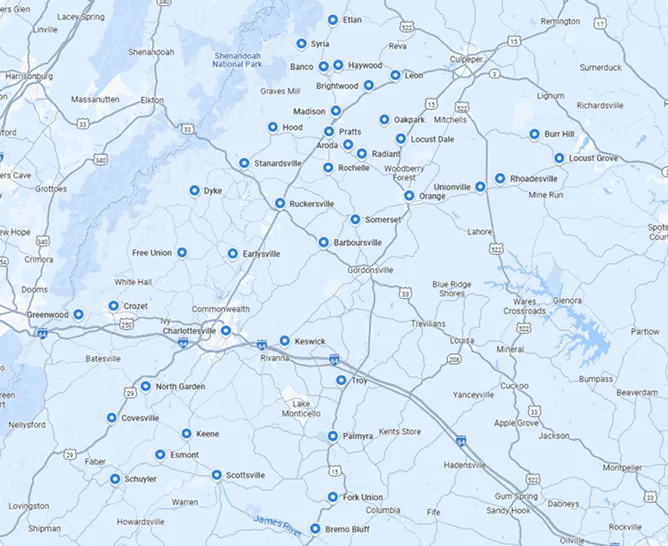
Service areas