

Choose an option to see quick actions and get help faster.
.svg)

Why Dirty Filters Cause Frozen Evaporator Coils — And What It Means for Your AC in Charlottesville, VA
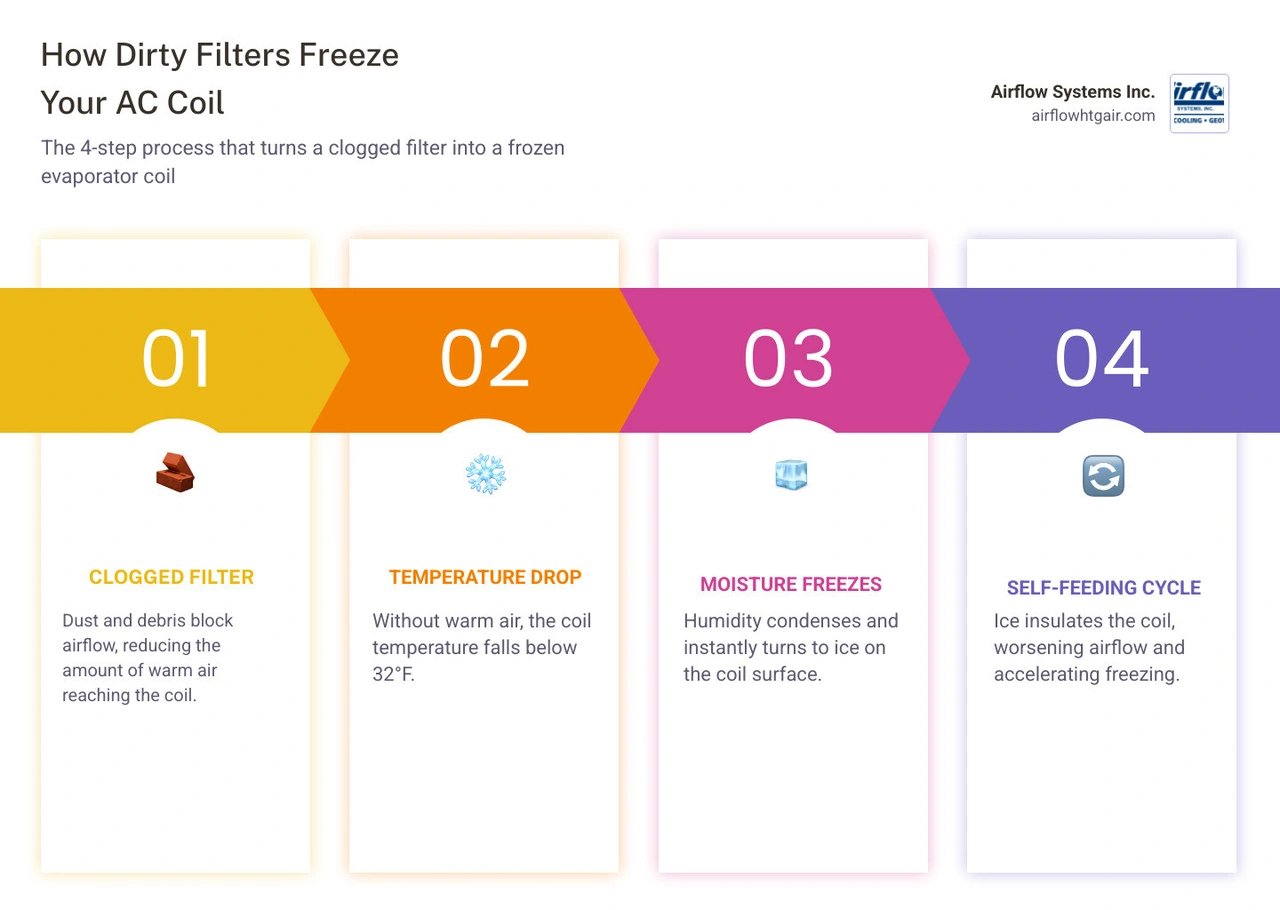
How dirty filters cause frozen evaporator coils comes down to one straightforward problem: when your air filter gets clogged, warm air can no longer flow freely across the evaporator coil. Without that steady supply of warm air, the coil gets too cold, drops below 32°F, and the moisture in the air freezes right onto its surface.
Here is the short version of how it happens:
- Filter clogs — Dust, pet hair, and debris build up and block airflow.
- Airflow drops — Less warm air reaches the evaporator coil.
- Coil temperature falls — The coil surface drops below freezing.
- Moisture freezes — Condensation on the coil turns to ice.
- Ice spreads — Ice acts as insulation, making airflow worse and freezing faster.
- System struggles — Your AC blows warm air, loses efficiency, or shuts down entirely.
A severely clogged filter can trigger this chain reaction within 24 to 48 hours of continuous operation. For homeowners in Charlottesville, VA and across Central Virginia — where summer humidity is high and AC systems run hard — a neglected filter is one of the fastest ways to turn a minor maintenance task into an expensive repair call.
The good news: this is one of the most preventable AC problems there is. Understanding the mechanism helps you catch it early and avoid the kind of damage that strains your system and your schedule.
How dirty filters cause frozen evaporator coils vocabulary:
- how dirty air filters destroy your ac performance
- how often to change your ac filter in humid climates
The Science of Airflow: How Dirty Filters Cause Frozen Evaporator Coils
To truly understand how a simple piece of cardboard and pleated fabric can shut down a multi-ton cooling system, we have to look at the physics of heat exchange. Your air conditioner does not actually "create" cold air; instead, it removes heat from your indoor air.
At the heart of this process is the indoor evaporator coil. Inside this coil, cold liquid refrigerant undergoes a phase change, expanding into a gas as it absorbs heat from the air blowing over it. This process involves two types of heat:
- Sensible heat: The actual temperature of the indoor air that you can read on a thermometer.
- Latent heat: The hidden heat trapped within airborne moisture (humidity).
As warm, humid air passes over the cold metal fins of the evaporator coil, the temperature of the air drops below its dew point. This causes moisture to condense on the coil surface, which then drips safely into the condensate drain pan.
However, this entire refrigeration cycle relies on a very specific volume of air to keep the coil warm enough to prevent freezing. Residential AC systems are designed to move between 350 and 400 cubic feet per minute (CFM) of air per ton of cooling capacity. When a dirty filter blocks the return duct, a major pressure drop occurs, and airflow plummets.
Systems operating below 350 CFM per ton can lose up to 30% of their cooling capacity almost immediately. Without enough warm air passing over the coil to balance the freezing temperature of the refrigerant, the coil’s surface temperature falls below 32°F (0°C). The condensation on the coil immediately freezes into frost.
Once frost begins to form, a self-feeding cycle of ice accumulation takes over. Ice is an excellent insulator. Instead of allowing heat exchange to continue, the ice barrier blocks the remaining airflow from reaching the refrigerant inside the tubes. This causes the coil to get even colder, freezing more condensation and spreading ice down the refrigerant lines.
If your air conditioner is struggling to keep up with the summer heat, you can read more about what to look for in our guide on AC Not Cooling Properly: What to Check First.
Warning Signs of a Frozen AC System
How do you know if your indoor unit is turning into a block of ice? Often, the evaporator coil is tucked away inside a sealed air handler closet or attic space, making direct visual inspection difficult. Fortunately, your system will drop several clear hints that something is wrong.
Keep an eye out for these common warning signs of a frozen AC system:
- Weak Airflow: When ice blocks the spaces between the copper tubing and aluminum fins, your blower motor struggles to push air through the frozen barrier. You will notice very little air coming out of your supply vents.
- Warm Air: Because the ice insulates the refrigerant, the air that does manage to squeeze past the coil cannot transfer its heat. Your vents will begin blowing lukewarm or warm air.
- Hissing or Gurgling Sounds: As ice expands, shifts, or restricts the flow of refrigerant through the metering device, you may hear unusual hissing, bubbling, or cracking noises coming from the indoor unit.
- High Indoor Humidity: Since the frozen coil can no longer condense moisture from the air, your home will feel sticky, muggy, and uncomfortable.
- Visible Frost: You might see ice forming on the exposed copper refrigerant lines (the suction line) entering the indoor air handler or even on the brass valves of the outdoor condenser unit.
- Condensate Backup and Water Leaks: As the ice begins to melt during off-cycles, it can overwhelm your primary drain pan, leading to water dripping from your ceiling or pooling around the base of your furnace.
If you are experiencing any of these symptoms, it is crucial to shut down your system immediately. Running an air conditioner with a frozen coil places immense strain on the compressor, which can lead to permanent mechanical failure.
How to Safely Thaw a Frozen Evaporator Coil
If you have discovered ice on your system, do not panic. Thawing the coil safely is a straightforward process, but it requires patience. Trying to speed up the process with brute force or improper tools can permanently damage your system.
Follow these step-by-step instructions to safely defrost your AC:
- Switch the System Off: Go to your thermostat and turn the system from "Cool" to "Off." This stops the compressor from pumping cold refrigerant through the frozen coil.
- Turn the Fan to "On": Change your fan setting from "Auto" to "On." This keeps your blower motor running continuously, forcing warm, room-temperature indoor air over the frozen coil to melt the ice naturally.
- Replace the Dirty Filter: Slide out the old, clogged filter and discard it. Replace it with a fresh, clean filter. Never run your system without a filter, even during the thawing process, as this will allow dust to settle directly onto the wet coil.
- Monitor the Condensate Drain: As the ice melts, a substantial volume of water will flow into your drain pan. Keep a close eye on the pan and the drain line to ensure there are no blockages. Keep some towels handy to clean up any overflow and prevent water damage to your home.
- Wait for a Complete Thaw: Depending on the thickness of the ice, it can take anywhere from 4 to 24 hours for the coil to defrost completely. Do not attempt to scrape, chip, or pry ice off the delicate aluminum fins with screwdrivers or knives; doing so can easily puncture a refrigerant line. Avoid using high-heat hair dryers or heat guns, which can warp plastic components or cause uneven thermal stress on the copper joints.
Once the coil is completely dry and free of ice, you can turn the system back to "Cool" and monitor its performance. If you want to make sure you are covering all your bases, check out our comprehensive AC Maintenance Checklist for Virginia Homeowners.
Airflow Restriction vs. Low Refrigerant: Key Differences
While a dirty air filter is the most common cause of a frozen evaporator coil, it is not the only culprit. Low refrigerant levels due to a leak can also cause your system to freeze up. Telling the difference between these two issues is essential for determining whether you have a simple DIY fix or need to call in a professional.
When a system has a refrigerant leak, the pressure inside the evaporator coil drops. This pressure drop causes the boiling point of the remaining refrigerant to plunge. A system with just a 10% refrigerant undercharge can see coil surface temperatures fall by 5–8°C (9-14°F) lower than designed, rapidly turning normal condensation into ice.
Additionally, dirty filters are almost always the cause of dirty refrigerant coils. When a filter is clogged or ill-fitting, dust bypasses the filter and sticks directly to the damp evaporator coil. A mere 0.02-inch layer of dust on the evaporator coil can reduce heat transfer efficiency by up to 15%, compounding both airflow and temperature issues.
Here is a quick reference table to help you distinguish between airflow-related freezing and refrigerant leaks:
| Symptom | Airflow Restriction (Dirty Filter) | Low Refrigerant (Leak) |
|---|---|---|
| Filter Condition | Visibly black, gray, or caked in dust | Clean or recently replaced |
| Airflow Volume | Significantly weakened throughout the home | Normal airflow volume, but the air is warm |
| Ice Location | Evenly distributed across the entire evaporator coil | Often starts as a band of ice on one section of the coil |
| Suction Line Temp | Cold and sweating, or completely frozen | Warm or lukewarm to the touch near the outdoor unit |
| Hissing Noise | Quiet or whistling near the filter slot | Distinct hissing or bubbling along the copper lines |
| Resolution | Solved by thawing and replacing the filter | Requires leak detection and a professional recharge |
Preventive Maintenance to Stop Coil Freezing
The absolute best way to handle a frozen evaporator coil is to prevent it from happening in the first place. With a few consistent habits and regular professional attention, you can keep your home comfortable and your utility bills manageable throughout the hot Virginia summers.
- Establish a Filter Schedule: Check your air filter every 30 days. If you have pets, allergies, or live in a dusty area of Central Virginia, you may need to replace it monthly. At a minimum, change standard pleated filters every 60 to 90 days.
- Choose the Right MERV Rating: For most residential systems, filters rated between MERV 8 and MERV 11 offer the perfect balance of excellent air filtration and low airflow resistance. Avoid MERV 13 or higher unless your system's static pressure has been professionally tested and rated to handle it, as high-efficiency filters can restrict airflow even when clean.
- Keep Vents and Registers Clear: Ensure that at least 80% of your home's supply registers and all return air grilles are completely open and unobstructed by furniture, heavy drapes, or rugs. Closing too many vents increases static pressure and starves the system of airflow.
- Clean the Outdoor Condenser: Your outdoor unit needs to breathe just as much as your indoor unit. Keep weeds, grass, and debris cleared back at least two feet from the condenser. For safety tips on keeping the outdoor unit clean, see our guide on How to Clean Your AC Condenser Unit Safely.
- Schedule Annual Professional Maintenance: Having a professional technician inspect your system before the cooling season begins is invaluable. A technician will clean the delicate coil fins, check refrigerant levels, measure electrical draw, and ensure your blower motor is operating at peak efficiency.
To prepare your system for the upcoming seasons, take a look at our helpful Spring HVAC Maintenance Checklist to ensure your system is ready to handle the summer heat.
Frequently Asked Questions About Frozen AC Coils
Why do dirty filters cause frozen evaporator coils in humid climates?
In highly humid areas like Central Virginia, the air carries a massive amount of latent heat in the form of water vapor. When this humid air hits a cold evaporator coil, it produces an exceptional amount of condensation. If airflow is restricted by a dirty filter, the coil temperature drops below 32°F very quickly. Because there is so much water on the coil, the moisture freezes rapidly, accelerating the frost risk and leading to a thick block of ice much faster than it would in an arid climate.
Can a dirty filter cause ice on the outdoor condenser unit?
Yes, absolutely. The freezing process always begins at the indoor evaporator coil, but if left running, the ice will crawl along the insulated copper suction line all the way to the outdoor condenser unit. When this happens, liquid refrigerant can travel back down the line instead of evaporating into a gas. This leads to a highly destructive phenomenon called "liquid slugging," which can easily destroy the compressor—the most expensive component in your outdoor unit.
How long does it take to thaw a system after dirty filters cause frozen evaporator coils?
Generally, you should expect a thaw time of 4 to 8 hours using the safe "fan-only" method. The exact timeline depends on the thickness of the ice buildup and the ambient temperature of your home. Avoid trying to speed up the process with mechanical tools or direct heat, as natural melting is the safest way to preserve your system's components.
Conclusion
A frozen evaporator coil is more than just an inconvenience; it is a sign that your air conditioner is suffocating. While a dirty air filter is the most common and easiest cause to fix, ignoring the warning signs can lead to severe system damage, including water damage from melting ice or a completely failed compressor.
At Airflow Systems Inc., we have been helping families stay comfortable in Charlottesville, VA and the surrounding Central Virginia areas since 1988. As a family-owned business, we pride ourselves on delivering honest, dependable service with certified professionals who treat your home with respect. Whether you need a routine spring tune-up, a professional coil cleaning, or emergency repairs, we are always here to help.
Keep your cooling system running smoothly all summer long. If you suspect your system has a deeper airflow or refrigerant issue, contact us today to schedule your professional Air Conditioning Services.
We proudly serve homeowners across the region, including our neighbors seeking:
Book Expert Service Or Contact Us
Our Service Process
A Hassle-Free Service Experience
01
Consultation & Diagnosis
We start by listening to your needs and performing a thorough diagnosis of your system to recommend the best solution.
02
Transparent Quoting
We provide a clear, upfront estimate with no hidden fees, so you know exactly what to expect.
03
Expert Service & Follow-Up
Our factory-trained technicians complete the work to the highest standards, and we follow up to ensure your complete satisfaction.
testimonials
What Our Customers Are Saying
Our customers consistently praise our exceptional service and attention to detail, making us a trusted choice for all your HVAC needs.
where we operate
Service areas